- Une nuit pour se retrouver sous la même lune
- Quand la lune ronde devient symbole de réunion
- La lune, langage du manque et de la distance
- « La lune est plus claire au pays natal »
- À mille lieues, partager encore quelque chose
- Quand la nostalgie tombe avec la lumière de la lune
- Lorsque la lune devient messagère
- Et quand la lune ne suffit plus ? Il reste les mooncakes


Fête de la Lune : quand la même lune réunit ceux que la distance sépare

Une nuit pour se retrouver sous la même lune
Il suffit parfois de lever les yeux vers le ciel pour penser à un lieu, à un visage, à quelqu’un qui nous manque. En Chine, la Fête de la Lune est l’un de ces moments.
Le 25 septembre 2026, au 15e jour du 8e mois du calendrier traditionnel chinois, on célèbre Zhōngqiū Jié 中秋节, la Fête de la Mi-Automne, ou Fête de la Lune. Une soirée de retrouvailles, de repas partagés et de mooncakes, sous une même pleine lune.
Mais cette lune ne raconte pas la même histoire à chacun. Pour ceux qui sont réunis, elle évoque la famille rassemblée. Pour ceux qui sont loin de chez eux, elle rappelle parfois un foyer que l’on ne peut rejoindre, des proches absents ou un pays natal laissé derrière soi.
C’est sans doute pour cela que, depuis des siècles, les poètes chinois lui confient tout ce que la distance fait naître.
Quand la lune ronde devient symbole de réunion
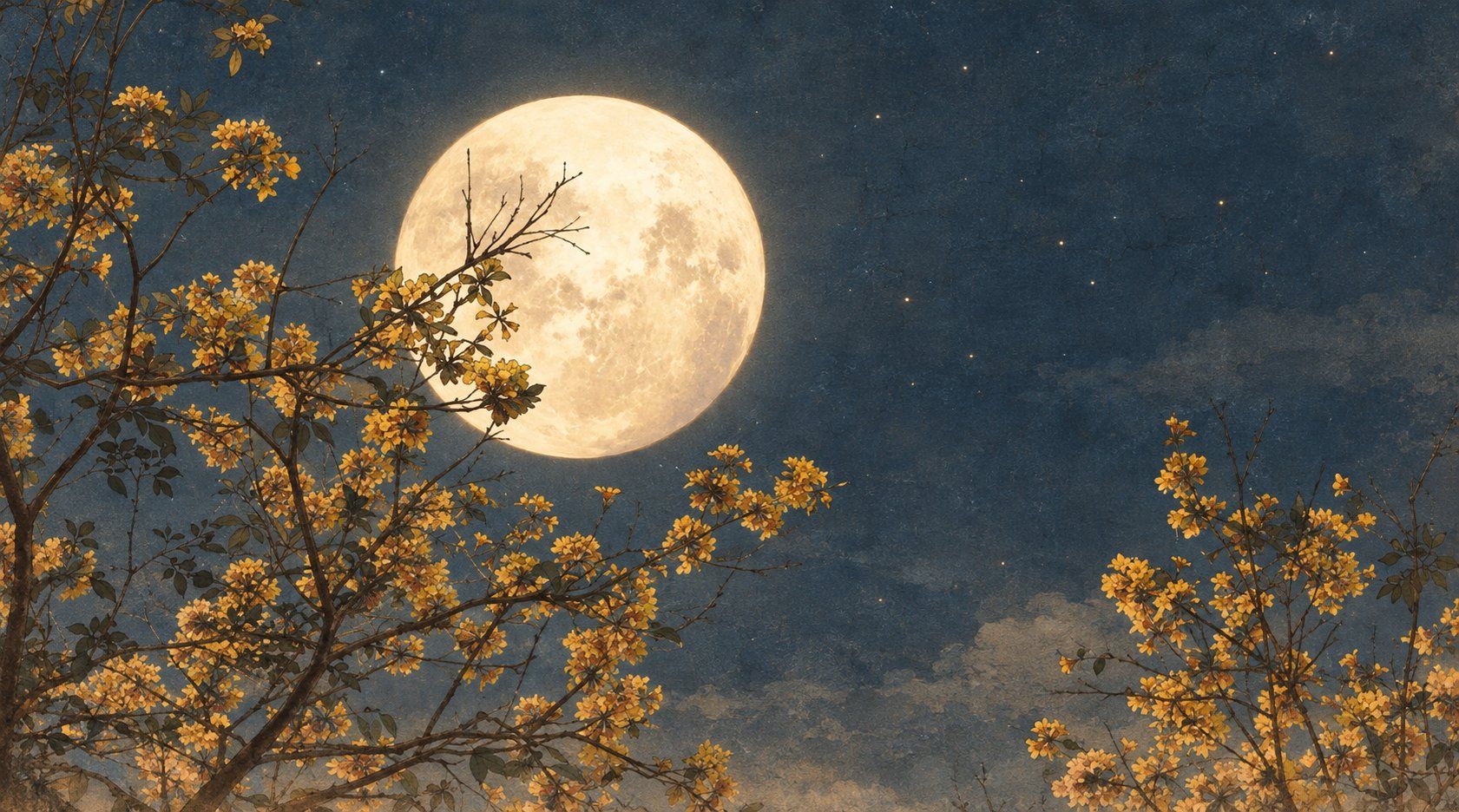
La Fête de la Lune trouve ses racines dans les anciennes célébrations liées à l’automne et aux récoltes. Avec le temps, elle est surtout devenue une grande fête familiale, comparable par son importance à ces moments de l’année où l’on cherche avant tout à rentrer chez soi.
Le soir venu, les familles se réunissent autour d’un repas, contemplent la lune et partagent des yuèbǐng 月饼, les fameux mooncakes. Leur forme ronde n’est pas anodine. Dans la culture chinoise, le cercle évoque volontiers ce qui est complet, réuni, sans rupture. La pleine lune répond ainsi à l’idée de tuányuán 团圆, les retrouvailles et la réunion familiale.
La lune est ronde. Les mooncakes le sont aussi. Et autour de la table, on souhaite que la famille puisse, elle aussi, être réunie. Pourtant, tout le monde ne peut pas toujours rentrer. C’est précisément là que la lune prend une autre profondeur.
La même lune que l’on contemple en famille devient, pour celui qui est loin, une image du foyer. Elle rappelle les personnes absentes, les lieux familiers et tout ce dont la distance nous sépare. Et c’est là que commence la poésie.
La lune, langage du manque et de la distance
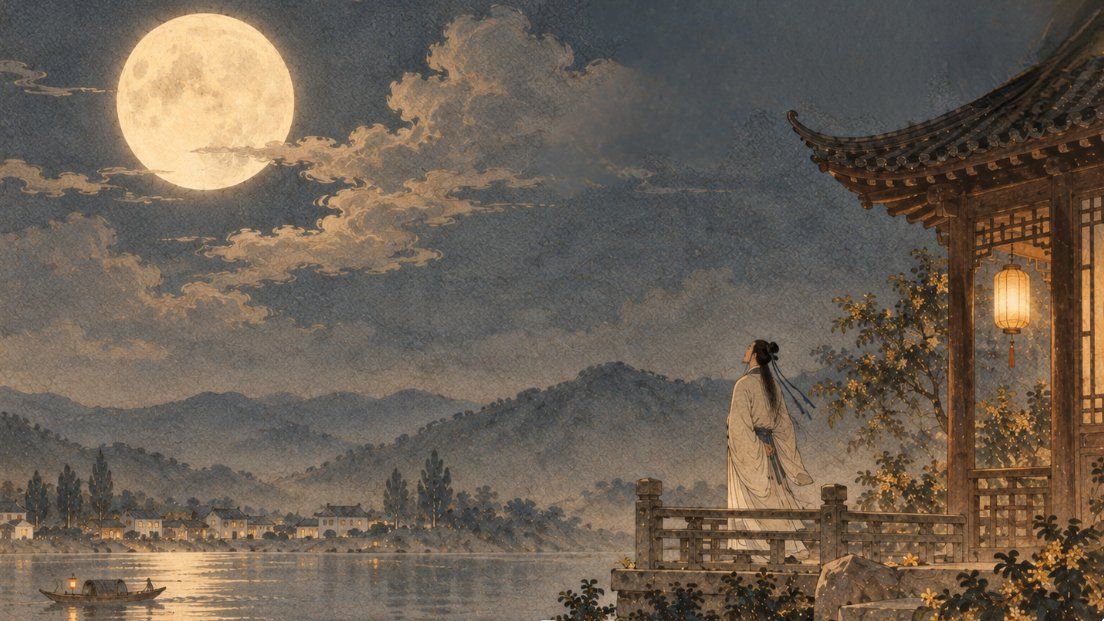
« La lune est plus claire au pays natal »
Le poète Du Fu 杜甫 écrivait sous la dynastie Tang :
Ce n’est évidemment pas la lune qui change, mais le regard de celui qui pense à son pays natal. Quand on est loin, le souvenir transforme les choses : ce qui appartient au foyer semble parfois plus doux, plus beau, plus lumineux.
La lune n’éclaire alors plus seulement la nuit. Elle éclaire aussi la mémoire.
À mille lieues, partager encore quelque chose
Quelques siècles plus tard, Su Shi 苏轼 écrivait dans son célèbre Shui Diao Ge Tou :
Ces vers sont aujourd’hui encore intimement associés à la Fête de la Lune. Ils ne promettent pas que la distance disparaîtra, ni que tous pourront se retrouver. Ils disent quelque chose de plus délicat : lorsque l’on ne peut pas partager le même lieu, il reste encore possible de partager un même instant sous la même lune.
La distance n’efface pas le manque. Mais contempler la même lune devient un lien, un moment que l’éloignement ne peut tout à fait nous enlever.
Quand la nostalgie tombe avec la lumière de la lune
Dans un autre poème consacré à une nuit de pleine lune, Wang Jian 王建 écrit :
Tout tient ici dans un verbe : 落, « tomber », « se poser ». La nostalgie ne reste pas seulement dans le cœur. Elle semble descendre avec la clarté de la lune et venir se poser sur le foyer laissé au loin.
La pensée devient presque visible.
Lorsque la lune devient messagère
Chez Li Bai 李白, la lune peut même voyager à la place de celui qui reste. Il écrit :
Cette fois, la lune n’est plus seulement contemplée. Elle devient messagère. Là où le poète ne peut aller, il laisse la lune porter ses sentiments à sa place.
C’est peut-être ce qui explique sa présence si forte dans la poésie chinoise : la lune appartient à tous. Où que l’on se trouve, on peut lever les yeux et imaginer qu’une personne lointaine regarde, au même moment, la même lumière.
Et quand la lune ne suffit plus ? Il reste les mooncakes
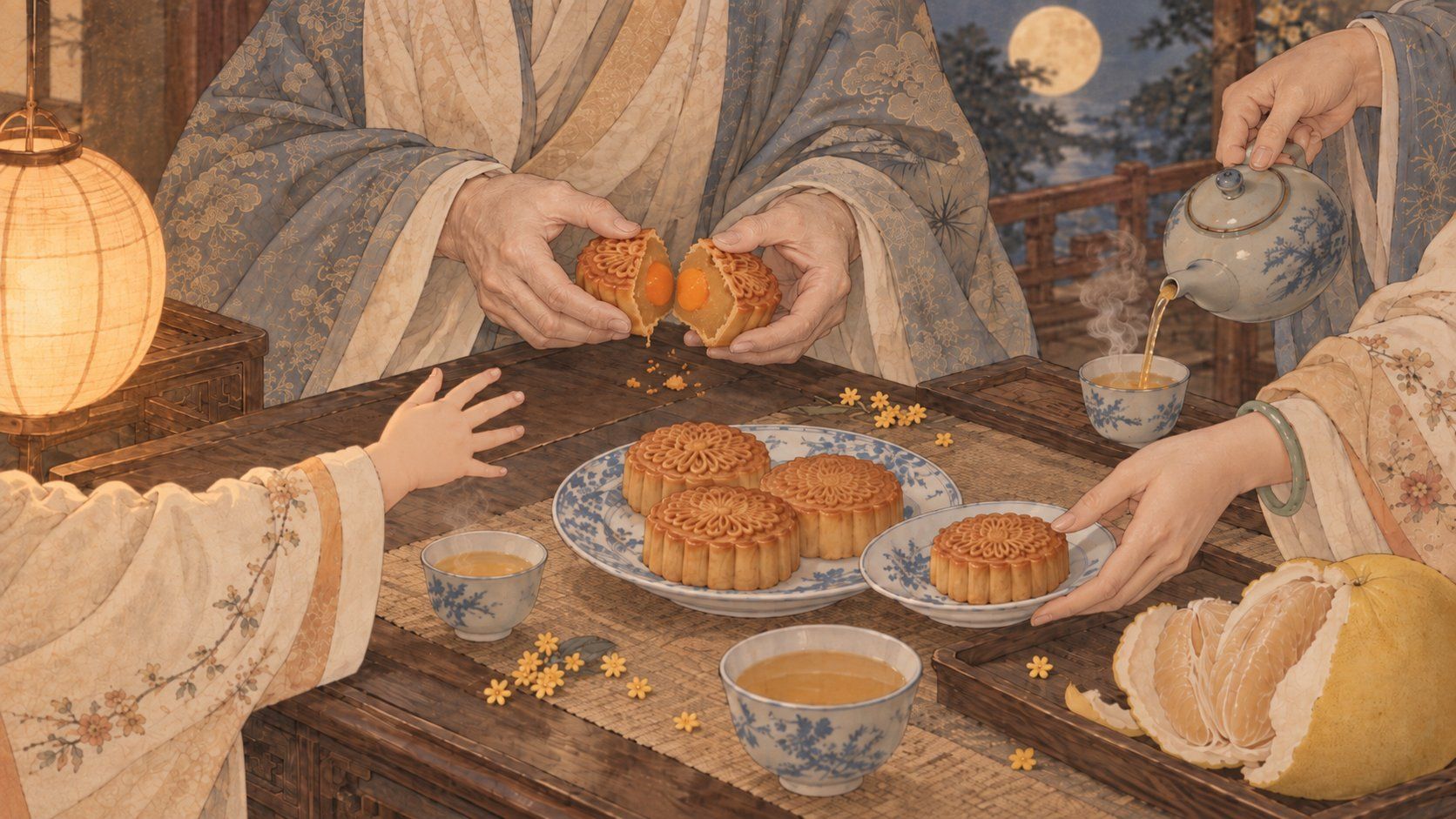
Heureusement, la Fête de la Lune n’est pas seulement faite de nostalgie. C’est aussi une fête gourmande, chaleureuse et profondément vivante.
On offre et on partage des mooncakes, dont les recettes varient énormément selon les régions : pâte de lotus, haricot rouge, graines, jaune d’œuf salé, fruits à coque ou encore versions salées plus inattendues.
Là encore, leur forme ronde rappelle la lune et les retrouvailles. On coupe le gâteau. On distribue les parts. On mange ensemble. Un geste très simple qui dit, lui aussi, quelque chose de la fête : ce qui compte n’est pas seulement ce que l’on mange, mais avec qui on le partage.
Des siècles ont passé depuis les vers de Du Fu, Li Bai, Wang Jian ou Su Shi. Nos façons de voyager, de communiquer et de rester proches ont changé. Mais certaines choses demeurent étonnamment familières. Être loin de chez soi. Penser davantage aux absents lorsqu’arrive une fête. Regarder le ciel et savoir que, quelque part, une personne aimée peut contempler la même lune.
Ce soir-là, où que nous soyons, une même lune brillera pour nous tous.
Très belle Fête de la Lune à toutes et à tous !
