- Nails: much more than a beauty feature
- What is a nail made of?
- What are nails for?
- Nail disorders
- Nails in traditional Chinese medicine
- How do nails reflect our state of health?
- Nails in Chinese energetics
- The link between nails and organs
- The thumb
- The index finger
- The middle finger
- The ring finger
- The little finger
- Taking care of your nails with the Nail Health Herbal Bath


Polished, natural, short, long, decorated (and sometimes damaged), nails are a symbol of beauty all over the world and have been at the heart of trends for centuries.
Made up mainly of keratin (just like hair on the head and body), a sulphur-rich protein, our nails are unfortunately all too often mistreated for the sake of their appearance… A reflection of our lifestyle, damaged nails are not only unsightly but, above all, reveal disturbed health. For example, ridged or brittle nails can reveal an imbalance in the Liver, an organ closely linked to nail health in traditional Chinese medicine.
How can we take care of our nails? What natural remedies does traditional Chinese medicine offer to strengthen their health?
Nails: much more than a beauty feature
What is a nail made of?
As mentioned above, a nail is mainly made of keratin, but also small amounts of water, fatty acids, iron and calcium. It consists of an internal part and an external part.
Its internal structure is made up of three parts:
- The nail bed: this is the part of the skin on which the nail plate rests. It contains blood vessels that supply the nutrients essential for nail growth.
- The matrix: this is a part located under the skin that produces keratin. It is a very sensitive part of the nail: when it is damaged, the nail grows irregularly or becomes deformed.
- The lunula: this is a white, half-moon-shaped area that connects the matrix to the nail bed.
As for its external part, it includes several components, including:
- The eponychium: also called the cuticle, this is the edge of skin covering the matrix.
- The paronychium is the edge of skin that covers the sides of the nail.
- The hyponychium lies under the tip of the nail.
What are nails for?
There is no question that our fingers and toes are crucial. But what about our nails? Do they serve any purpose at all?
Well, yes, nails can play certain roles. For example, they can help us pick up small objects, which is very useful! They can also be precious allies for plucking strings (just ask guitarists)... But above all, nails help protect the backs of the fingers and toes from any external aggression, such as changes in temperature or knocks.
Nail disorders

Beyond their appearance, nails sometimes “fall ill”. Indeed, there are bacterial invasions (fairly common ones, in fact) that threaten their health. Among the most frequent nail invasions are:
Nail infections: around 10% of the population suffers from this problem, often called nail fungus. It is fairly common in adults and becomes more frequent with age. It is caused by a fungus that infects the nail. Swimming pools, sports changing rooms, saunas and bathrooms are places where this infection spreads easily, as does contact with water or certain treatments and illnesses that can encourage the fungus to grow. This infection causes thickening, yellowing and an abnormal build-up of hard material on the nail.
Ingrown nails: also called “onychocryptosis”, this problem mainly affects the big toe. It appears when the nail grows abnormally and digs into the flesh. It is characterised by a very painful red swelling showing that the nail is inflamed.
Perionyxis (or paronychia) is another type of infection that affects the nail and the skin around it. It is common in people who bite their nails, since it takes advantage of a skin lesion near the nail to settle in. Generally, this infection makes the affected finger swell, the infected area turns red and painful, and pus is often noticeable.
Onycholysis, or nail detachment. This is the gradual, partial or total separation of the nail from the nail bed. This condition is defined by the weakening and discolouration of the nail, which becomes more and more brittle.
Nail psoriasis: sometimes hereditary, this disease is distinguished by lesions that appear on the nail, and it generally affects the matrix or the nail bed. It shows up as ridged, deformed, painful and opaque nails (with pinkish spots appearing).
Nails in traditional Chinese medicine
How do nails reflect our state of health?
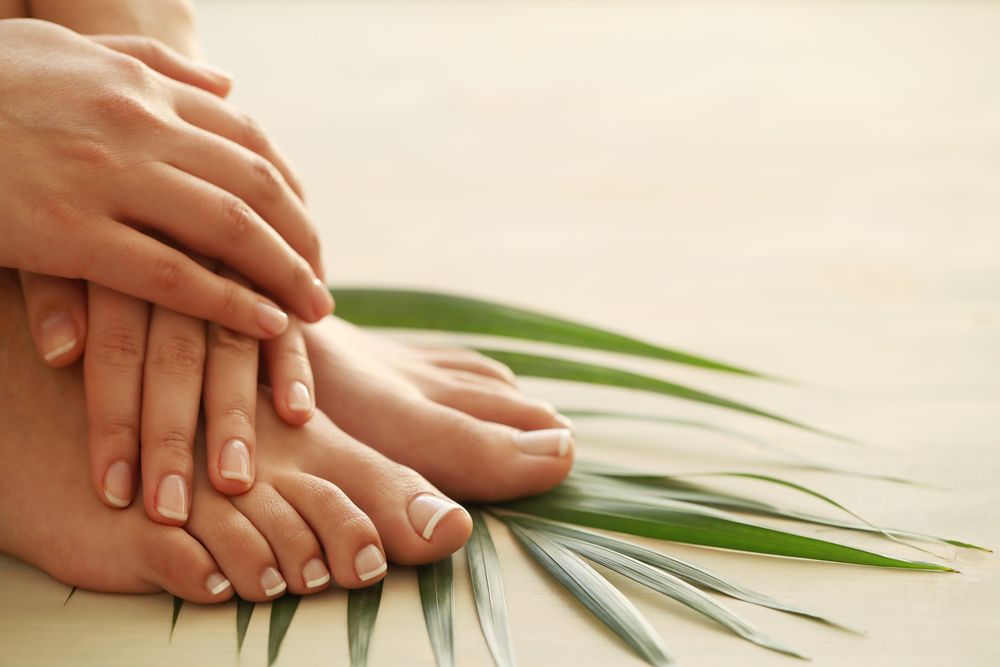
In traditional Chinese medicine, the condition of the nails is an indicator of the state of health. Nails are therefore frequently examined to make a diagnosis.
Observation of the nails focuses on: their growth, their colour, any white marks under the nail, softening or thickening of the nail, fragility or a receding lunula. Indeed, all these factors say a lot about our general state of health.
Nails in Chinese energetics
Traditional Chinese medicine considers the Liver responsible for the lustre of the nails. Indeed, Liver energy has a considerable influence on the health of the nails, which are linked to the Wood element.
Healthy nails are smooth, slightly curved and relatively thick and shiny. They show that the Liver, and more precisely Liver Blood, is in good condition. On the other hand, brittle, ridged nails can indicate a Liver Blood deficiency. More precisely:
- Thin, brittle nails can indicate a deficiency of Qi and Blood and, in some cases, a deficiency of Kidney Essence.
- Split nails can be due to Dryness of Liver Blood or, in older people, come from a Yin deficiency.
- Nails with white spots reflect a Qi deficiency.
- Red nails are generally caused by the presence of Heat in the body.
- Yellow nails point to Damp-Heat in the Stomach, the Spleen, or the Liver and Gallbladder.
- Nail infections generally point to Heat in the Liver.
The link between nails and organs

While nail health is generally associated with the Liver, each nail has a particular affinity with an organ. Discover these relationships:
The thumb
The thumbnail is under the influence of the Lung. It can reflect illnesses affecting the eyes, ears, nose, throat and mouth.
The index finger
The index fingernail is related to the Heart, and its condition can reflect an imbalance in the Upper Burner (shang jiao上焦) or Middle Burner (zhong jiao 中焦).
The middle finger
Linked to the Spleen, the middle fingernail can reveal illnesses of the stomach, duodenum, liver, pancreas, kidneys or colon.
The ring finger
The ring fingernail is linked to the Liver. On the right hand, it can indicate a dysfunction of the liver, gallbladder, kidney or reproductive system. On the left hand, however, it can reveal disorders of the spleen, uterus, pancreas or urinary tract.
The little finger
The little fingernail is linked to the Kidneys, and it can reveal an imbalance located in the ankles and feet.
Taking care of your nails with the Nail Health Herbal Bath
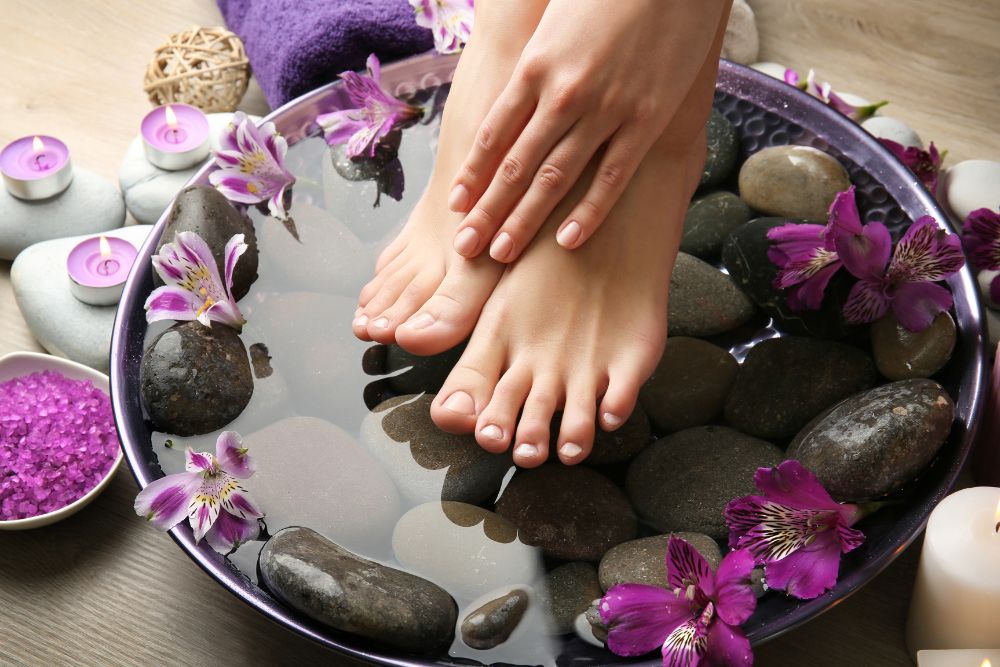
To prevent and overcome nail infections, the Chinese pharmacopoeia developed Hu jia fang (Nail Health Herbal Bath), a preparation made from 12 Chinese plants, including Fang feng, reputed for its benefits for nail health.
The Nail Health Herbal Bath offers a natural external solution traditionally used to protect the nails. Applied daily as a foot or hand bath made with the decoction, it helps strengthen nail health and improve the condition of the nails.
Infections, deformities, changes in colour…. the disorders affecting nails are many. Beyond their effect on our appearance, nails are true indicators of our state of health and our energy deficiencies! So let's pay attention to how they look and take care of their health, first so that they can play their roles properly, but also to have beautiful hands!