- When history becomes an art of care
- Yang Guifei: the emblem of skin as pure as jade
- Princess Taiping: when flowers become a beauty secret
- The restorative treatment from the Three Kingdoms
- From imperial rituals to daily care: the same quest for harmony
- Face cupping: an ancient gesture for a modern face
- Its effects, according to Chinese logic and modern observation:
- Beauty as a dialogue between gesture and presence

While Chinese beauty starts on the inside (in diet, the circulation of Qi and the gentleness of the Shen), it is just as much expressed through a long tradition of external care.
Precise, sensory gestures inherited from centuries of observing the face, the skin and the emotions.
Long before the era of serums and high-tech textures, women at court and at home had already mastered the art of massage, oils and mineral powders.
Their intention remained the same: to get things moving again, soften and make the skin glow without rushing it.
When history becomes an art of care
Outer beauty has always been a form of expression in China, not as a mask, but as the natural extension of an inner balance.
Through the dynasties, some women left behind rituals that became legendary, testifying to the finesse and depth of Chinese care.
Yang Guifei: the emblem of skin as pure as jade
Among the great beauties of imperial China, Yang Guifei holds a mythical place. The chronicles describe her skin as "fresh, luminous, almost translucent", a metaphor for the purity and suppleness of her complexion. Legend has it that she used an ointment that became famous.
Her secret? Apricot kernel, very finely ground and applied in the evening, before being rinsed off with lukewarm water. A strikingly modern treatment: softening the skin's texture, evening out the complexion, nourishing the tissues.
One of the first "night-time treatments", handed down for centuries as a beauty secret.
Princess Taiping: when flowers become a beauty secret
The beloved daughter of Empress Wu Zetian, Princess Taiping embodied the elegance and refinement of the Tang court.
Her best-known ritual followed the rhythm of the seasons:
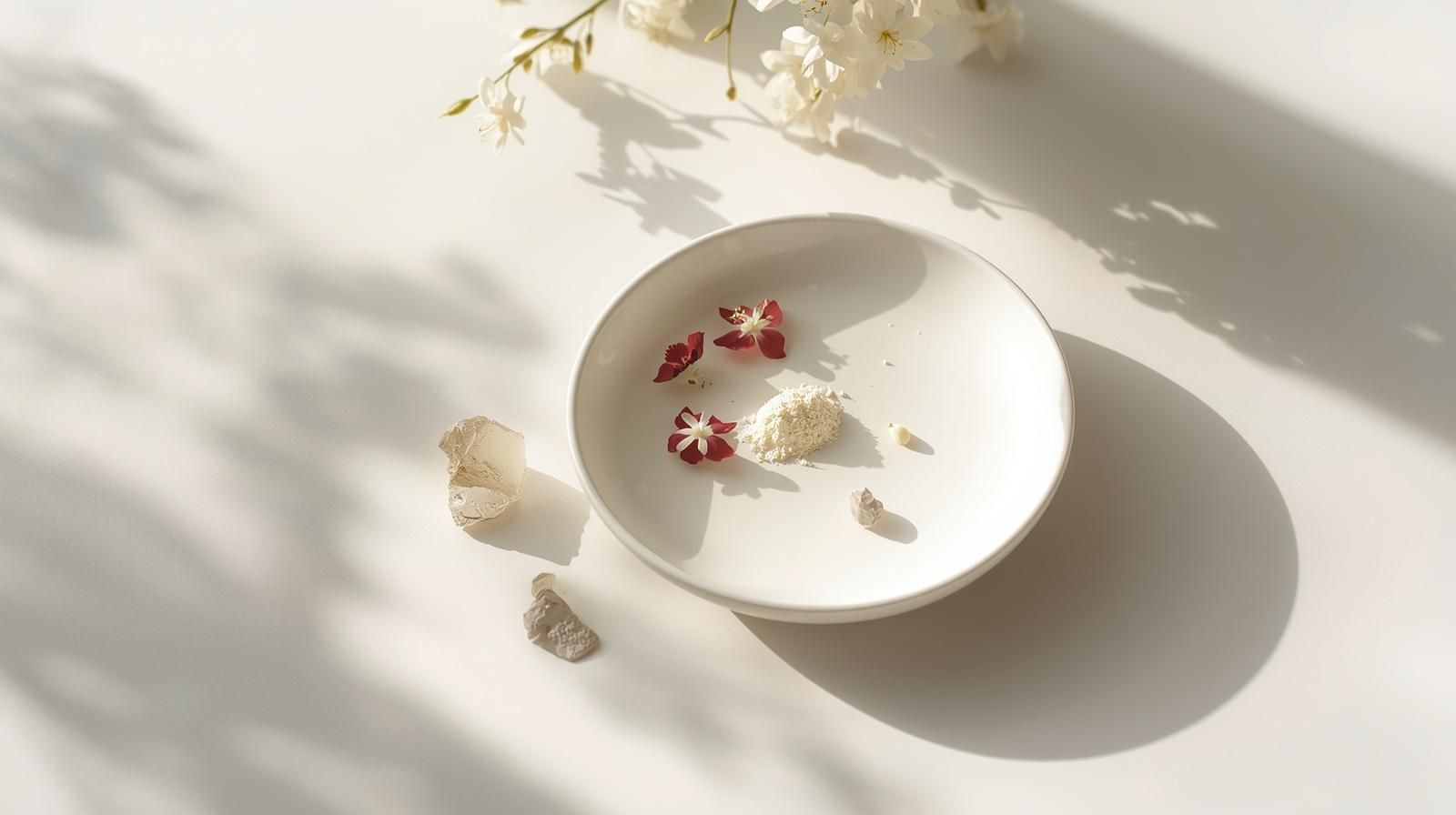
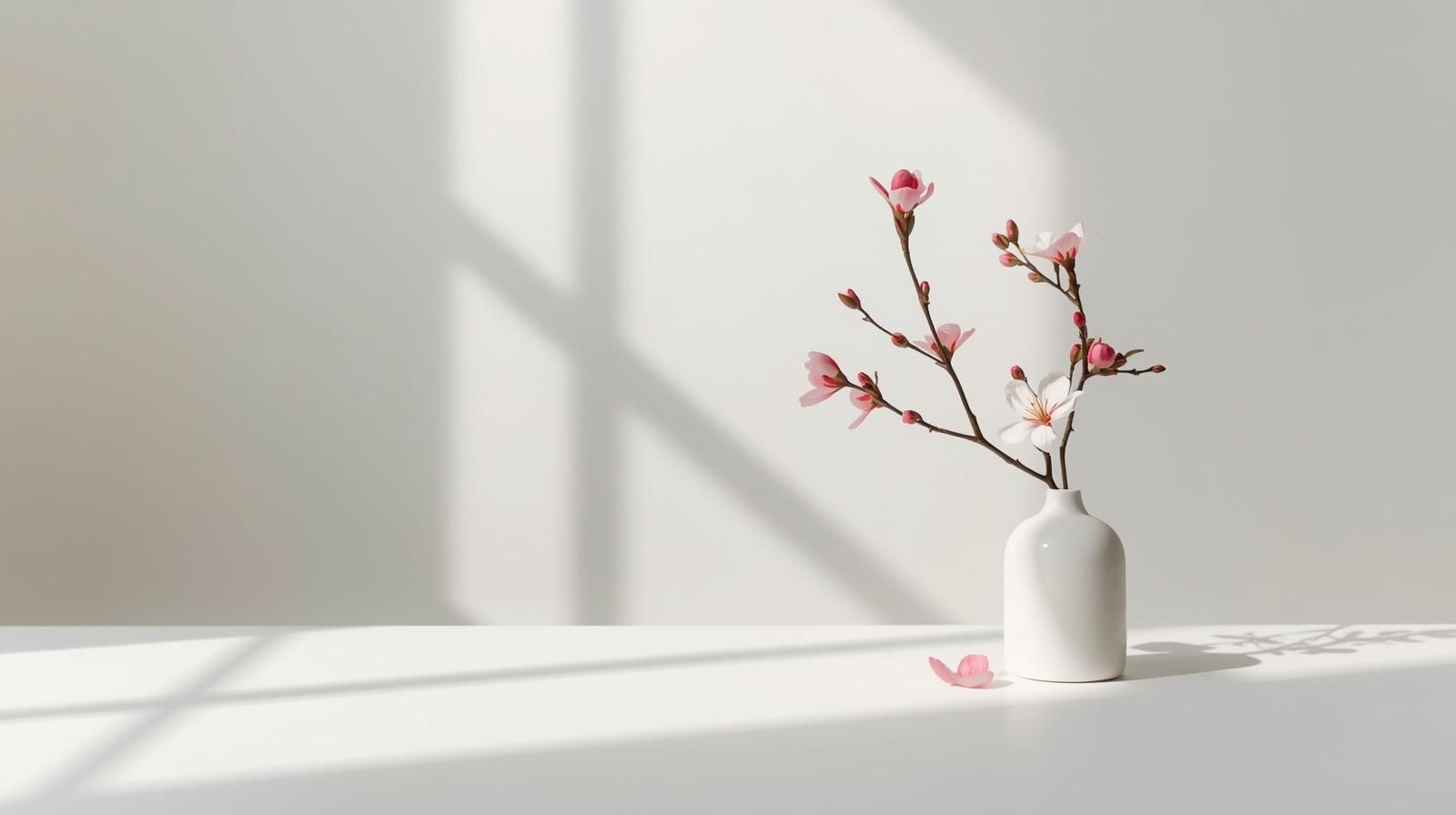
- Spring: she picked the first peach blossoms and left them to dry
- Summer: she ground them into powder and mixed them with a few drops of black hen's blood to form a paste applied as a mask.
Far from being make-up, this treatment nourished, softened and protected the skin: an ancient version of today's floral or enzyme masks.
The restorative treatment from the Three Kingdoms
A chronicle tells how a relative of Sun Quan, ruler of the kingdom of Wu, was badly injured in the face. The court physicians then prepared an ointment made from otter marrow, cinnabar and mineral powders.
Legend has it that the scar disappeared without a trace. The skin is even said to have become clearer and softer than before.
Whether accurate or embellished, this story shows a constant in Chinese culture: external care was not a cosmetic act, but a gesture to repair, soothe and restore the harmony of the face.
From imperial rituals to daily care: the same quest for harmony
Over the centuries, the methods differed (flower powders, ointments, mineral powders...), but the logic stayed the same: free what is stagnating, relax what is tense, reawaken what is fading.
In Chinese tradition, a glowing face is above all a face where energy flows freely.
In the same spirit, these rituals were often accompanied by massage gestures designed to help the preparations penetrate and to stimulate the meridians of the face. These slow, precise movements create a gentle warmth that activated energy and releases tension.
To enhance these effects, simple tools were sometimes used, such as stone or jade plates (ancestors of modern gua sha tools), which were passed over the skin to stimulate circulation and dispel stagnation.

Today, these ancient gestures live on in reinterpreted techniques such as gua sha or certain manual massages, and take a particularly gentle form in face cupping.
Face cupping: an ancient gesture for a modern face
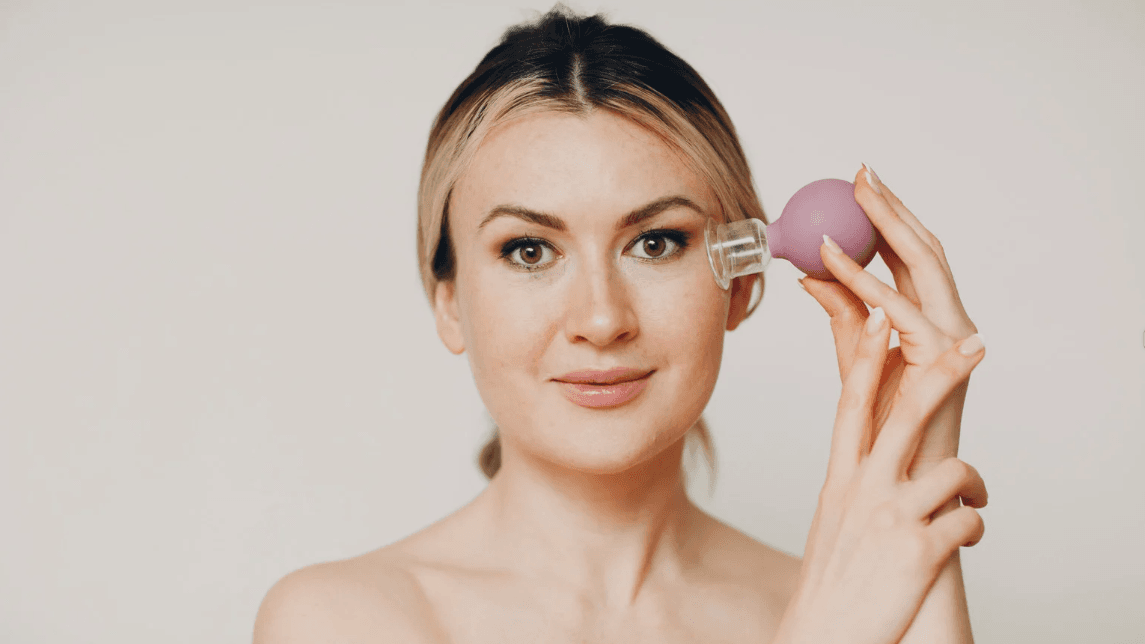
Among the practices reinterpreted today, face cupping is one of the most fascinating, for its simplicity, gentleness and effectiveness.

Born of the traditional principle "get things circulating to restore balance", it uses small, soft cups that are gently glided over the face.
Unlike body cups, facial cups are light, almost airy, and follow the natural lines of the muscles and meridians.
Its effects, according to Chinese logic and modern observation:
- Wakes up microcirculation: the complexion becomes more luminous.
- Relaxes areas of tension: jaw, temples, forehead, the places where stress settles.
- Stimulates elasticity: by mobilising Qi and Blood.
- Visually refines the features: not by sculpting, but by releasing what weighs them down.
In ancient China, it was said that these gestures served to "release wind and stagnation", a poetic way of saying that tense skin is skin that lacks air and movement.
Face cupping carries this idea forward: by releasing tension in the face, it also calms the mind.
It frees, it lightens, it awakens.
Beauty as a dialogue between gesture and presence
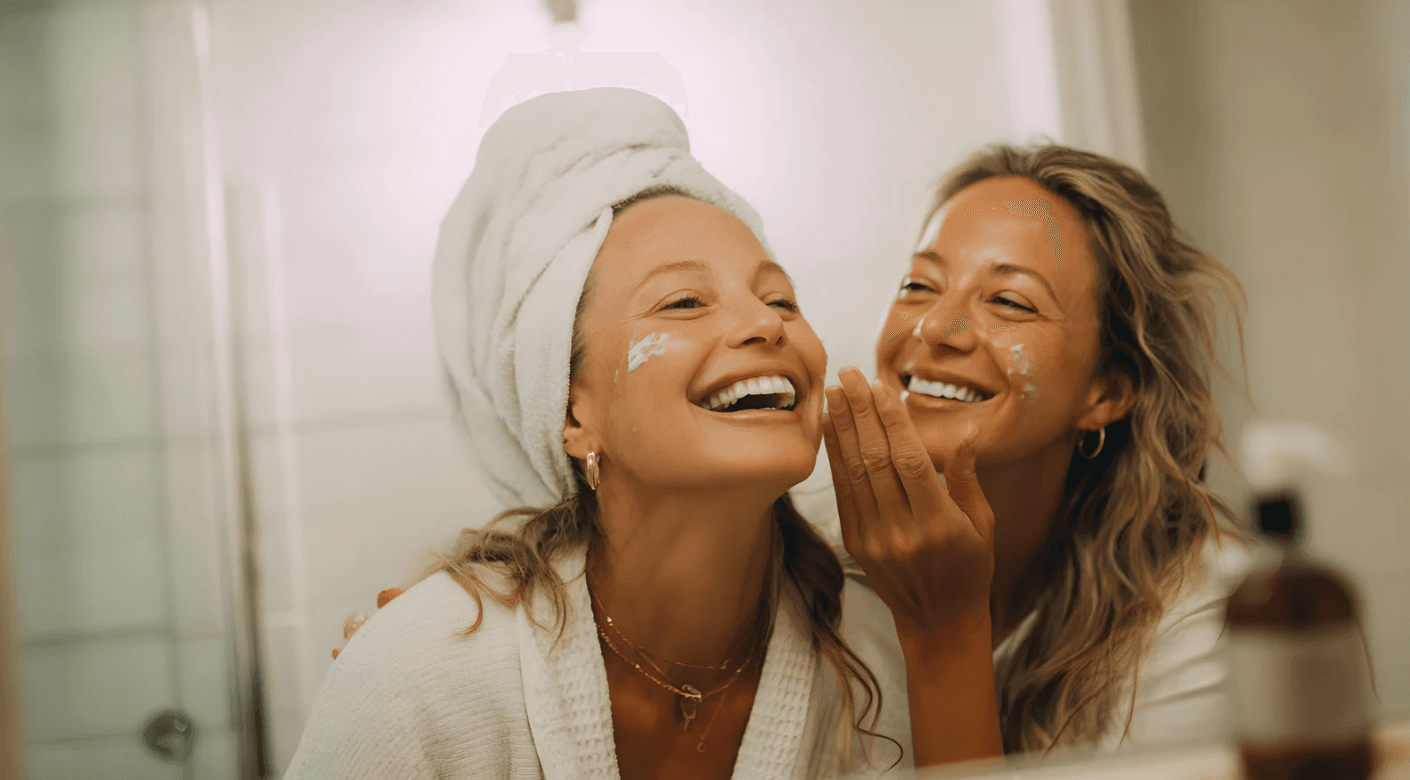
What these stories, imperial or domestic, reveal is that beauty in China was never a goal.
It was a way of being present to yourself.
A slow gesture, a floral powder, warm oil between your hands...
Nothing extraordinary, and yet everything changes.