
The gua sha is a massage tool that comes from Traditional Chinese Medicine. Used for centuries in Asia, it is now very popular in the beauty industry for its benefits for the skin. With this craze for gua sha, its cultural meaning and use have been somewhat lost, giving way to a tool supposedly used only for looks.
So while today it is mainly used as a beauty accessory for the face, the gua sha was originally designed to be used on the body and to treat various ailments.
What is gua sha in Traditional Chinese Medicine? How do you use it, and what are its effects on health?
What is gua sha?
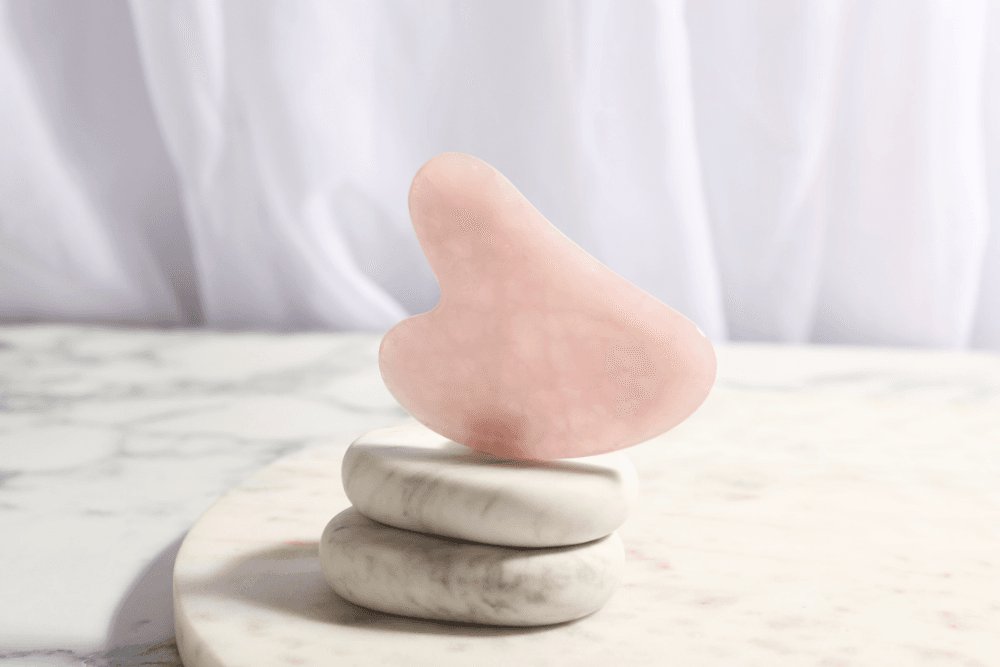
In Chinese, gua means "to scrape" and sha refers to "the disorder". A name full of meaning that says a lot about what this little tool is used for.
Mentioned in the greatest works published under the Ming dynasty (1368 to 1644), the gua sha is far from new: it is in fact an ancestral massage tool that was long used as a treatment for discomforts. [1]
In ancient times, the gua sha resembled a spatula, usually made from cattle horn. Today, noble materials are preferred, such as rose quartz, jade or black obsidian. However, some people like to stay close to tradition and choose gua sha tools made from yak or buffalo horn.
There are also many shapes of gua sha. The choice depends mainly on how it will be used and the area to be massaged. The most popular (the one you see all over social media and from every cosmetics brand) looks like a flat stone with an inward-curving edge that makes it easier to glide the tool over the face. Other shapes have been designed to suit the body.
How to use a gua sha
Although the beauty trend has made it a tool dedicated to facial skin, the gua sha is in fact traditionally used all over the body. Although it is little used by Chinese doctors, who prefer other treatment methods, gua sha is a care technique that anyone can do easily once they have learned a few basic movements.
The movements are simple: with light pressure, work from bottom to top and from the inside outwards, repeating the same movements for a long time. It is advisable to moisturise the skin with an oil or cream before using the gua sha to make the movements easier.
Redness sometimes appears on the areas that have just been massaged. This is completely normal and is even considered a good sign: circulation is stimulated and increases. The redness generally fades over the following days.
The effects of gua sha according to Chinese medicine
In Traditional Chinese Medicine, gua sha is used to stimulate blood circulation and stimulate certain points on the meridians in order to restore Qi (vital energy), release the Exterior and treat pain. It is commonly used to relieve muscle and joint pain, drain excess water, improve sleep, strengthen the body, eliminate toxins….
Unsurprisingly, gua sha is also used for cosmetic purposes. Gua sha massage on the face helps activate lymphatic drainage, improve skin problems such as redness and puffiness and firm the skin so as to slow the appearance of wrinkles.
Focus on 3 benefits of gua sha
Gua sha to relieve neck pain
Neck pain means pain located in the neck, which can be acute and come on suddenly or gradually. It is generally caused by a sudden movement, poor posture, high stress, an injury or illness. It leads to symptoms such as numbness and tingling in the arms and hands, as well as difficulty moving the neck or head.
While acupuncture can be very effective in overcoming these discomforts, gua sha massage can also help relieve pain by releasing the muscles. One study has shown the effectiveness of gua sha in soothing neck pain. [2]
Gua sha to improve the appearance of the skin
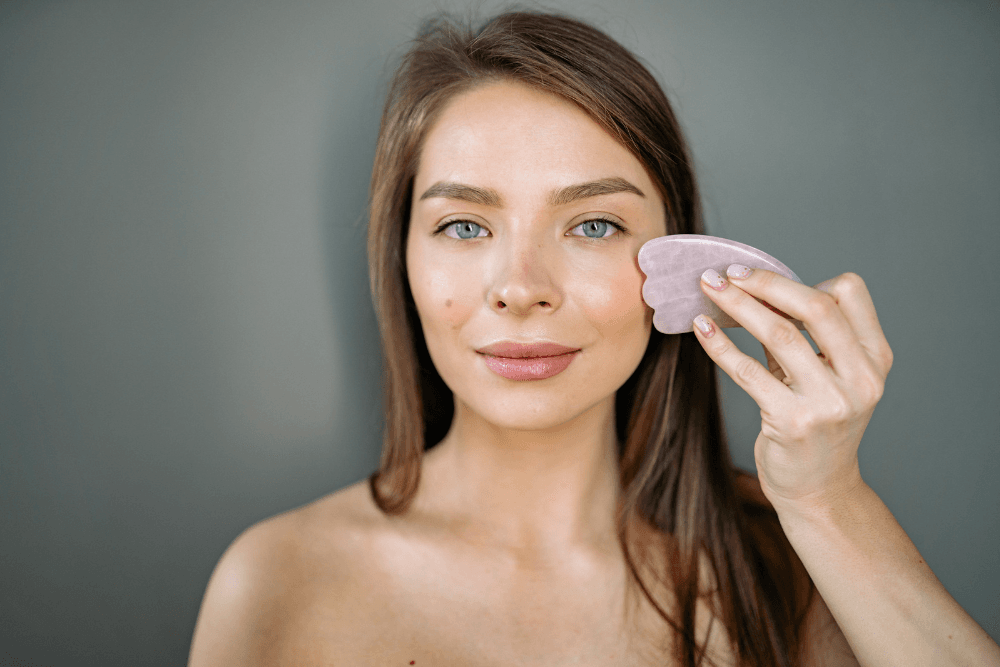
Facial massage with a gua sha has many benefits for the skin: many people report firmer, smoother, more radiant skin after daily massages.
Its benefits include:
• Its toning and firming action on the skin: gua sha helps strengthen the skin's elasticity and reduce the appearance of wrinkles and fine lines.
• Its action on the appearance of the skin: by stimulating blood circulation, the massage helps reduce dark circles and puffiness and revives the face's radiance.
• Its detoxifying effects: it purifies the skin and reduces the signs of fatigue and stress that cause a dull complexion and tired-looking skin.
Gua sha to ease muscle pain
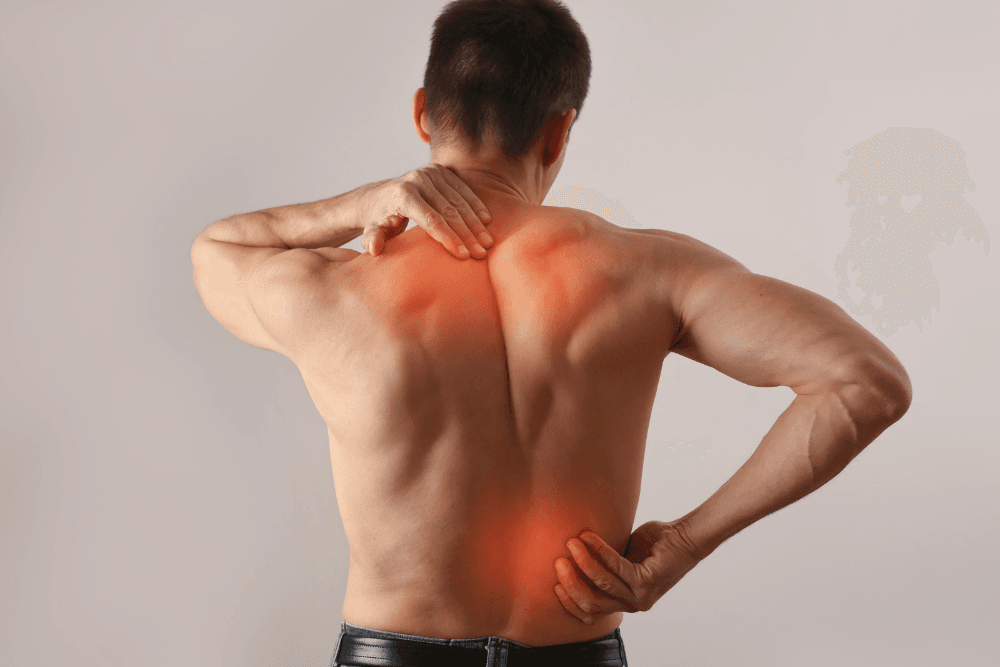
By helping improve blood circulation and relieve muscle knots, gua sha massage soothes musculoskeletal pain. It is particularly effective in the case of external attacks (pathogenic energies). When the muscle is under deep tension, gua sha works to eliminate it.
As well as relieving muscle pain, gua sha promotes the circulation of Qi in the body. A dysfunction of Qi can cause many health problems. Gua sha therefore restores the flow of energy and helps preserve well-being.
While gua sha is now considered a beauty trend, many forget that it is in fact linked to an ancestral method of care born of Traditional Chinese Medicine. Much more than a simple stone meant to improve the look of your skin, the gua sha is a massage tool that, with knowledge of the body, Qi and the meridians, can allow the treatment of many discomforts and so help preserve health.
