
Associated with the passing of time and sometimes a source of self-consciousness, wrinkles affect every human being and can appear anywhere on the face: on the forehead, around the eyes or even on the neck.
While in Western medicine they are linked to the ageing of the skin or to the repeated contraction of the facial muscles, in TCM they are sometimes considered to reflect an organ imbalance. But wrinkles are not just a matter of physical appearance: they also carry a spiritual dimension, revealing emotional or energy blockages that reflect each person’s inner story.
Discover in this blog article what your wrinkles say about your state of health.
What is a wrinkle?
A wrinkle is a fold or furrow of varying depth (more than 1 millimetre) that appears on the face from a certain age and marks it.
There are two main types of wrinkles, corresponding to two ways in which they form: expression wrinkles and ageing wrinkles.
Expression wrinkles
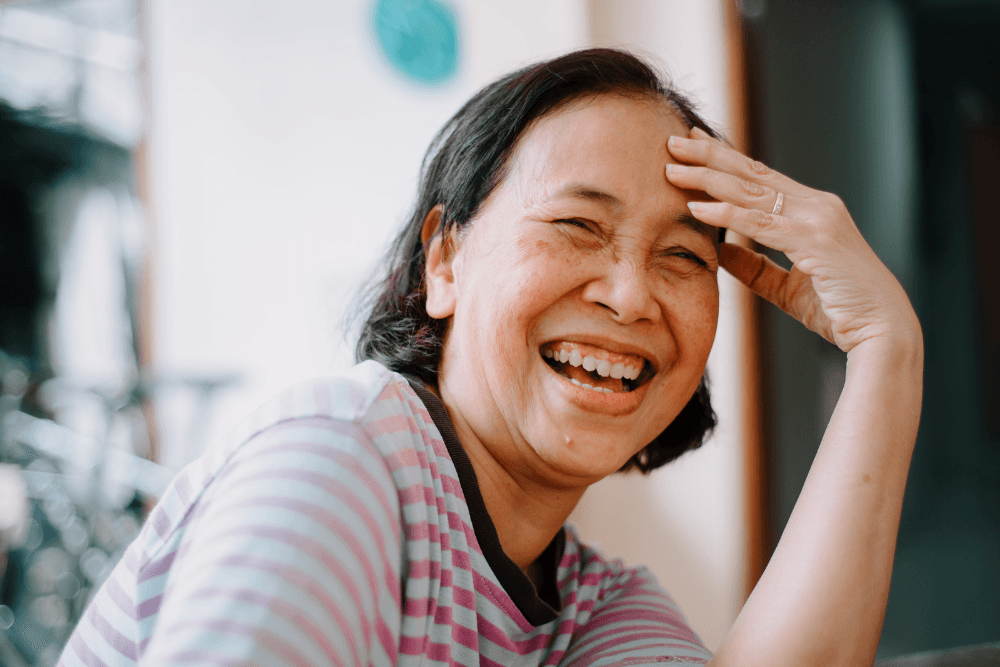
Expression wrinkles, also called dynamic wrinkles, are caused by repeated contractions of the facial muscles, such as frowning, opening the eyes wide, squinting, clenching the jaw or smiling. They are generally found on the upper part of the face. They include:
- horizontal forehead lines: these are linked to worry, fear, surprise or hesitation.
- frown lines (between the eyebrows): these are associated with stress, frustration, worry, or an excess of thinking, reflection or concentration.
- crow’s feet (at the outer corners of the eyes): these can reflect frustration, anger, jealousy or fear.
Ageing wrinkles
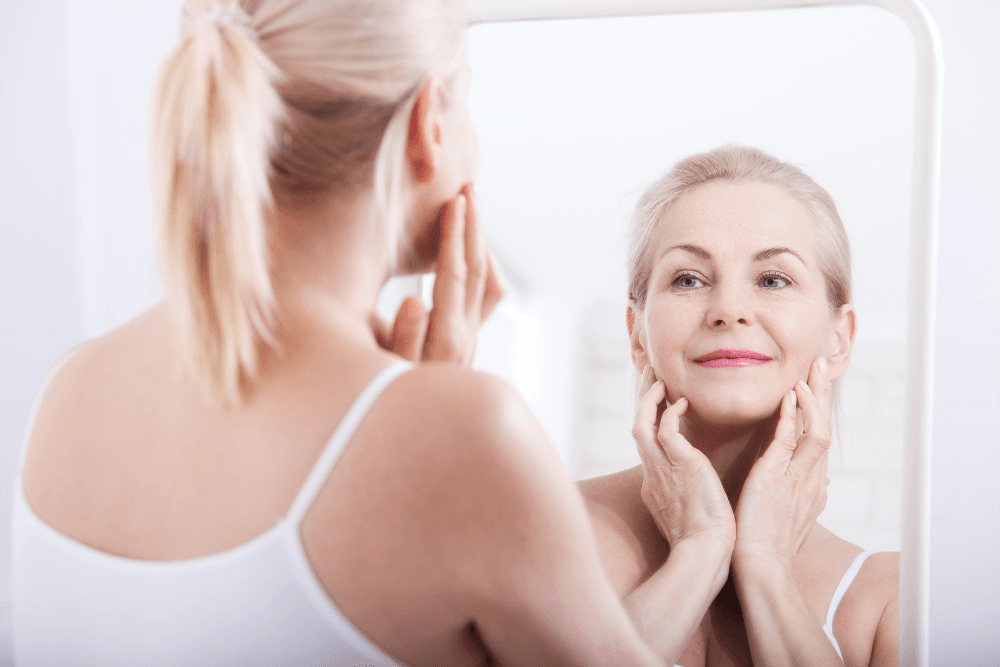
Ageing wrinkles, or static wrinkles, are, as their name suggests, linked to the ageing of the skin. They result from a natural decrease in collagen, elastin and hyaluronic acid levels, leading to a loss of firmness and elasticity. These wrinkles are generally found:
- Around the lips: these are the lines at the corners of the mouth. They are associated with sadness, suffering or frustration.
- Under the cheeks, running from the nose to the mouth: these are smile lines, also called nasolabial folds. They express a lack or an excess of letting go.
- On the neck (in the form of horizontal folds): these are neck lines. They are linked to anxiety, annoyance, difficulty communicating or pride.
Wrinkles and what they mean in TCM
In TCM, each part of our face is connected to an organ of the body: if an organ runs into a problem, the face will signal it through signs on the skin in a specific area. Wrinkles are therefore considered the manifestation of an organ imbalance and say a great deal about the state of health of our organs.
Wrinkles around the eyes
According to traditional Chinese medicine, the eyes, mirrors of the soul, are directly connected to the energy of the Liver. There are three main types of wrinkles around the eyes: crow’s feet, frown lines and eyelid wrinkles (lower and upper).
Crow’s feet
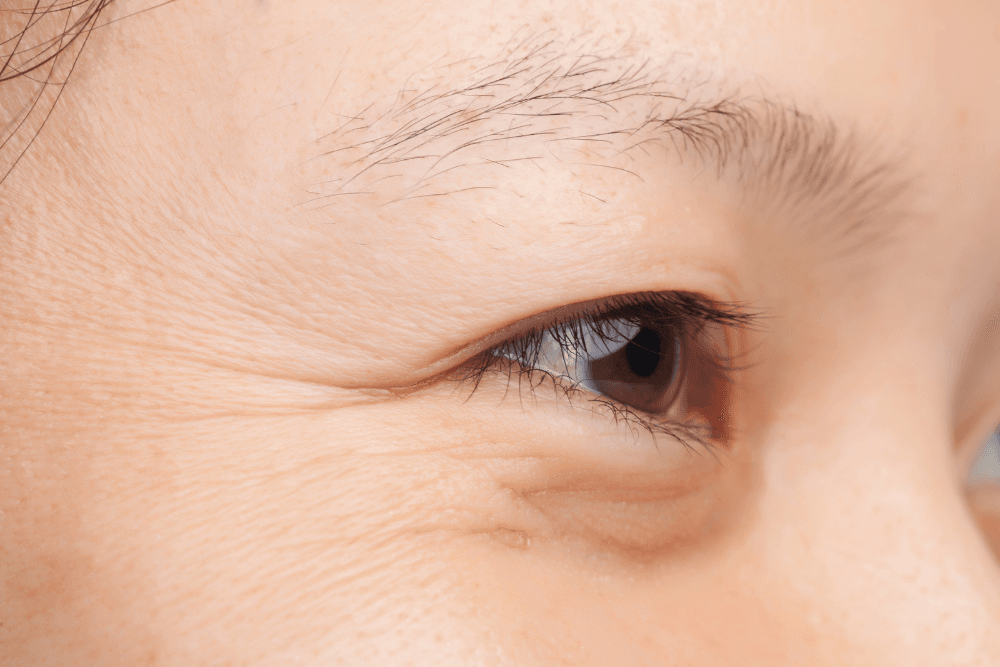
Crow’s feet are wrinkles that take the shape of a small triangle at the outer corner of each eye. They lend a certain charm, maturity, a zest for life or a certain good humour. They deepen gradually with age but often appear quite early, around the age of 25 to 30.
In TCM, they can be linked to a weakness of the Stomach, the Kidneys or the Liver.
Spiritual meaning: Crow’s feet can reflect an emotional or spiritual imbalance linked to an inability to let go or to look at the world with clarity and serenity. This area, influenced by the energy of the Liver, is also linked to the ability to release frustration or anger. When these emotions are repressed, they often show up as visible muscle tension.
Frown lines
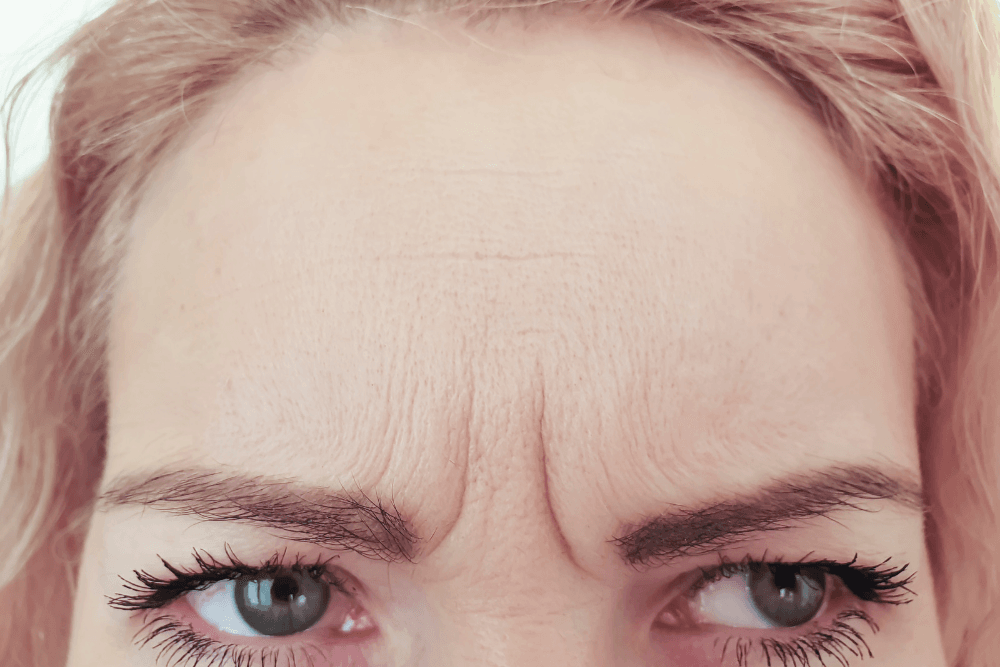
Frown lines are two vertical wrinkles between the eyebrows. They are generally the first to appear on our face, at around the age of 25.
In TCM, the right line is linked rather to the Liver and the left one to the Spleen: they can indicate Liver Qi stagnation but also a weakness of the Spleen.
Beyond their link with the energy imbalances of the organs, frown lines also reveal a deeper dimension. In traditional Chinese medicine, they are seen as an energetic warning signal, reflecting inner tensions or spiritual blockages.
The spiritual meaning of frown lines
In TCM, frown lines are not just physical manifestations. The right line, linked to the Liver, can reflect an energy stagnation caused by emotions such as anger, frustration or resentment. This reflects a difficulty in releasing buried emotions, symbolising a need for inner transformation.
The left line, for its part, associated with the Spleen, often points to mental overload or excessive rumination, reflecting an inner struggle or an emotional imbalance. Spiritually, these lines can signal a leak of vital energy (Qi) or an energy blockage.
Eyelid wrinkles
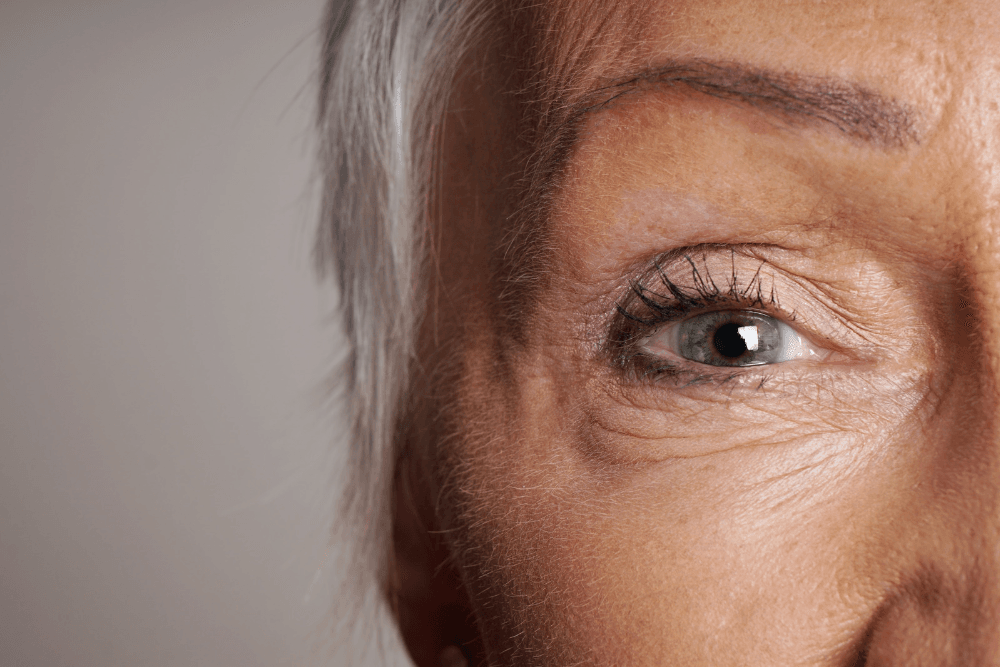
These are fine lines that form horizontally on the upper and/or lower eyelid. They often give the eyes a sad, tired look. They can appear at any age.
In TCM, as the eyes are nourished mainly by the Liver, the Kidneys and the Heart, these wrinkles can therefore point to an imbalance in one or more of these organs.
Spiritual meaning: These wrinkles often indicate a disturbance of the Shen (Spirit), which is housed by the Heart. They can be a sign of mental or emotional exhaustion, linked to overthinking or overwork. Spiritually, they reflect a need to recentre one’s vital energy and to soothe inner stress.
Wrinkles around the mouth
According to traditional Chinese medicine, the mouth serves as the gateway to the Lung and the Stomach and is connected with the Spleen.
There are three main types of wrinkles around the mouth: lines at the corners of the mouth, nasolabial folds and cheek wrinkles.
Lines at the corners of the mouth
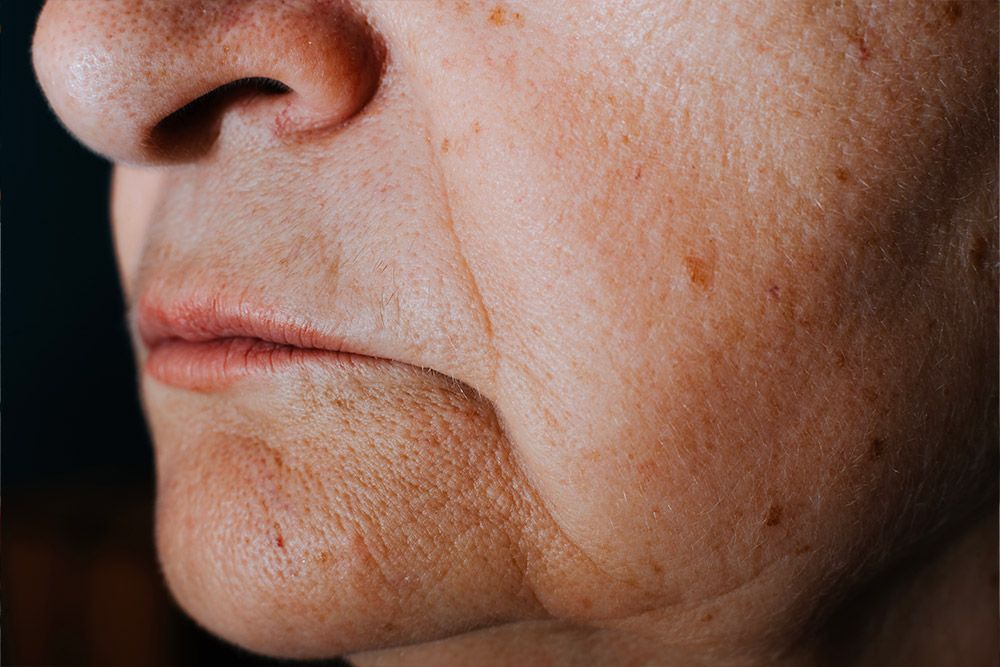
These are vertical wrinkles that appear at the side of the mouth and stretch from the corner of the mouth down to the chin, pulling the corners of the lips downwards. They give a sad look, and are sometimes called “upside-down smile lines”.
In TCM, these wrinkles invite us to reflect on gut health, and more particularly the health of the Large Intestine. They can also mark a weakness of the Liver: the more marked and deep the line, the more it will be associated with digestion. If it is only slightly marked, it will be associated with Liver problems.
If the more marked line is the one on the right, we will look for a link with the Gallbladder, and if it is the one on the left, with the Liver.
Spiritual meaning: These wrinkles symbolise an inability to express one’s sadness or grief. They reflect a need for emotional communication, often blocked by fears or inhibitions. Spiritually, they invite us to work on accepting and releasing negative emotions.
Smile lines
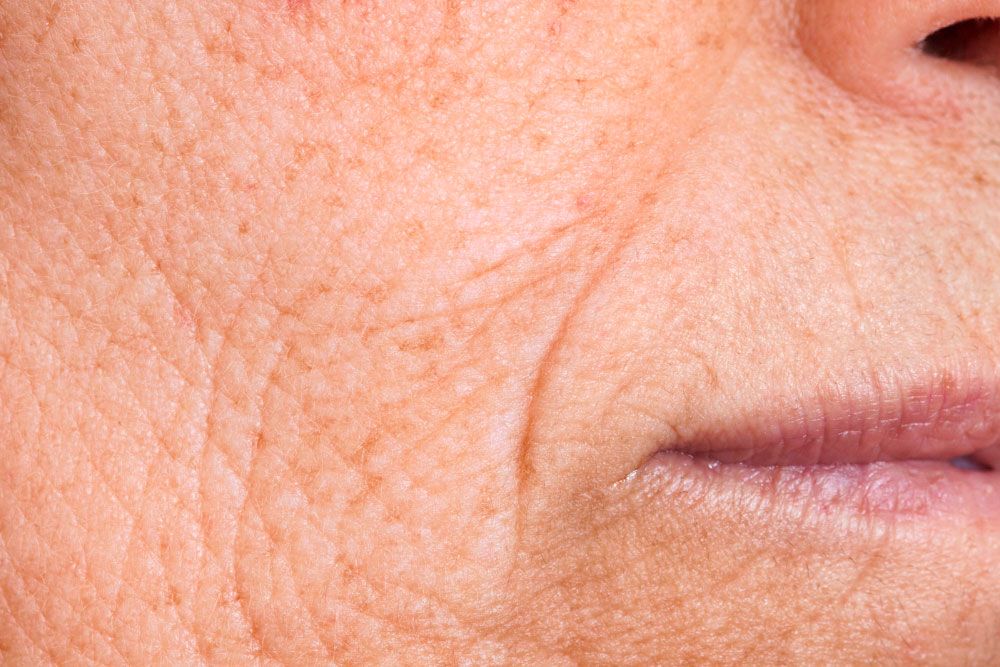
Also called “nasolabial folds” (because they follow the “nasolabial furrow”), these wrinkles take the form of two vertical folds running from the nostrils to the corners of our lips. They give the face a sad, stern look and generally appear around the age of thirty. However, it is not impossible for them to form earlier.
In TCM, these wrinkles are due to a disturbance of the Large Intestine and the Stomach. They can also point to digestive weakness or overindulgence in unsuitable foods.
Spiritual meaning: These wrinkles can indicate a difficulty in balancing giving and receiving in relationships. They reflect a need to let go and open up to more joyful experiences. Spiritually, they mark an inner struggle linked to control or perfection.
Cheek wrinkles
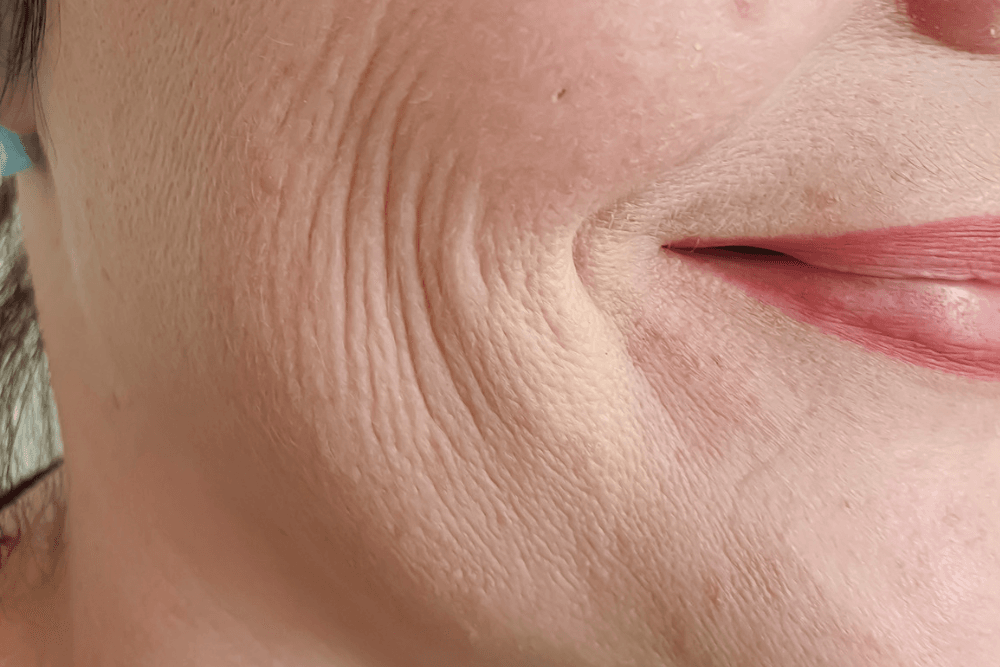
These are wrinkles that hollow the cheeks vertically. They can be reminiscent of scars and so give a rebellious look. There are two of them: the first starts at the eye and runs vertically across the cheek, while the second sits further back on the cheek.
In TCM, the cheeks paint an exact picture of the state of the respiratory and circulatory systems and are linked to the Lung: the right cheek corresponds to the right lung and, likewise, the left cheek to the left lung. Wrinkles on the cheeks can therefore signify a progressive Dryness of the Lung. They can also reflect an intestinal disturbance, more precisely in the Small Intestine and the Large Intestine.
Spiritual meaning: Cheek wrinkles can reflect emotional fatigue linked to the weight of responsibilities or to insufficient breathing (in both the spiritual and the physical sense). They signal a need to rediscover an inner lightness and to release buried emotional blockages, often linked to unmet expectations.
Whether they are crow’s feet, smile lines, wrinkles around the mouth or on the forehead, your wrinkles make you unique and tell your story. So, in traditional Chinese medicine, since wrinkles can sometimes be linked to an organ imbalance, it is important to take care of the health of your organs, notably with the help of the plants of the Chinese pharmacopoeia.