Luffa sponge: origins, benefits and the Chinese medicine perspective

Do you know the luffa sponge? It is often used as a plant-based sponge: in the shower, to scrub the body, or even around the house for certain cleaning tasks. But behind this simple natural sponge lies a plant with several lives.
Discovering luffa: its origins and transformation
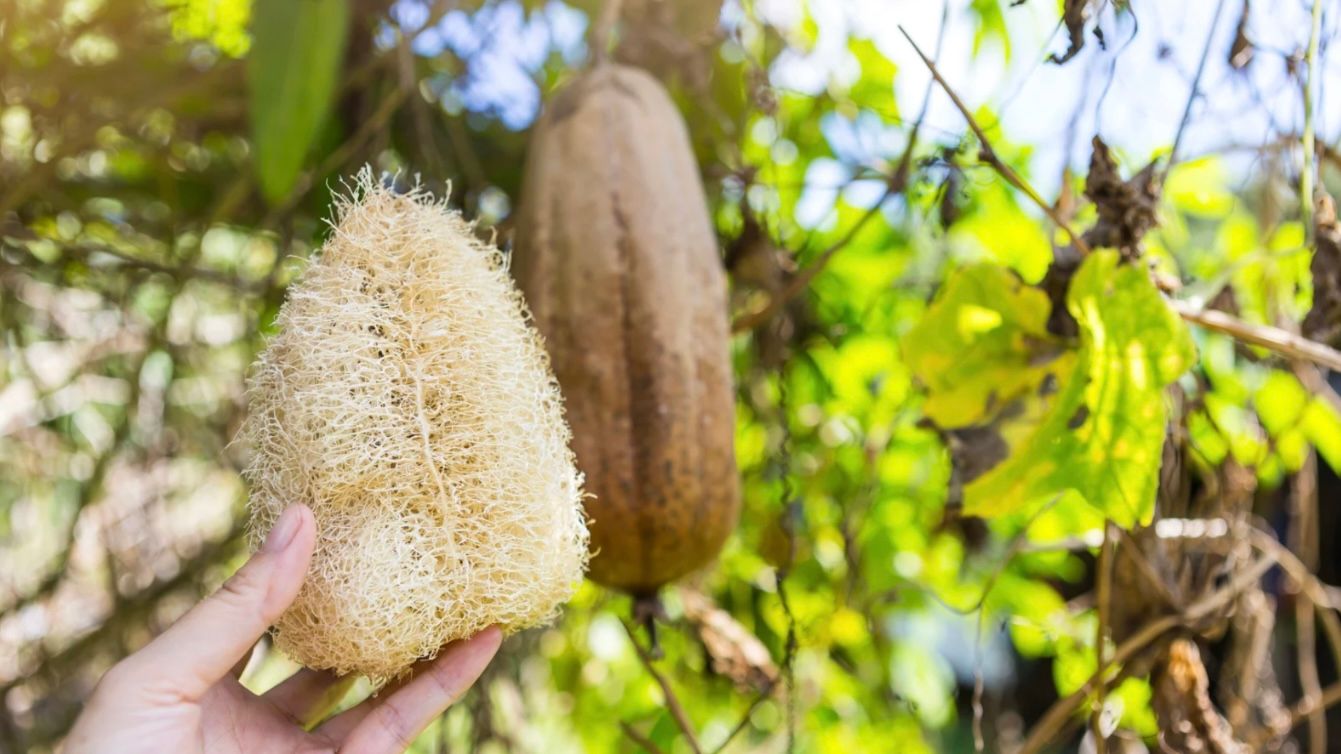
Luffa is a plant of the cucurbit family, closely related to squash and cucumber. In several Asian countries, its young fruit is cooked as a vegetable.
Then, as it ripens, it transforms: its flesh dries out and gradually disappears, revealing a light, airy and sturdy inner fibre. Once cleaned and dried, this fibre becomes the luffa sponge we use today.[1]
In Europe, it is known mainly as the sponge gourd, the vegetable sponge or natural luffa. It is appreciated as a shower accessory, for exfoliating the body, and also for certain household cleaning tasks.
In China, this fibre is also known in another context: that of plant tradition and Chinese medicine. To understand this perspective, we need to take a closer look at its Chinese name: Si Gua Luo (丝瓜络).
The luffa sponge in Chinese medicine
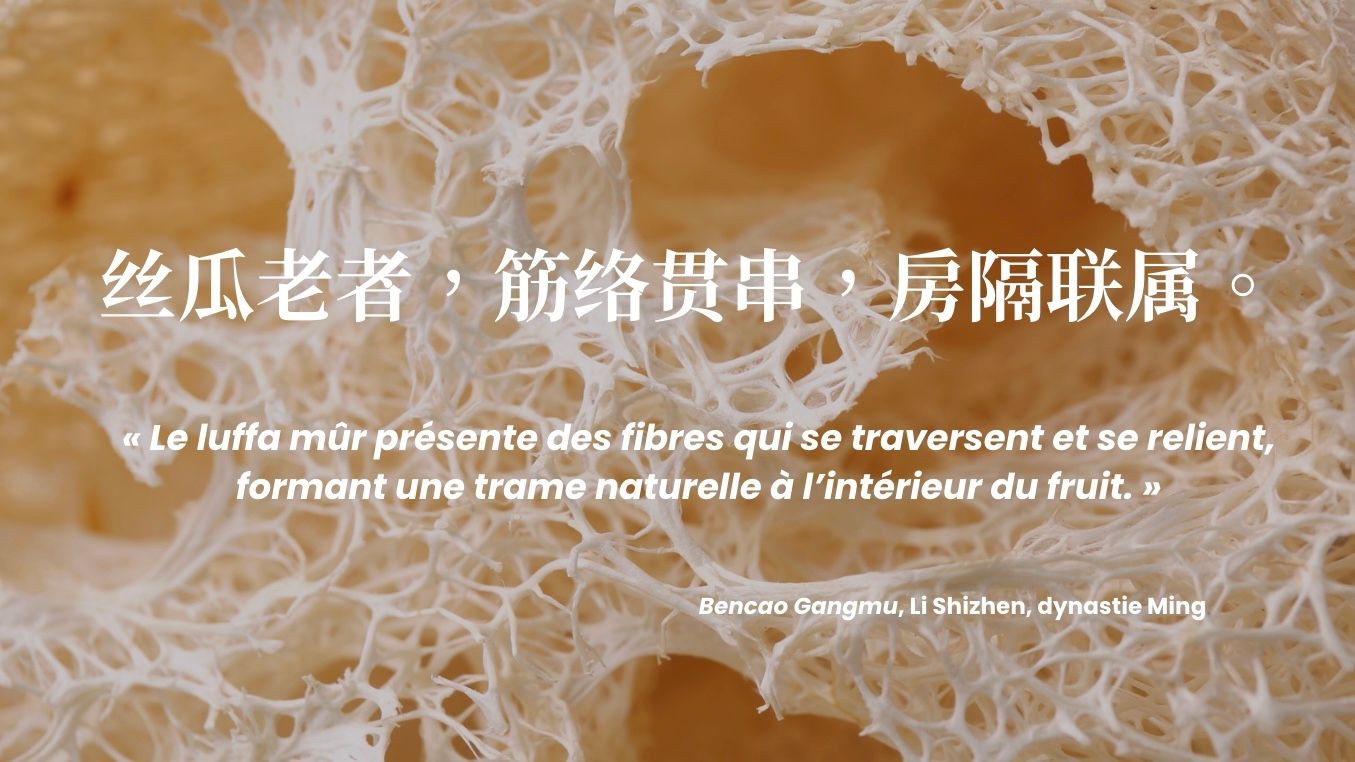
In Chinese, Si Gua refers to luffa, while Luo evokes a weave, a network, an interlacing. This name describes the luffa sponge very well: a structure of fibres that cross, connect and run through the ripe fruit.
In Chinese texts, this fibre corresponds to the vascular bundles of the ripe, dried fruit of Luffa cylindrica. The Bencao Gangmu, the great classic of Chinese materia medica written by Li Shizhen during the Ming dynasty, describes old luffa as a material whose fibres are linked to one another[2].
This shape has inspired a traditional reading centred on connection, passage and fluidity. In Chinese medicine, luffa fibre is described as sweet in flavour, neutral in nature, and associated with the Lung, Stomach and Liver meridians.
Traditionally, it is mentioned in connection with suppleness, ease of movement and harmonious circulation through the body's networks.
The luffa sponge: everyday uses and benefits
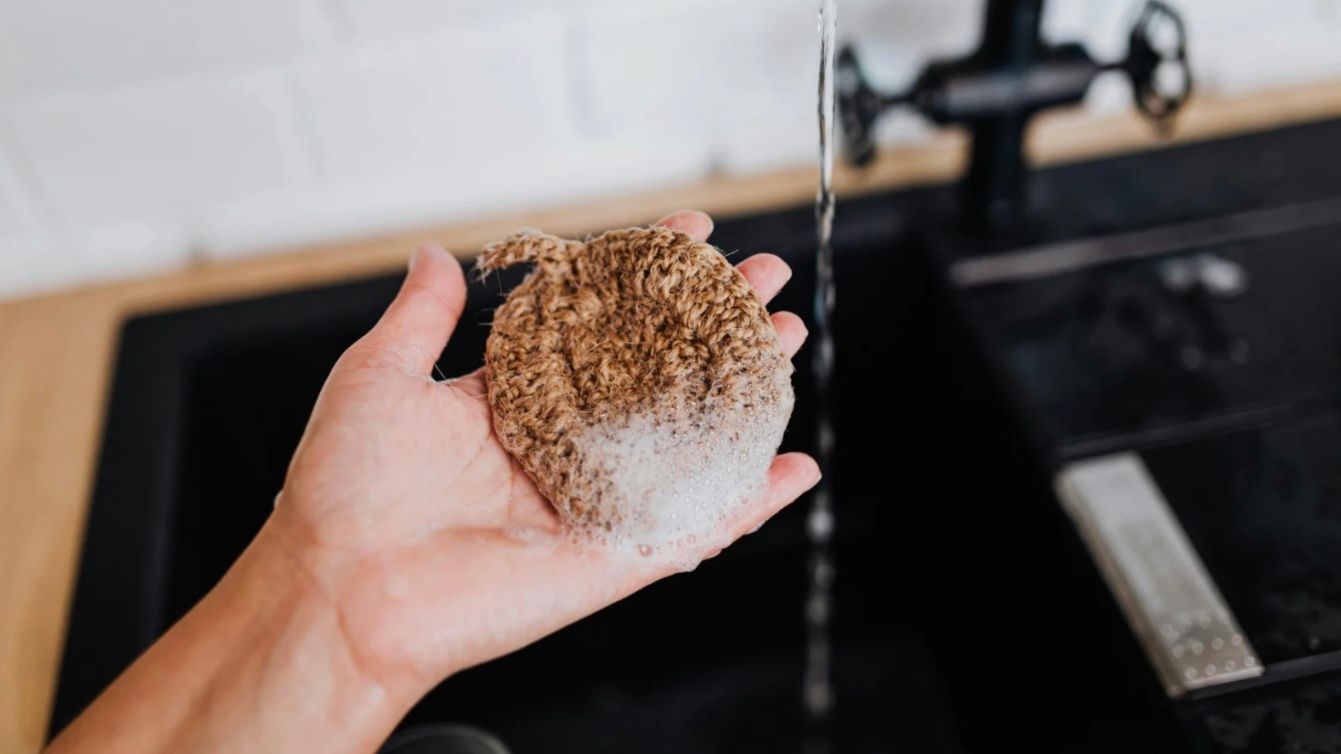
The appeal of the luffa sponge lies first of all in its texture. Dry, it is light and firm. Moistened, it softens while keeping a slight texture.
In the shower, it helps cleanse the skin, lather the soap and gently exfoliate the body. Used in circular movements, it helps remove dead surface cells and leaves the skin feeling smoother to the touch.
Depending on its format, it can also be used around the house: dishes, sink, worktop or washable surfaces. A plant-based alternative to synthetic sponges, in the bathroom as well as in the kitchen.
For good hygiene, keep one sponge for each use: one for the body, another for the house.
One plant, several lives
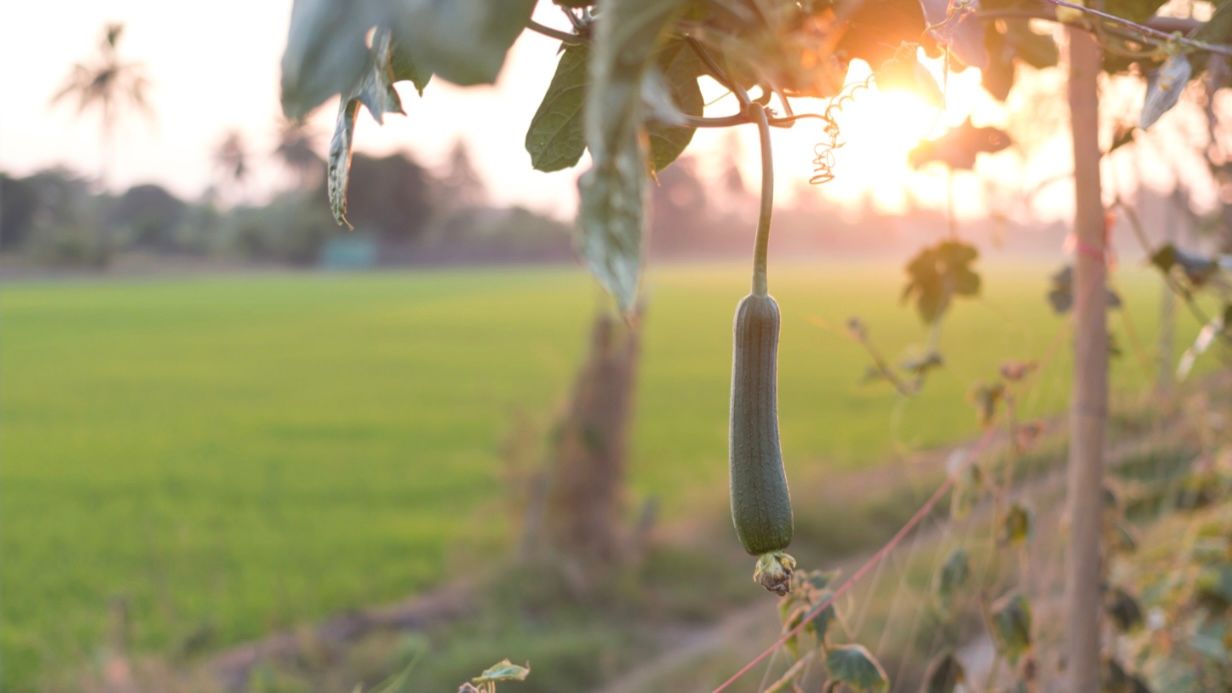
Young, luffa is cooked. Ripe, it dries and reveals a light, airy fibre, naturally ready to use. It is this natural transformation that makes it so remarkable: no synthetic material, no complex process, the fruit simply becomes a sponge.
References:[1] Pharmacopoeia of the People's Republic of China, 2020 edition.
[2] Bencao Gangmu, Li Shizhen, Ming dynasty.
[3] Wikipédia France, "Courge éponge / Luffa aegyptiaca syn. Luffa cylindrica" — botanical origin and uses as food / plant-based sponge.