Chaga: Discover the Virtues of the Mushroom Nicknamed the “Gift of God”

A medicinal mushroom, chaga has been used for several centuries by the tribes of Northern Europe and Asia for its extraordinary virtues for the body.
Although it was discovered years ago, it was not until very recently that scientists decided to look into this small organism and identify its true health benefits.
Discover everything you need to know about this mushroom, its use in traditional Chinese medicine and 3 delicious recipes for enjoying it while treating yourself!
The origins of chaga
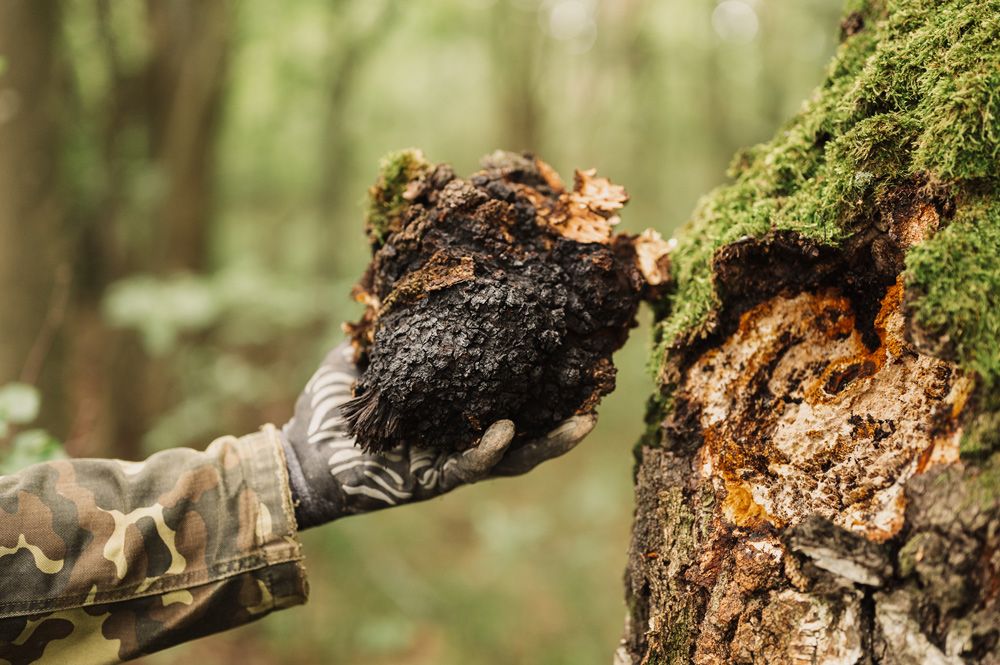
A member of the Hymenochaetaceae family, chaga originates from Russia. It is said that the Grand Prince of Kyiv, Vladimir I Sviatoslavich, regularly drank infusions of this astonishing mushroom.
Chaga grows on birch trunks and is known for its resistance to very low temperatures. With its strange appearance and irregular shape, it is rich in melanin and is often compared to "a lump of burnt charcoal”.
Nicknamed the “king of plants” in China, the “gift of God” in Russia and the “diamond of the forest” in Japan, this legendary mushroom is deeply rooted in Asian medicinal traditions. Prized for centuries, it is associated with balance, longevity and vitality in traditional pharmacopoeias such as Chinese and Russian medicine.
So although it is not much to look at, chaga is a legendary mushroom whose properties are appreciated throughout Asia. What use does Chinese medicine make of it?
Its use in traditional Chinese medicine
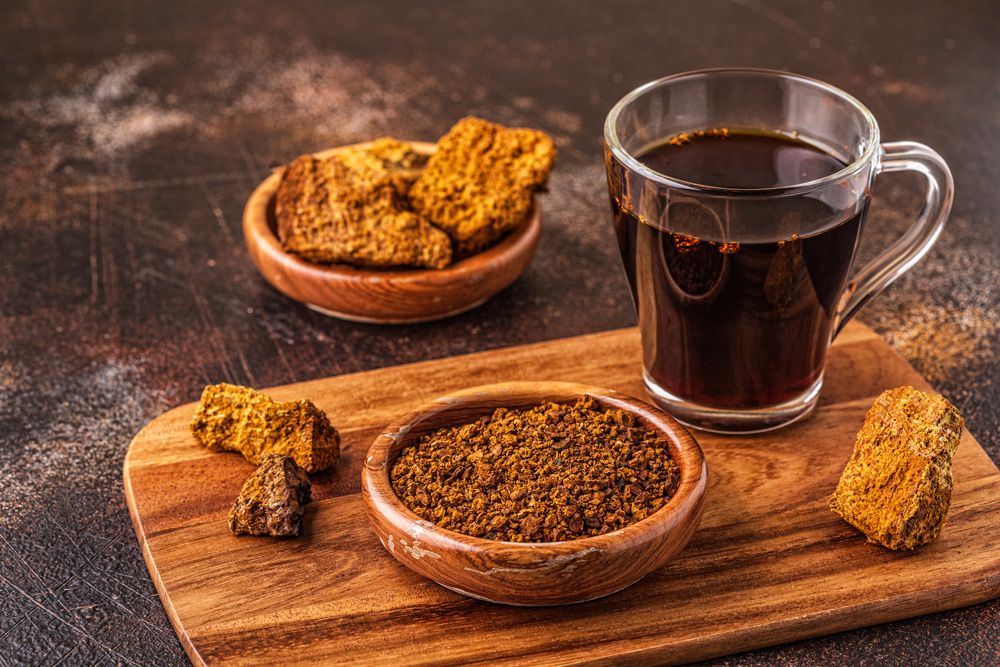
Warm in nature and bitter in flavour, chaga is known in Chinese medicine as Bai hua rong.
Bai hua rong is used in traditional Chinese medicine because it helps clear Heat, drive out Dampness and regulate the circulation of Qi. It also helps tonify the Spleen and nourish the Stomach and the Liver.
Often described as the “immunity mushroom”, chaga is associated in TCM with vital energy (Qi) and traditionally used to support periods of fatigue or seasonal transition. As well as being used to support periods of chills or seasonal fragility, chaga also supports digestive comfort. In some cultures it is also valued for its ability to boost overall vitality and promote better emotional balance during demanding periods.
A closer look at its rich composition
If chaga has one particular feature, it is that it is very rich in vitamins and minerals.
Chaga naturally contains many nutrients, including B vitamins (B2, B3, B5) as well as vitamins A, D and K. These micronutrients are recognised for their role in energy metabolism, the balance of the nervous system and the maintenance of certain physiological functions when present in sufficient quantities in the diet.
In addition, it contains many minerals, including potassium, magnesium, germanium, phosphorus, selenium, copper, zinc and even silver.
Chaga: 4 benefits of this mushroom for the body
Its traditional association with maintaining the body's natural defences

This mushroom is particularly recognised in Asian and Russian traditions for its link with the natural defences. It contains compounds such as polysaccharides and beta-glucans, also found in other mushrooms such as reishi (ling zhi in Chinese).
In traditional herbal medicine, chaga is considered a tonic mushroom, valued for its wealth of nutrients such as copper, zinc, selenium and vitamin D. These naturally occurring elements reinforce its image as all-round support during changes of season.
Its action against fatigue

Besides its benefits for our immune system, chaga is effective against fatigue thanks to its high vitamin B3 content.
Indeed, a study carried out in 2015 confirmed the positive effects of chaga on fatigue1: by helping to reduce levels of lactate and urea nitrogen, substances whose build-up can lead to a drop in energy, chaga increases physical and mental fitness.
Its role in carbohydrate metabolism

Chaga is also a promising mushroom for managing blood sugar problems. Its beneficial effect on this condition is largely attributed to the polysaccharides it contains, which can help reduce sugar levels in the blood as well as fatty acids.
Its benefits for the digestive system

Chaga naturally contains fibre and bioactive compounds that make it an ingredient traditionally valued to support digestive comfort. It is sometimes used in ancient pharmacopoeias to support intestinal balance, particularly during periods of dietary imbalance.
Zero waste: how to cook chaga once it has been infused
For our part, we recommend infusing 5 to 10 g of chaga in a large cup of hot water (80℃) for 5 minutes, then drinking the infusion.
Eating chaga, its infusion and its powder can be another equally interesting way to enjoy its benefits.
Find out what to do with your mushrooms once you have infused them: we share 3 very simple recipes with you.
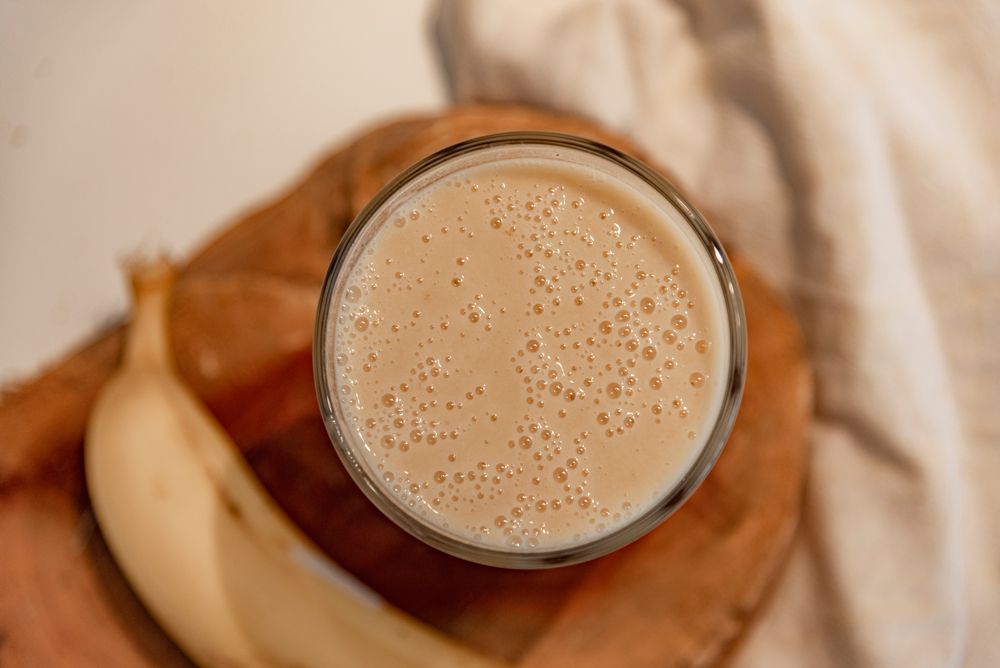
Chaga smoothie
Ingredients
- 2 bananas
- 1 handful of cashew nuts
- 2 teaspoons of honey
- 1 teaspoon of chaga powder
- A little coconut milk
Method
Blend the 2 bananas, the milk, the honey and the chaga, then pour the mixture into a glass. Next, add the cashew nuts on top and enjoy!
Chaga chai latte

Ingredients
- ½ cup of chaga infusion
- 1 teaspoon of cinnamon
- 1 star anise
- 4 cardamom pods (lightly crushed)
- 2 cloves
- 1 cup of milk
Method
Boil the spices in ½ of the chaga infusion for about 5 minutes. Meanwhile, froth the milk, add it to the spiced infusion and enjoy!
Chaga iced coffee

Ingredients
- 1/2 teaspoon of ground cinnamon
- 120 ml of water
- 100 ml of milk
- 1 teaspoon of sugar
- 1 teaspoon of chaga powder
- Ice cubes
Method
First, infuse the chaga powder with the ground cinnamon in 100 ml of heated water and leave to stand for 5 minutes. Next, put a few ice cubes in a glass and add the milk, the sugar and the chaga and cinnamon infusion. Stir well. Finally, sprinkle your iced coffee with a little ground cinnamon and enjoy!

Exceptional in every way, chaga is a mushroom well known in mycotherapy, with effects that are second to none. Besides its therapeutic properties, it is also highly prized in cooking.
Ideal for preparing for the arrival of the cold seasons, this rather off-putting-looking mushroom is one of the natural remedies to keep in our cupboards!
