- Spring doesn't make you allergic: it reveals an imbalance
- How TCM understands spring allergies
- The Liver: when momentum becomes irregular
- The lungs: the first line facing spring
- Digestion: when congestion sets in
- Regaining balance in spring: support rather than struggle
- An emblematic formula: Yu Ping Feng San
- A soothing, supportive recipe: millet porridge with astragalus and Chinese yam
- Self-massage: helping energy to flow

Spring doesn't make you allergic: it reveals an imbalance
A runny nose from the moment you wake up, repeated sneezing, eyes that sting or water for no apparent reason. Your throat is scratchy, your head feels heavy, and a strange fatigue sets in, as if the body were both on alert and overwhelmed.
Every spring, these symptoms come back for millions of people. They sometimes appear overnight, even though you felt fine a few weeks earlier. Nature is in bloom, the air is warming up… and yet the body reacts, gets irritated, defends itself.
Western medicine then speaks of seasonal allergies, pollen and immune reactions. But from the point of view of TCM, these signs tell another story. They are not only linked to what is circulating in the air, but to what is circulating (or not) inside the body.
How TCM understands spring allergies
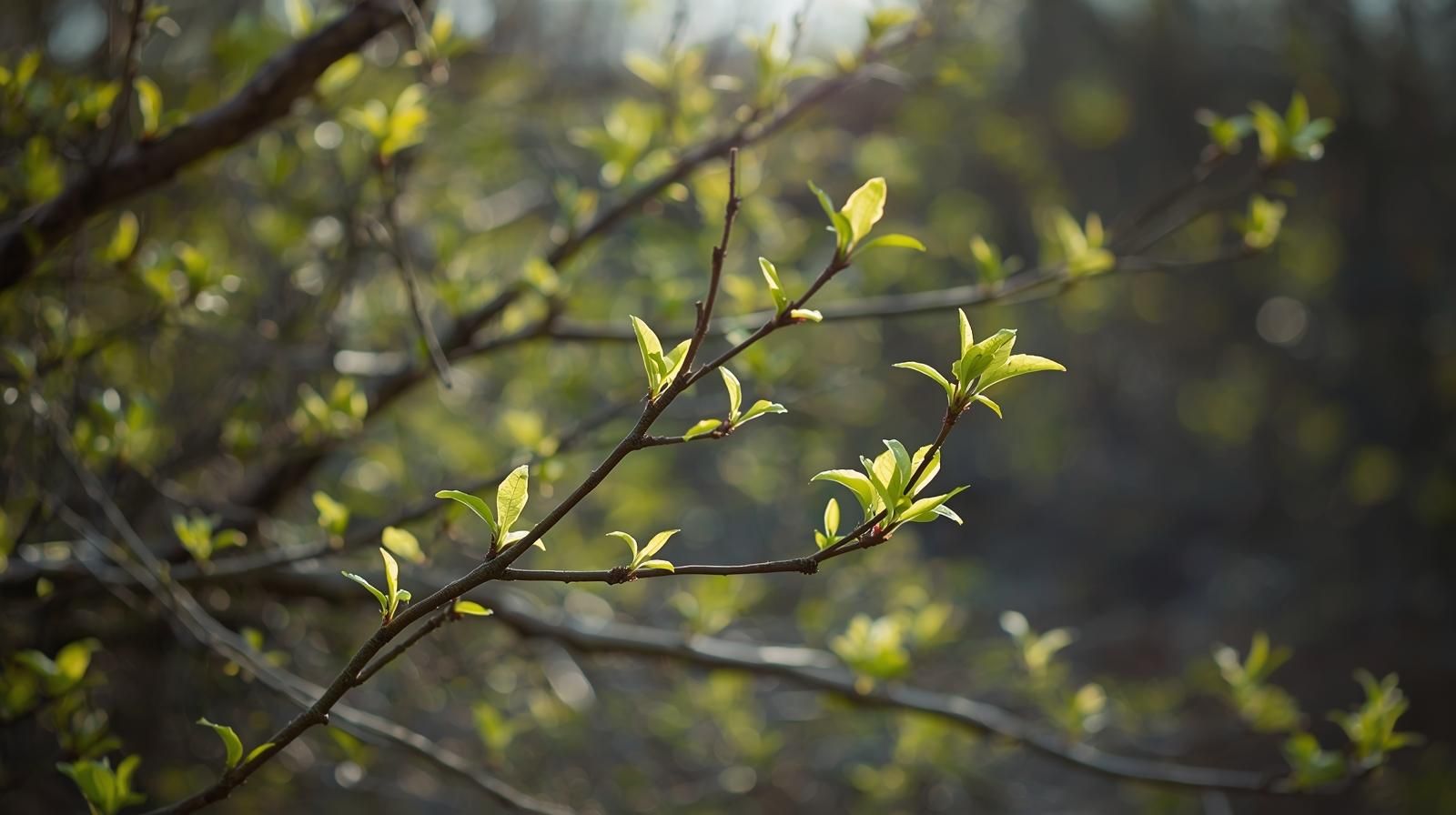
In TCM, spring allergies never have a single origin. They appear above all when the body struggles to keep up with the change of season.
The Liver: when momentum becomes irregular
The Liver plays a central role. It is what allows energy to flow freely and adapt to the change of season. When it is still slowed down by winter, the momentum of spring struggles to take hold. You may then feel lingering fatigue, a sense of heaviness, difficulty getting going, both physically and mentally.
Conversely, when this energy restarts too quickly, without being properly regulated, the movement becomes more chaotic. Headaches, increased irritability, a feeling of pressure in the upper body or diffuse tension may appear, like energy rising without finding its way.
The lungs: the first line facing spring
But the Liver is not the only one involved. In spring, breathing is often the first to react. The air becomes laden with pollen and more mobile particles. If the body's protective capacity is weakened, these particles get in more easily. In TCM, this protective function is closely linked to the lungs.
Reactions then appear where the body is most exposed: repeated sneezing, a runny or itchy nose, a feeling of irritation in the throat, red or watery eyes. The body tries to expel and defend itself, sometimes excessively.
Digestion: when congestion sets in
Digestion also plays a part in these spring reactions. When the transformation of fluids is slowed down, the mucous membranes become more sensitive. Discharge can become heavier, the nose more often blocked, the head heavier, with a general feeling of congestion. In this context, spring energy, already on the rise, can accentuate these signs. It is not a single cause, but a terrain that encourages symptoms to recur and persist.
In this reading, it is neither a question of a system that is "too weak" nor "too strong". It is a question of a disturbed balance, at the very moment when the body is changing rhythm. Spring allergies are therefore not enemies to be fought at all costs. They are often a sign that an adjustment is needed, to help the body regain a smoother, more harmonious circulation in tune with the season.
Regaining balance in spring: support rather than struggle
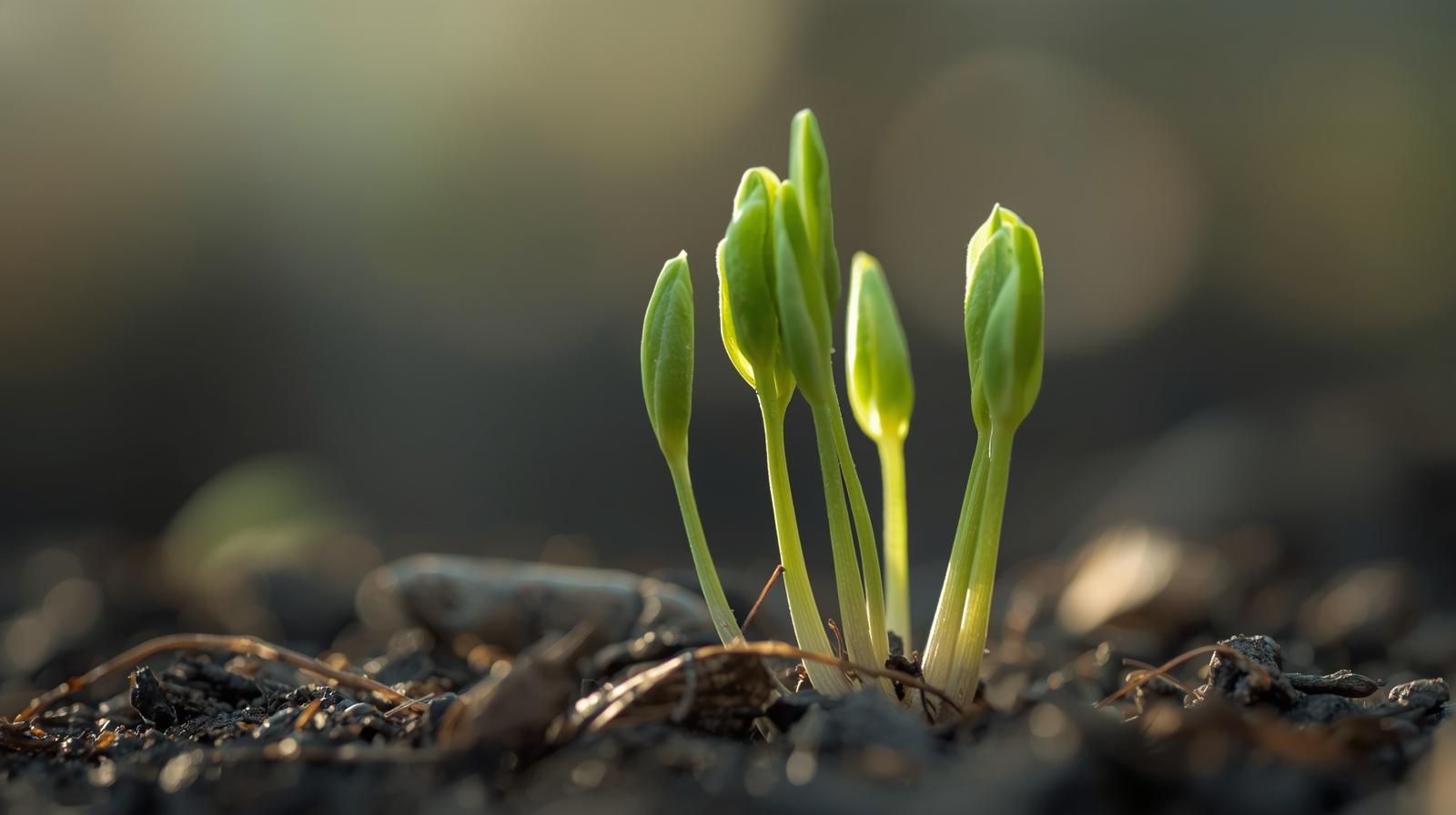
Faced with spring allergies, the reflex is often to want to block, silence and suppress the symptoms. TCM offers another reading: rather than fighting what is being expressed, the idea is to support the terrain and help the body get through the season better.
An emblematic formula: Yu Ping Feng San
In Chinese tradition, one of the best-known formulas for supporting seasonal sensitivities is called Yu Ping Feng San, literally "the jade screen powder against the wind".
Handed down for centuries, it rests on a simple idea: rather than fighting what comes from outside, strengthen the body's capacity to protect itself. Traditionally, this formula is used by people who are more sensitive to seasonal changes: those who "catch the wind" easily, tire quickly or react more to pollen and changes in their environment.
In TCM logic, Yu Ping Feng San does not seek to block reactions, but to stabilise the terrain, so that the body gets through spring with more solidity and regularity. It illustrates a Chinese approach to prevention, centred on the terrain and on adapting to change.

A soothing, supportive recipe: millet porridge with astragalus and Chinese yam
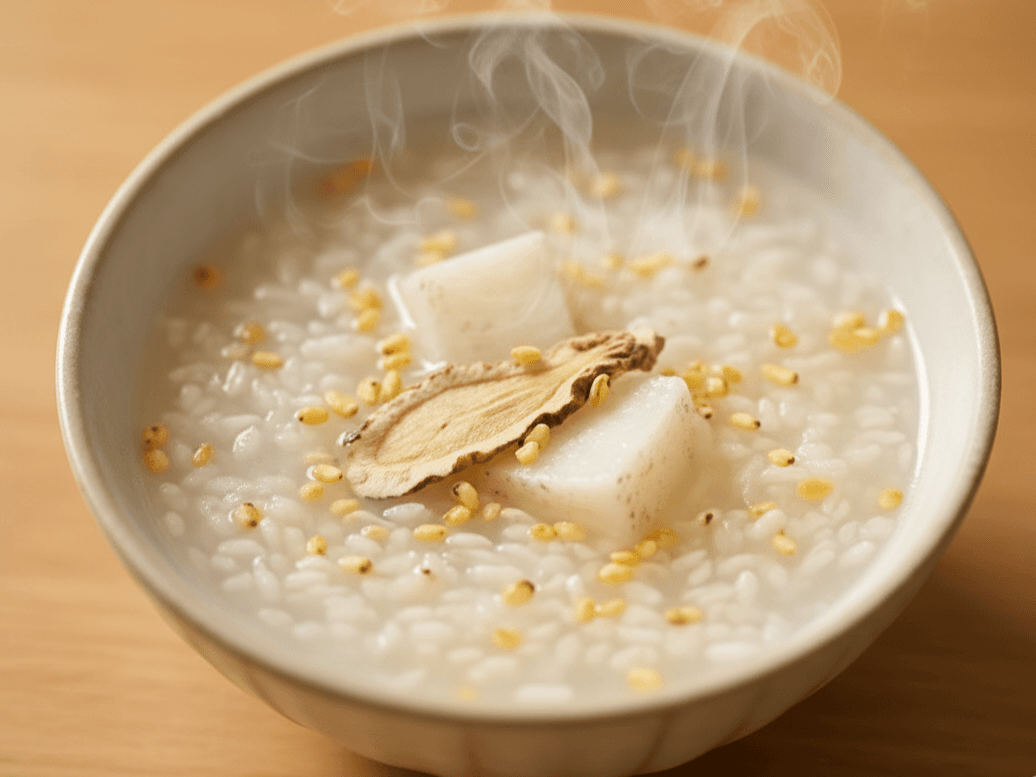
In Chinese tradition, spring is also a season for caring for the terrain through food. When the body tires quickly, the appetite is unsettled or reactions become more pronounced, people often return to simple, warm, easy-to-digest preparations.
Among them, this porridge combines millet, Chinese yam and astragalus (Huang Qi). It is traditionally used to support digestion, nourish energy and strengthen the body's defensive capacity, without weighing it down.
It is a gentle recipe, often recommended for people who are sensitive, tired or prone to seasonal imbalances.

Self-massage: helping energy to flow
In spring, a few simple gestures can already help relieve the discomfort linked to allergies, particularly in the face and head.
Two points are traditionally used to clear the airways and soothe tension:
- Yingxiang (迎香穴), located on either side of the nose, close to the nostrils
- Fengchi (风池穴), at the back of the skull, in the hollow at the base of the neck
With your fingertips, gently massage each point for 1 to 2 minutes, breathing calmly. The pressure should be firm but comfortable, without seeking pain. This massage can be done 2 to 3 times a day, especially in the morning or when symptoms are felt. These points are traditionally associated with clearing the nose, easing runny noses and mild headaches, and helping the body adapt better to changes in the weather.

In the TCM view, spring allergy symptoms are therefore no coincidence. They often signal an imbalance in the seasonal transition, a body that is struggling to leave winter behind and fully enter the momentum of renewal.
Understanding spring allergies from a TCM angle means learning to read these reactions differently: not as an inevitability, but as an invitation to restore circulation, balance and harmony with the season.
