- Qixi: love at the heart of Chinese legend
- The 4 precepts of true love in Chinese thought
- The health benefits of love
- Love in Traditional Chinese Medicine
- The importance of sexuality in a couple’s life
- Flagging libido? Plants in the service of love


What could be more beautiful than love? That feeling that makes life more beautiful, that deeply rooted affection that draws us closer to the person we love. There are different ways of falling in love: love at first sight, friendships that turn into love, love that grows slowly but surely, love rediscovered after the fact.
An essential part of life, love is commonly celebrated in many cultures. In China, every year the lovers’ festival, called Qīxī 七夕 and equivalent to Valentine’s Day, takes place on the seventh day of the seventh lunar month of the Chinese calendar (usually in July or August in the Gregorian calendar).
So what legend is Qixi linked to, what does love symbolise in traditional Chinese medicine, and what are the benefits of this feeling for our health?
Qixi: love at the heart of Chinese legend
Born of a legend, Qixi refers to the love story between a goddess (Zhinü) and a farmer (Niulang), who wished to crown their love with marriage. However, the goddess’s mother opposed it because Niulang was human. So she created a wide river to separate them: the Milky Way. Despite her opposition, the two lovers kept seeing each other and built a bridge across the Milky Way. Their story thus lived on and became part of Chinese memory. To pay tribute to this legend, as poetic as it is romantic, which symbolises unshakeable love, lovers celebrate the reunion of Niulang and Zhinü every year.
The 4 precepts of true love in Chinese thought
Besides Chinese love legends and the stories handed down from generation to generation, Buddhist thought holds that there are four elements that bear witness to true love. They are called the four immeasurables and are described as limitless. Combined, they give those who manage to master them the experience of a love stronger than anything, and they are most often explained as follows:
- Loving-kindness 慈: this means loving the other person and accepting them in all their differences. This feeling calls for deep self-mastery to better handle the situations we may face with our partner. It is a way of fighting anger, weakness and lies, and invites us to show kindness and sincerity towards the other.
- Compassion 悲心: this is the intention and ability to relieve your partner’s ills, transform their suffering and ease their sorrow. It is essential to free yourself from all judgement in order to help the other person and try to put yourself in their shoes. And to be truly helpful, trying to understand the other person is crucial.
- Joy 喜: “True love brings joy. It is the happiness we feel in simple pleasures. When we love, joy seems to surround us and fill us!” If our love is true, it will undoubtedly bring us pure happiness.
- Equanimity 舍: this is the ability to feel fully connected to the other person without clinging or being possessive. This precept symbolises freedom. To achieve it, it is essential to manage to keep some distance in the relationship without giving the other person a feeling of being abandoned.
Loving well involves trust, honesty, mutual support and compassion, and of course good communication is the foundation of any successful relationship. Following the four immeasurables will therefore lead to a lasting, sincere and healthy love! Love reassures us, makes us more creative and gives us well-being and stability. What is its relationship with traditional Chinese medicine? And what are the benefits of this feeling for our health in general?
The health benefits of love
Love in Traditional Chinese Medicine

There is no denying that love has a major impact on well-being. For centuries, Traditional Chinese Medicine has recognised that our emotions are inextricably linked to our health and have a considerable impact on our harmony. When it comes to love, people often speak of the “warmth of emotions”. In TCM, this feeling is naturally associated with the colour red, the Heart organ and the emotion of joy. And since we commonly describe people or events positively as “warm”, Fire is the element linked to love.
Chinese thought holds that it is good to be surrounded by the people who give us this feeling, and that we should seek to cultivate it in order to pass it on. Calm, deep joy comes from shared love and nourishes the Heart. Uncontrolled emotions, on the other hand, are the sign of a Fire that flares up and can therefore become harmful1.
What is more, according to Stéphan Lentzner, a practitioner of traditional Chinese medicine, “our immune system is a reflection of our emotional and mental state.” Love is said to be a guarantee of good health that helps us face illness and helps boost our immune system. However, when our love is not true, our immune system is threatened and sends us signals through physical reactions and psychological pain, bringing up feelings such as fear, guilt, accusations, rejection and hurt. So anything that is not “true love” weakens our immunity.
The importance of sexuality in a couple’s life
Besides the importance of communication, it is essential to remember the importance of sexuality in couples’ lives. From the first encounters with a loved one, we experience real hormonal storms: dopamine, adrenaline, oxytocin and other endorphins. These hormones act as natural stimulants that reduce stress and anxiety. When we talk about sexuality, it is no small thing to mention the hormonal secretions that boost good mood and bring well-being.
According to the French Federation of Cardiology, sexuality is said to help reduce stress, generally lead to happiness and have many benefits for the heart. “Sexual activity helps eliminate toxins, increases the heart rate, activates blood circulation and strengthens the heart muscle”2. In couples, flagging libido is one of the main reasons for consulting a sex therapist. So which plants does the Chinese pharmacopoeia recommend to increase libido?
Flagging libido? Plants in the service of love
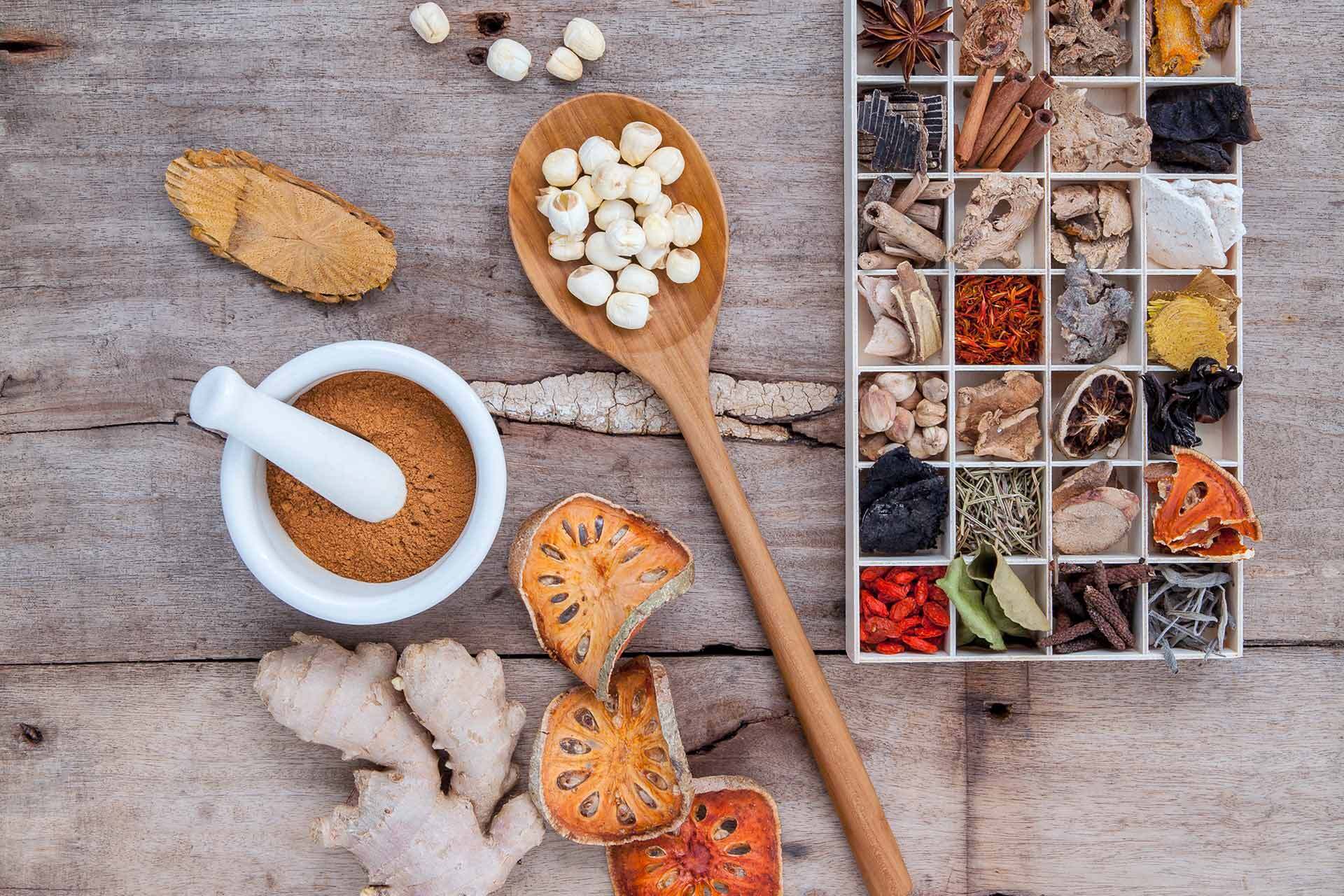
Medicinal plants can have many virtues for the body. Some are known for their use in achieving a harmonious libido. Specific to each individual, libido refers to sexual desire and activity. In women as in men, natural remedies can be real treasures for stimulating libido. Here is a selection of plants able to give you a more fulfilling sex life:
- Ci ji li (Caltrop): a true sexual tonic, it acts on sexual performance and on fertility.
- Maca (Ma Ka): besides its ability to boost the immune system, Maca acts on sexual disorders and regulates hormonal imbalances.
- Ren shen (Ginseng): a flagship plant of traditional Chinese medicine, ginseng promotes physical vitality and mental well-being. It also helps to stimulate libido, combat erectile problems in men and improve fertility.
- Dong Chong Xia Cao (Cordyceps): nicknamed the “Himalayan Viagra”, this mushroom has been used for centuries in TCM because it is an excellent libido stimulant and an effective solution for erectile problems.
By approaching health holistically, traditional Chinese medicine recognises the interconnection between body and mind, and between physical health and emotional well-being. It is often easy to give in to the emotions that surround love, such as joy, but protecting our Heart is essential, because intense joy can lead to psychological imbalances affecting Heart Qi. So take care of your heart, don’t let yourself be carried away by your emotions and, of course, always seek balance!