- The dialogue between the Heart and the Kidneys
- The Lung: when the breath is disturbed
- The Liver and Gallbladder: emotions and night-time serenity
- Regaining deep sleep
- 1. A hot foot bath before bed
- 2. A soothing infusion of calming herbs
- 3. Massaging the "Yong Quan 涌泉穴" point – the source of calm
- Our selection for regaining deep sleep

Light sleep and night-time awakenings: when the night can no longer calm the mind

The night seems calm, but sleep won't hold.
A dream that is too vivid, an imperceptible noise, a thought that keeps coming back… and you wake up for no reason.
This light sleep, broken by awakenings and floating sensations, is not the result of a restless mind, but of a body whose balance loosens during the night.
In Traditional Chinese Medicine (TCM), this form of insomnia corresponds to a disharmony of the Lung, Liver, Gallbladder and Kidneys, organs that each contribute in their own way to deep sleep.
When one of them goes out of balance, sleep becomes fragmented, and the mind loses its anchor in the night.
The dialogue between the Heart and the Kidneys
In the TCM view, the Heart governs fire (that of activity, consciousness and emotions), while the Kidneys hold water, the source of calm and deep vitality.
When these two organs stop communicating harmoniously, the heat of the Heart is no longer soothed by the coolness of the Kidneys: sleep becomes unstable, broken by awakenings, sometimes accompanied by feelings of heat.
In people who are tired, older or convalescing, the soothing energy of the Kidneys (what TCM calls Yin) weakens.
It can no longer temper the heat of the Heart: the body longs for rest, but the mind stays awake.
In other words: when the energy of calm runs low, a subtle heat stays awake, and sleep slips away.
When communication between fire and water breaks down, it is often the breath that is disturbed in turn.
This is when the Lung, master of rhythm and breathing, comes into play.
The Lung: when the breath is disturbed

The Lung, known as the "delicate" organ in TCM, connects the inside of the body with the outside world.
When the Lung weakens under the effect of stress, dryness or cold, it loses its ability to soothe the Po (魄), the part of us that is sensitive to emotions and dreams.
Sleep then becomes lighter, sometimes broken by awakenings.
Internal dampness or phlegm, produced by slow digestion, can also disturb the Lung's breath and make sleep unstable.
So when the Po is restless, the Shen can no longer find rest: the mind becomes restless in turn, and sleep loses its depth.
But sleep doesn't depend on the breath alone.
The emotions of the day can also make their way into the night, and then it is the Liver and Gallbladder that have their say.
The Liver and Gallbladder: emotions and night-time serenity

The Su Wen states: "The gallbladder is the organ of courage and decision."
In Chinese medicine, it works closely with the Liver, which regulates the flow of energy and emotions.
When anger, frustration or accumulated thoughts block this movement, the Liver tightens and the inner balance is disturbed.
The night then becomes a mirror of the day's tensions: vivid dreams, frequent awakenings, slight restlessness or vague worry.
The Gallbladder, for its part, plays a role in emotional stability and the quiet confidence that allows us to welcome sleep.
When it is weakened, it gives way to doubt, fear or hesitation: the sleeper becomes more sensitive and nervous, sometimes prone to startling awake or intense dreams.
So the Liver and Gallbladder form a complementary pair: the first calms the flow of emotions, the second maintains inner serenity.
When their harmony breaks down, sleep becomes fragmented, as if the mind refused to let itself be lulled by the night.
Regaining deep sleep
Understanding the imbalances is the first step. But to regain deep sleep, you need to relearn how to soothe inner heat, nourish the calm of Yin and let the breath soften.
Here are a few simple TCM-inspired gestures:
1. A hot foot bath before bed

Every evening, soak your feet in hot water for 10 to 15 minutes.
This gesture warms the Kidneys, stimulates circulation and helps energy descend to the lower body.
Add a handful of salt or a few dried rose petals to soften the tensions built up during the day.
Ideal for those whose sleep is light or broken by night-time awakenings.
2. A soothing infusion of calming herbs
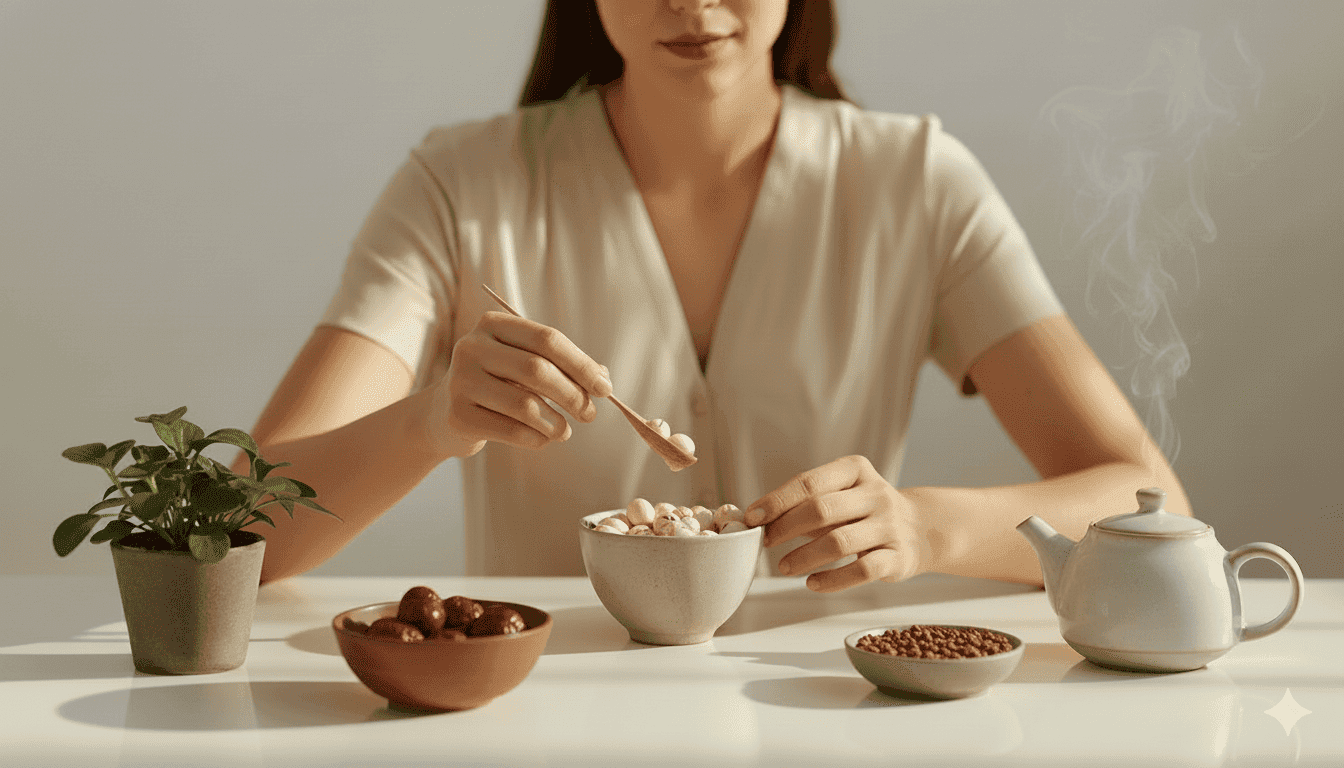
Herbs that nourish Blood and soothe the Shen promote deeper, more continuous sleep.
Fo-ti vine – Ye Jiao Teng: calms the Shen, relaxes the emotions and reduces night-time awakenings; recommended if you have trouble waking up or wake up tired.
Jujube seeds – Suan Zao Ren: nourishes Heart Blood, supports the Liver and promotes deep, restorative sleep. Also available as capsules or concentrated powder for easier use.
Prepare them as a gentle herbal tea and drink it warm 30 minutes before bed, so the body can fully absorb their benefits.
3. Massaging the "Yong Quan 涌泉穴" point – the source of calm
On the sole of the foot lies a point called Yong Quan, "the gushing spring", considered in Chinese medicine to be a gateway that anchors the body.
Gently massage this area with a few drops of warm oil before bed.
This gesture helps bring energy down, release tension in the upper body and promote deeper sleep.
This point is associated with the Kidneys, the symbol of inner calm.
Stimulating it helps bring the Shen back to tranquillity, so that the night becomes peaceful once more.

Our selection for regaining deep sleep
For those whose nights are restless despite fatigue, the Sleep Formula offers a natural, comprehensive answer: it soothes the Shen, nourishes Heart Blood and promotes deep, lasting sleep.
A calm mind, more restorative sleep, and a light-hearted awakening.

- Helps to fall asleep
- Improves the quality of sleep
- Alleviates nervous disorders