- The Dragon Boat Festival: an unmissable celebration in China
- A legend at the heart of Chinese memory
- The dragon boat race
- Associated traditions
- Zongzi, the must-have dish of the Dragon Boat Festival
- Realgar wine
- Xiang nang, the little scented pouches


The Dragon Boat Festival, or Duan Wu 端午节, is one of the best-known traditional Chinese festivals and is considered the biggest event in the Chinese festive calendar. Widely celebrated in China, the festival is marked by the famous dragon boat race and by the culinary traditions associated with it.
Discover the origins of this festival, so important in Chinese culture, and how it is celebrated.
The Dragon Boat Festival: an unmissable celebration in China

Also called the "Double Fifth Festival", the Dragon Boat Festival is celebrated on the 5th day of the 5th month of the Chinese lunar calendar (in May or June in the Gregorian calendar). Its Chinese name, translated as Duan “beginning”, Wu “sun”, marks, in terms of climate, the beginning of the great heat. In 2009, UNESCO inscribed this festival on the list of the Intangible Cultural Heritage of Humanity, because of the legend attached to it and the festivities that take place in various provinces of China1.
When Duan Wu is celebrated, we are steeped in the energy of summer: Yang has gradually increased until it reaches its peak and overtakes Yin. This phenomenon shows itself in nature as in human beings, and can be seen notably in plants as they flower and bear fruit. Duan Wu thus marks the day when the Yang of plants is at its strongest. Scientifically speaking, this is the period when most of the phytochemical compounds in herbaceous plants are at their richest. It is therefore the right time to harvest medicinal plants, since the therapeutic effects of plants are at the height of their development.
In human beings, this day marks the rise of Heat in the body and the movement of Energy from the Fluids towards the Surface.
A legend at the heart of Chinese memory
Generally speaking, Chinese festivals mean legends! Given its cultural importance, it is no surprise that this celebration has given rise to many legends.
However, the best-known legend remains that of Qu Yuan. A great patriotic Chinese poet, Qu Yuan was also a minister of the Kingdom of Chu during the Warring States period (475–221 BC).
At that time, the Kingdom of Chu was at war with the Kingdom of Qin. Qu Yuan called for resistance against the enemy and proposed an alliance with the State of Qi to strengthen Chu's military forces. Unfortunately, his efforts were eventually stifled, as another minister of the Kingdom of Chu opposed them. And so Qu Yuan was stripped of his duties and banished from the capital by the king.
In exile, the poet spent his days writing poems about the oppression he had suffered. Among them are the famous Li Sao, translated as “Sorrow of Separation”, and Huai Sha, translated as “Longing for Changsha”, poems that left a deep mark on the memory and history of the Chinese people.
A few years later, when Qu Yuan learned of the defeat of the State of Chu by the State of Qin, he succumbed to despair and took his own life by throwing himself into the Miluo River. It is said that after the poet's tragic death, the people of Chu criss-crossed the river in their boats to find his body. They began throwing rice balls into the water to feed the fish and stop them from devouring the poet's remains.
From this, two Duan Wu traditions were born: the dragon boat race and zongzi, cakes made from glutinous rice.
The dragon boat race
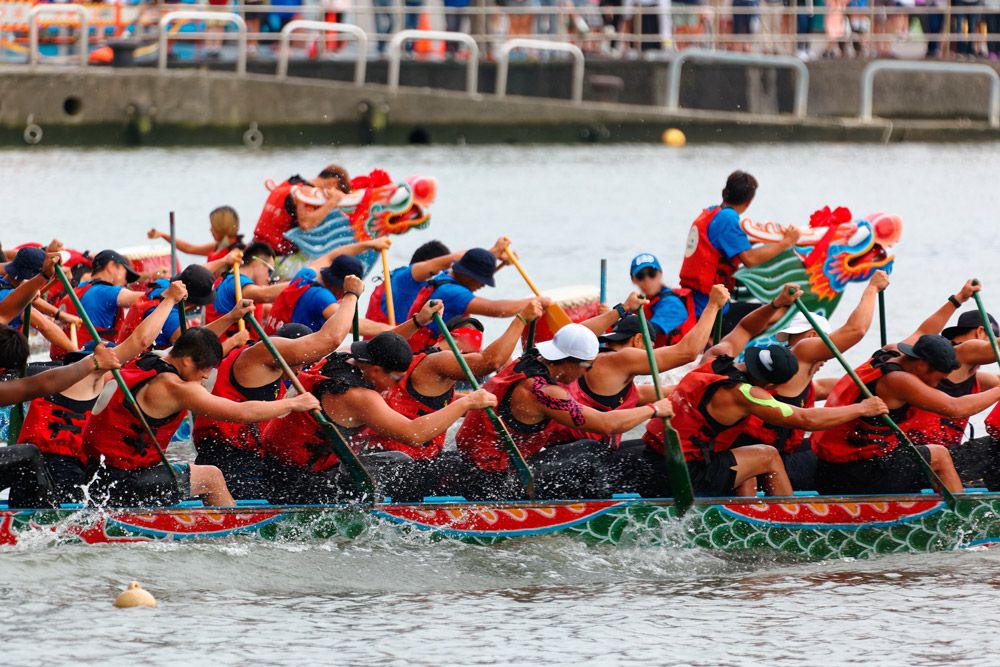
"They would rather leave the fields uncultivated for a year than lose the dragon boat race."
An annual race is held all over China as part of the dragon boat competition. Also known as the Qu Yuan Cup, the dragon boat race is without doubt the most popular custom of this festival. Since 1980, it has been on China's list of national sports competition events.
Ranging from 10 to 50 metres in length, each boat is decorated with a dragon's head at the bow and a tail at the stern, hence the name “dragon boats”.
The festival brings together athletes, but also farmers, who come from all over China and the world. During the competition, the teams paddle bravely to reach the finish line as fast as possible. One person beats a drum to set the rhythm of the race.
The event has spread worldwide and has become a modern international sport. It can be seen in every corner of the world, notably in Japan, Vietnam, Canada, Germany and the United Kingdom.
Associated traditions
Zongzi, the must-have dish of the Dragon Boat Festival
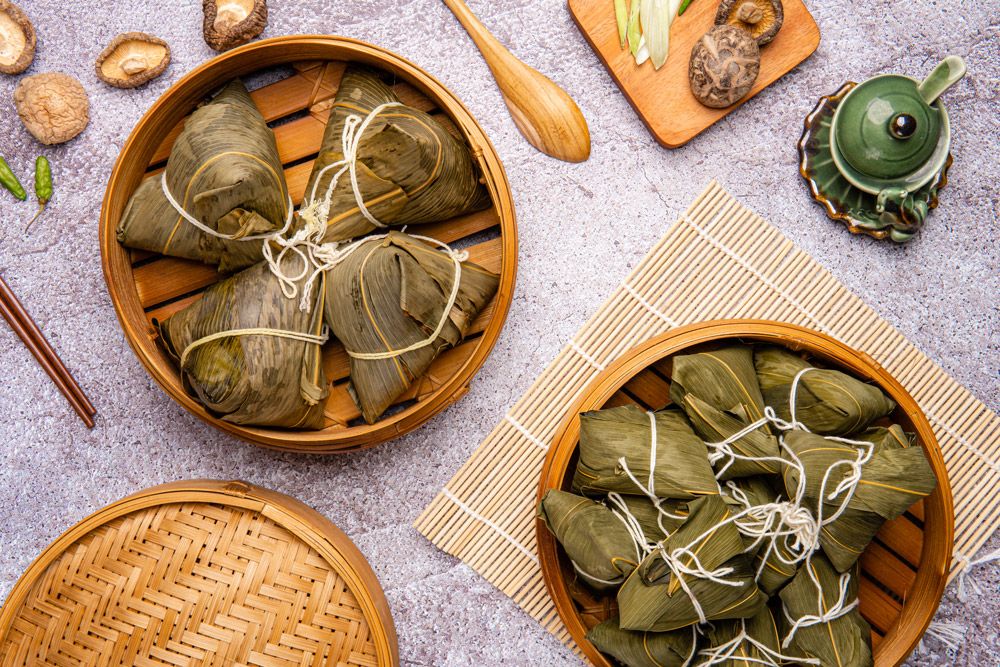
Most Chinese festivals are linked to a culinary speciality, and Duan Wu is no exception. For the occasion, Chinese people make zongzi: stuffed triangles wrapped in bamboo or reed leaves and then steamed. Various ingredients can make up the savoury filling, such as peanuts, prawns, pork, shallots or black fungus. The sweet filling, however, is made exclusively from red bean paste.
This Chinese custom has spread to several Asian countries, notably Japan and Korea, where zongzi are widely enjoyed…
Realgar wine
What is more, on this day that marks the rise in temperatures, pests, insects and snakes multiply. To protect themselves against illness, insects and evil spirits, it is customary to hang up pouches of aromatic plants to keep mosquitoes away and, in some regions of China, to drink wine mixed with realgar (an arsenic mineral) to keep snakes away. This practice is followed less and less, as serious research has shown that drinking realgar wine can be dangerous.
Xiang nang, the little scented pouches
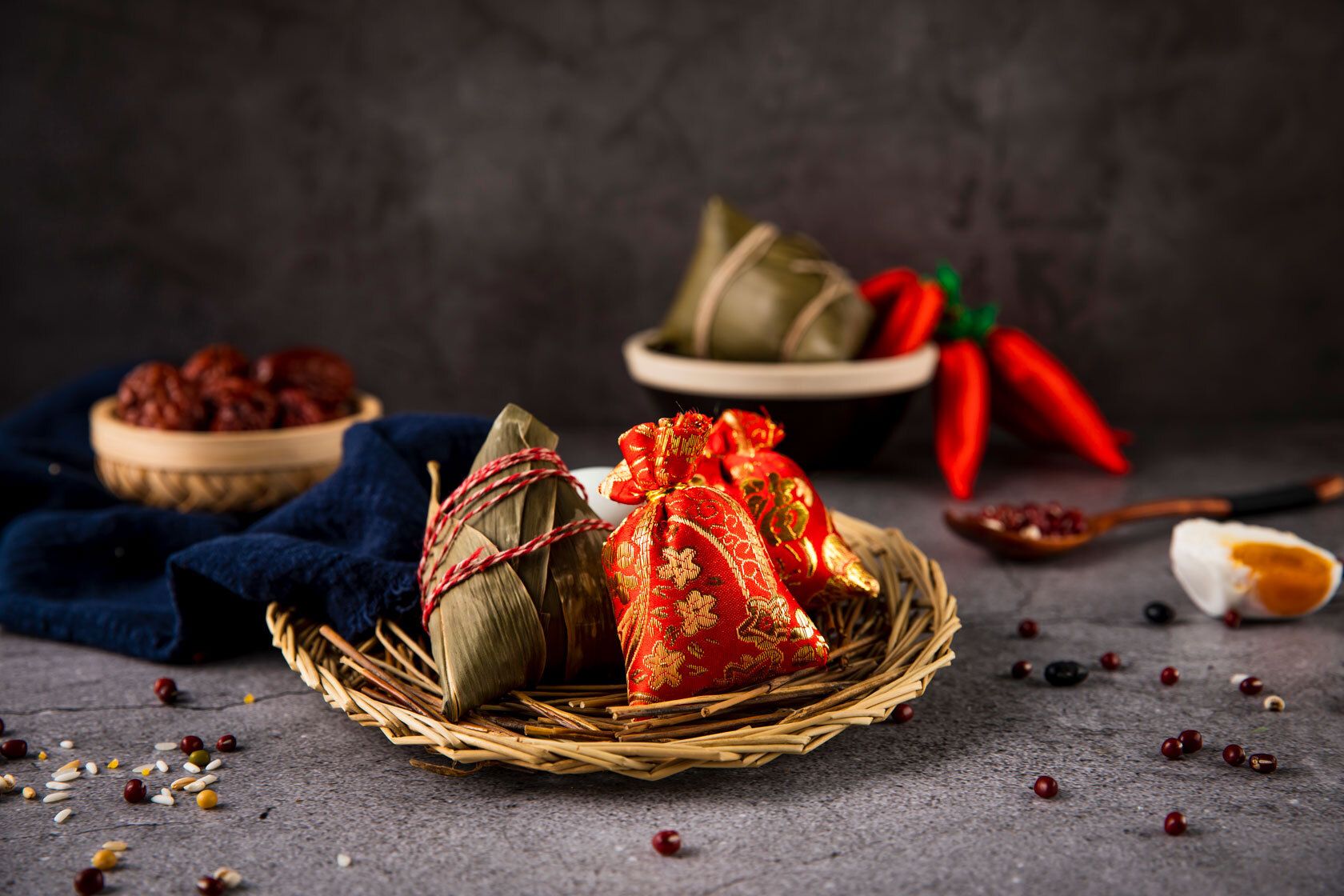
While the habit of drinking realgar wine is dying out, the custom of wearing little fabric pouches called Xiang nang, containing realgar, herbs (notably mugwort) and spices, is still very much alive. Scented sachets, or Xiang nang, are an ancient custom deeply rooted in Chinese culture. These little fabric pouches are worn to protect against negative energies and outside influences, while bringing fortune and happiness. Traditionally used during the Dragon Boat Festival (Duanwu), Xiang nang contain herbs and spices with purifying and protective virtues.
Xiang nang are handmade by local artisans, often in silk, satin or cotton, and come in several traditional colours such as red, yellow, green and blue. As well as being effective, these sachets add an aesthetic touch to Chinese culture. They are worn around the neck, hung from a bag or hung up in specific places such as bedrooms or offices.
Our scented sachets
For those who would like to bring a little of this Chinese tradition home, we have created two unique scented sachet designs:
- Summer scented sachet: A natural summer fragrance, specially designed to drive away dampness, stimulate the mind and keep away heat and mosquitoes. This sachet is a true seasonal ritual, bringing balance and freshness during the summer.
- Scented sachet for children: Inspired by the traditions of the Dragon Boat Festival, this sachet is designed to bring calm and protection to children. It keeps insects away, encourages peaceful sleep and surrounds little ones with a soothing, caring environment.
Combining tradition and well-being, these sachets are carefully made to offer a unique sensory experience, while recalling the customs and symbols of Chinese culture.
Whether to protect yourself from harmful influences or to bring a touch of everyday well-being, our scented sachets are an invitation to discover the richness of Chinese traditions while enjoying the natural benefits they bring.
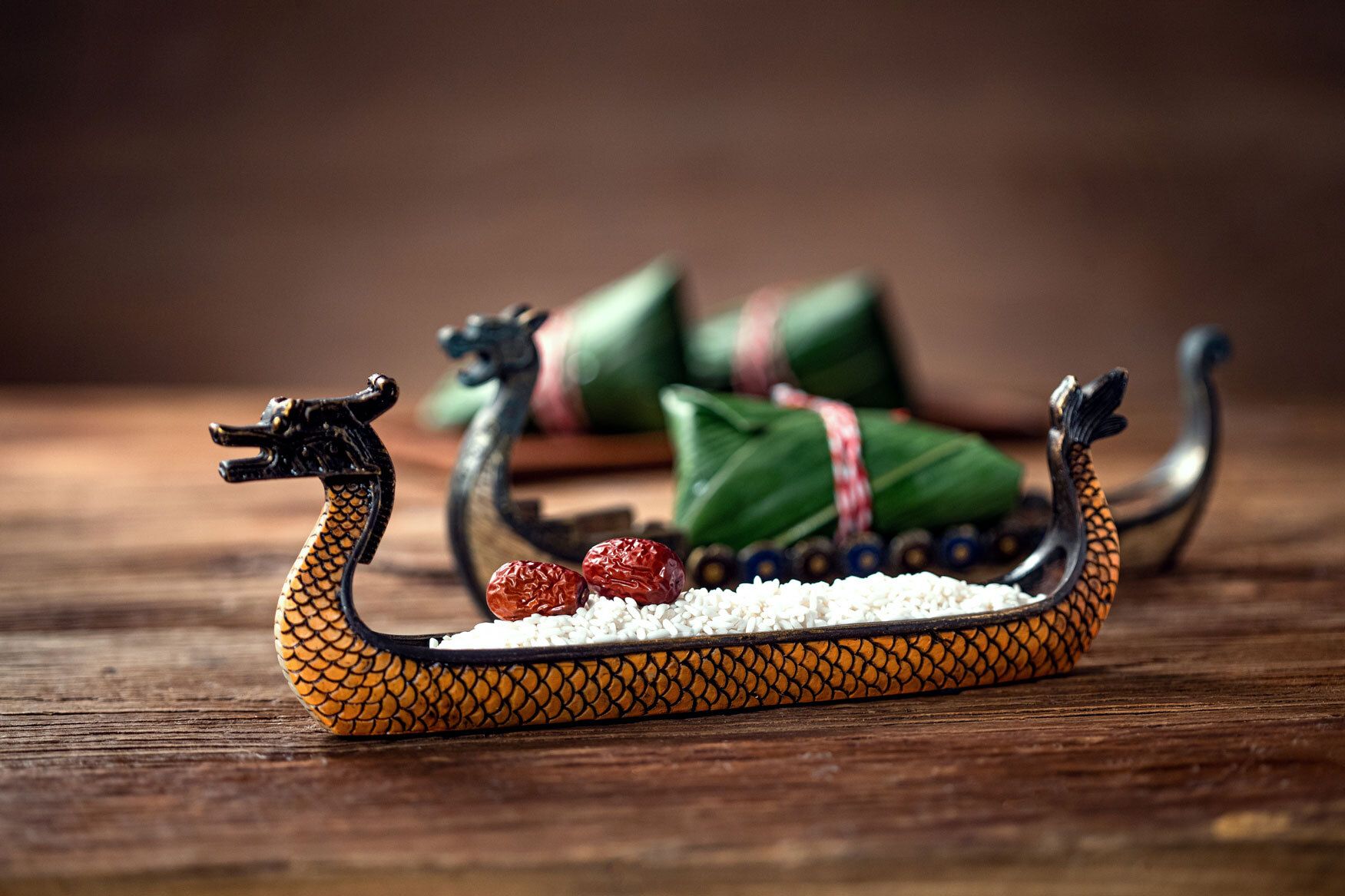
And so, combining good food, moments of competition, unity, joy and festivity, Duan Wu is an eagerly awaited moment of the summer season. As the customary saying goes on this occasion, "Gong xi fa cai!", meaning “Be happy and prosperous”!