- Know your stress level
- Regaining your balance in the face of stress: 6 approaches to manage stress better day to day
- 1. Chinese meditation
- 2. Towards a healthy, balanced diet
- 3. Exercise without breaking a sweat
- 4. The natural power of plants
- 5. Moxibustion combined with acupuncture
- 6. The role of family and friends
- Let go to hold on


What is your stress level? 6 TCM-inspired approaches to manage it better

Know your stress level
Stress doesn't always show itself dramatically. It isn't just a feeling of pressure or mental overload. It often creeps in more quietly: lighter sleep, fatigue that won't go away, unusual irritability, difficulty letting go, a sense of tension that becomes almost familiar. Before looking for ways to act, it can be helpful to take a moment to see where you stand today. Here are five simple questions. Simply add up the numbers that match your answers.
Question 1 / 5 · In the last month…
How often have you been upset by something that happened unexpectedly?
Whatever your score, one thing remains essential: stress does not always show itself in the same way, and it is not always overcome in the same way. For some people, it mainly creates tension. For others, it agitates the mind more. For others still, it drains them more deeply. According to Traditional Chinese Medicine, a build-up of stress is associated with a stagnation of vital energy, which can lead to an energetic "blockage" or disrupt the functioning of the organs. This reading of stress, which we explore in more detail in a dedicated article on its impact on the body, invites us to approach it differently.
So managing stress better is not only about "holding on" or "coping". It is also about understanding what the body needs to regain more stability.
Regaining your balance in the face of stress: 6 approaches to manage stress better day to day
There is no single answer to stress. Some approaches help bring tension down. Others support energy, get things moving again, or recreate a sense of support. The key is not to do everything at once, but to identify what can already help you, concretely, wherever you are right now.
1. Chinese meditation
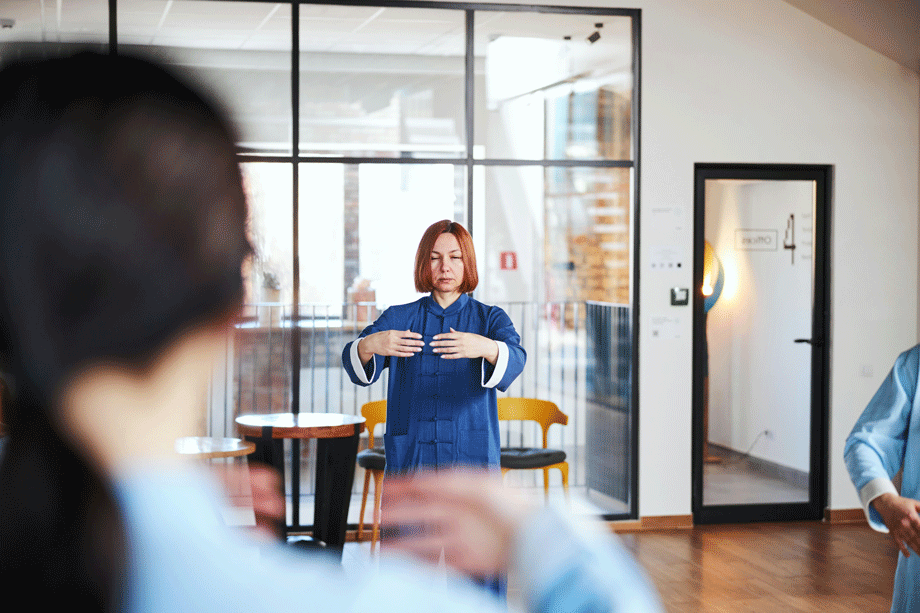
When stress sets in, the body often stays on alert. Even during breaks, something keeps turning: the breath stays short, thoughts keep going, tension never really comes down. Creating a space of calm does not necessarily mean "emptying your mind". It is more about giving the body a moment when it no longer needs to hold on, react or anticipate.
In Chinese tradition, some simple practices work in this direction. Meditation, widely adopted by many well-known figures such as Steve Jobs, Marion Cotillard, Katy Perry and Angelina Jolie, proves to be not only an effective way to relieve stress, but also a practice that aims to calm the mind, refocus on the present moment and cultivate inner peace.
Chinese meditation, including the tree posture, Zhan Zhuang, is a practice that goes well beyond a simple spiritual pause. It consists of standing in a stable posture while gradually releasing unnecessary tension. This seemingly very simple practice works on attention, grounding and breathing all at once. You can practise it in the morning, at lunchtime or in the evening, even on your commute. Here is a short video to help you understand this practice better:
2. Towards a healthy, balanced diet
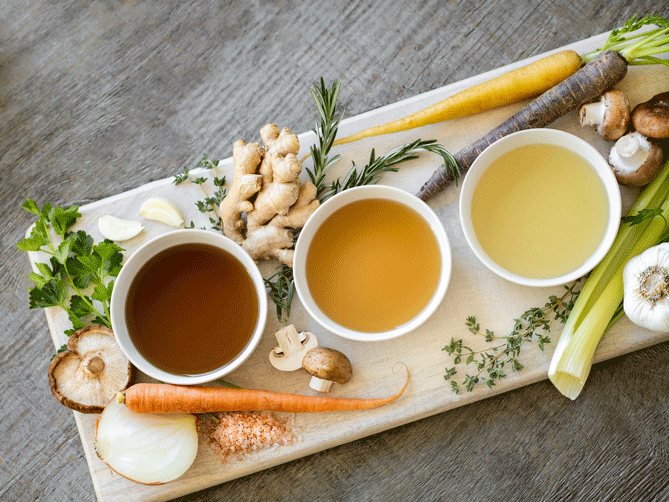
When stress sets in, our eating habits often change without us realising. We skip a meal, eat faster, turn to sugar or coffee to keep going… quick fixes that, over time, don't really support the body.
At times like these, the point is not to "eat perfectly", but to find something more stable, more in tune with what you are going through. Because not all states of stress are alike. Some drain you and leave a feeling of emptiness. Others, on the contrary, create tension, heat and restlessness that is hard to calm. In Chinese dietetics, these nuances are also reflected in flavours and in the way we eat[1].
When stress tires you out and wears you down deeply, the body often responds better to nourishing, regular meals and to sweet flavours, sometimes slightly salty or sour: a way of gently supporting what has been weakened.
Conversely, when stress shows up as tension or restlessness, lighter foods, slightly bitter notes and herbal infusions can help bring the pressure down and soothe what has built up.
Hot drinks can also play a useful role at these times. Tea, for example, offers both a gentle stimulation and a moment of pause, while some herbal infusions, such as passionflower, verbena or rose flowers, are traditionally used to support relaxation. Explore our selection of herbal teas carefully crafted by our experts by clicking on this link.

It is not about following a strict rule, but about subtly adjusting what you give your body. Sometimes, it is these discreet choices that already help you regain some balance.
3. Exercise without breaking a sweat
Stress doesn't only build up in the head. It also lodges in the body: a stiff neck, a tight chest, short breathing, a feeling of rigidity. At times like these, gentle movement can be more helpful than intense effort. By going to a park near home or the office, gazing into the distance and getting some fresh air, we can calm our mind.
For a more dynamic approach, Ba Duan Jin, also known as the Eight Pieces of Brocade, is a form of Chinese exercise aimed at strengthening the body and prolonging life. The sequence of 8 movements is simple to set up and takes only 10 to 15 minutes of your day. It fits perfectly into your morning routine or coffee break, to wake up body and mind and dispel mental fatigue.
4. The natural power of plants
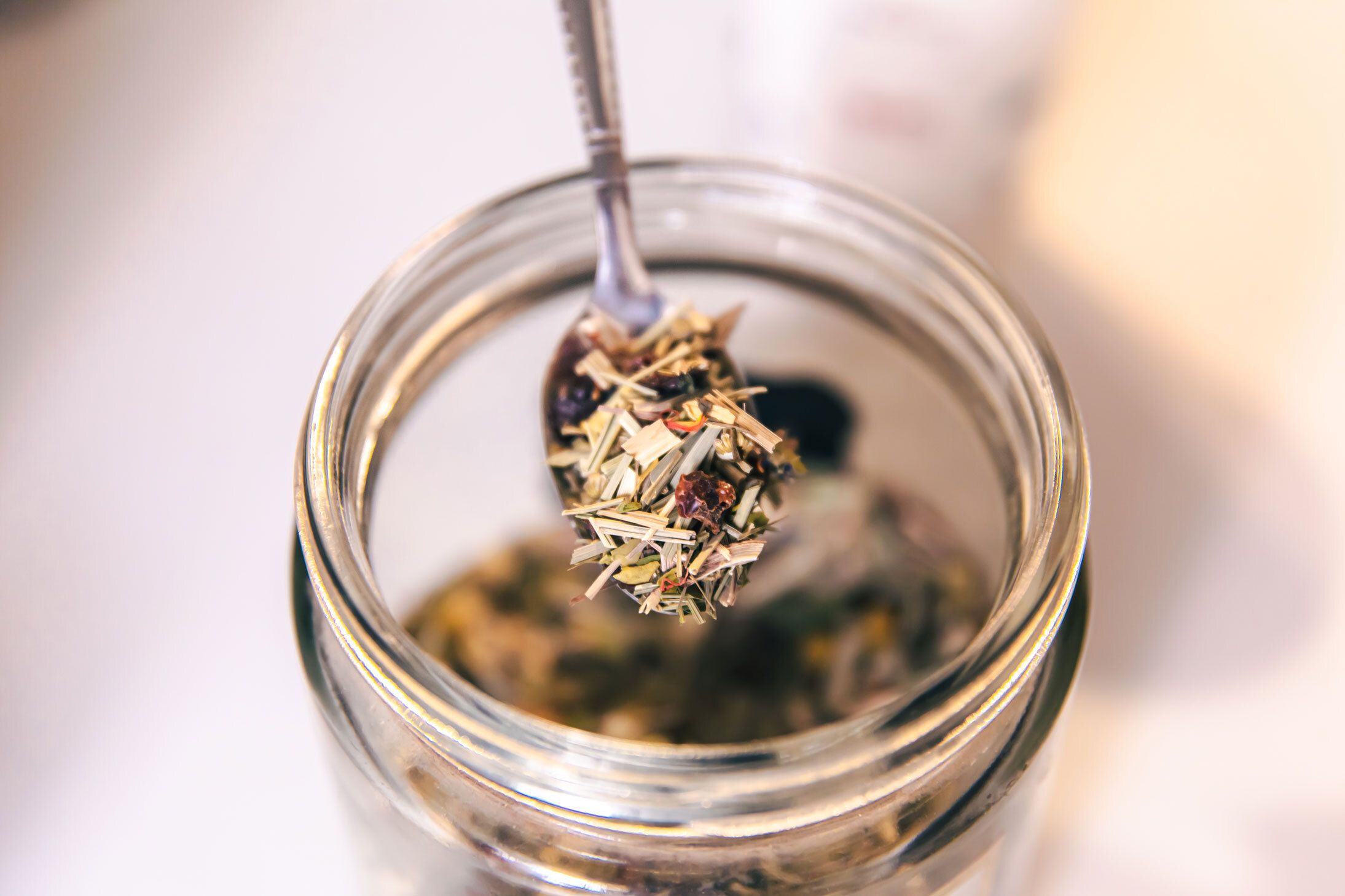
Turning to natural remedies is a healthy way to regain inner harmony. Indeed, numerous studies carried out over the years have shown the effectiveness of certain plants listed in the Chinese pharmacopoeia on stress and anxiety[2].
Here is a selection of herbs and formulas widely renowned in Chinese medicine for regaining tranquillity and promoting relaxation of body and mind:
- Bupleurum root - Chai hu: native to Asia, Chai hu is a very popular plant. Its roots are recommended to restore Liver Qi, which is responsible for emotional health in Chinese medicine. It therefore works to restore emotional harmony and to soothe stress.
- Xiao yao san: known for its soothing properties, this formula made up of 8 Chinese herbs acts on Liver energy to calm the mind, improve mood and reduce stress.
Studies have confirmed the effectiveness of Xiao yao san for emotional instability. Its effects on stress have also been the subject of much research, which has revealed the remarkable potential of this formula[3]. The results have also shown that using it in combination with antidepressants increases the effectiveness of treatment for depressive disorders.
- Rosebuds - Mei gui hua: rosebuds are appreciated for their pleasant fragrance and their relaxing properties. The Chinese pharmacopoeia recommends Mei gui hua to calm the Shen (the Spirit) in order to relieve stress and nervous states.
5. Moxibustion combined with acupuncture
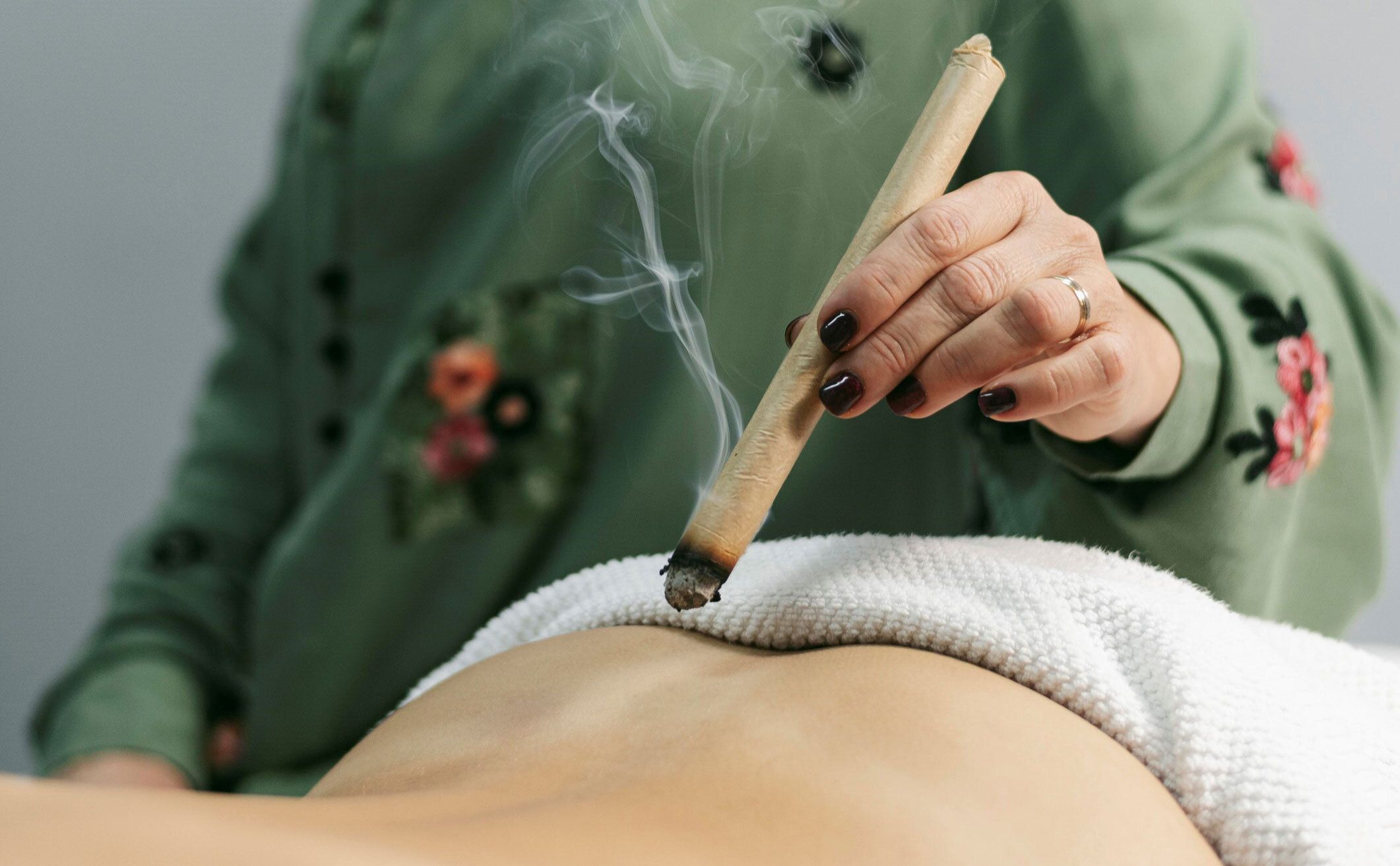
Chinese medicine has revealed to the world many ways to find inner calm and ease tension. Among them is acupuncture, known for its relaxing effect on the body, and also moxibustion. This TCM technique helps rebalance the flow of energy using moxas (sticks made of mugwort) that warm certain acupuncture points in order to release blockages.
Moxibustion sessions help reduce stress and allow deep relaxation, usually followed by a feeling of well-being. Combined with acupuncture, moxibustion helps relax the body and overcome stress and anxiety. Among the points usually stimulated are:
- ST36, which helps regulate Blood and Qi, relieves fatigue and helps you find your calm again.
- PC6, which restores Heart Qi to soothe stress accompanied by sadness, anxiety and palpitations.
- CV12, known for its anxiety-relieving effect: it stimulates Stomach Qi and helps with stress management and emotional harmony.
6. The role of family and friends

Our ties with friends and family play an essential role in reducing everyday stress. Talking about our worries helps untie certain knots and think problems through more clearly, allowing us to feel emotionally close to someone and contributing to our happiness. To begin with, simple gestures such as showing attention or paying a sincere compliment to a friend or colleague can strengthen these bonds. The support our friends and family provide creates a space for listening, making us better able to solve problems and lower our stress levels.
But sometimes no method really works as long as we remain in a constant struggle against what we feel.
Let go to hold on

"To hold on, you must first open your hand. Let go." Lao Tzu
After exploring different ways of acting on stress, we would also like to share another approach, drawn from Chinese thought: letting go. Not letting stress settle in. But avoiding a constant struggle to control it. Because insisting on calming or mastering what we feel can sometimes, without our realising it, keep the body in a state of tension.
When stress lasts over time, everything tends to contract: the body stays on alert, the mind tries to anticipate, manage and control. But this build-up often ends up exhausting us more than it protects us.
Letting go does not mean giving up. It allows the body to gradually release certain tensions, come out of this constant state of alert and regain a little more stability. Stress doesn't always disappear all at once. But simple gestures, repeated over time, can already help the body find a better balance.
References:[1] CHEN You Wa, Yin and Yang Dietetics (in French), Marabout, p. 73.
[2] Zhang Y, Han M, Liu Z, Wang J, He Q, Liu J. Chinese herbal formula xiao yao san for treatment of depression: a systematic review of randomized controlled trials. Evid Based Complement Alternat Med.
[3] Ibid., Chinese herbal formula Xiao yao san for treatment of depression: a systematic review of randomized controlled trials.