- Beauty in China: a mirror of the soul and of the world
- Han, Tang, Song, Qing: how each era redefined beauty
- Han dynasty: vitality and lightness – health as the first criterion of beauty
- Sui & Tang dynasties: fullness and radiance – joie de vivre as brilliance
- Song dynasty: purity, calm and depth – the beauty of the mind
- Ming & Qing dynasties: ritual as an art of living
- Inner beauty, outer beauty: one and the same harmony
- Rituals that stand the test of time
- A rosebud infusion before bed
- A few gentle presses around the eyes
- A slow pass of a jade roller or gua sha
- Skincare applied with warmed palms
The history of beauty in China: rituals, light and harmony for over 2,000 years

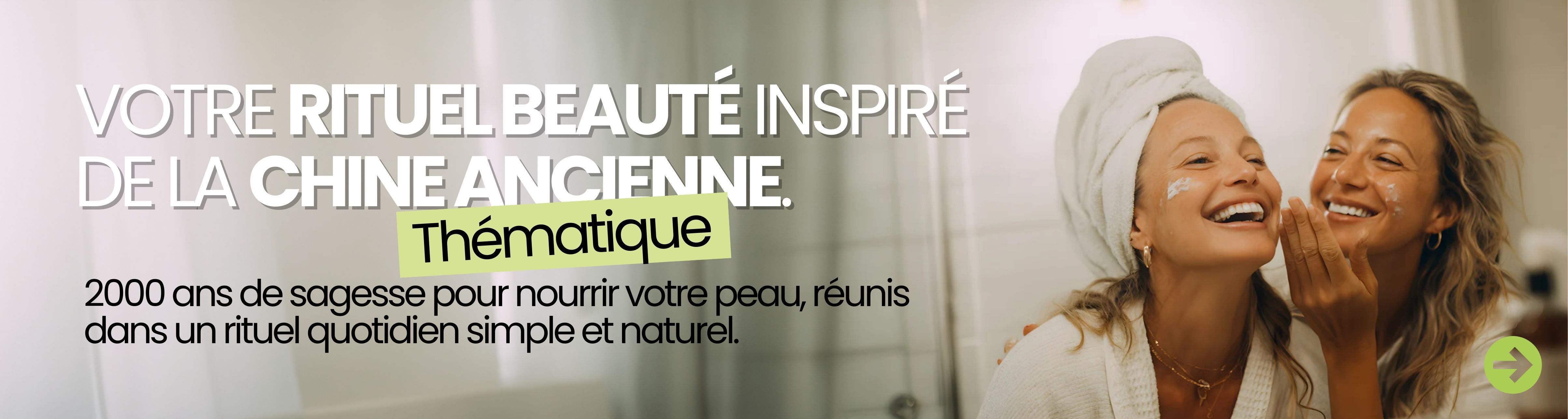
Beauty in China: a mirror of the soul and of the world
Since ancient times, beauty has held a special place in China: it refers not only to appearance, but to a state of harmony between body, mind and the surrounding world. Far from superficial, it reflects inner balance.
Unlike traditions that seek to transform or conceal, Chinese beauty rests on a founding idea: outer radiance is the direct reflection of inner balance. The complexion bears witness to the circulation of Qi, the softness of the features reflects peace of heart, and the clarity of the gaze reveals the fluidity of the emotions.
Taking care of yourself is therefore a profound act, an art of living passed down from generation to generation, not to look good but to preserve. A gesture of health, attention and presence to yourself.
Han, Tang, Song, Qing: how each era redefined beauty
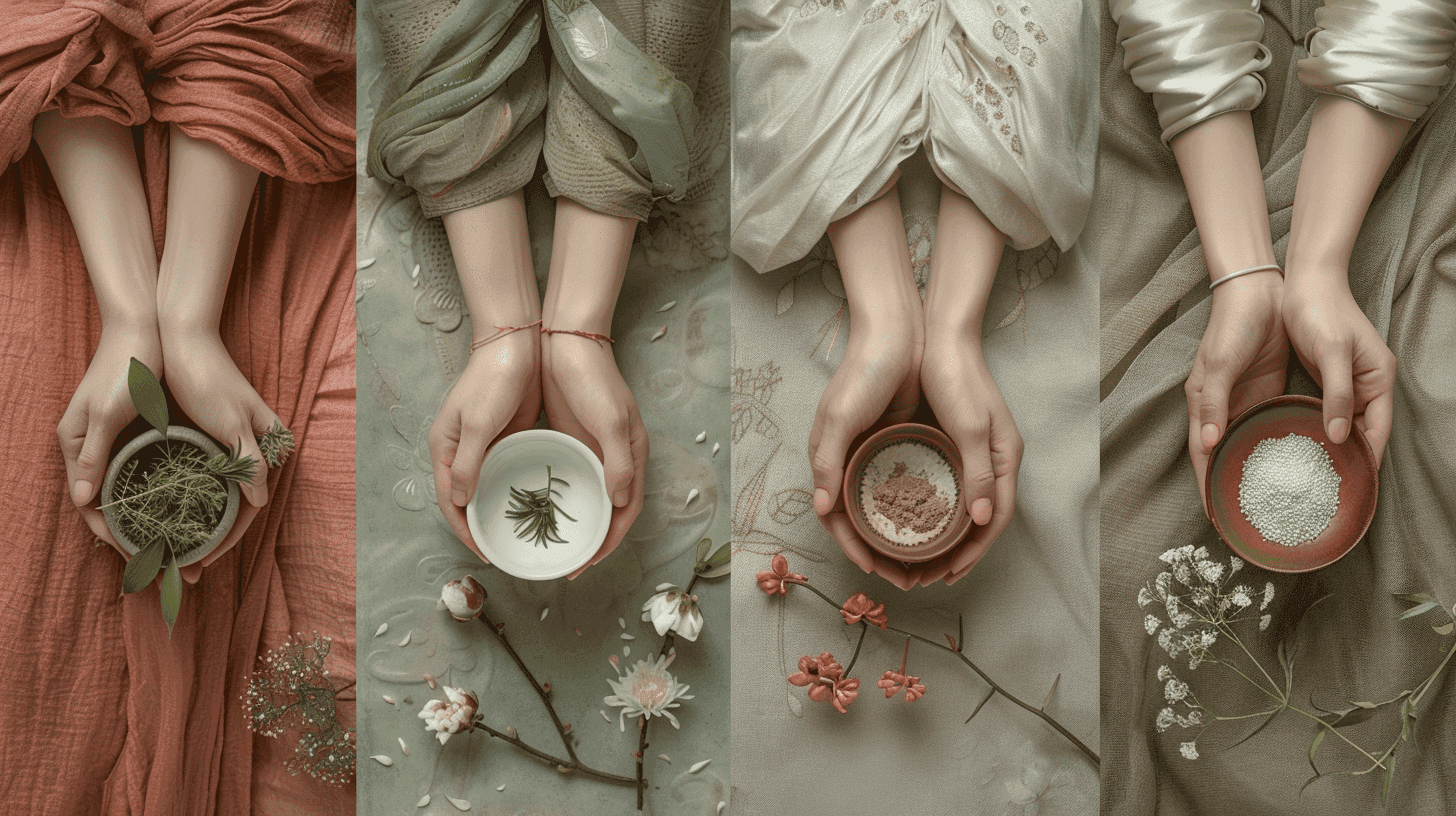
While the idea of harmony remains at the heart of Chinese aesthetics, the different dynasties shaped contrasting visions of beauty, influenced by philosophy, medicine, the imperial court, poetry and the status of women.
Among these periods, some left a particularly strong mark on the art of care and beauty.
Han dynasty: vitality and lightness – health as the first criterion of beauty
Beauty = vitality and the circulation of Qi
Under the Han (206 BC – 220 AD), beauty was first and foremost seen as the visible expression of inner health. The earliest medical and Taoist texts state that the skin is the mirror of Qi.
Care was then centred on maintaining the vital breath: fragrant baths, massages along the meridians, herbal powders. The feminine ideal valued a slender figure and free-flowing energy.
The emblematic figure of Zhao Feiyan embodies this so-called "airy lightness" aesthetic: a mobile body, free breath, energy that flows unimpeded.
Sui & Tang dynasties: fullness and radiance – joie de vivre as brilliance
Beauty = joie de vivre and prosperity
In the Sui-Tang era (581 – 907), the empire enjoyed unprecedented prosperity. This abundance was reflected in a generous, confident ideal of beauty: round faces, full bodies, soft and serene features.
Health could be read in the fullness of the body, seen as a sign of vitality. Court ladies multiplied their treatments: ointments, infused flowers, mineral powders… Beauty became expressive, joyful, almost festive. The frescoes of the period show serene, radiant women wrapped in an atmosphere of flourishing elegance.
Peach and plum blossoms, symbols of vitality and flourishing, became major aesthetic references.
Tang beauty was not discreet: it expressed inner joy and the power of life.
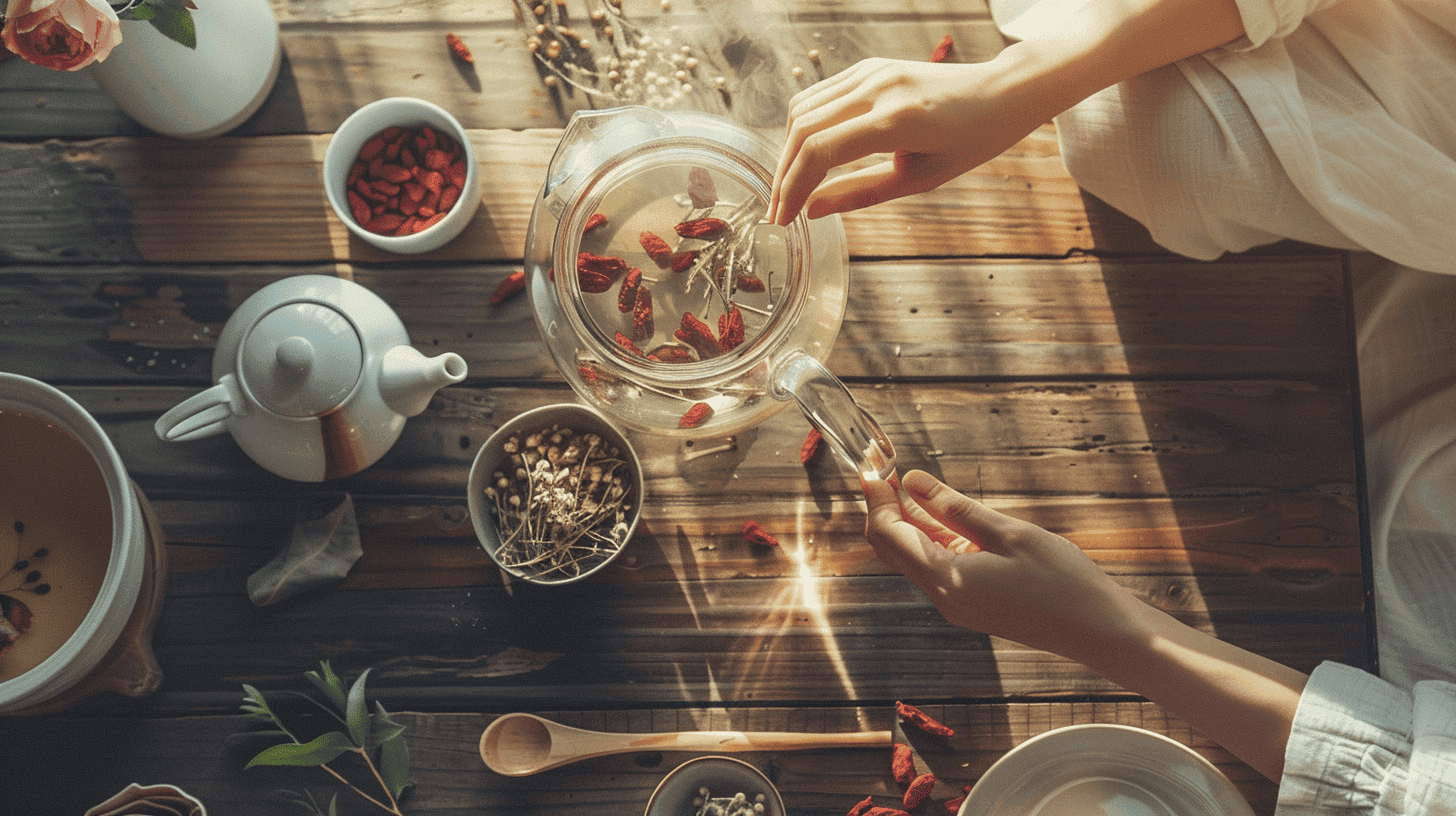
Song dynasty: purity, calm and depth – the beauty of the mind
Beauty = inner serenity
With the Song (960 – 1279), a new, more discreet and introspective aesthetic emerged. The exuberance of the Tang gave way to a quest for purity and restraint. Beauty was no longer only visible; it became emotional and spiritual.
The complexion became pale, translucent, almost ethereal. Gestures were measured and silent. What now mattered was the radiance of the Shen (the spirit) through a calm face. Beauty was cultivated in tranquillity, as a reflection of a soul at peace.
To be beautiful under the Song was to radiate tranquillity.
Ming & Qing dynasties: ritual as an art of living
Beauty = daily discipline and consistency
From the Ming (1368 – 1644) and under the Qing (1644 – 1912), beauty became a codified ritual. In the apartments of court ladies, a discipline of care could be observed: infusions, baths, self-massage, polished jade, masks and nourishing ointments were part of daily life.
Pearl powder, originally used in the pharmacopoeia, became a symbol of soft, inner light. Empress Cixi, passionate about skincare, is said to have used it into old age to preserve the radiance of her complexion.
Beauty then became a constant commitment: a reflection of patience, awareness and gentleness. No longer a passing state, but a slowly cultivated radiance.
Beauty is no longer a passing state, but the fruit of constant, mindful care.
Inner beauty, outer beauty: one and the same harmony
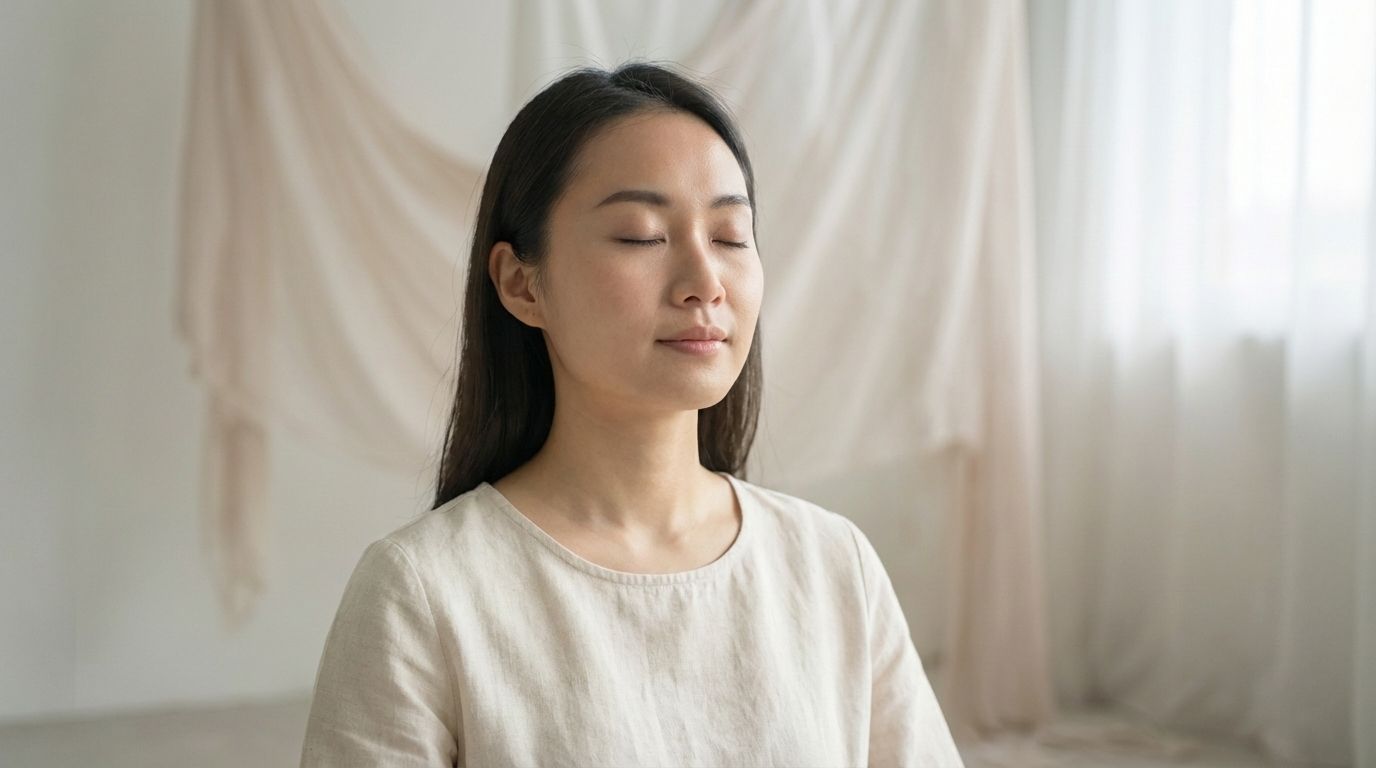
Through these eras, one common thread remains: in China, beauty is never separated from inner balance.
In medical texts as in scenes of daily life, the face is described as a true barometer of Qi:
- Liver fatigue dulls the gaze,
- agitation of the Shen troubles the complexion,
- smooth circulation naturally lights up the features.
Care gestures therefore follow this logic: soothe, nourish, circulate.
- Evening infusions support the Liver,
- facial massages follow the meridians to release tension,
- the choice of foods and flavours influences the softness of the features.
This holistic, gentle, precise and patient conception makes beauty an everyday art, a way of inhabiting the body with elegance and of letting the inside light up the outside.
Rituals that stand the test of time
Today, the rituals inherited from the ancient dynasties take a more modern form.
They no longer resemble the solemn gestures of the imperial courts, but simple moments woven into daily life, where tradition and contemporary comfort meet.
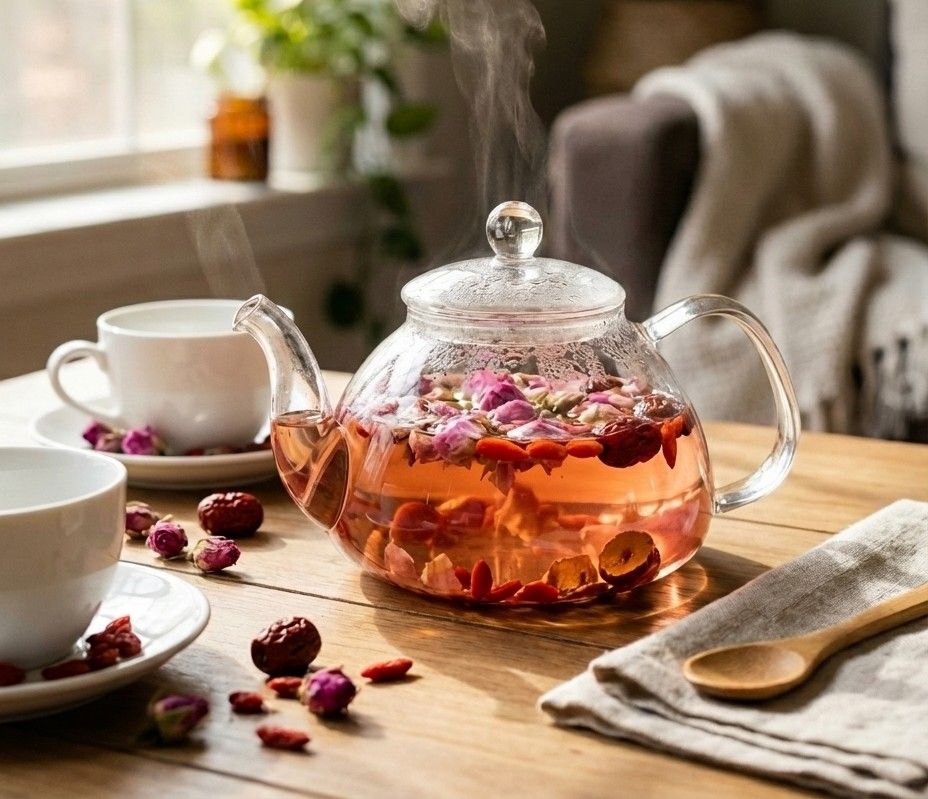
A rosebud infusion before bed
- To soften the emotions of the day and prepare the body for restorative sleep.
- An ancient gesture that has become an intimate ritual in many Asian homes.

A few gentle presses around the eyes
- Especially after hours in front of screens, to release the most strained area of the face and regain a clearer gaze.
- A technique inherited from traditional massage, reinterpreted for today's digital life.
A slow pass of a jade roller or gua sha
- Not as a showpiece, but as an everyday gesture
- To smooth away tension, wake up microcirculation and give the face back its natural glow, without excessive stimulation.

Skincare applied with warmed palms
- To aid absorption and calm the skin immediately.
- A small ritual that once transformed the evening toilette and which, even today, brings a feeling of coming back to yourself.
Whether they come from the Han, the Tang or our routines today, these rituals tell the same story: in China, beauty never separates body from mind.
One gesture to soothe, another to smooth, a moment to breathe: everything is part of the same movement, restoring balance so that the skin can glow effortlessly.
In this vision, beauty is not a result, but a path.
A way of living with yourself, of finding yourself in the simplest gestures, and of letting inner harmony gradually become visible.