- Factors that weaken our hair
- Hair in Chinese medicine
- Hair problems in Chinese medicine: what our hair says about our health
- What should you eat for beautiful hair?
- Which herbs for which problem?
- A simple gesture to add to your routine


A universal symbol of beauty, the condition of our hair is not just a gift of nature: it also depends on a good hair-care routine.
Linked to our health, our hair says a lot about our condition and our lifestyle (bad habits, an unbalanced diet, smoking, lack of physical activity, etc.).
Several problems can considerably affect the appearance of our hair, such as heavy hair loss, dandruff or grey hair.
Do you feel your hair has stopped growing, or that it is brittle, dull or thin? Discover how to take care of your hair with Traditional Chinese Medicine.
Factors that weaken our hair
Hair can be weakened by a poor hair-care routine, but not only that; several other factors may also be involved:
The season: hair loss in autumn and spring can be noticeable. This periodic shedding is generally due to stress, lower energy (common in these seasons) and less natural light. While it is perfectly normal to lose hair, hair loss can be considered worrying or even pathological when a large amount of hair is lost over a long period. Abnormal hair loss may point to a hormonal imbalance. In addition, certain treatments or medications can also weaken the hair and lead to heavier hair loss.
Exposure to UV rays: hair is particularly weakened during the summer season. And for good reason: sun exposure poses risks for our hair. UV rays damage the hair fibre, harm the keratin in the hair and disrupt the balance of the scalp, leaving hair brittle and dry.
Swimming: a favourite summer activity, swimming in the sea or in a pool can take a heavy toll on our hair. The iodine and salt in seawater and the chlorine in pools irritate and weaken the hair, as well as attacking the scalp. It is therefore best to avoid contact with the water as much as possible, tie your hair up and wet it as little as possible.
Dandruff: dandruff is located on the scalp. Dry skin or hypersensitivity to certain hair products can be the cause. Although harmless, it is uncomfortable, as it causes itching and irritation of the scalp. Dandruff is also a cosmetic concern for those who have it (one person in two).
Stress: often underestimated, stress can have a direct impact on hair. When it lasts over time, it can disrupt the natural growth cycle and encourage heavier hair loss, sometimes several weeks after a difficult period. Hair may then seem thinner, less dense or less vital. Stress can also speed up the premature appearance of grey hair.
Using chemical products: do you have split ends and brittle hair? Certain cosmetic products may be to blame. Some products contain harsh ingredients that weaken the hair and irritate the scalp (notably parabens, silicones, sodium...).
What does Chinese medicine say about these hair problems, and what solutions does it offer?
Hair in Chinese medicine
In Traditional Chinese Medicine, hair is said to be "the surplus of Blood". This means that its health depends on Blood. Blood nourishes the scalp, so good blood circulation is essential for healthy hair.
In addition, the health of the hair is linked to two organs: the Kidney and the Liver. These two organs have a considerable influence on the vitality of the hair, its growth, its colour and its texture.
Hair problems in Chinese medicine: what our hair says about our health
- Hair loss: as mentioned, hair growth and thickness depend on the Liver and Kidney. Gradual hair loss can therefore be caused by Liver Blood or Kidney Essence Deficiency. It can also have other Excess-type causes, such as Heat in the Blood, which may show up as a dry scalp.
- Dandruff: it generally appears when the Liver is weakened. Dandruff forms when Liver Blood can no longer nourish the scalp. Liver Wind can be the cause of dandruff when there is a lot of it. Finally, Damp-Heat in the Liver can also encourage dandruff to form...

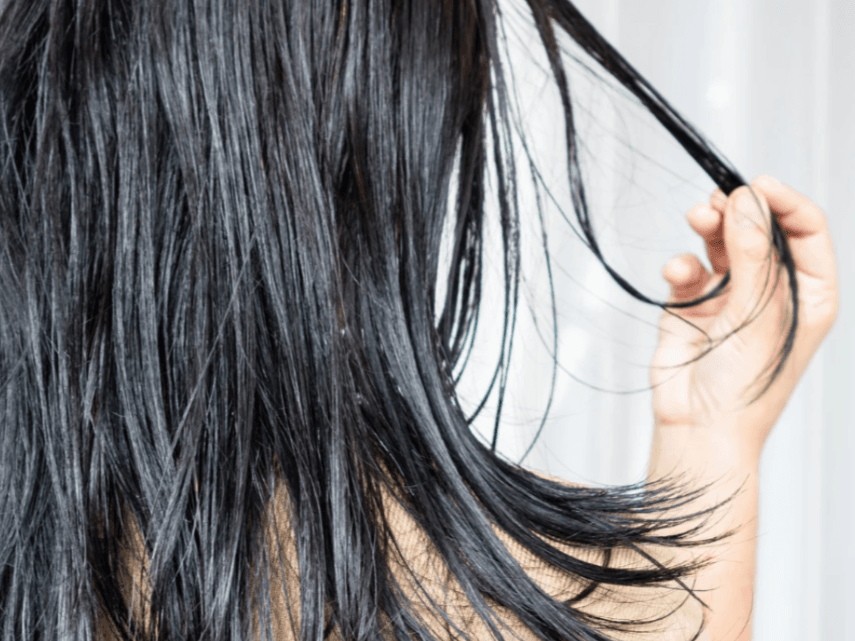
- Greasy hair: when hair gets greasy again very quickly, it often reflects an accumulation of Dampness, sometimes combined with Heat. In Chinese medicine, this is generally linked to an imbalance of the Spleen and Stomach, which can no longer properly transform fluids and food. This Damp-Heat then rises to the scalp, where it shows up as excess sebum. Stress, an overly rich diet or an irregular lifestyle can accentuate this imbalance and encourage a greasy scalp, sometimes accompanied by itching or dandruff[1].
- Premature grey hair: Liver Blood or Kidney Essence Deficiency is the most common cause of premature grey hair. It can also be due to a general Deficiency of Qi and Blood. When grey hair appears suddenly, this points to Fire in the Liver and Heart (generally linked to an emotional shock and/or the result of anger (Nu)).
- Dry, brittle hair: since the Liver and Kidney are responsible for nourishing the hair, an imbalance in these two systems (Kidney Yin and Liver Blood Deficiency, for example) can result in fragile, thin and brittle hair. In addition, Stomach Deficiency can also affect the hair. In this case, the hair is no longer properly nourished by the Food Essences produced by the Stomach. This imbalance is generally associated with worry and overthinking[2].
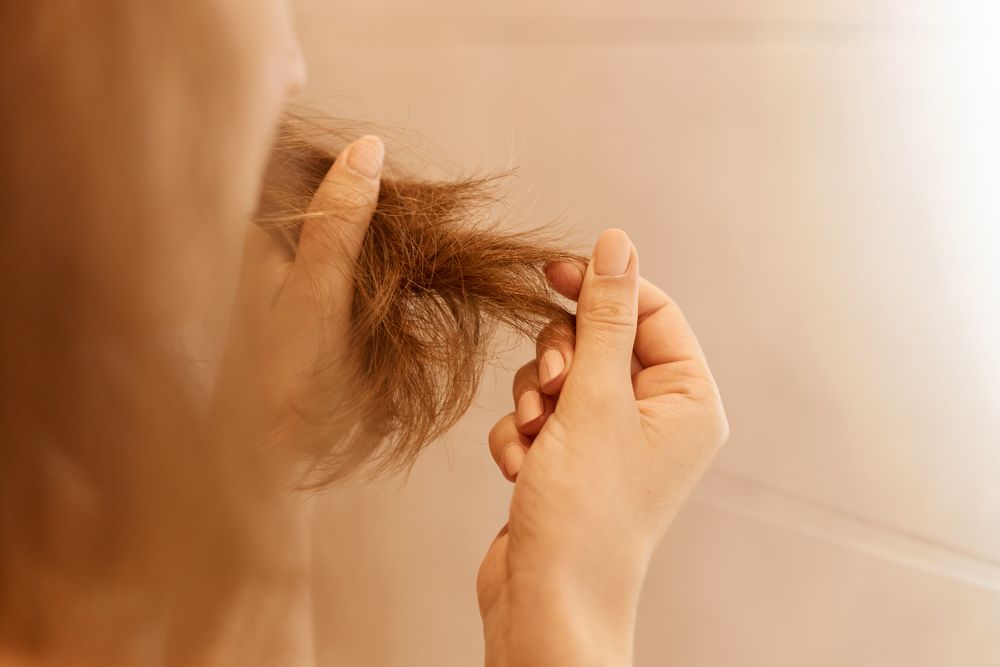
These various problems affecting the appearance of our hair generally stem from an unsuitable routine. But don't panic, they are not irreversible! Beautiful hair starts from within. That is why Chinese medicine recommends adopting good eating habits and favouring plants, true allies for strengthening the hair, rather than cosmetics.
What should you eat for beautiful hair?
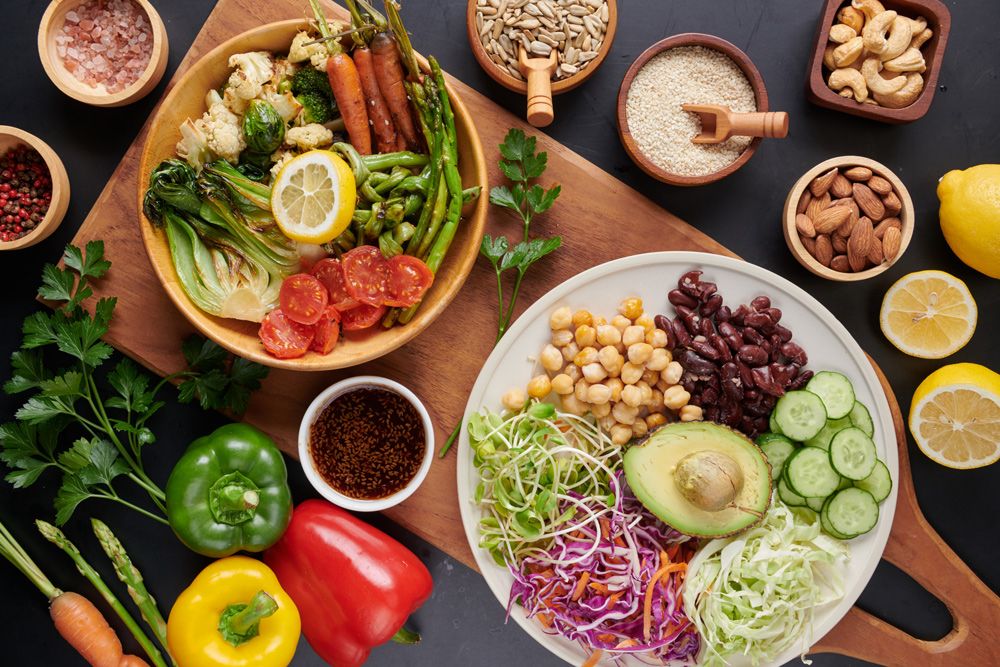
Chinese dietetics advises nourishing the Qi of the Kidneys and Liver to encourage hair growth.
To take care of your Liver, two flavours are generally recommended:
- First, the sour flavour, as it has an affinity with the Liver. So choose foods such as cherries or tomatoes.
- Next, the sweet flavour, as it promotes the circulation of Liver Qi and strengthens the Stomach (and therefore the hair!). Turn to foods such as button mushrooms, rice and wheat.
To take care of your Kidney, favour the salty flavour, since, eaten in moderation, it helps tonify this organ. So opt for foods such as seafood, fish and duck.
Which herbs for which problem?
Medicinal plants make a valuable contribution to the health of your hair. The Chinese pharmacopoeia recommends several herbs and formulas to improve and repair the condition of the hair, including:
- Camellia to prevent dandruff: in TCM, this plant is used for its ability to invigorate blood circulation. It helps the Blood nourish the scalp and therefore helps prevent dandruff from forming. Well known as a beauty ally, camellia also adds shine to the hair.
- Fo-ti to limit hair loss and premature greying: a flagship herb of the Chinese pharmacopoeia, it strengthens the Kidneys and Liver which, as a reminder, are the organs responsible for healthy hair. It not only helps reduce hair loss but also encourages regrowth. What's more, it helps prevent premature grey hair!
- The Hair Nutrition Formula to restore strength to your hair: developed by our laboratory, this formula is inspired by TCM knowledge. Made from 3 herbs, it was designed above all to deeply nourish the hair and give it shine and vitality.
A simple gesture to add to your routine
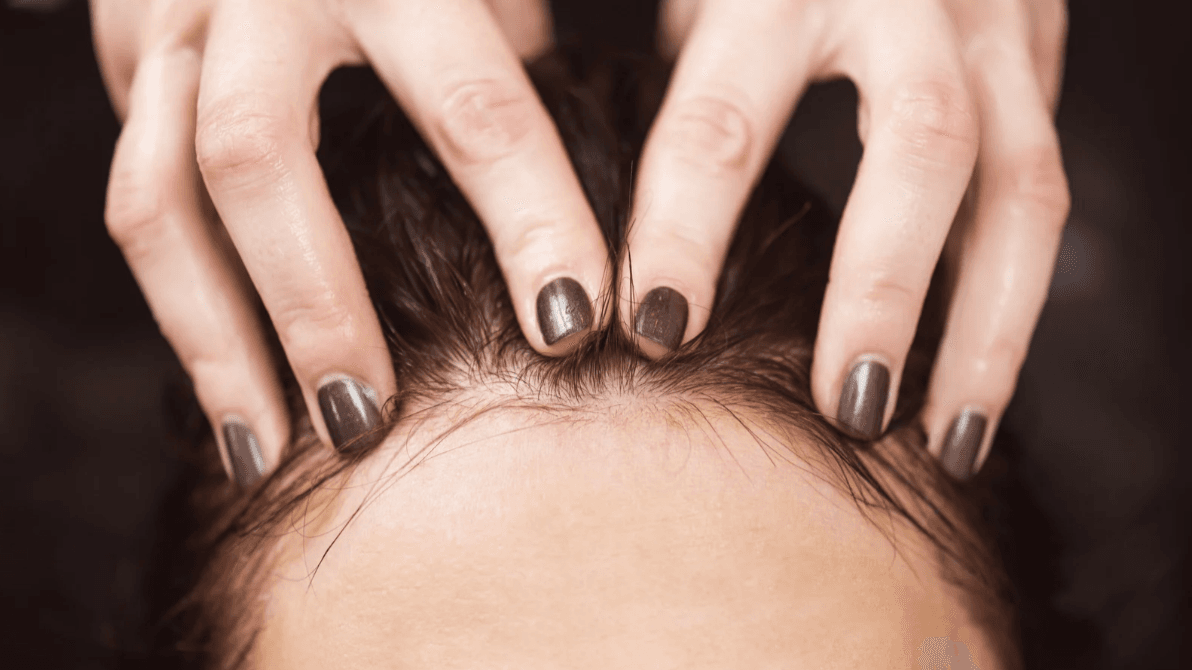
A regular scalp massage can also make a difference. In just a few minutes, it helps wake up the scalp, release tension and create a more favourable terrain for stronger, more resilient hair.
Fingertip scalp massage
In the morning when you wake up or in the evening before bed, spread your fingers naturally and gently massage your scalp with your fingertips, without using your nails.
- Start at the forehead, then work up towards the crown and the back of the head, with slow, regular movements.
- Continue until you feel a slight warmth.
This simple gesture stimulates microcirculation, helps nourish the roots better and gives the scalp a feeling of lightness and suppleness.
The Baihui point (百会)
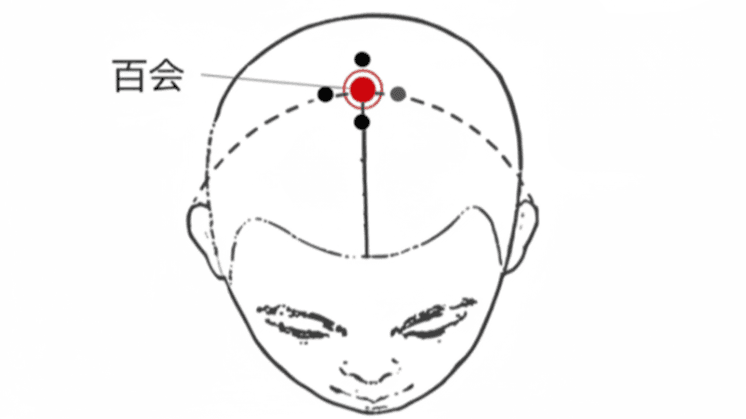
Located at the top of the skull, in the centre of the head, this point is often used to restore momentum and support circulation towards the upper body. By massaging it for a few minutes, you may feel a sense of openness and lightness in the head, as if tension were releasing. It is particularly helpful for hair lacking vitality or density.
The Fengchi point (风池)
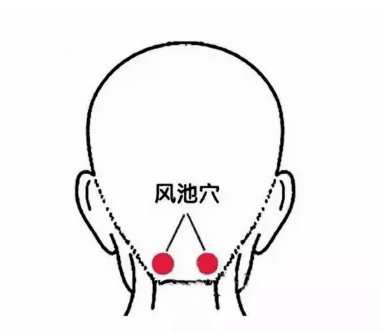
Located at the back of the neck, on each side, this point helps release tension built up in the neck and scalp. Massaging it often brings an immediate sense of relaxation. It is particularly useful when stress, tension or scalp discomfort weaken the hair.
A few minutes a day can be enough to turn this gesture into a real care ritual. A simple but deeply beneficial moment to support the vitality of your hair every day.
Preventing hair loss, repairing and caring for your hair always comes down to a good hair-care routine. As hair is central to our appearance, it is essential to nourish and protect it, especially during the summer season. To do so, nothing could be simpler: opt for an energising diet and make the most of the virtues of medicinal plants.
- Li Siyuan, Wu Zhong, Clinical advances in the treatment of seborrhoeic hair loss in Traditional Chinese Medicine. Zhongguo Zhongyiyao Keji (Chinese Journal of Traditional Medical Science and Technology). 2022;29(6).
- MACIOCIA Giovanni, The Foundations of Chinese Medicine, Elsevier. 2018. p. 83.