
History of traditional Chinese medicine
History tells us that the first traces of Traditional Chinese Medicine appeared in primitive times, when people lived only by gathering. Traditional Chinese Medicine was established in the 5th century BC and is today one of the three great scholarly medicines, along with that of the Mediterranean world and Ayurveda.
Closely associated with spirituality in Antiquity, the practice of traditional Chinese medicine gradually aroused interest. It was during the Spring and Autumn and Warring States periods (770–221 BCE) that its use developed, with the appearance of the first writings, notably those of the physician Bian Que. He was the first to develop the practice of diagnosis, which is fundamental in TCM. It was also during this period of History that the three fundamental principles were theorised: Qi, Yin and Yang, and the Five Elements.
Strongly influenced by traditional philosophy, TCM developed by drawing on two schools of thought that lie at the heart of Chinese civilisation: Confucianism and Taoism. Over the centuries, scholars took more and more interest in this discipline, which was becoming more coherent and refined. This is how many works came into being and how the practice of Traditional Chinese Medicine became widespread in Asia. In the West, although it has long faced a certain scepticism, TCM now enjoys recognition thanks to the spread of preventive medicine and the desire to regain a health based on the virtues of nature.
Major principles of this complex medicine
In practice, Traditional Chinese Medicine is built around the living and takes a holistic approach, studying and observing the different elements that characterise the patient's life. This age-old oral tradition therefore relies on the constant evolution of its concepts, relating to the patients' environment, while preserving its own methodology and foundations and ever deepening its therapeutic interest.
So TCM stands out for its unique way of understanding life, well-being, imbalances and their solutions. As a preventive method, it looks at the cause of disorders rather than their effects. It analyses the principles that govern the proper functioning of the body, both when it is in harmony and when it is disturbed, with the aim of preventing, restoring and adapting treatments to each individual.
A complete medicine, it is made up of five disciplines: Chinese pharmacopoeia, acupuncture, Chinese dietetics, Tui na massage and Qi gong. Each one works to prevent disorders and unblock energy in order to allow physical and mental well-being. This notion of energy is fundamental to understanding TCM: indeed, Qi (pronounced “chee”), considered one of the treasures of this medicine, is a concept specific to TCM, which regards it as the foundation of life.
Qi
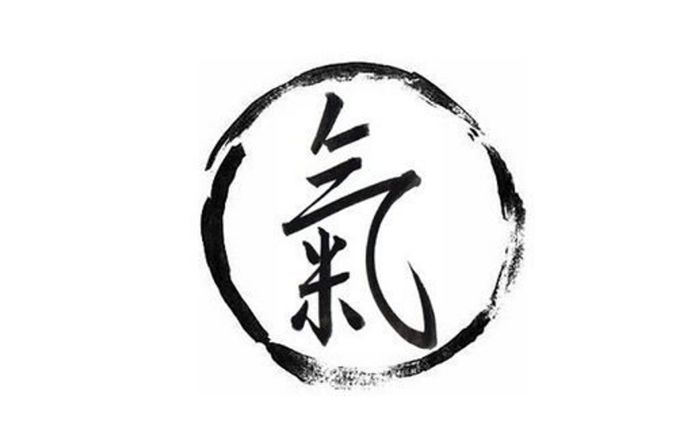
A fundamental notion in Traditional Chinese Medicine, Qi is often translated as “vital Energy”. Indeed, Qi is a creative force that animates the universe and every form of life. It must circulate freely in order to irrigate the body and ensure it functions properly.
Qi is affected by every form of change: the seasons, emotions, diet or overwork, for example. These imbalances generally lead to energy blockages, also called “Qi stagnations”, anomalies that open the door to disorders. So, in TCM, treatment mainly involves regulating and harmonising the circulation of Qi. To be in good physical and mental shape, Qi must therefore circulate freely through the human body, carried by the Meridians, which flow through our body like streams.
The Meridians
The meridians form a complex network of 20 channels that ensure the flow of Qi through the human body. These meridians are constantly at work and ensure that transitional states run smoothly. Since they are energy channels, stimulating them makes it possible to make up for an energy shortfall, clear excesses and release blockages.
There are 20 meridians in total: 12 regular meridians, which see to the circulation of Qi, and 8 extraordinary meridians, also called “Extraordinary Vessels”, whose role is to preserve the Essences (essential to the proper functioning of the organs). Indeed, the meridians are connected to our skin by 365 points. It is these points that are used during acupuncture sessions to regulate the circulation of Qi. Their discovery and study are the result of an oral tradition passed down from observations made over the centuries.
Yin and Yang
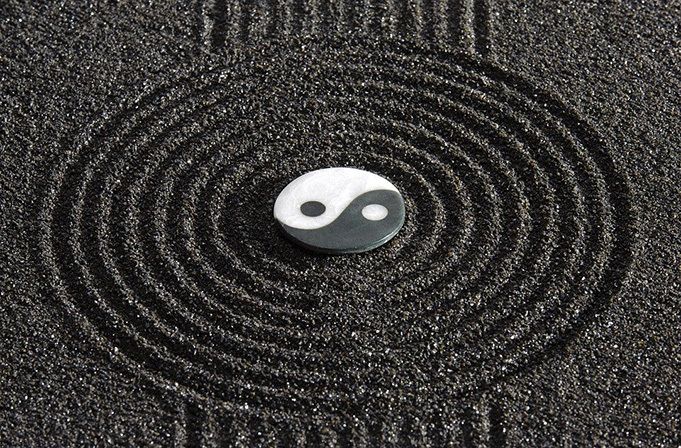
Having appeared at the same time as the theory of the 5 movements (9th century BC), the concept of Yin and Yang is linked to all the others, and mainly to Qi. Unlike the very Western idea of good and evil, Yin and Yang are two opposing and complementary forces that govern our lives. One cannot exist without the other: they are interdependent.
Explanation of the symbol
Originally, Yang referred to the sunny side of a hill and Yin to its shaded slope. Each of them refers to a different facet of reality. In the symbol we all know, Yin is the dark part. Within it, a small white dot is visible. This is the energy of Yang at the heart of Yin. Opposite it, Yang, white in colour, contains a small black dot, which is its embryo of Yin. Together they show that, in the universe as in life, nothing is ever absolute.
Yin: the gentle force
Black in colour, Yin is darkness, night. In TCM, but also in the West, Yin is often associated with woman. A gentle force, but also wise and passive. This force is also associated with the element of water. Yin is located in the North because it is linked to cold. In anatomy, Yin refers to the lower part of the body. It concerns the solid organs, called “zang”, namely the Heart, the Liver, the Spleen, the Lungs and the Kidneys. The main disorders linked to Yin are often caused by Cold and Dampness.
Yang: the driving force
White in colour, Yang is light, day. It is the ultimate force that allows us to be active. Man is considered Yang. This force is linked to everything that is animated on Earth, such as the sun, the sky and nature. It is associated with the element of fire. Yang is located in the South and is linked to Heat. In anatomy, Yang refers to the upper part of the body. It concerns the hollow organs, called “fu”, namely the Small Intestine, the Gallbladder, the Stomach, the Large Intestine, the Bladder and the Triple Burner. The main Yang disorders result from the presence of Heat and Dryness.
In Traditional Chinese Medicine, people's health varies according to the balance of these two forces, a balance that is essential for keeping health harmonious and stable. When the balance is broken, illness appears; when the two forces separate, death follows. The duality represented by Yin and Yang is one of the essential notions for understanding traditional Chinese medicine.
The 5 elements
At the root of Traditional Chinese Medicine lies the theory of the 5 elements, born of Taoism, a pillar of Chinese thought. These elements, also called Movements, are: Wood, Fire, Earth, Metal and Water. Like Yin and Yang, they are defined by interdependence and mutual transformation; each element is both creator and destroyer. Several relationships exist between the elements; for example, they follow a logical generating cycle: Wood generates Fire, Fire generates Earth, Earth generates Metal, Metal generates Water and Water generates Wood once again. They also follow a cycle of domination, a relationship of control: Wood controls Earth, Earth controls Water, Water controls Fire, Fire controls Metal, Metal controls Wood.
The number 5 is predominant in TCM, and the theory of the 5 elements applies to many aspects. For example, each organ is associated with an element that resonates with its activity. So the Liver is Wood, the Heart is Fire, the Lung is Metal, the Kidneys are Water, and the Spleen/Pancreas is Earth. This theory is essential for understanding the world and the movement of energy.
5 organs, 5 emotions

In TCM, a distinction is made between the organs called Zang, considered “full”, and the viscera called Fu, considered “hollow”. Several organ/viscera pairs have been formed:
- Liver/Gallbladder
- Heart/Small Intestine
- Spleen/Stomach
- Lung/Large Intestine
- Kidney/Bladder
Unlike Western medicine, Traditional Chinese Medicine makes no distinction between body and mind: each organ has a physical role but also a psychological one. So TCM considers 5 emotions to be the main ones, since they can be at the root of illness when they are out of balance. In keeping with the theory of the 5 elements, each emotion is associated with an organ, which it can affect particularly when it is not kept in check. For example:
- Anger (Nu) is associated with the Liver
- Joy (Xi) is associated with the Heart
- Sadness (You) with the Lung
- Worry (Si) is associated with the Spleen/Pancreas
- Fear (Kong) is associated with the Kidneys
Consequently, emotional balance is indispensable for preserving physical health: if our organs are balanced, our emotions will be too. Likewise, when an organ does not function normally, the emotion associated with it can in turn become unbalanced. According to TCM, emotions are among the 9 factors that can influence our well-being. It is therefore essential to take care of our emotional balance and to stay alert when an emotion is felt too intensely, as this could signal a deeper imbalance.
The perverse energies
Among the 9 factors influencing health according to TCM are the “climates”, which refer to the six external perverse energies (Wai Yin). We live with these energies every day; however, they become perverse and pathogenic when they are in excess in the body.
These energies include:
- Wind (Feng)
- Cold (Han)
- Dampness (Shi)
- Heat (Re), which can turn into Fire (Huo)
- Summer Heat (Shu)
- Dryness (Zao)
These six perverse energies intervene and threaten well-being at well-established times. Indeed, each of them dominates according to the season: Wind generally threatens in spring, Cold in winter, Heat attacks in summer, Dampness mainly towards the end of summer and the beginning of autumn, and Dryness is to be feared in autumn. Since the body naturally adapts to climatic conditions, it is the other energies that we need to protect ourselves from. Perverse energies can seriously affect the body and cause disorders and illness.
So, based on a whole philosophy, Traditional Chinese Medicine stands out for its rich and profound knowledge of health and the human body. If it has managed to make its way in the West, it is above all thanks to its holistic, sophisticated and exceptional approach.