Fu ling (Poria cocos): a mushroom as original as it is exceptional

Also known as “pachyma”, Poria (or Fu ling in Chinese) is a mushroom native to China that belongs to the Polyporaceae botanical family.
Although it has been used for more than 2,000 years in Asia and the great classics of traditional Chinese medicine mention its health benefits, Fu ling is still little known in Europe…
What makes it special? How is it used in the Chinese pharmacopoeia? And what are its virtues for the body? We explain everything you need to know about this mushroom.
Discover Fu ling
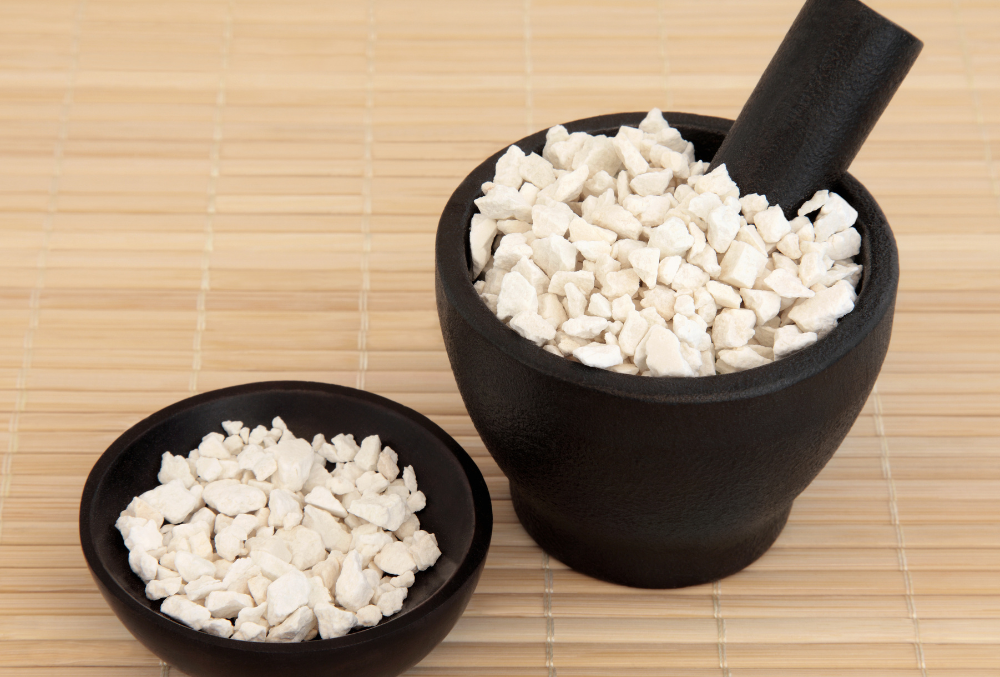
Growing around the roots of trees, especially pine trees, Fu ling is a mushroom about 30 cm long. It is made up of two parts: the black outer part (the skin), called Fu ling pi, and the white inner part (the flesh), called Fu ling kuai. Both are listed and used in the Chinese pharmacopoeia.
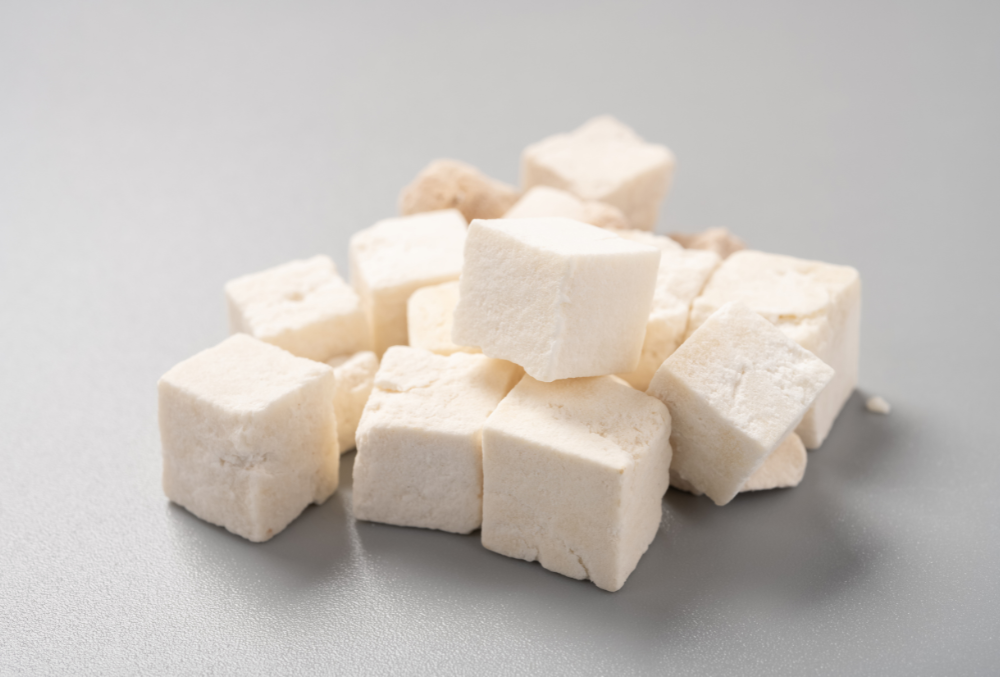
Poria’s appearance is sometimes compared to that of a coconut. It is therefore no surprise that it is nicknamed “the coconut mushroom”. Once dried, Poria is usually cut into cubes: with this shape and its white colour, it looks like diced tofu.
Harvested between July and September, this mushroom is above all a choice ingredient much appreciated in Asian cuisine. The Emperors and Empresses of Ancient China ate it regularly (especially during the Ming and Qing Dynasties).
Poria was long a star ingredient of imperial cuisine. It was used in congees and many dishes, among them “snakehead fish and poria soup” and “imperial Poria cake”.
Its use in the Chinese pharmacopoeia
Traditional Chinese medicine discovered the therapeutic potential of Fu ling several centuries ago and incorporated it into its pharmacopoeia.
Classified among the plants that are sweet and bland in flavour and neutral in nature, Fu ling has affinities with four of the five Zang organs, namely the Heart, the Spleen, the Kidneys and the Lung.
A medicinal mushroom rich in active compounds, it is used alone or in combination with other plants and/or mushrooms. So what are its main properties?
Fu ling: many virtues for the body
Its actions in the Chinese pharmacopoeia
In the Chinese pharmacopoeia, this mushroom helps to harmonise the Middle Burner (中焦), a system located in the middle of the Stomach that houses the digestive function. It is also recommended for overcoming the signs of Spleen Deficiency: by strengthening the Spleen, Fu ling soothes digestion.
This mushroom is also indicated to promote urination and eliminate Dampness from the body. Fu ling drives out Heat and helps clear impurities; it resolves the Stagnation of Fluids and drains excess water.
Fu Ling is thus particularly valued for its role in managing body fluids and supporting digestive balance. It is often used to promote a feeling of lightness, especially in cases of heaviness or diet-related imbalances. A study has also confirmed Fu ling’s protective action on the intestinal flora2.
Calming effects on the nervous system.
Some recent research has looked at the effects of Fu Ling on emotional balance, notably in connection with its triterpenoids, natural compounds present in its structure. In TCM, this plant is associated with soothing the Shen (the mind), and is often used in formulas aimed at supporting inner serenity3.
In traditional Chinese medicine, Fu ling is recommended to calm the Mind, “Shen”, and soothe the Heart.
It is used to calm an agitated Shen, a condition associated with nervousness, scattered thoughts and a lack of emotional stability. This imbalance can show up as inner restlessness, difficulty concentrating, a weakened memory or a feeling of oppression in the Heart area.
Immunostimulating properties
Poria naturally contains polysaccharides and triterpenoids, two families of compounds studied for their potential role in immune balance and cell protection. It is considered a gentle tonic, often used during periods of fatigue or to support the body’s natural defences.
As fun as it is exceptional, Poria has been the subject of much research examining each of its properties for the body one by one. As well as being a very effective drainer and having the particularity of combining well with many herbs, Fu ling strengthens immunity, stimulates the liver and kidneys and soothes stress. A treasure handed down by tradition, which can also turn out to be delicious!
