- Discovering Coix lacryma-jobi
- Their use in Traditional Chinese Medicine
- Properties studied by science
- An ally for good digestion
- A formidable diuretic
- A seed that takes care of our skin

Job's Tears (Coix lacryma-jobi) and Chinese medicine: a gluten-free seed full of virtues

Traditional Chinese medicine is an age-old practice that relies on the use of plants and holistic methods to promote health and well-being. Among the many medicinal plants used in this tradition, Yi yi ren (Coix lacryma-jobi), known in English as Job's Tears, holds an important place. This versatile plant has been prized for centuries for its seeds, which are rich in nutrients and used in many health practices.
In this new article in our “The Power of Plants” series, we set out to discover Yi yi ren, its use in traditional Chinese medicine and the scientific evidence that supports its traditional use.
Discovering Coix lacryma-jobi
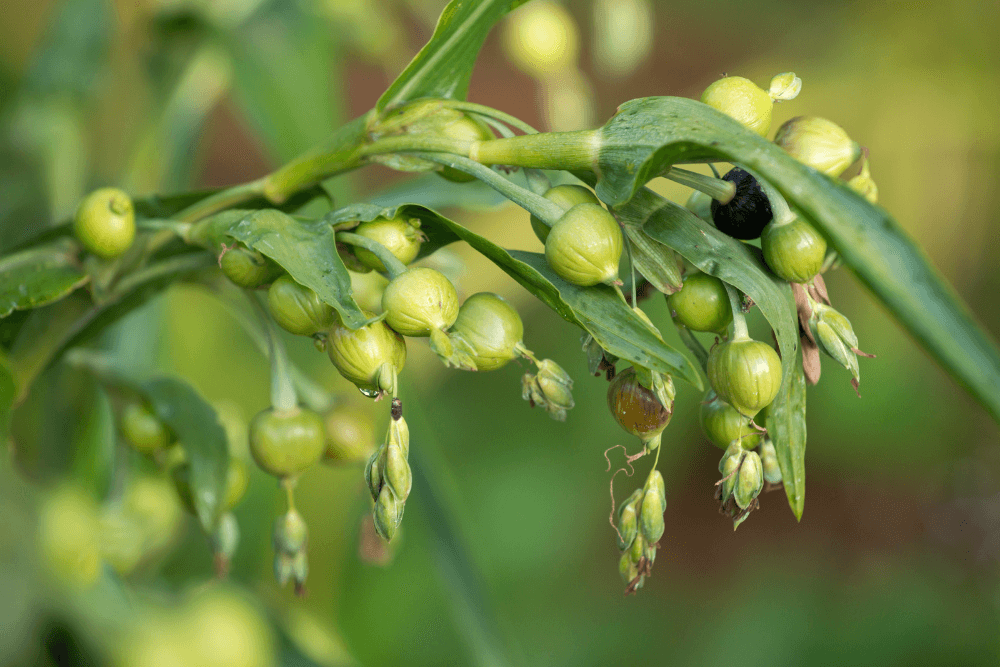
Coix lacryma-jobi, known by its common name “Job's Tears”, or also “rosary grass”, is a herbaceous plant first discovered several thousand years ago in Southeast Asia.
At that time, Coix lacryma-jobi was already popular with the indigenous peoples of the region, who used its seeds to feed themselves, to heal themselves, but also to protect themselves. Indeed, Job's Tears seeds have long served (and still do) as plant beads in the making of jewellery and amulets. Although the use of these seeds is nothing new, it was not until the Chinese Shang dynasty that their benefits were mentioned in a written work for the first time.
Belonging to the Poaceae family (just like wheat, rice, maize and barley), known for bringing together most of the cereals essential to our staple diet, Coix lacryma-jobi stands out above all for its amusing seeds, whose shape recalls that of tears. It is for this very reason that it was given the name “Job's Tears”.
Indeed, Job's Tears seeds, also called Coix seeds, are oval in shape and resemble small translucent tears. They can vary in colour, from white to dark brown, are hard and solid, and are enclosed in tough husks. They are harvested between October and December.
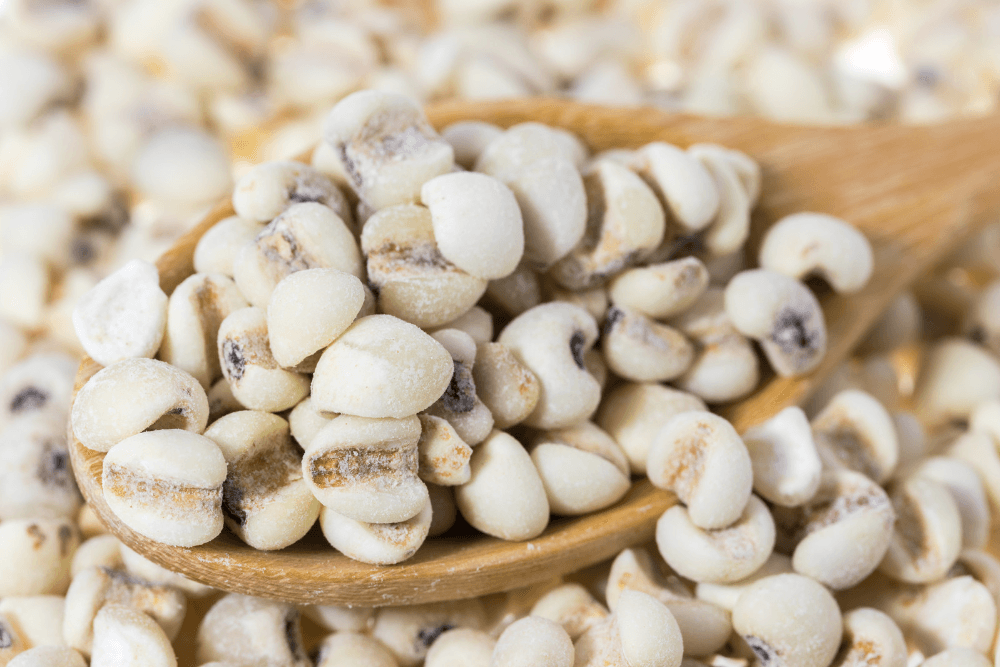
Although it was discovered in Asia, Coix lacryma-jobi is now grown in many regions of the world, particularly in tropical and subtropical climates. Indeed, this plant grows mainly in well-drained soils rich in organic matter. It is suited to a hot, humid climate, and is grown as a food crop and ornamental plant.
Recently, this plant has grown in popularity in the West because of its medicinal properties and its applications in various fields, such as cosmetics, health and, above all, food. Rich in protein but above all gluten-free, Job's Tears seeds are a valuable alternative for people who are intolerant to this group of proteins. So it is this absence of gluten in its composition that has shone a light on this beneficial cereal, even though traditional Chinese medicine has known it for centuries!
Their use in Traditional Chinese Medicine
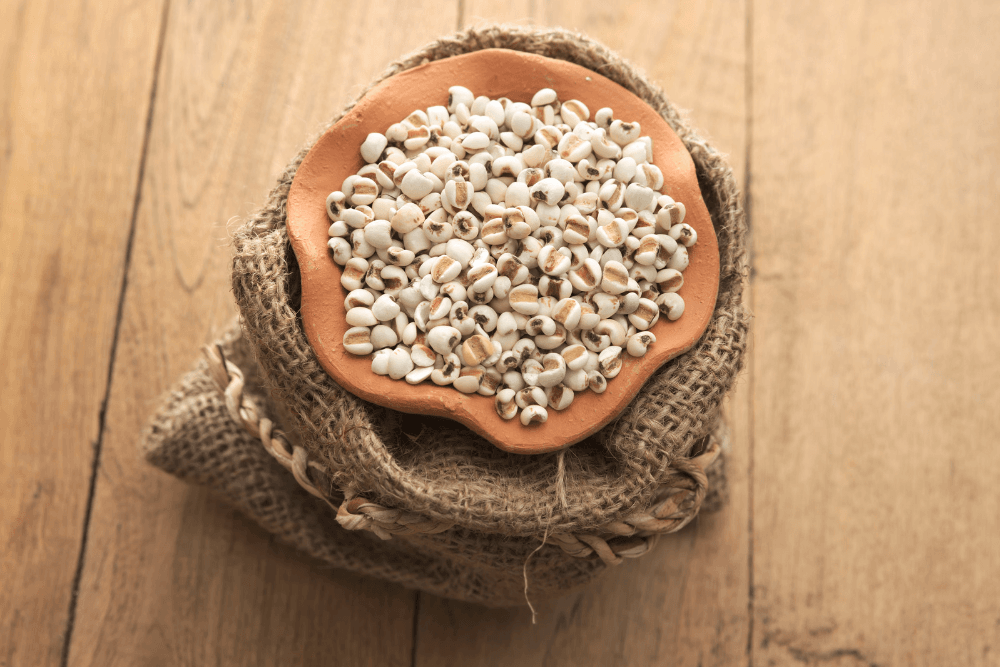
The ancient Chinese used Job's Tears seeds, called Yi yi ren in Chinese, for medicinal and food purposes. Usually ground into flour or eaten as a cereal, Yi yi ren has also been used for several centuries by Traditional Chinese Medicine (TCM) as a natural remedy to treat various ailments.
Indeed, Yi yi ren is one of the plants that drain Dampness in the Chinese pharmacopoeia. Sweet and bland in flavour and slightly cold in nature, its use is mainly recommended to:
- strengthen the Spleen and tonify its Qi
- eliminate Dampness
- expel Wind-Dampness
- relieve pain
- clear Damp-Heat
As a result, Yi yi ren is mainly recommended to combat excess Dampness obstructing the Spleen. As we have often explained, the Spleen is an organ essential to the proper functioning of the body. In TCM, it takes on many roles, notably producing Qi and Blood, transforming Fluids and looking after the health of the muscles and limbs… So when the Spleen can no longer function normally, many internal imbalances make themselves felt.
In traditional Chinese medicine, excess Dampness in the Spleen is considered an energy imbalance that, according to this approach, can show itself through various signs: slow digestion, reduced appetite, a feeling of heaviness (particularly in the legs), swelling, urinary discomfort, diffuse joint pain, or the appearance of small skin growths.
So, thanks to its bland flavour, Yi yi ren drains Dampness, while its sweet flavour allows it to tonify the Spleen.
Moreover, because they act on the Spleen, which is responsible for producing and controlling Blood, Job's Tears seeds are also recommended for women to help them live through their menstrual period more comfortably. Indeed, Chinese medicine recommends Yi yi ren to regulate the cycle and relieve pain.
Properties studied by science
More recently, Coix lacryma-jobi has attracted the attention of the international scientific community. Studies have been carried out to explore the chemical compounds found in the plant and their potential effects on human health.
Indeed, Coix lacryma-jobi is a plant packed with compounds that are beneficial to health. Its seeds, which are the most widely used part of the plant, contain a variety of essential nutrients, including proteins, carbohydrates, fibre, vitamins and minerals (calcium, magnesium and phosphorus)1. These nutrients help to strengthen the immune system and improve digestion.
An ally for good digestion

Naturally rich in fibre, Job's Tears seeds are traditionally valued for supporting digestive comfort and a regular transit.
They are valuable allies for relieving certain digestive discomforts: by increasing stool bulk and making it easier to pass, they are a solution to problems of slow digestion.
Moreover, they help to regulate intestinal activity. They soothe the stomach and help to reduce feelings of bloating and wind.
A formidable diuretic

As mentioned earlier, Yi yi ren is a plant that “eliminates Dampness”. Detoxifying and diuretic, it promotes elimination via the kidneys and contributes to the body's natural purification, fights water retention, relieves the feeling of heavy legs and preserves urinary well-being.
A seed that takes care of our skin

Job's Tears seeds are rich in natural antioxidant compounds such as flavonoids and phytosterols2. These antioxidants are traditionally associated with protecting the body against external aggressors (pollution, UV rays) and internal imbalances linked to oxidative stress. In certain Asian traditions, they are also linked to a radiant complexion and a more even skin texture, particularly in cases of pigmentation irregularities.
Also, thanks to their soothing properties, Job's Tears seeds calm sensitive skin. They are often included in well-being practices aimed at supporting the skin's balance, particularly in cases of temporary redness or reactions linked to an internal imbalance.
Moreover, Job's Tears seed oil has become a highly prized ingredient in the cosmetics industry. Indeed, laboratories have caught wind of the benefits of this plant and of the moisturising and soothing properties of the oil from its seeds.
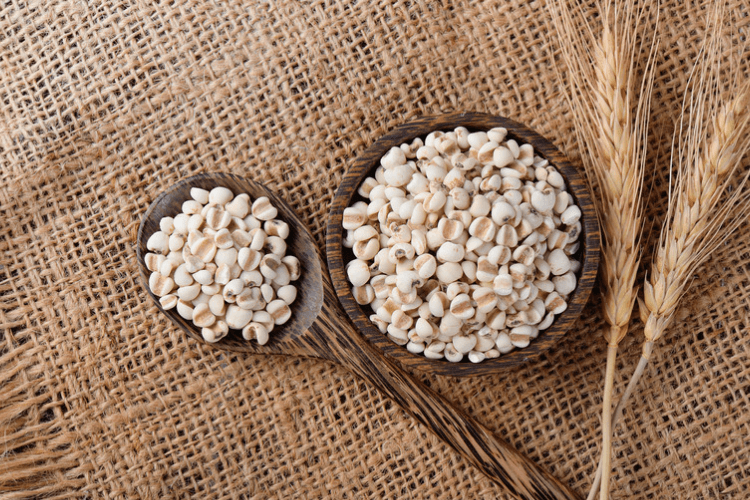
Prepared as a decoction or as a gruel, Job's Tears seeds are true marvels for health. Indeed, while they are mainly used in TCM to expel excess Dampness obstructing the Spleen, recent research has revealed the many other virtues they hold, notably for digestion, the joints, excess water and the skin.