- Why is discomfort sharp for one person and heavy for another?
- Joint discomfort through the lens of Chinese medicine
- The five main profiles
- 1. Discomfort that dreads the cold: the Cold-Damp profile
- 2. Red, hot and swollen discomfort: the Damp-Heat profile
- 3. Fixed, stabbing discomfort: the Qi and Blood Stagnation profile
- 4. Heavy, numb discomfort: the Damp-Phlegm profile
- 5. Dull discomfort that returns with fatigue: the Weakened Foundation profile
- How to support your joint comfort
- 1. Move… but not in the same way
- 2. Acupuncture, massage and warmth: stimulating circulation
- 3. Herbs: a different logic for each profile
- Joint discomfort does not always tell the same story


Why is discomfort sharp for one person and heavy for another?
Joint discomfort is often explained using well-known medical terms, which help to pin down the situation. But another question often remains open: why does this discomfort take this particular form in me? Why does a knee react to the cold? Why does one person feel a stabbing sensation, and another a heavy one?
Traditional Chinese Medicine sheds complementary light on this. Rather than starting from a medical label alone, it looks at how the discomfort shows itself, the terrain on which it appears and the factors that influence it.
To understand these differences, we need to go back to the way Chinese medicine reads joint discomfort.
Joint discomfort through the lens of Chinese medicine
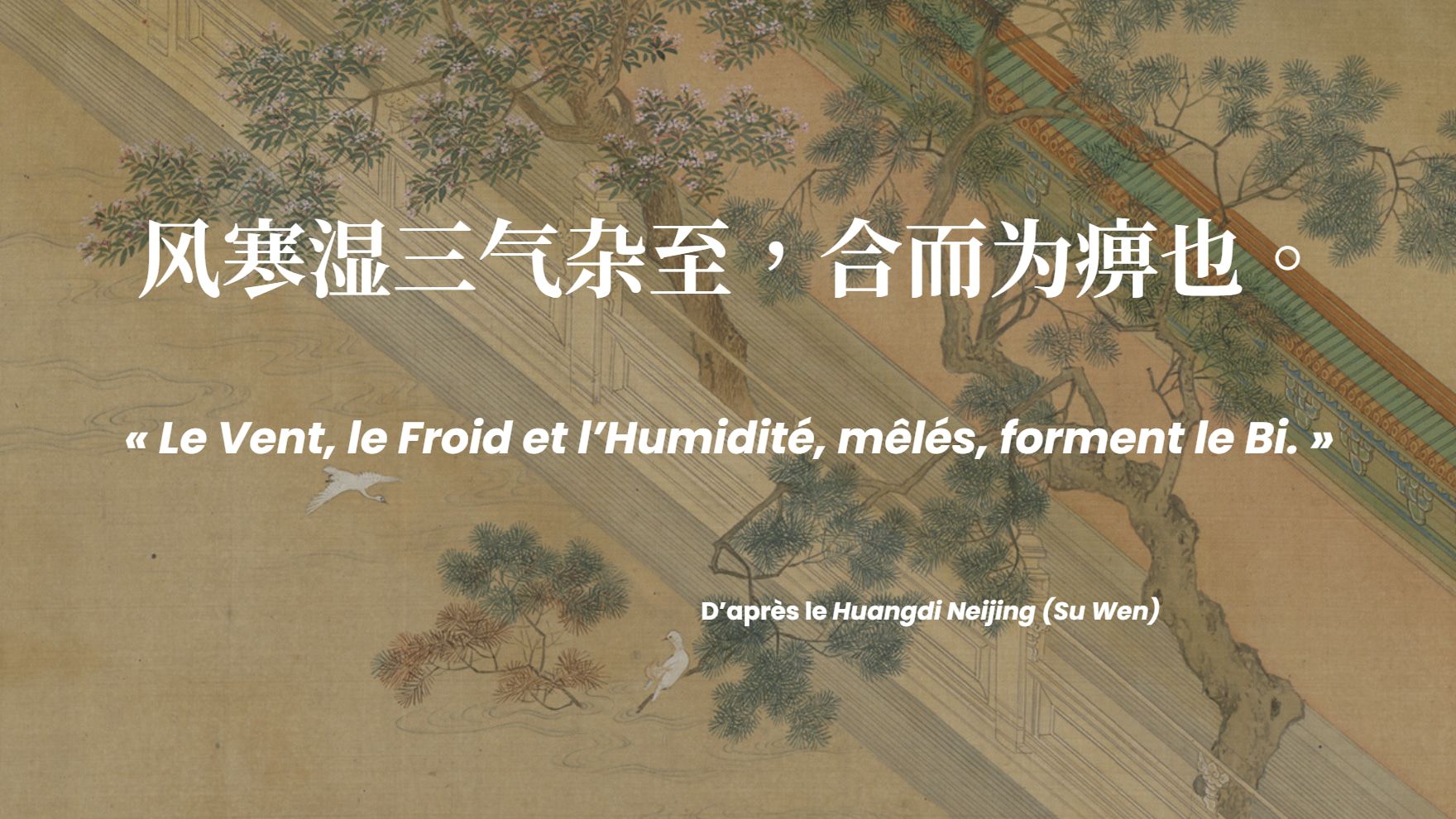
In Chinese medicine, discomfort often appears where something no longer flows freely. As long as Qi, our energy, and Blood circulate harmoniously in the meridians, the joints stay supple. When they slow down or become blocked, discomfort sets in: what no longer flows, hurts. This obstruction has a name: Bi 痹, which can be understood as a blockage.
This blockage often arises where three dimensions meet:
- external factors such as cold, damp, wind or heat;
- a weakened foundation, marked by a lack of Qi or Blood, or a weakness of the Liver and Kidneys;
- and lifestyle, such as a sedentary routine, overwork or an overly heavy diet.
Depending on which dominates, the discomfort takes a different form: cold, hot, stabbing, heavy or linked to fatigue. The same joint discomfort can therefore tell very different stories. This is the reading we will follow through five common profiles.
The five main profiles
To help you find your bearings quickly, here are the five most common profiles described in Chinese medicine. They are not diagnoses, but markers to help you better understand the form your discomfort takes.
| Profile | Dominant sensation | What makes it worse | TCM logic |
|---|---|---|---|
| Cold-Damp | "Rusty" stiffness, especially on waking | Cold, rain, damp | Warm and protect |
| Damp-Heat | Red, hot, swollen joint | Heat, touch, sudden flare-up | Seek advice, avoid heat |
| Qi and Blood Stagnation | Fixed, stabbing discomfort, always in the same spot | Immobility, rest, old injury | Get things moving again |
| Damp-Phlegm | Heaviness, swelling, numbness | Sedentary lifestyle, damp, heavy diet | Lighten and drain |
| Weakened Foundation | Dull discomfort, fatigue, weakness | Overwork, age, lack of recovery | Support over the long term |
The 5 profiles of joint discomfort according to TCM
1. Discomfort that dreads the cold: the Cold-Damp profile
The discomfort gets worse in cold, damp or rainy weather, and eases noticeably with warmth: this is its most characteristic sign. It is often accompanied by stiffness, especially on waking, like a "rusty" joint that movement gradually loosens up.
For Chinese medicine, cold contracts and damp weighs down: together, they slow the circulation of Qi and Blood in the meridians, which encourages Bi to appear.
The logic is therefore to warm and protect the joint, and gradually get the circulation moving again.
2. Red, hot and swollen discomfort: the Damp-Heat profile
The joint is red, hot, swollen and tender to the touch. The discomfort can come on suddenly and does not improve with warmth; heat may even intensify the feeling of discomfort.
For Chinese medicine, damp combines with heat here, which may show up as a local sensation of heat, tension or swelling.
This profile calls for more caution. In the meantime, it is best to avoid any source of heat on the area concerned and to ask a healthcare professional for advice before any local stimulation.
3. Fixed, stabbing discomfort: the Qi and Blood Stagnation profile
The discomfort is precise, always in the same place, with a pricking or needle-like sensation. It tends to appear after an old injury, repeated strain or prolonged immobility.
In Chinese medicine, this sensation reflects Qi and Blood stagnation: circulation is held back locally, which makes the discomfort more intense and more localised.
The priority is to gradually get the area moving again, without forcing, to encourage smoother circulation.
4. Heavy, numb discomfort: the Damp-Phlegm profile
The dominant sensation is heaviness: the limbs feel "bogged down", the joint seems swollen and less mobile, sometimes with numbness. This feeling often comes with general physical fatigue or heavy legs.
For Chinese medicine, persistent damp can become denser and form what tradition calls Phlegm 痰 tán, a stagnation that hinders circulation even further.
The aim is to lighten the terrain, encourage drainage and avoid anything that keeps the damp going.
5. Dull discomfort that returns with fatigue: the Weakened Foundation profile
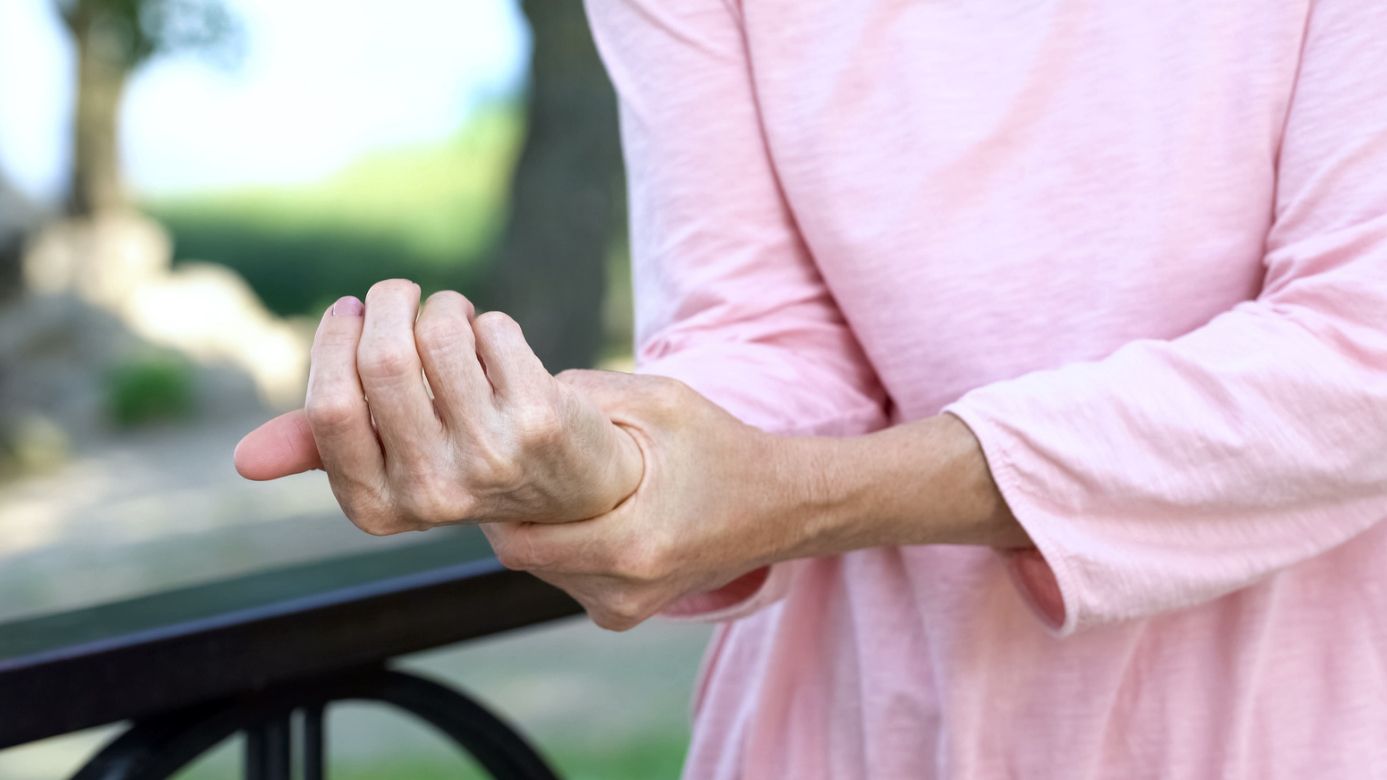
The discomfort is subtle but persistent. It returns with fatigue, overwork or age, often affects the knees or lower back, and comes with a feeling of weakness more than acute discomfort.
For Chinese medicine, this profile reflects a weakened foundation. It may correspond to a Liver and Kidney deficiency, since these nourish the bones and tendons, or to a lack of Qi and Blood, when the body recovers less well.
This is one of the reasons why joint discomfort becomes more frequent with age: over the years, this foundation replenishes itself less well, and the joints are less well supported.
Here, the aim is less to unblock than to gradually strengthen the terrain over the long term.
How to support your joint comfort
1. Move… but not in the same way
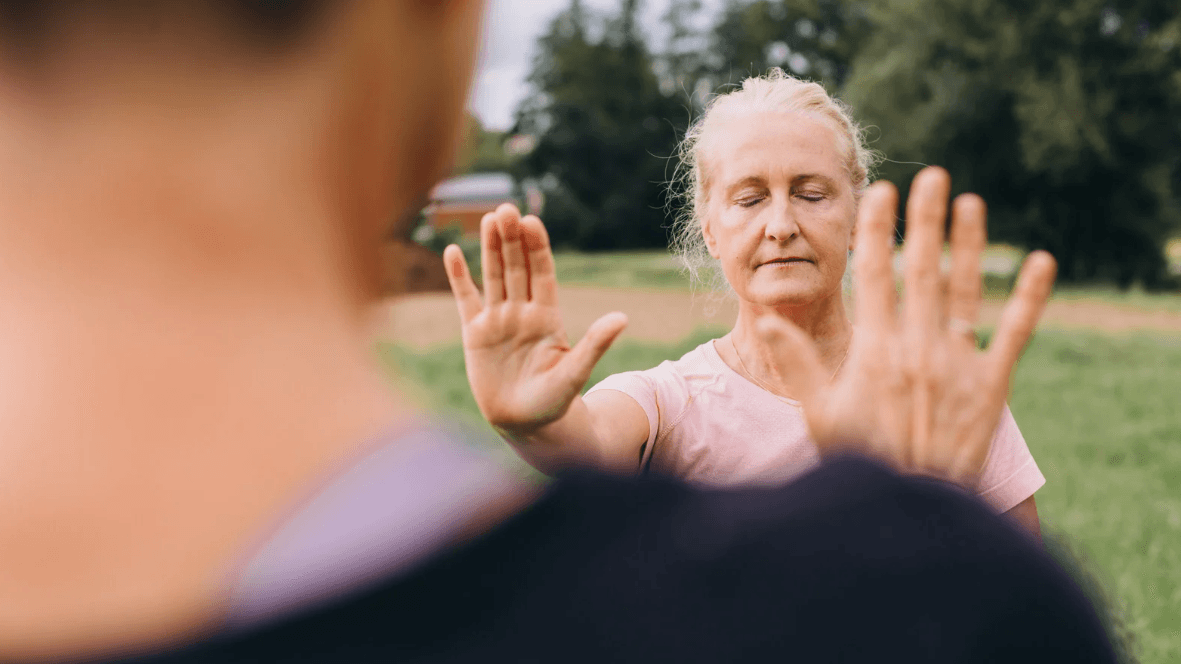
Movement is often one of the first reflexes when a joint is painful. In Chinese medicine, it also helps circulate Qi and Blood. But that does not mean everyone should move in the same way.
When there is Qi and Blood stagnation, or a feeling of heaviness linked to Damp, gentle, regular activity often helps get the circulation moving again. Conversely, with a weakened foundation, the aim is not to add more effort, but to let the body recover gradually. The exercises are then gentler, interspersed with rest.
Finally, when the discomfort is made worse by cold, it is best to avoid activities in cold or damp surroundings and to start by gradually warming up the joints. On the other hand, a red, hot and swollen joint calls for more caution: movements that strongly trigger the discomfort should then be avoided.
2. Acupuncture, massage and warmth: stimulating circulation
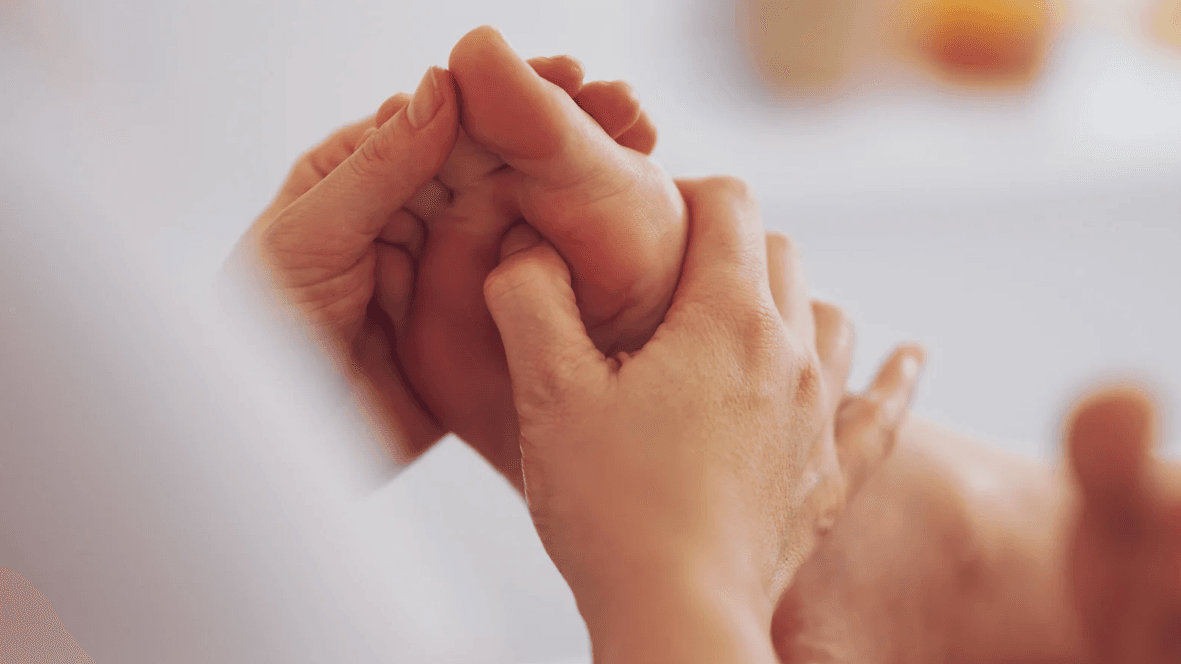
Like movement, stimulation techniques are chosen according to the profile. Some kinds of discomfort love warmth; others, on the contrary, call for more caution.
When the discomfort is made worse by cold and relieved by warmth, moxibustion can be very worthwhile. By spreading the warmth of mugwort close to a point or an area of the body, it aims to warm the meridians, drive out the cold and get Qi and Blood moving again.
Acupuncture, for its part, works by stimulating precise points. In Chinese medicine, it is used to revive circulation in the meridians, release tension and support joint comfort. It must be performed by a qualified professional.
Day to day, acupressure, the manual massage of certain points, lets you apply this principle in a simpler way. Here are a few landmarks traditionally associated with the profiles presented in this article.
| Profile | Traditionally associated points | How to find them easily |
|---|---|---|
| Cold-Damp | Zu San Li (ST36) + Yang Ling Quan (GB34) |
ST36: four finger-widths below the knee, one finger-width outside the crest of
the shinbone. GB34: just below the knee, in the hollow in front of and below the head of the fibula. |
| Qi and Blood Stagnation | He Gu (LI4) + Tai Chong (LR3) |
LI4: on the back of the hand, between the thumb and index finger. LR3: on the top of the foot, in the hollow between the first and second metatarsals. |
| Damp-Phlegm | Yin Ling Quan (SP9) + Feng Long (ST40) |
SP9: on the inner side of the knee, just below the inner condyle of the
shinbone. ST40: on the outer side of the leg, roughly halfway between the knee and the ankle, two finger-widths from the crest of the shinbone. |
| Weakened Foundation | Tai Xi (KI3) + San Yin Jiao (SP6) |
KI3: in the hollow between the inner ankle bone and the Achilles
tendon. SP6: four finger-widths above the inner ankle bone, along the inner edge of the shinbone. |
| Damp-Heat | — | If a joint is red, hot, swollen and particularly uncomfortable, it is best to consult a healthcare professional before any local stimulation. |
Massage each point for 1 to 2 minutes, with gentle, gradually increasing pressure. Stop if the discomfort increases. These self-massage gestures are wellness markers: they do not replace the advice of a professional, especially if the discomfort is marked, recent or persistent, or comes with redness, heat or swelling.
In Chinese medicine, all these techniques share the same idea: getting the circulation moving again.
3. Herbs: a different logic for each profile
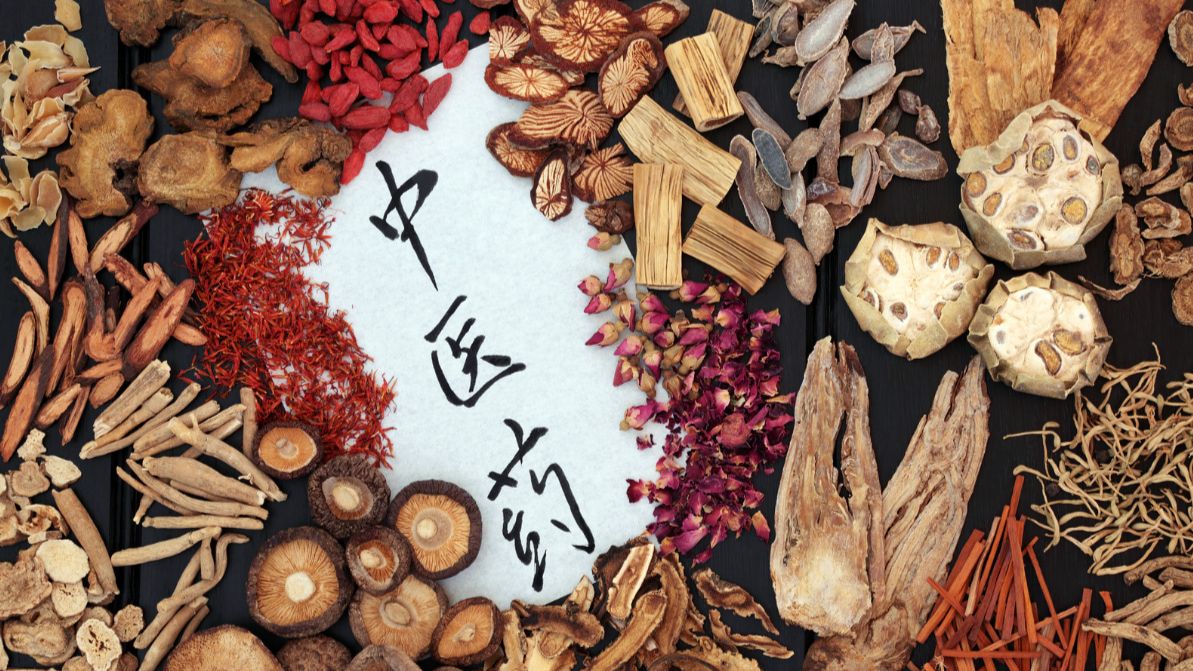
In the Chinese pharmacopoeia, every herb carries an intention: some warm, others get the Blood moving again, others still lighten the damp. The right choice therefore depends not only on the area concerned, but on the profile the discomfort belongs to.
For the Cold-Damp and Weakened Foundation profiles: Du Huo Ji Sheng Tang. This classic formula combines dispelling Wind-Cold-Damp with supporting Qi and Blood. It is traditionally appreciated by those whose discomfort gets worse with cold and damp, and whose lower back and knees become more fragile over time: a common terrain as we get older or recover less well.
For the Qi and Blood Stagnation profile: Turmeric (Jiang Huang). Behind its golden colour, turmeric is best known in TCM for its relationship with Blood circulation. It is associated with fixed, localised discomfort, often following an old knock or a spot that has been under strain for a long time, when the idea is to get what is stagnating moving again.
For the Damp-Phlegm profile: Mulberry twigs (Sang Zhi). Less supple joints, a feeling of heaviness, legs that "drag": mulberry twigs act on Wind-Damp and encourage the drainage of excess water. A suitable support for those who often feel weighed down, particularly with a sedentary lifestyle or in damp weather.
For more comprehensive support: Bai Shao Zhi Tong San. Where a single herb answers a precise logic (cold, stagnation or damp), this formula brings together several complementary herbs. Its intention: to support the terrain, encourage the circulation of Qi and Blood and support mobility over the long term. A foundational choice that suits most profiles, and those who wish to look after their joint comfort day to day.
One exception: if a joint is red, hot and swollen, do not look for the right herb; consult without delay. This kind of manifestation first calls for the advice of a healthcare professional.
Joint discomfort does not always tell the same story
In Chinese medicine, recognising your profile helps you better understand why certain habits, certain herbs or certain approaches seem to work for some people… and less so for others.
Understanding your terrain is already a first step towards more personalised care.
This article is part of a wellness approach to supporting everyday joint comfort. It does not replace the advice of a healthcare professional. Discomfort that sets in, intensifies or comes with redness, heat or swelling always deserves appropriate advice.
Also worth reading
- Ease your joint pain with medicinal plants
- 6 quick exercises to get your energy flowing, at the office or at home
- Sports injuries: prevent, recover and regain balance naturally
References:
- [1] Working Group on Clinical Practice Guidelines for Chinese Medicine Rehabilitation of Xiang Bi. Clinical practice guidelines for Chinese medicine rehabilitation: Xiang Bi (neck pain). Kangfu Xuebao (Journal of Rehabilitation). 2020;30(5).
- [2] LANG Jirui et al. Review of research on classic Chinese medicine formulas in the management of gout. Zhongyao Yaoli yu Linchuang (Pharmacology and Clinics of Chinese Materia Medica). 2023;39(1).
- [3] China Association of Chinese Medicine. Guidelines for the integrated Chinese and Western medicine diagnosis and treatment of knee osteoarthritis. Zhongyi Zhenggu (Journal of Traditional Chinese Orthopedics and Traumatology). 2023;35(6).
- [4] Translated and annotated by Yao Chunpeng. Huangdi Neijing, Zhonghua Book Company, Beijing, 2010.