
Menstruation, though natural, sometimes comes with challenges that deserve particular attention. For the modern, elegant and active woman, it is essential to go through this time with balance and serenity. Behind every symptom - pain, irregularity, fatigue - lies a message your body is trying to send you.
Inspired by the secrets of traditional Chinese medicine (TCM), Calebasse reveals gentle, natural solutions to warm your body, soothe your mind and restore harmony to your menstrual cycle.
Part 1. Period pain - The silent cry of a chilled uterus
Every month, the same scenario plays out: a sharp pain twisting your lower abdomen, a feeling of heaviness weighing on your uterus, electric cramps radiating down to your lower back and thighs. You had planned a productive day, but here you are curled up on the sofa, clutching your hot-water bottle, unable to concentrate. Going out in cold weather? Unthinkable. Even under several layers of clothing, your belly stays icy.
Beyond the pain, your cycle becomes chaotic: dark periods, clots, irregular flow, a feeling of stagnation. Crushing fatigue, a sense of inner cold that drains your energy... The slightest stress, a dish that is too cold or an evening on a café terrace seems to make things worse.
This isn't just a bad patch. Your body is sending you an alarm signal: it is fighting an internal cold that blocks blood circulation and unbalances your menstrual cycle.
The good news? This imbalance is not inevitable. By warming the uterus and encouraging circulation, it is possible to relieve this pain and regain a smooth, calm cycle. Let's dive together into the causes of this "icy rebellion" and discover how to bring it some beneficial warmth.

Why does cold disrupt your periods?
Uterine cold is not just a passing discomfort: it profoundly disrupts the menstrual cycle, intensifies pain, alters the flow and can even affect fertility. Here are the main manifestations of this phenomenon:
-
Poor blood circulation: An under-supplied uterus
When cold sets in, blood circulation slows down. The uterus no longer receives enough warmth or nutrients, causing irregular contractions and intense pain, often accompanied by abdominal heaviness and a persistent feeling of cold.
-
Blood stagnation: Menstrual flow that struggles to pass
Cold makes the blood thicker and more viscous, hindering its flow. The result: dark periods, clots, reduced menstrual volume and increased abdominal pain. The belly feels frozen, as if contracted by the cold.
-
Excessive contractions: Heightened sensitivity to pain
A uterus exposed to cold becomes more reactive and sensitive. Instead of being smooth and natural, its contractions become irregular and excessive. The result: sharp cramps radiating to the back and thighs, making periods particularly painful.
-
Lack of vital energy: Weakened resistance to cold
A body lacking internal energy is more vulnerable to cold. Women prone to uterine cold experience persistent fatigue, icy hands and feet and low vitality, which in turn worsens the intensity and duration of period pain.
-
Build-up of dampness: An energy blockage in the menstrual cycle
Excess cold often goes hand in hand with a build-up of dampness in the body, leading to an irregular menstrual cycle and late or prolonged periods. This imbalance is frequently accompanied by a feeling of heaviness in the legs, swelling and heavier vaginal discharge.
Uterine cold and period pain are often the result of a gradual imbalance, which worsens in winter or after prolonged exposure to cold. By warming the uterus, encouraging blood circulation and clearing energy blockages, it is possible to relieve cramps and regain a smoother, more harmonious cycle.
Recommended solutions

Coco-grass is a medicinal plant commonly used in Chinese medicine to regulate vital energy. For generations, it has been used to relieve menstrual problems in women, such as irregular periods and period pain.
Its taste is slightly pungent and bitter, and its nature is warm without being drying.
Coco-grass helps soothe the liver, ease emotional tension, regulate menstruation and relieve pain. It is particularly effective for period pain linked to poor circulation of vital energy, such as lower abdominal pain and breast tenderness. Coco-grass can be used on its own or combined with other medicinal plants such as Dang Gui (Chinese angelica) and Chuan Xiong (Sichuan lovage) to strengthen its effects on the circulation of energy and blood.
Recipe: Coco-grass and brown sugar infusion
Ingredients:
- Coco-grass (Rhizoma Cyperi): 10 g
- Brown sugar: 15 g
- Fresh ginger: 3 slices
Method:
- Boil the coco-grass and ginger in 500 ml of water for 15 minutes.
- Strain to remove the residue.
- Add the brown sugar and stir well before drinking.
How to use:
Start drinking 3 to 5 days before your period, once a day, until the end of menstruation.
Benefits:
Relieves period pain caused by poor circulation of vital energy, such as abdominal pain, bloating and breast tenderness.
Precautions:
Not recommended for pregnant women.
Use with caution in cases of general weakness (chronic fatigue or lack of energy).

Lindera root is a medicinal plant with a pungent, warm nature, known for warming the uterus, dispersing cold, encouraging the circulation of vital energy and relieving pain. Traditionally, it is used to treat period pain caused by cold and poor circulation of energy. It is particularly suited to women who suffer from lower abdominal pain during their periods, made worse by cold, together with a scant, dark menstrual flow with clots. Lindera root helps warm the uterus, encourage the circulation of energy and blood, and relieve pain. It can be used on its own or in combination with other warming plants such as Rou Gui (Cinnamon) and Dang Gui (Chinese angelica) to strengthen its effect on regulating menstruation and relieving pain.
Recipe: Lindera root, ginger and brown sugar infusion
Ingredients:
- Lindera root: 10 g
- Fresh ginger: 5 slices
- Brown sugar: 15 g
Method:
- Boil the Lindera root and ginger in 500 ml of water for 15 minutes.
- Strain to remove the residue.
- Add the brown sugar and stir well before drinking.
How to use:
Start drinking 3 to 5 days before your period, once a day, until the end of menstruation.
Benefits:
Relieves period pain caused by cold and poor circulation of vital energy, such as lower abdominal pain, scant periods and blood clots.
Precautions:
Not recommended for pregnant women.
Use with caution in cases of internal heat (hot flushes or night sweats).

- Cut a slice of ginger about 3 mm thick and pierce a few small holes in it.
- Place the ginger slice on the navel, then set a moxa cone on top and light it.
- Leave it on for 10 to 15 minutes. For women prone to painful periods, regular use is recommended.
- Brisk walking (30 min/day) → Improves uterine blood circulation by 10%.
- Swimming (2 h/week) → Increases the uterus's capacity to contract by 10%, thereby promoting better internal temperature regulation.
- Opt for high-waisted trousers and heat patches to keep the uterus warm.
- After exercise, dry yourself off immediately and put on warm clothes to stop damp and cold from getting into the body.
- Dried mugwort: 30 g
- Fresh ginger: 5 slices
- Coarse salt: as needed
- Put the mugwort and ginger in a saucepan.
- Add 1000 ml of water and boil for 15 minutes.
- Pour the decoction into a foot-bath basin.
- Once the water has reached a comfortable temperature, add the coarse salt and stir well.
- Soak your feet up to the calves for about 20 minutes, until you sweat slightly.
- Dried yam (Chinese yam): 30 g
- Red jujubes (Hong Zao): 6
- Dried longans (Gui Yuan): 10 g
- Goji berries: 10 g
- Rock sugar: as needed
- Soak the dried yam in water for 30 minutes.
- Wash the red jujubes, longans and goji berries.
- Put the rehydrated yam, red jujubes, longans and goji berries in a saucepan with an appropriate amount of water.
- Bring to the boil over a high heat, then lower the heat and simmer for 30 to 40 minutes.
- Add rock sugar to taste and simmer for another 5 minutes until the soup is rich and fragrant.
- Late periods
- Emotional fluctuations (irritability, anxiety, depression)
- Tightness in the chest, insomnia
- A dull, yellowish complexion
- Period pain, abdominal bloating
- These symptoms are often accompanied by unstable moods and irregular menstrual cycles.
- Dried longan (longan flesh): 10 g
- Jujubes: 5
- Chicken (whole chicken or pieces): 300 g
- Fresh ginger: 3 slices
- Wash the chicken and cut it into pieces, stone the jujubes, and prepare the longan and ginger.
- Put the chicken, jujubes, longan and ginger in a saucepan, add enough clean water and bring to the boil over a high heat.
- Lower the heat and simmer for 1 hour, then season with salt.
- Preparation: Cut a slice of fresh ginger about 0.2 to 0.3 cm thick and pierce a few small holes in it.
- Setting up: Place the ginger slice on the Guānyuán point and set a moxa cone on top.
- Lighting: Light the moxa and let it burn down.
- Duration: Carry out moxibustion for 5 to 10 minutes per session, once a day.
- 5 g dried rose flowers
- 15 g brown sugar
- Place the rose flowers in a teapot.
- Add 500 ml of water and bring to the boil.
- Lower the heat and simmer for 5 minutes.
- Add the brown sugar, stir and leave to cool slightly before drinking.
- Activates blood circulation and regulates menstruation.
- Relieves the symptoms of Qi and blood stagnation (irregular periods, bloating and period pain).
- Nourishes the blood, improves a dull complexion and reduces fatigue.
- Rose is slightly warming and suits women with a cold constitution or suffering from Qi and blood stagnation.
- People prone to excess internal heat or inflammation should avoid drinking this tea.
- Pregnant women should refrain from using rose because of its blood-activating properties.
- Gui Zhi (Cinnamon twigs)
- Fu Ling (Poria cocos)
- Mu Dan Pi (Peony roots)
- Tao Ren (peach kernels)
- Bai Shao (white peony)
- Sharp or throbbing pain in the lower abdomen before or during periods.
- Dark menstrual blood with clots, with pain relieved once the clots have passed.
- A dull complexion, purplish lips and other signs of blood stasis.
- Nourish and activate the blood.
- Regulate menstruation.
- Relieve pain.
- Ease dryness and support intestinal transit.
- Supports a more harmonious menstrual cycle, helping to balance scant periods.
- Brings vitality and radiance, reducing fatigue, dizziness and a dull complexion.
- Encourages blood circulation, which is essential for boosting the energy of women with deficient Qi and blood.
- 10 g Chinese angelica (Dang Gui).
- 5 jujube fruits.
- 10 g goji berries.
- 3 slices of fresh ginger.
- Place the angelica, jujube fruits, goji berries and ginger in a porcelain electric multicooker or an earthenware pot.
- Add water and bring to the boil.
- Lower the heat and simmer for 20 minutes.
- Add the rock sugar, simmer for another 5 minutes and serve.
- Use in moderation if you are prone to internal heat or heavy periods.
- Not recommended for pregnant women, because of its stimulating action on blood circulation.
- Warms the meridians and encourages the circulation of internal energy.
- Dispels cold and helps relieve pain linked to blood stagnation.
- Nourishes and revitalises the blood, thereby supporting the body's balance.
- Particularly beneficial for women suffering from scant periods, abdominal pain or cold hands and feet due to internal cold.
- Chinese angelica (Dang Gui) 10 g
- Fresh ginger 5 slices (about 15 g)
- Lamb 300 g
- Cooking wine 20 ml
- Salt 2 g
- Water 1500 ml
- Place the lamb pieces in a saucepan, add the cooking wine and cover with water.
- Bring to the boil over a high heat to remove impurities and reduce the smell.
- Drain and set aside.
- In an earthenware pot, add the blanched meat, the ginger slices and 1500 ml of water.
- Bring to the boil over a high heat, then lower the heat and simmer for 1 hour 30 minutes.
- Stir in the Chinese angelica (Dang Gui) and simmer for another 15 minutes to draw out all its benefits.
- Add the salt at the end of cooking, stir well and serve hot.
- Women prone to internal cold, with blood deficiency and period pain.
- Those who feel a persistent sensation of cold, especially in the lower abdomen, hands and feet.
- People with excess internal heat or an energy imbalance linked to excessive dampness.
- Women with heavy menstrual flow.
- Not recommended during pregnancy because of its stimulating effects on blood circulation.
- Soak the Hong dou in about 5 cm of water for 12 hours and all the other ingredients for 1 hour.
- Bring the mixture to the boil, then cook for 30 to 45 minutes.
- Add brown sugar.
- Nourishes Qi and blood while being delicious.
- Principle: This point regulates the spleen, liver and kidneys, playing a key role in treating menstrual problems.
- Method: Light a moxa stick and hold it 1.5 - 3 cm from the skin over the point.
- Duration: 10 to 15 minutes per session.
The Menstrual Comfort Formula is a food supplement made from 11 Chinese plants. Inspired by traditional Chinese medicine, it helps women live through their periods more comfortably. Indeed, Dang gui (Chinese angelica) and Bai shao yao (white peony root) are known to contribute to the maintenance of women's health. Yi mu cao (motherwort), for its part, is reputed to help maintain good comfort before and during the menstrual cycle. In addition, Xi lan rou gui (cinnamon bark) has tonic effects on the body and helps strengthen the body, and Gan jiang (ginger root) contributes to the normal functioning of the intestinal tract.

The Painful Periods Herbal Tea, or Tong jing zhi tong tang, is a preparation that lives up to its name, since it helps women live through the menstrual cycle more comfortably.
Made from three Chinese plants: Lindera root (Wu yao), motherwort (Yi mu cao) and coco-grass ( Xiang fu ), this herbal tea is popular in Asia for its action on menstrual cramps. By encouraging blood circulation, the Painful Periods Herbal Tea soothes discomfort and harmonises the cycle . It is recommended for women who experience difficult and irregular periods.
Even in the middle of a busy working day, you can easily enjoy a cup of this infusion to relieve the discomfort of period pain, regain your vitality and take care of your body. Stay efficient and take on every challenge with complete serenity!

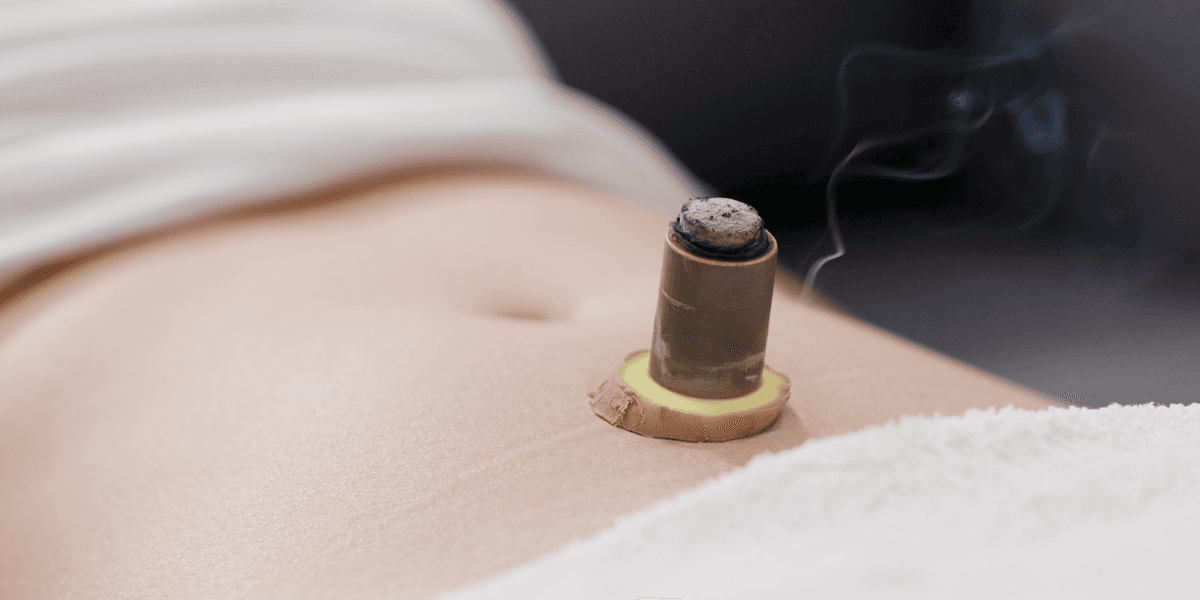
How do you practise ginger moxibustion?
Why the navel, and how do you find it?
The navel, also called "Shen Que" in Chinese medicine, is a key point of energy balance and a major energy centre. Located on the Ren Mai meridian, it is linked to the vital organs such as the heart, the lungs, the spleen, the stomach and the kidneys. In traditional Chinese medicine, it is regarded as the root of vital energy. Stimulating and warming this area improves blood circulation, balances internal energy and supports the proper functioning of the organs.
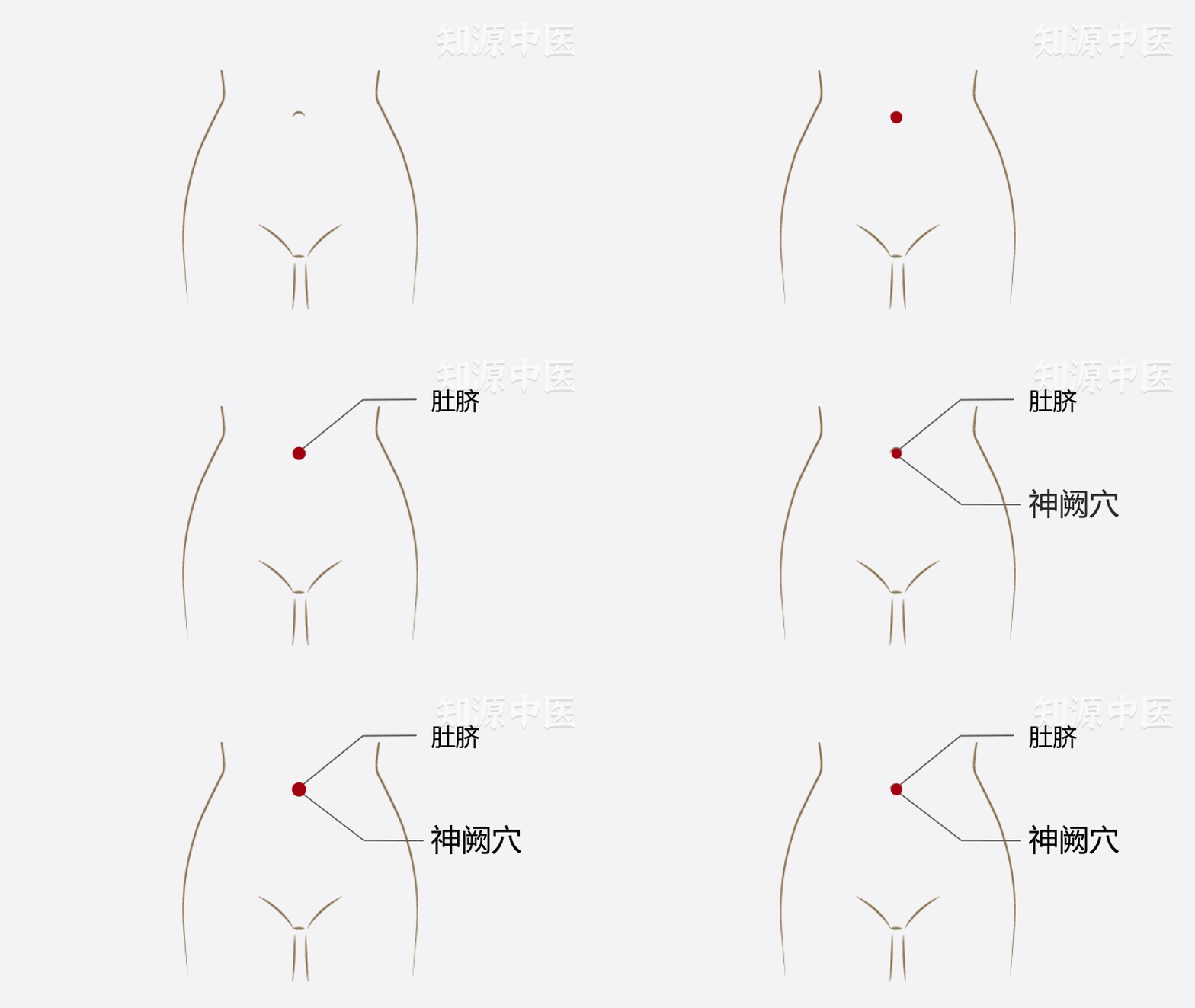
In winter, navel therapy is ideal for warming the uterus and relieving period pain. Ginger moxibustion is an effective method: the heat of the mugwort combined with the warming properties of ginger helps dispel cold, activate blood circulation and reduce period pain. Regular practice brings the best results.
How do you practise ginger moxibustion?
How to do it?
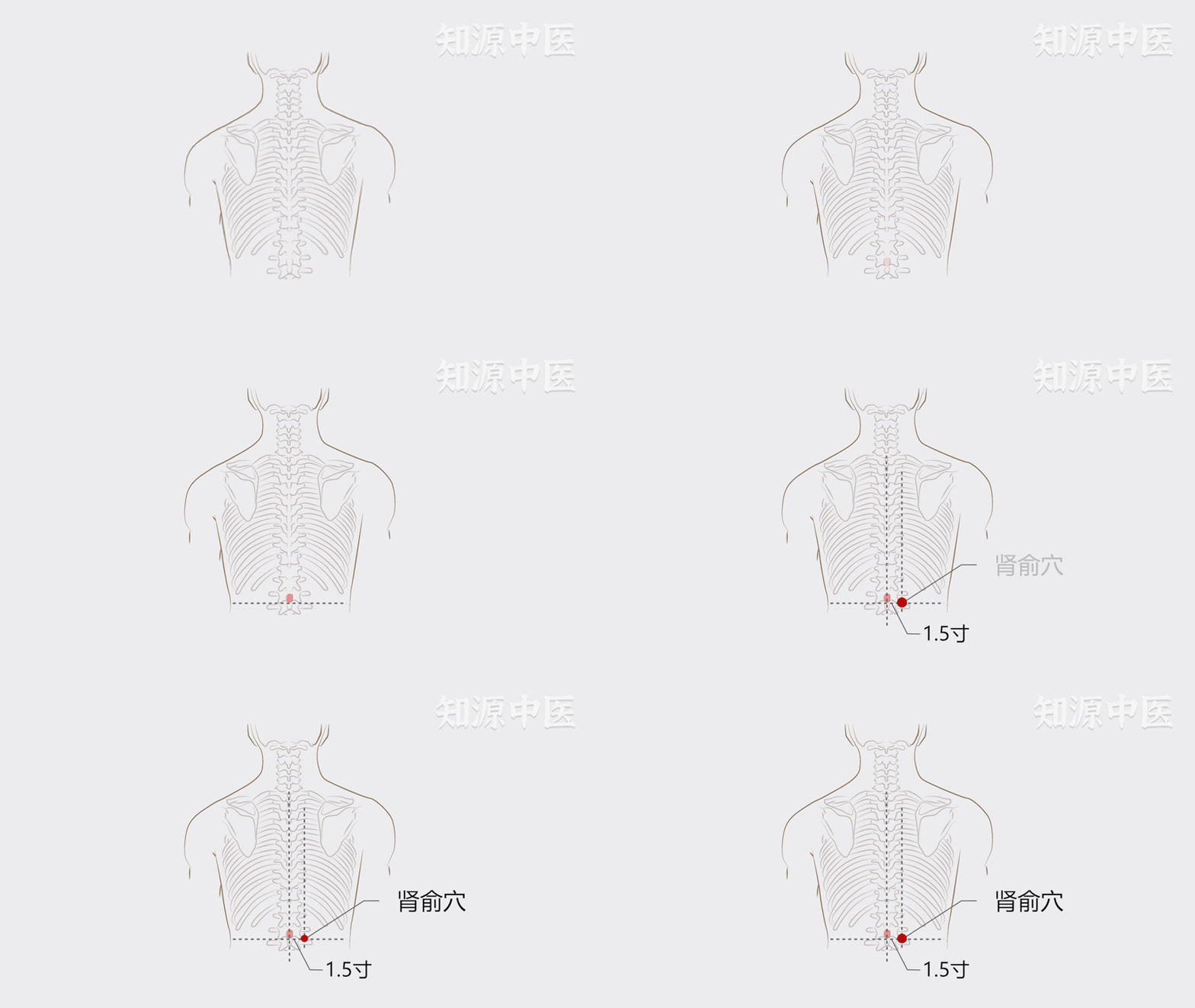
With your thumbs, massage the ShenShu point (located on either side of the spine, at kidney level) in circular movements for 30 to 60 seconds. Massage both sides at the same time or alternately.
When to do it?
This exercise is particularly effective if done one week before your period. By encouraging the flow of menstrual blood and correcting a possible retroverted uterus, it helps reduce pelvic congestion and effectively relieves pain.
Pelvis-stretching yoga pose
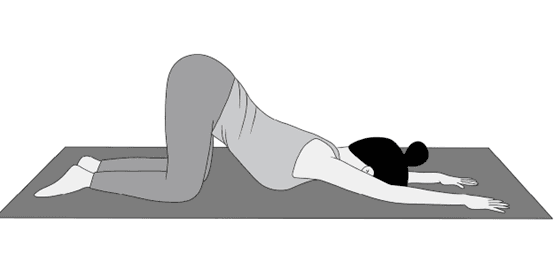
Kneel on the bed, lean your upper body forward, rest your forearms on the mattress and lower your chest while keeping your hips raised.
Take up a gentle sportBy adopting these simple habits and incorporating natural care such as ginger moxibustion, it is possible to relieve period pain and regain an optimal hormonal balance.
Part 2: Late periods - When cold blocks the way
Is your usually punctual cycle keeping you waiting for no apparent reason? This delay may be a sign of cold accumulating in the uterus, disrupting its natural functioning. If you spend your days with an iced drink in hand or your nights are too short, your uterus bears the consequences, silently.
Cold slows the blood
In traditional Chinese medicine (TCM), there is a saying: "Cold slows the blood" (寒气入经,血凝不流 - Hán qì rù jīng, xuè níng bù liú). In other words, when cold enters the meridians, it slows blood circulation and disrupts the menstrual cycle. Women exposed to cold, chronic stress or excessive fatigue are particularly vulnerable to this imbalance.
Recommended solutions
Mugwort warms the uterus, drives out cold and stimulates blood circulation. Combined with brown sugar, it becomes a gentle and effective way to regulate the cycle. Mugwort is a plant with a hot nature that warms the meridians, relieves pain, drives out cold and regulates vital energy. Used externally, it helps disperse cold, warm the uterus and encourage blood circulation through methods such as hot compresses or foot baths. This helps relieve period pain and regulate late periods.
Routine: Mugwort foot bath to warm the uterus
Benefits:
Warms the meridians and drives out cold, relieves period pain caused by cold and damp, such as lower abdominal pain, late periods and a cold feeling in the lower abdomen.
Ingredients:
Method:
How to use:
Start 5 to 7 days before your period, once every evening, and continue until the end of menstruation.
Precautions:
Suitable for women with uterine cold who often have cold hands and feet.
Not recommended for pregnant women, women during menstruation or people with skin lesions, to avoid irritation or disruption of the menstrual flow.

Yam, often called a "natural treasure of nutrition", is a precious food in Chinese medicine for toning the spleen and stomach while regulating energy and blood. Rich in mucilage, vitamins and trace elements, it helps strengthen digestion, revitalise vital energy and nourish the blood. Yam is particularly recommended for women suffering from late periods, scant periods, fatigue and weakness, often caused by a deficiency of vital energy and blood.
Neutral in nature, yam can both tone the spleen and stomach and gently moisten to balance hormones and regulate the menstrual cycle. Taken internally, it can be combined with warming ingredients such as jujube fruits (Da zao) and longan fruit (Long yan rou) to strengthen its effects on energy and blood, thereby helping to correct menstrual problems linked to an energy deficiency.
Recipe: Yam, red jujube and longan soup
Benefits:
Tones vital energy and nourishes the blood, warms the spleen and stomach, and helps regulate the symptoms of late periods, scant menstrual flow and fatigue linked to an energy deficiency.
Ingredients:
Method:
How to use:
Start 5 to 7 days before your period, once a day, and continue for one week.
Precautions:
Suitable for women with an energy deficiency and late periods.
To be consumed in moderation by people with a damp-heat constitution.
People with diabetes should adjust the amount of rock sugar or consult a healthcare professional before consumption.

Xiao Yao San is a classic Chinese medicine formula from the ancient treatise《太平惠民和剂局方》(Taiping Huimin Heji Ju Fang). It is traditionally used to treat menstrual problems and emotional fluctuations in women. Made mainly of Chai Hu (Radix Bupleuri), Bai Shao (white peony root), Dang Gui (Chinese angelica), Fu Ling (Poria) and Gan Cao (liquorice), this formula harmonises energy and blood, frees the liver from emotional stagnation and regulates menstruation.
It is particularly effective for relieving stress, soothing the emotions and treating menstrual problems linked to liver stagnation, such as late periods, scant periods and period pain. Xiao Yao San is also reputed for its balancing action on the female endocrine system.
Tips for using Xiao Yao San
Suitable for women with symptoms caused by stagnation of liver energy and poor blood circulation, such as:
Start 7 days after the end of the menstrual cycle and continue for 10 days.
The course can be extended depending on your constitution and the severity of the symptoms, but the dosage must be adjusted according to the recommendations of a Chinese medicine practitioner.
Precautions:Not recommended for people with marked internal damp-heat, weakness of the spleen and stomach, or gastrointestinal disorders.
Not to be used by pregnant women.
Before starting, consult a doctor specialising in Chinese medicine to check whether this formula suits your constitution and your specific needs.

Longan, jujube and chicken soup recipe
Drink twice a week, one cup at a time, preferably before or after your period.
Precautions:Suitable for women with weak vital energy and blood, especially those suffering from fatigue or with a pale complexion. People with a damp-heat constitution should consume it in moderation.


The Guan Yuan point lies 4 finger-widths below the navel; it is a "key centre" for regulating the female reproductive system. By practising moxibustion daily for 10 to 15 minutes, you can not only disperse cold but also strengthen Yang energy, thereby warming the uterus.
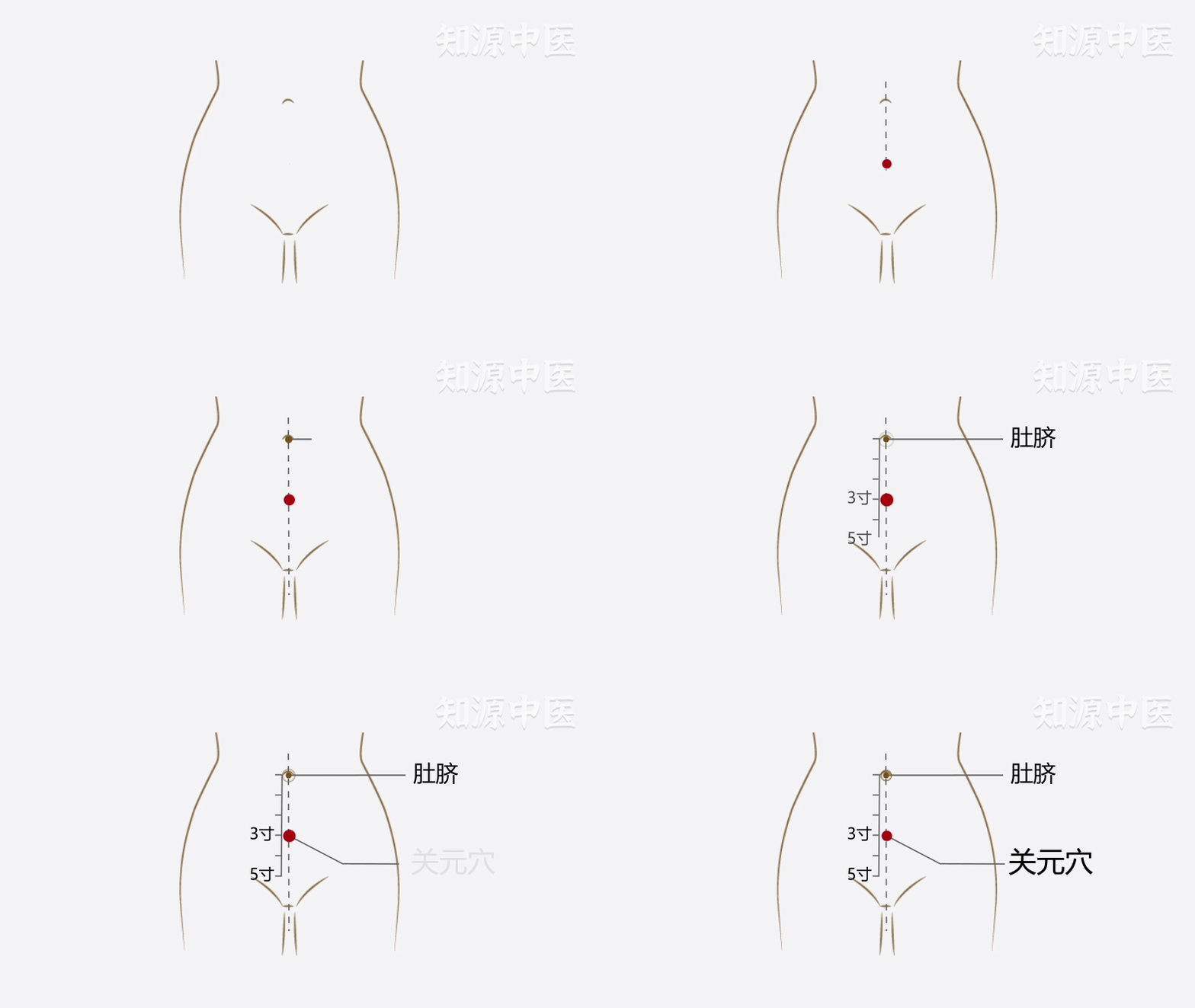
How ginger moxibustion works:
Menstrual blood comes from the uterine palace (bāo gōng), located in the lower abdomen and connected to the Chong and Ren meridians. Moxibustion on Guānyuán helps regulate these meridians and balance the sources of Yin and Yang energy.
Method:
1. Get moving to chase away the cold
A light jog or a brisk walk of 20 to 30 minutes every morning encourages blood circulation and helps dispel that persistent feeling of cold in the hands and feet.
2. Avoid iced food and drinks
Tempting as they may be, ice creams, iced coffees and other cold foods weaken the uterus, especially before and during your period. Choose lukewarm or hot drinks to preserve your inner balance.
3. Wear warm clothes
Opt for high-waisted trousers and heat patches to protect your belly from the cold while staying elegant and comfortable.
With these simple habits, take care of your women's health by adopting TCM-inspired habits suited to your daily life.

Part 3: Dark blood and clots - When blockages set in
If your periods often come with dark blood clots and an irregular flow, it is no mere coincidence. It is a signal your uterus is sending to indicate an internal blockage. Insufficient circulation of Qi and blood, combined with repressed emotions, can lead to blood stagnation, affecting your menstrual well-being.
When Qi and blood do not flow, they stagnate
In traditional Chinese medicine, blood stagnation is often linked to emotional blockages such as stress or melancholy. Obstructed Qi, particularly in the Liver, can worsen the invasion of cold, slowing blood circulation even further and encouraging clots to form.
Moreover, "Stagnant blood generates cold", and this cold in turn exacerbates the stagnation, leading to darker periods with more clots. Understanding these imbalances lets you adopt natural solutions to restore the fluidity of your cycle and encourage a more harmonious menstrual flow.
Recommended solution
Rose is a gentle remedy for regulating periods and enhancing the complexion. Nicknamed "the queen of flowers", it is not only a romantic symbol but also a precious plant in TCM for regulating Qi and blood. It has properties of regulating Qi, easing the emotions, activating blood circulation and reducing pain. It is ideal for treating menstrual problems caused by stagnation of Qi and blood, such as irregular periods and period pain.
With its gentle, warming nature, rose can be combined with brown sugar and goji berries to balance Qi and blood while soothing the emotions. It is particularly beneficial for easing fatigue and mood swings during menstruation.
Recipe: Rose and brown sugar tea
Ingredients:
Method:
Directions:
Start drinking this tea 5 days before your period, once a day, and continue for 5 days.
Benefits:
Precautions:

Taken from the 金匮要略 (Jīn Guì Yào Lüè, Essential Prescriptions of the Golden Cabinet), this classic formula activates blood circulation, dispels stasis, warms the meridians and dissolves accumulations. Its ingredients include:
This formula is particularly suited to women suffering from period pain caused by blood stagnation. Symptoms include:
It can also be used to treat other gynaecological problems linked to blood stasis, as well as menstrual irregularities.

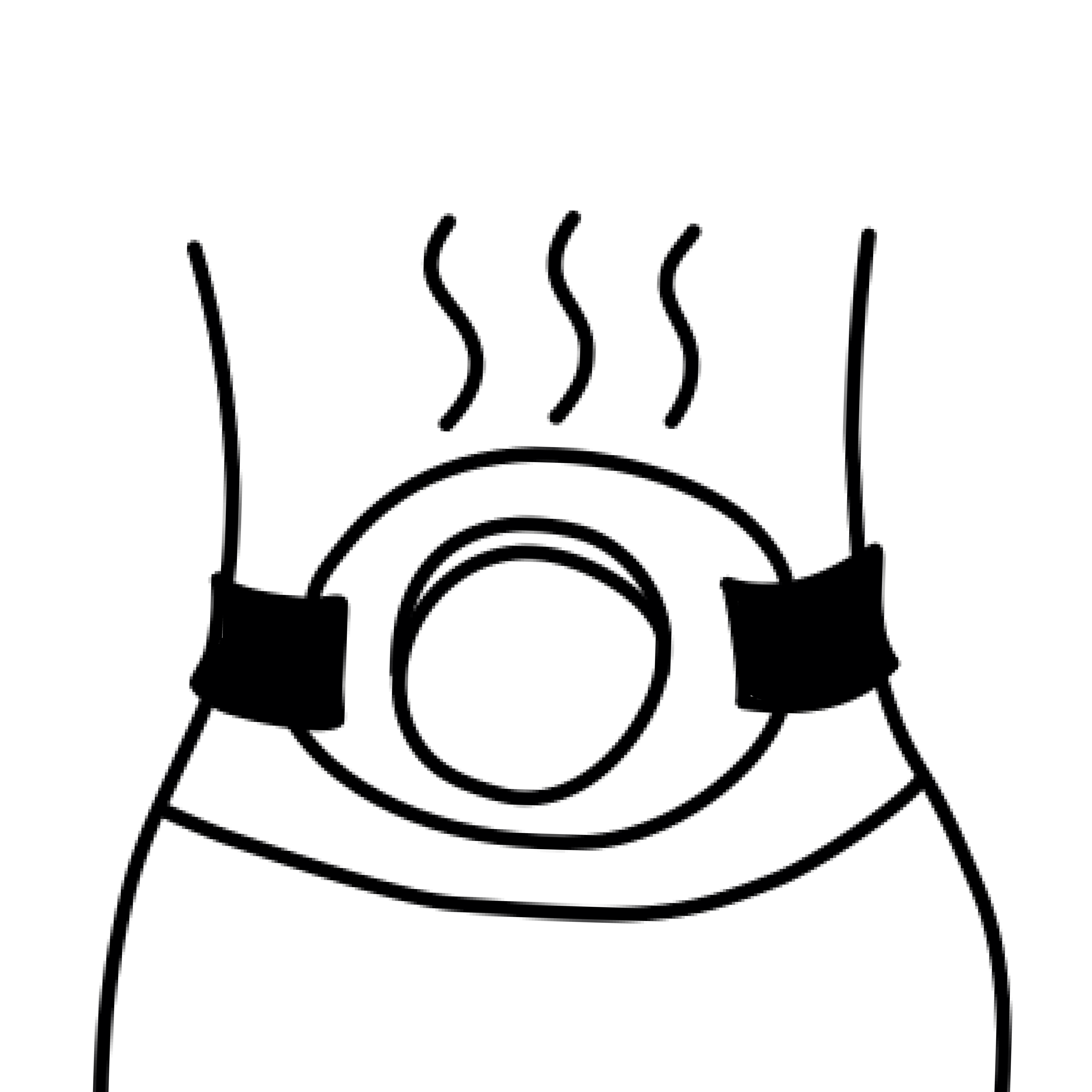
A ritual to warm the uterus. Get yourself a small portable moxibustion box. Light a mugwort stick after work and let the heat gently warm the area around your navel. This warmth can dispel blood stasis.


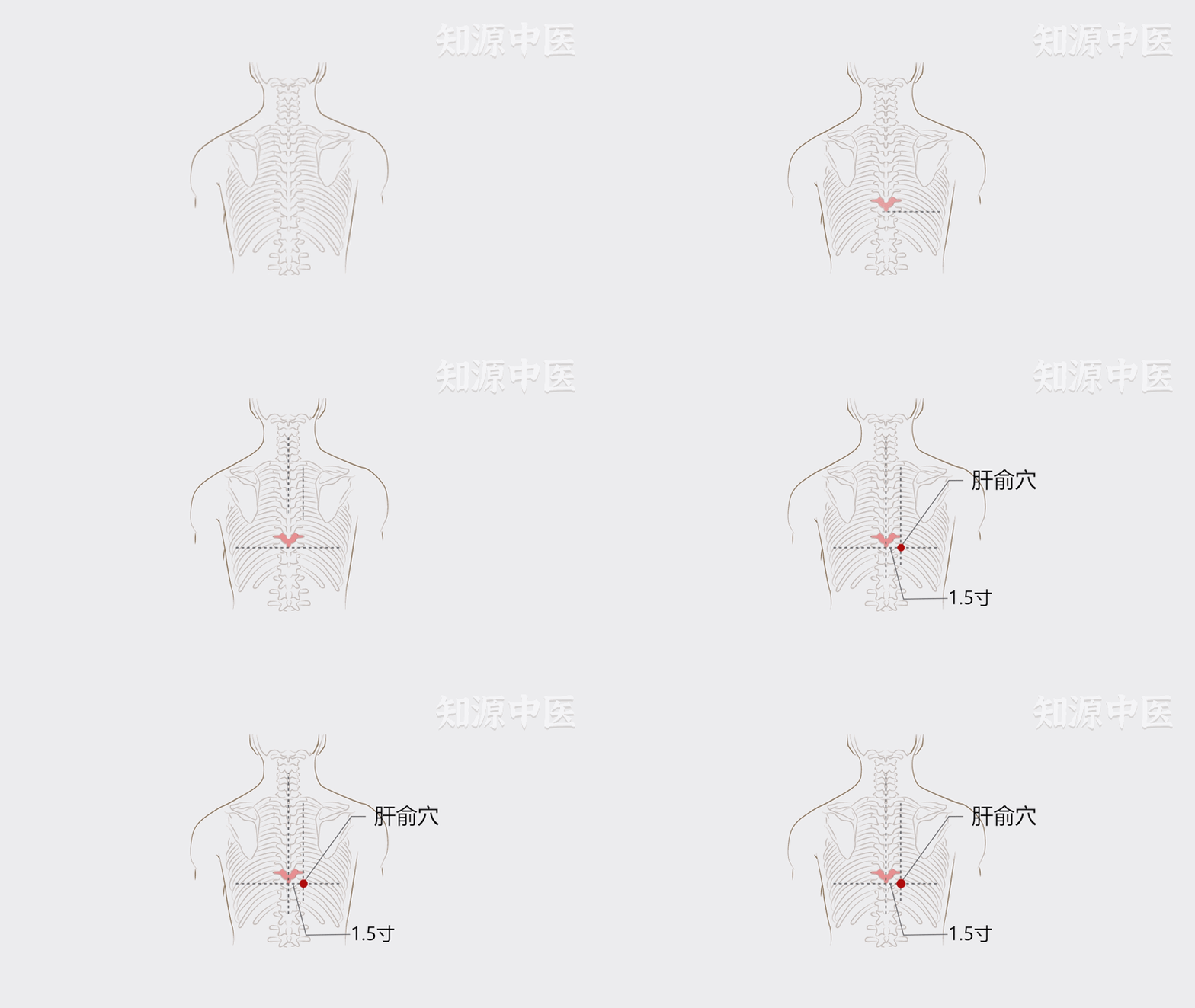
The Gān Shū point, located 1.5 cun on either side of the ninth thoracic vertebra, is essential for soothing the liver and easing the emotions. Massaging this area regularly helps resolve blood stasis problems.

1. Release your emotions
Practise deep-breathing exercises or yoga before your period to relieve stress and stop your emotions from blocking the circulation of Qi and blood.
2. Avoid cold foodsCut down on iced drinks, crab or sashimi, which can chill the uterus.
With these TCM tips, you can better understand and take care of your women's health day to day.

Part 4: Scant periods - A uterus short of vitality
When your period makes a brief, discreet appearance before vanishing just as quickly, you might think your hectic lifestyle is pushing it to keep a lower profile. In reality, a lack of circulation of Qi and blood is often the cause.
Stress, short nights, an unbalanced diet… All these habits draw on your body's energy reserves, leaving your uterus too weakened to function fully.
When the sea of blood runs low, the uterus weakens.
In Chinese thought, the uterus is often compared to a fertile field, while the blood plays the role of a nourishing spring. When the reserves of Qi and blood dwindle, it is as if the water were running out, depriving the uterus of the energy it needs for an optimal cycle.
Internal cold often makes this situation worse, slowing blood circulation even further, which explains periods that are paler, lighter and less abundant.
Recommended solution
Chinese angelica, nicknamed women's ginseng, has for centuries been the herb of choice for treating menstrual problems. Called the Qi remedy within the blood, it is used to:
It is particularly suited to women with infrequent or late periods due to blood deficiency or blood stasis. With its gentle but warming nature, it can be combined with jujube fruits and goji berries to maximise its nourishing and beautifying effect.
Recipe: Angelica, jujube and goji berry soup
Benefits:
Ingredients:
Method:
How to use:
Drink this soup once a day for 5 days, starting one week before your period.
Precautions:
Slightly warming, angelica is ideal for women with a cold constitution or blood deficiency. However, some precautions should be taken:
Recipe: Lamb soup with Chinese angelica and ginger
Benefits:
Ingredients:
Method:
1. Blanch the meat:
2. First cooking stage:
3. Adding the Chinese angelica:
4. Seasoning:
How to use:
Start drinking it one week before menstruation, 2 to 3 times a week, for 3 cycles.
Who is it for:
- Recommended for:
- Not recommended for:

Drawn from a classic of traditional Chinese medicine, this formula is renowned as the foremost gynaecological remedy and remains an essential reference for women wishing to nourish their blood, regulate their menstrual cycle and improve blood circulation. For centuries, it has been used to restore energy balance and relieve problems linked to blood imbalances.
Made from a harmonious blend of medicinal plants, this preparation is built on four main ingredients: Chinese angelica (Dang Gui), recognised for its toning and nourishing action on the blood; Sichuan lovage (Chuanxiong), which encourages blood circulation and eases period pain; white peony (Bai Shao), with soothing virtues that preserve Yin and relieve liver tension; and finally prepared rehmannia (Shu Di Huang), a powerful blood tonic that revitalises and nourishes in depth.
Thanks to this unique combination, the formula helps restore feminine vitality by balancing blood flow, preventing stagnation and easing the symptoms linked to blood deficiency. Over the centuries, it has stood the test of time and established itself as a gentle, natural solution to support menstrual well-being.
Find out more about Si Wu Tang
Who is it for:
This formula is aimed mainly at women suffering from scant periods, pale menstrual blood, dizziness, a dull complexion, palpitations and insomnia, signs often associated with blood deficiency. It is also recommended for women who feel increased fatigue at the end of their menstrual cycle, have dry skin or are prone to significant emotional fluctuations.
Dosage:
It is recommended to start taking this decoction 3 to 5 days after the end of menstruation to support the recovery and regeneration of blood. A course generally lasts 7 days and can be followed over 3 consecutive menstrual cycles for an optimal effect on regulating menstruation and nourishing the blood.
Advice:
Avoid in case of a cold, heavy periods or symptoms of excessive heat. It is important to consult a doctor or a traditional Chinese medicine practitioner before use to avoid inappropriate use.

Five Red Congee with Longan and Peanuts is a classic recipe in China. This congee, made from six plants (Xiao zao, Nuo mi, Hua sheng, Hong dou, Gou qi and Long yan rou), nourishes Blood and Qi and supports healthy skin.
Find out more
Method:
Benefits:

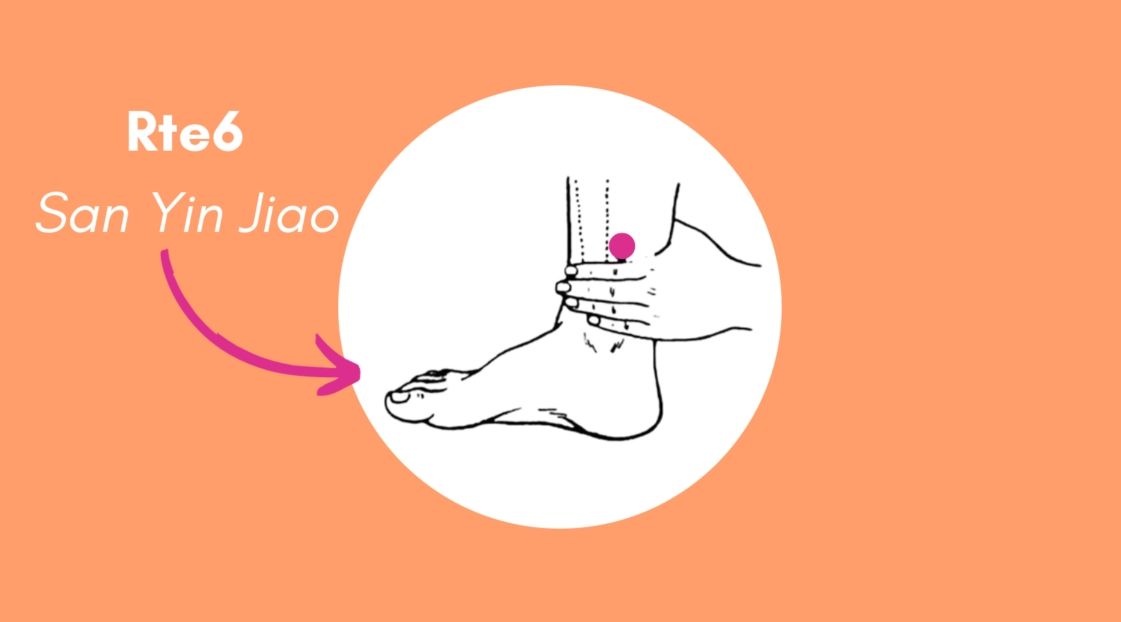
The San Yin Jiao point is known as the "number one point in gynaecology". With moxibustion, it warms and revitalises the whole body while strengthening Qi and blood.
Before and after menstruation, warm your hands and gently massage your lower abdomen clockwise. This helps strengthen the energy of the uterus.
1. Foot bath for cycle disorders
The foot bath is an external method commonly used in traditional Chinese medicine. By acting on the meridians of the foot, the Foot bath for cycle disorders encourages the circulation of Qi and Blood and is therefore a help for living through your periods more comfortably.
Soak your feet in hot water for 15 minutes every evening. Use bath sachets specially designed to warm the uterus and encourage blood circulation.
Developed for women's well-being, this foot-bath preparation is made from 12 Chinese plants. By acting on the meridians of the foot, it encourages the circulation of Qi and Blood and is therefore a help for living through your periods more comfortably.

2. Avoid sitting for too long
Get up every hour and walk for 10 minutes. This helps relieve pelvic congestion and improves circulation to the uterus.
A health message: Take care of your uterus, one small step at a time
Your periods are a reflection of your health. By taking care of your body with gentle, effective methods such as those of TCM, you will notice marked improvements in your overall well-being.
References: