
Strengthening your immune system all year round is essential to fight everyday troubles: fatigue, stomach aches, infections and other discomforts. This is even more true when a change of season is on the horizon, an upheaval for which it is important to prepare your body. The branches of TCM offer various ways to strengthen your immune system and fortify the body and our vital energy. What are they?
Tonifying your Qi to stay healthy
“Prevention is better than cure”
In the West, when we feel unwell, the general reflex is of course to treat ourselves by suppressing the symptoms with an appropriate treatment. Traditional Chinese medicine, by contrast, is preventive. In other words, it considers it crucial to prevent imbalances before they even appear, and to prepare the body to resist harmful external influences. So, to strengthen the body, Chinese medicine recommends tonifying Qi, the vital energy, to give the body the tools it needs to defend itself against pathogenic energies.
The ultimate energy and the force of all life, Qi is the first thing to stimulate in order to be in good shape. Present throughout the body, it is said to be our body’s vital flow. Like everything, this flow can sometimes diminish or be weakened.
At the heart of our immunity, and produced in part from the food we eat, defensive energy, or Wei Qi (a form of Qi derived from True Qi and part of the Lung Meridian system), fights off the aggression of harmful external influences and microbes (Xie Qi). During the day, Wei Qi circulates along the meridians to warm and nourish the skin and muscles. At night, it goes deep into the Yin organs to ensure restorative sleep. When Wei Qi is weakened, symptoms showing a drop in immunity become noticeable…
Thanks to genetics, some people have inherited more original energy (Yuan Qi) than others, but don’t worry: there are plenty of ways to increase your energy and strengthen your immune system. Discover the advice of traditional Chinese medicine for strengthening your Qi.
The benefits of acupuncture for strengthening the immune system
The first traditional Chinese medicine treatment for stimulating energy and strengthening the immune defences is acupuncture. Widely used to prevent many ailments and make up for energy deficiencies (among other things), acupuncture has proven its effectiveness in the fight against infections and seasonal imbalances. Its analgesic properties have been confirmed, as has its role in regulating the emotions and the endocrine and immune systems1. It has also been shown that acupuncture promotes the production of white blood cells, which help to eliminate aggressors and strengthen the body by reinforcing its protective barrier, in other words, the skin.
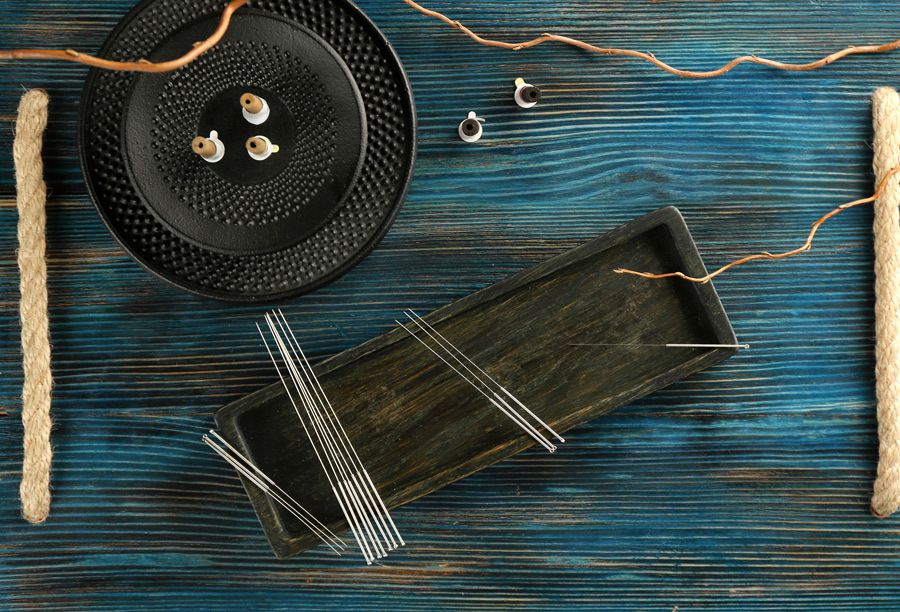
Several points can be stimulated by the acupuncturist during sessions to strengthen the immune system. For example:
-
ST36 – Zu san li (Stomach 36): reputed to prolong life, this acupuncture point located near the shinbone strengthens the body, fortifies immunity, improves digestion and balances blood pressure.
-
KI27 – Shu fu (Kidney 27): located below the collarbones, this point frees the Lung, tonifies the immune system and soothes stress. Massaging this point is often recommended for people who find it hard to manage their emotions.
A study published by the Hindawi group in 20072 also states that acupuncture helps to increase the activity of T cells, B cells (which play a major role in the secondary immune response, that is, in strengthening antibodies), macrophages (cells belonging to the white blood cells) and natural killer cells (which have a protective action against unwanted cells). What is more, stress and anxiety can weaken the defence system, and by reducing these disruptive emotions, acupuncture sessions help to strengthen it. The study also showed that women suffering from chronic stress and anxiety had noticed a significant improvement in their well-being after several sessions.
What natural remedies can stimulate our body and our natural defences?
Vitamins to boost your body

Diet obviously plays a fundamental role in strengthening the immune defences. The more resources the body has, the better it can fight external forces. Chinese dietetics recommends varying your diet well in terms of colours, flavours and natures. It is also essential to favour seasonal foods and adopt a diet rich in vitamins and fibre, since a lack of these nutrients can lead to fatigue, pain, tension, joint discomfort and, above all, a general weakening of the body.
Vitamin D and zinc help to combat stress better; they improve nerve transmission and ensure good muscle contraction. They are a key factor in immunity.
Vitamin C, essential for renewing white blood cells, has many virtues. A study dating from 20123 even states that it can shorten the duration of a respiratory discomfort and, in some cases, stop it from developing.
In the West, vitamin C is generally taken in the form of capsules and food supplements. Although effective, this method does have drawbacks: “At excessive doses, the benefit of vitamin C can be reversed,” says Marie-Christine Boutron-Ruault, a specialist in internal medicine. It then becomes oxidising. Experts therefore strongly recommend eating citrus fruits and fresh fruit and vegetables to avoid any excess. It is always better to favour what nature offers us.
Plants to strengthen the immune system
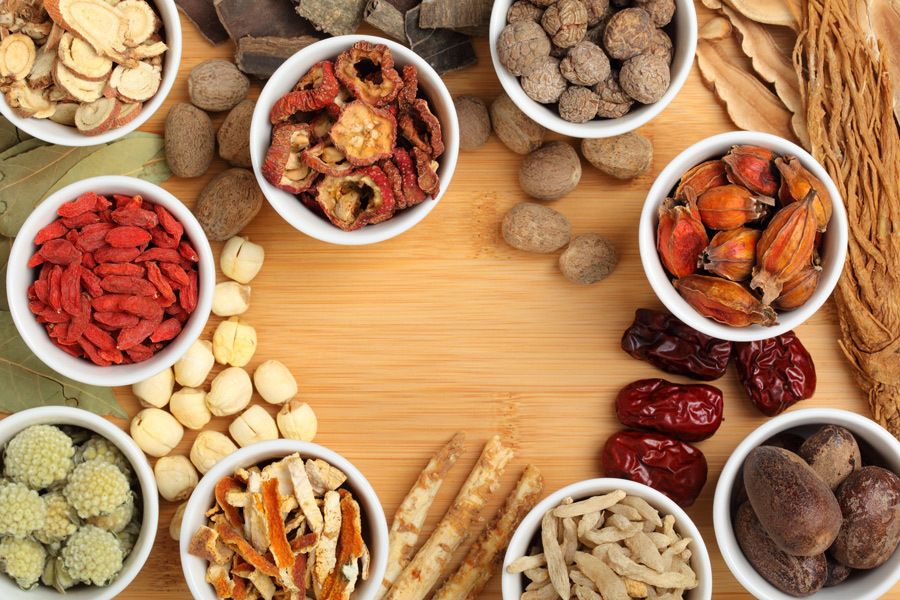
The Chinese pharmacopoeia lists a wide range of medicinal plants that offer an answer to every need, energy imbalance or health problem. In cases of low energy and general fatigue, Chinese medicine recommends using plants to support defensive energy and revitalise the body. Here are the best-known in the pharmacopoeia:
-
Ren shen (Ginseng): Popular in the East and the West alike, ginseng is one of the greatest tonics of the Chinese pharmacopoeia. It is very effective in cases of low vitality and severe fatigue. It strengthens the immune defences by tonifying Yuan Qi, the original energy.
-
Huang qi (Astragalus): Also highly valued, Astragalus effectively fortifies Wei Qi by acting on the surface of the body to prevent pathogens from entering. Through its action on the Spleen and the Lung, the systems responsible for producing and distributing Qi, it tonifies the whole body and helps it resist the cold.
-
Ci wu jia (Siberian ginseng): Ci wu jia is reputed for its energising action. It increases the body’s ability to adapt to stress and external attacks. It is ideal for getting back into top form.
-
Ling zhi (Ganoderma): Called the “herb of the gods” in China and nicknamed the “mushroom of immortality”, it is known to reduce fatigue, tone the body and strengthen immunity.
-
Mu er (Black fungus): Also called Judas’s ear, black fungus is an effective immune stimulant whose action restores Jing. Sweet and cool, it invigorates the Blood and eases pain. Rich in amino acids, phosphorus, iron, calcium and sugars, it stimulates the natural defences and tones the body.
No healthy body without a healthy mind to inhabit it
The impact of meditation

In traditional Chinese medicine, it is unthinkable to aspire to physical fitness with a tormented, disordered mind. Moreover, it is important to control our emotions to avoid developing illnesses of internal origin, which can disturb the Qi and consequently exhaust the healthy Energy and weaken the body.4
Meditation is a very good way of strengthening your Qi while calming stress and anxiety. It is also practised to ease pain. According to an American study5, experienced meditators have brain responses to pain 40 to 50% lower than average. Another study6, carried out by researchers in Wisconsin, Spain and France, showed that the practice of so-called “mindfulness” meditation is very effective on the immune system. It is said to have direct effects on pro-inflammatory genes, which contribute to faster psychological recovery from a stressful situation. According to the founder of the Center of Investigating Healthy Minds, Richard J. Davidson, this study is the first to prove “rapid alterations in gene expression”.
Don’t forget the importance of physical activity
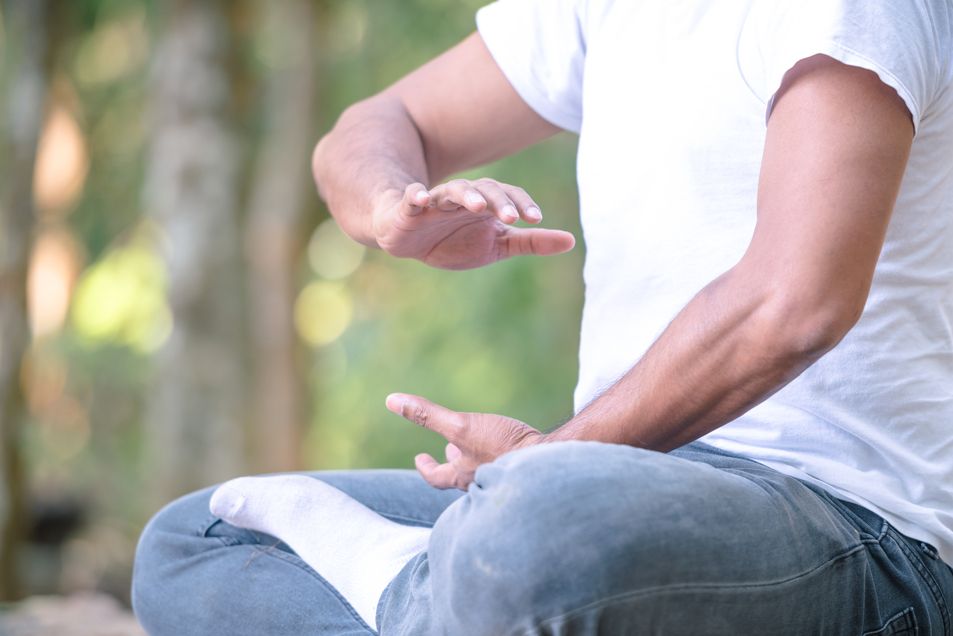
Combined with meditation, sport is said to reduce the signs of mental distress by 40% after just two months of practice, two days a week. As well as reducing stress and anxiety, regular sporting activity helps you feel good about yourself, regain self-confidence and, above all, strengthen your Wei Qi!
In winter, it is harder to exercise outdoors because the weather threatens to create an excess of Yin and can even damage your lungs. However, some sports can still be practised, such as Qi Gong for example.
Depending on each person’s wishes and level, there are three types of exercise: passive Qi gong, dynamic Qi gong, or the two combined. The first, more meditative, trains the mind. The second, more active and in motion, works the breathing. By bringing the two together, just as Yin and Yang might be brought together, we get a third exercise, which is the one most often practised in the West: a combination of passive and dynamic movements in which every action is controlled, conscious and complete.
In short, the immune system needs to be strengthened by actively stimulating both body and mind. The body can be fortified with acupuncture, vitamins or medicinal plants, and the mind with meditation and sport. It is important to keep your defensive energy, Wei Qi, at its highest and, finally, to avoid constant stress.


