- A new energy
- The season of the Lung
- Autumn’s threats to our inner balance
- Eating well to avoid imbalances
- Beware of lurking Dryness
- Don’t leave (too much) room for sadness
- Say goodbye to control, cultivate tranquillity!
- Plants to favour this season


According to the Chinese lunisolar calendar, we made our grand entrance into autumn (Liqiu) at the beginning of August. Liqiu is the 13th solar term of the Chinese calendar and the very first day of autumn. As with every season, autumn is marked by six events that signal climatic changes and, by extension, transformations in nature that affect the harvests.
The 24 Chinese solar terms were traditionally established to guide agricultural production. A season of transition marking the end of the heat and the harvest period, autumn gradually settles into our towns and makes way for the warm colours that clothe nature. We watch the fine days slip away and the cold slowly draw near. Understanding the impact of the seasons on the body is essential to living in complete harmony with nature.
A new energy
“ To follow the four seasons is to possess life, peace and health; not to follow them is to risk illness and death” – ” Sù Wèn

According to the theory of the five elements, autumn is a season dominated by Metal, the element generated by Earth, which it follows. Metal marks the passage from day to night; its energy is one of decline.
It is said that “in autumn, heaven and earth begin to separate”. The days grow shorter, the nights longer, darkness sets in, the cold gradually takes hold, nature goes to rest… Lying between summer – the most Yang season – a time of activity and movement, and winter – the most Yin season – a time of rest and gathering of energy, autumn is a period of adaptation.
During this season, Yang gradually declines to let Yin grow. Energy thus moves downwards and inwards. Wei Qi (protective Qi, or defensive Energy), which is produced from our breathing and the food we eat, comes to recharge the organs so that they function well. Wei Qi, the energy governed by the Lung, ensures our immunity and fights off the attacks that can upset its balance. It goes without saying that it is put to the test during this season.
The season of the Lung
In fact, the Lung is the master organ of autumn in Traditional Chinese Medicine. It is one of the Zang organs and is paired with the Large Intestine, a Fu organ. Its roles are many: it governs breathing, helps propel blood through the vessels, inhales pure Qi, ensures the free flow and diffusion of energy, distributes the body fluids and controls the Exterior. A fundamental system, the Lung plays a crucial role in the body since it ensures its protection, which in turn naturally exposes it to all kinds of attacks: it is a bridge between the body and the outside world. Since our well-being in autumn rests on the Lung, it will be vital to take care of it during this season1.
Autumn’s threats to our inner balance
Eating well to avoid imbalances
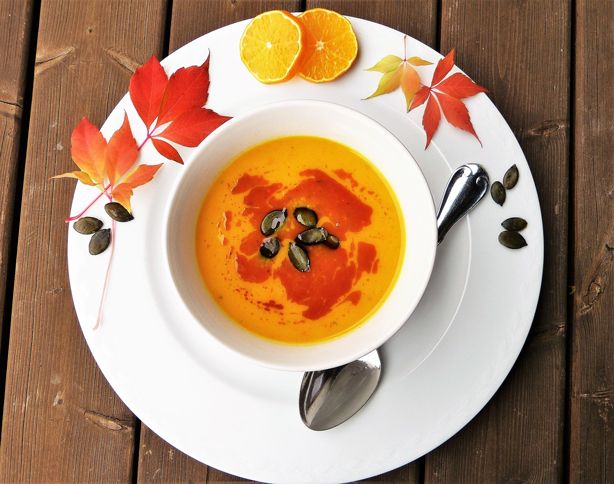
To prepare for the start of autumn, it is advisable to get full nights of sleep, dress warmly and take a course of vitamins. Traditional Chinese Medicine, for its part, stresses the importance of strengthening the Lung, moistening Dryness and nourishing Yin. To adapt our body to this energetic change, Chinese dietetics suggests drinking milk to nourish Yin, and favouring cooking in water and consuming liquids and soups to moisten Dryness. Fresh fruit and vegetables are indispensable in our diet, since they help to lubricate the Lung and encourage the production of body fluids2. Chinese dietetics also invites us in particular to choose white ones, such as cabbage, celery, turnip or onion, since white is the colour associated with autumn.
Beware of lurking Dryness
Dryness (Zào 燥) is the pathogenic factor associated with autumn. Linked to Heat, it is not uncommon for these two energies to join forces to threaten Lung Qi, which can cause many imbalances. When Dryness attacks and injures the Lung, the body fluids are damaged and, since the Lung governs the surface of the body, the skin and hair are inevitably affected. When the Lung is dried out, signs such as hair loss, a dry throat, scanty urination, skin sensitivity or constipation appear. In general, a dysfunctional Lung causes breathing problems, a feeling of tiredness and tightness in the chest… but also, curiously, a feeling of sadness.
Don’t leave (too much) room for sadness
Autumn marks the end of summer, of the fine days and the holidays, which is why every year we see a wave of nostalgia set in, and even a touch of the blues for some. Sadness shows itself in the movements of nature: the leaves wither, the rain falls… It is in fact a “Metal” emotion that TCM associates with the season! To beat the slump that threatens in autumn, Chinese medicine recommends taking care of your Lung. Sadness is a Yin emotion arising from the Lung which (although it is natural and sometimes entirely liberating) can, when experienced too intensely, become disruptive and exhaust its Qi. Strengthening the energy of the Lung should therefore be a priority as soon as autumn shows its face, first to protect our body from the pathogenic factors lurking during this season, but also to preserve our mental well-being.
Say goodbye to control, cultivate tranquillity!

Because it is under the influence of Metal, autumn brings a new energy that imposes a need for organisation, control and order. It is advisable to set aside the dynamism of summer and focus on letting go – in other words, to slow down in order to avoid the frustrations that lead to breathing problems or constipation, for example. Resting well and taking time to adapt to the changes of autumn is essential to make the most of this season so rich in transitions.
It is also the ideal time to start detox programmes: flush out the toxins and impurities accumulated in summer, cleanse your kidneys and prepare your body for the richer, heartier food it will receive in winter. And since white is the colour of the season, there is no need to say goodbye to your summer wardrobe: now is the time to wear your finest white clothes!
Plants to favour this season
There are several goals to aim for in autumn to stay healthy: protect your Lung, combat Dryness, preserve your respiratory health and, above all, strengthen your Wei Qi!
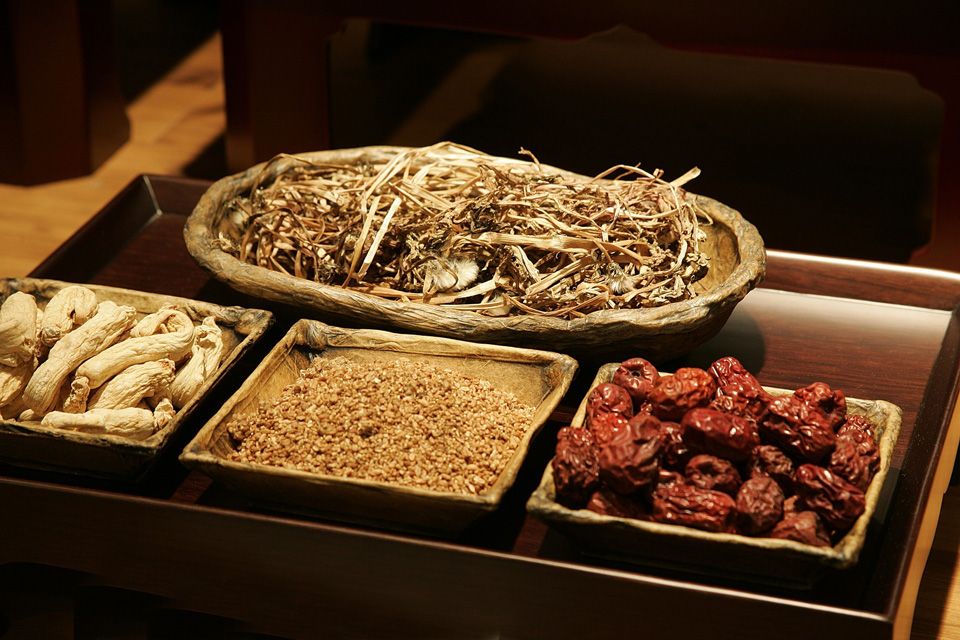
With more than 3,200 types of plants, minerals, spices and insects listed, and more than 400 preparations, the Chinese pharmacopoeia is one of the most important branches of traditional Chinese medicine. In autumn, several plants and formulas are recommended to tonify the body and protect it from external attacks.
We have put together a cocktail of medicinal plants to take care of your health this season:
-
Bai he gu jin wan: reputed to combat Dryness, it nourishes Yin and lubricates the Lung. It also helps to clear the airways, which are generally sensitive in autumn.
Bai he gu jin wan - Bai he gu jin wanTo relieve respiratory problems and sore throats.1 Bottle of 100 capsules - 50g- Clears the respiratory tract
27,90 € -
Bai he (Lily bulb): it moistens the Lung and soothes respiratory complaints.
Lily bulb - Bai heTo soothe the Lung.1 Small Packet plant 100g- Calms the Shen
- Induces a peaceful sleep
- Relieves the respiratory tract
14,60 € -
Huang qi (Astragalus): one of the best-known plants for strengthening defensive energy (Wei Qi) and stimulating the immune defences.
Dried astragalus roots - Huang qi (Sheng)- Tonifies the Qi
- Gives tonus to the body
- Stimulates natural defenses
11,90 € -
Ren shen (Ginseng): one of the greatest tonics of the Chinese pharmacopoeia. It is very effective in cases of low vitality and fatigue. It strengthens the immune defences by tonifying Yuan Qi, the original energy.
Ginseng Root - Ren shen- Nourishes the Spleen and Lungs
- Anti-fatigue by strengthening Qi
- Supports natural defenses and enhances endurance
- Improves concentration and memory
19,80 € -
Pu gong ying (Dandelion): its detoxifying power on the body is widely recognised. It purifies the body and cleanses the lungs and kidneys so that they function well.
Dandelion - Pu gong yingTo naturally purify the body.1 Small Packet plant 50g- Clarifies Heat
- Detoxifies the body
- Relieves urinary discomforts
7,90 €
So, to enter autumn in good shape and escape energy imbalances, Traditional Chinese Medicine is clear: let us enjoy nature, focus on our breathing, cultivate joy and positivity to keep disruptive emotions as far away as possible, enjoy full nights of sleep and, above all, take great care of our Lung.
