
The way Western medicine and traditional Chinese medicine conceive of the human being, the functioning of the body and health is very different. It is therefore no surprise that their view of mental health is just as distinct!
While in Western medicine the notion of the psyche essentially refers to psychological phenomena (everything relating to the mind, thought and mental activity), in traditional Chinese medicine this notion rests mainly on what are known as the five mental energies.
How does Chinese medicine conceive of mental health? What are the mental energies that make up our psyche, and how do they relate to the organs?
Mental health in traditional Chinese medicine
In the West, the distinction between mental health and physical health is very clear-cut. Mental health refers to a state of psychological, emotional and cognitive well-being. A whole medical discipline is in fact devoted to it: psychiatry.
Traditional Chinese medicine, for its part, fascinates above all through its holistic vision and its thinking – at once complex and simple – about the human being and the world. TCM does not separate mental health from physical health; on the contrary, it holds that the Mind and the Body are closely linked. Psychological disorders thus reveal an energy imbalance. The state of the Qi and of the organs can therefore affect the psyche, just as so-called “mental” disorders have an impact on the body and the Qi.
TCM therefore considers that there are five aspects that form the psyche. If one of these entities is affected, our psyche will be too.
The 5 components of the psyche in TCM
Shen 神, the Mind

Often translated as “the Mind”, Shen 神 is the most subtle part of our energy. Shen is the result of a transformation of Essence and Qi. It is also one of the “Three Treasures” of Traditional Chinese Medicine, together with Qi (vital Energy) and Jing (Essence). Housed in the Heart, it includes reason and thought (and also the Hun). It is said that it can be seen in the sparkle of the eyes and the radiance of the face.
Contrary to what is thought in many cultures, in TCM the Mind is not seen as something that animates the body but as a substance that makes up the body.
The Mind (and therefore the Heart) plays a fundamental role in mental activity. A balanced Shen brings serenity and fulfilment. Conversely, an agitated Shen affects the Heart, sleep, memory and… mental health. Indeed, when the Shen is agitated, negative emotions such as distress, anxiety, despair or sadness can arise.
Incorporating energy exercises into your routine can help take care of the Shen. Likewise, it is essential to pay particular attention to the Heart and to avoid excessive emotions and needless torment!
Yi 意, the Intellect
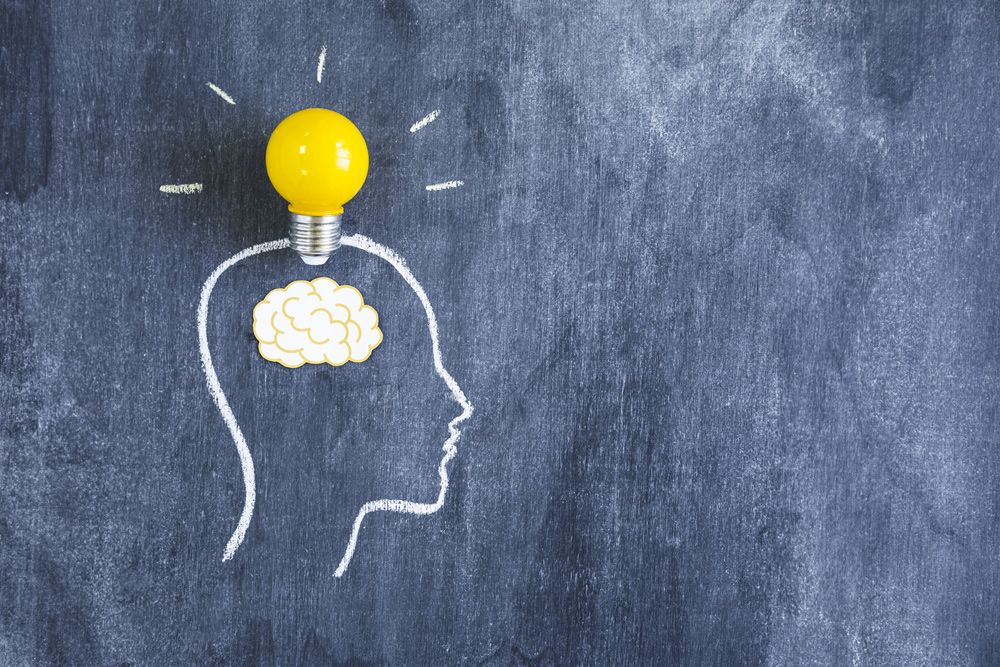
Often translated as “the Intellect”, the Yi is linked to our thinking. This entity encompasses concentration and our ability to pay attention, and refers to our learning faculties and intellectual capacities. It resides in the Spleen.
The Yi and the Shen are closely linked: it is sometimes said that the Yi is one of the aspects of the Shen. The Yi is, in a way, the part of the Mind that enables us to memorise, concentrate and study.
So when the Spleen is healthy, thinking is clear, memory is good and it is easy to retain information. Conversely, when the Spleen is weakened, or when pathogenic energies are present in the body (notably Phlegm and Dampness clouding the head), the mind is confused, thinking is slow, and memory lapses and difficulty concentrating become noticeable…
What is more, a weakened Yi can give rise to obsessive thoughts, foggy overthinking or brooding over dark thoughts…
Hun 魂, the Ethereal Soul

Translated as “the Ethereal Soul” or the psychic Soul, the Hun corresponds more or less to the idea of the soul in the West. Indeed, in the Chinese conception, the Ethereal Soul outlives the body after a person’s death and goes to Heaven (Tian).
In Chinese medicine, there are three types of Ethereal Soul: the first, Shuang ling, is shared by animals, humans and plants; the second, Tai guang, by humans and animals; and the last, You jing, concerns humans only. The Hun is passed down by the father and is associated with creativity and intuition. Housed by the Liver, this entity gives us the ability to create and develop new ideas. It allows us to plan for the future: it is creative freedom.
The Shen and the Hun are connected: the Shen exercises control over the Hun to prevent it from drifting or overflowing. Sometimes this connection is lost, leading to symptoms such as an inability to look ahead or to create, intense sadness and deep despair… In TCM, the lack of connection between the Shen and the Hun is one of the causes of depression.
Consequently, when the Hun is balanced, our capacity for understanding and discernment is enhanced and our creativity is stimulated. On the other hand, when the Hun can no longer move and loses its dwelling (following a disconnection from the Shen, Liver Blood Deficiency or Liver Yin Deficiency…), sleep disorders (especially nightmares, insomnia and waking in the night) occur, usually accompanied by great distress, excessive tears and a lack of energy. What is more, a weakened Hun undermines one’s state of mind and leads to a lack of goals, ideas, dreams, plans… The soul wanders without knowing where to go.
Po 魄, the Corporeal Soul
The Po is translated as “the Corporeal Soul”: it is the “physical part” of the Hun and represents the physiological activity of the body. It is anchored in the Lung and is linked to Jing: the Po is said to be the entry and exit of the Essence.
The Po comes from the mother and awakens from the moment the individual is conceived. It gives the body its form but, unlike the Ethereal Soul, it dies along with it. The Po is also associated with the need to reproduce and with basic needs, such as sleeping, breathing or eating, for example. It gives us the capacity to have senses, sensations and feelings. So when the Po is healthy, the imagination is overflowing, vision is clear and hearing is at its best.
Depleted Jing leads to the dispersal of Qi, the agitation of the Hun and the decline of the Po. When the Po is weakened, breathing problems, skin problems, a feeling of insecurity, and morbid or even suicidal thoughts can threaten well-being…
Zhi 志, the Will
The Zhi, or the “Will” (sometimes translated as “Memory”), resides in the Kidney and refers to determination, the ability to surpass oneself and the desire to undertake.
The Shen thus relies on the Zhi to bring ideas to life and move forward. Consequently, the Shen and the Zhi must both be strong: the Will gives the Mind the perseverance, drive and enthusiasm it needs to carry out projects and achieve its goals, and the Mind directs and applies the Will.
If the Will (Zhi) is weak, there will be a lack of drive, initiative and energy. Deficiency of the Kidney and of the Will is also one of the aspects of chronic depression.
Conversely, an excessive Will can lead to an authoritarian, even tyrannical attitude.
Making up our psyche, the five energies are at the heart of our well-being, health and fulfilment. So, in traditional Chinese medicine, since each psychic entity is associated with an organ (the Shen with the Heart, the Hun with the Liver, the Po with the Lung, the Zhi with the Kidney and the Yi with the Spleen), it is essential to take care of your energy and the health of your organs in order to preserve what we call “mental health”.