- The same mission, different roots
- The four great ginsengs: four temperaments for the same energy
- Codonopsis: another path to energy
- Why is it called "imperial ginseng"?
- Codonopsis and astragalus: the harmony of Qi
- Balance rather than overstimulation
- Energy, an art of balance


The same mission, different roots
For thousands of years, China has cultivated a singular art: that of nourishing Qi, the vital energy that connects body, heart and mind.
To tend this inner flame, master herbalists have always turned to roots: true treasures of the earth.
In a world where fatigue, stress and loss of energy are part of daily life, these ancestral plants still offer simple, natural and deeply human answers today.
Some, like ginseng root (Ren Shen), have become legendary for their power.
Others, more discreet, like codonopsis (Dang Shen) or astragalus root (Huang qi), continue this tradition with a gentler, but just as essential, energy.
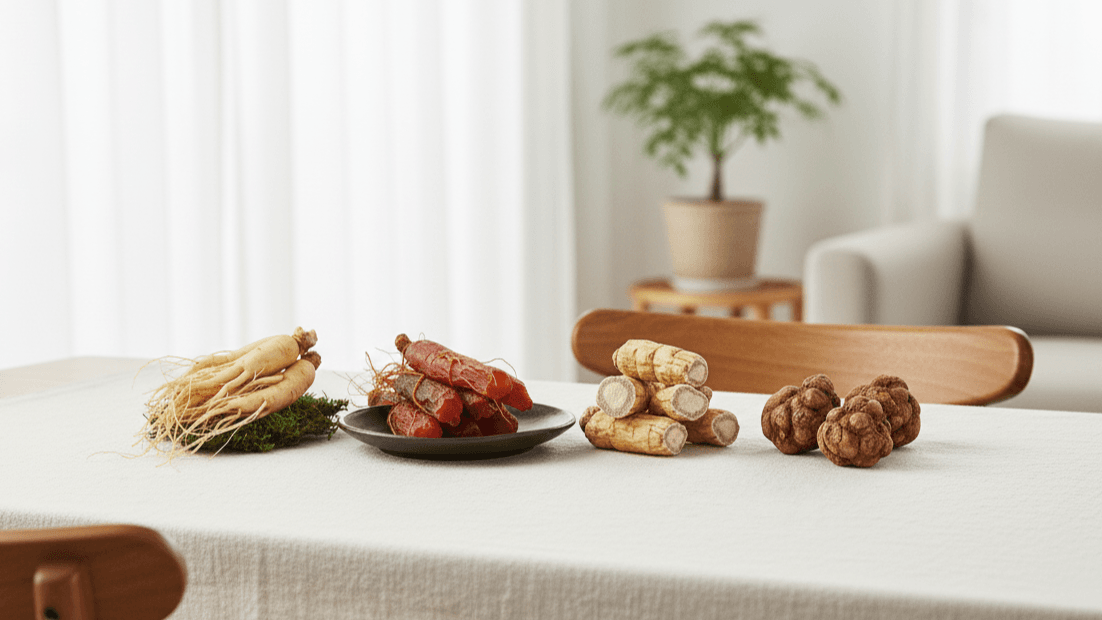
At Calebasse, we distinguish three main families of tonifying roots.
- True ginsengs (Panax ginseng, Panax quinquefolius, Panax notoginseng, Araliaceae family) restore vitality and tonify deeply.
- Codonopsis (Dang Shen, Codonopsis pilosula, Campanulaceae family) acts gently, supports digestion and strengthens energy without forcing it.
- Astragalus (Huang Qi, Astragalus membranaceus, Fabaceae family) completes the trio by strengthening natural defences and maintaining stable, lasting energy.
To help you better sense the nuances between these precious roots, let's get to the heart of the matter: what exactly are the benefits and specific features of each ginseng? Here is a comparison table to see things more clearly at a glance.
| Root | Active compounds | Benefit | Precaution |
|---|---|---|---|
| Ginseng root (Ren Shen) |
Ginsenosides: ★★★★☆ Polysaccharides: ★★★☆☆ | All-round tonic – Strengthens overall vital energy, improves resistance to stress and concentration. Ideal for chronic fatigue and convalescence. | If you are taking medication (especially for diabetes), ask your doctor or pharmacist for advice before use. |
| Red ginseng root (Hong Shen) |
Ginsenosides: ★★★★★ Polysaccharides: ★★★☆☆ | Powerful, warming tonic – Stimulates internal energy, warms the body and boosts alertness. Ideal for people who feel the cold and are tired, with cold hands and feet. | Avoid in case of internal heat, irritability, insomnia or constipation. |
| American ginseng root (Xi Yang Shen) |
Ginsenosides: ★★★★★ Polysaccharides: ★★★☆☆ | Soothing, cooling tonic – Restores energy and calms the mind while reducing mental and physical fatigue. Ideal for fatigue with stress and irritability. | Not recommended for people who feel the cold a lot or are very thin. |
| Notoginseng root (San Qi) |
Ginsenosides: ★★★★★ Polysaccharides: ★★★☆☆ | Circulation regulator – Promotes blood circulation, speeds up the healing of bruises and aids recovery after exercise. Ideal for athletes, knocks and tissue regeneration. | Do not combine with anticoagulants without medical advice. Not recommended during pregnancy or in case of significant active bleeding. |
| Codonopsis (Dang Shen) |
Polysaccharides: ★★★★★ Flavonoids: ★★★★☆ | Gentle, balancing tonic that strengthens vitality and supports digestion. | Not recommended in case of colds with fever, or signs of gum inflammation or constipation. |
| Astragalus (Huang Qi) |
Polysaccharides: ★★★★☆ Flavonoids: ★★★☆☆ | Fortifying tonic that supports immunity and resistance to fatigue. | Not recommended if you are taking blood pressure medication or cardiac glycosides, due to a risk of interaction. |
★★★★★: Very high content (>15% of dry weight)
★★★★☆: High content (8–15%)
★★★☆☆: Medium content (4–8%)
★★☆☆☆: Moderate content (1–4%)
Each root has its own energy, and the choice depends above all on your needs at the time:
- To regain vitality and inner drive, turn to ginseng root (Ren Shen), a true tonic of vital energy.
- If your digestion is fragile or you need a gentle boost of strength, codonopsis (Dang Shen) will be your best ally, together with astragalus (Huang Qi) to strengthen natural defences.
- To stimulate alertness and endurance, red ginseng root (Hong Shen) brings warm, lasting energy.
- If you are looking for calm and recovery, American ginseng root (Xi Yang Shen) helps soothe the mind while dispelling fatigue.
- Finally, to support circulation and regeneration, notoginseng root (San Qi) promotes blood vitality and recovery after exercise.
You will find detailed product sheets, our usage tips and the precautions to follow for safe, personalised use.
But if you would like to discover every facet in detail, and understand their origins, their subtle benefits and what makes each root unique in the way it nourishes vital energy, read on: you are entering the beating heart of Chinese tradition.
The four great ginsengs: four temperaments for the same energy
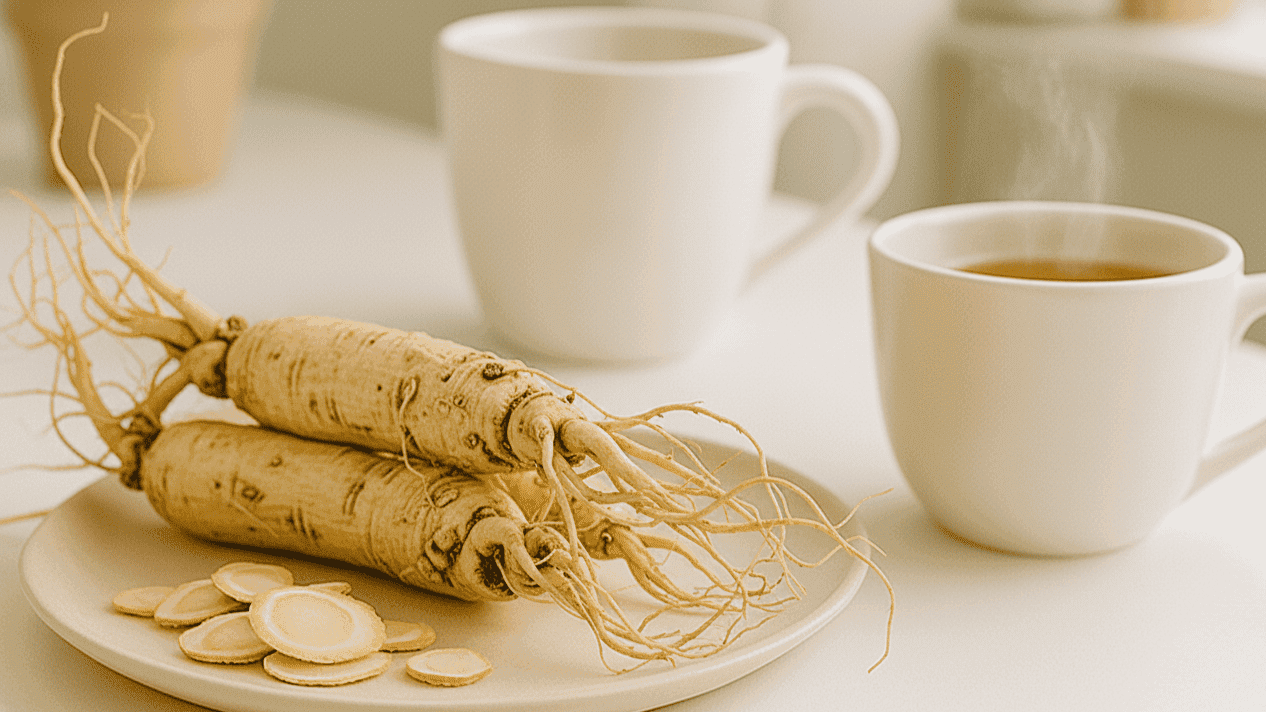
Rich in ginsenosides and polysaccharides, the ginsengs share the same heritage: nourishing vital energy, combating fatigue and supporting the body's regeneration.
Yet each variety has its own personality, its own singular way of awakening or sustaining Qi.
Ginseng root (Ren Shen): a complete, revitalising tonic
A symbol of vitality for thousands of years, a true all-round tonic that deeply tonifies Qi and restores inner strength. Ideal for relieving intense fatigue, building endurance and resilience, and improving concentration and mental clarity.
Made from steamed ginseng, it warms Yang and stimulates alertness. It is the tonic of recovery and morale, perfect for people who feel the cold or are weakened.
Cool and balancing, it nourishes Yin and soothes the mind. It supports periods of stress, internal heat or emotional overload, bringing calm, regulated energy.
Less well known but precious, it activates circulation and regulates Blood, promoting recovery after exercise. It is recommended for muscle stiffness, poor circulation or accumulated physical fatigue.
4 ginsengs, 4 faces of the same wisdom. Each supports energy in its own way, but they all tell the same story: that of a body regaining its rhythm, of energy flowing freely, and of a mind that can breathe again.
But while the true ginsengs work deeply to restore depleted Qi, codonopsis is closer to astragalus in its gentleness and its way of sustaining energy day to day.
Codonopsis: another path to energy

Among the great tonics of Chinese medicine, one root stands out for its gentleness: codonopsis (Dang Shen).
From the Campanulaceae family, it is not a "true" ginseng, but its spirit is very close.
In China, there is a saying: "When the body is too weak for ginseng, give it codonopsis."
A root with a honeyed taste and a balanced nature, codonopsis tonifies Qi, strengthens the Spleen and Lungs, and supports harmonious digestion.
Gentler than ginseng, it revives energy without forcing it, establishing stable, lasting vitality.
Rich in polysaccharides and flavonoids, it reduces fatigue, stimulates natural defences and supports recovery after exercise.
A root of balance and adaptation, codonopsis gently nourishes the body and supports everyday vitality: a calm, constant and benevolent energy.
Why is it called "imperial ginseng"?

This nickname is no accident.
In the past, ginseng was rare, precious and reserved for the elite.
Mountain peoples then discovered another root, more accessible, gentler and easier to digest, able to revive vital energy without excess: codonopsis.
It was said to extend the strength of ginseng, without its harshness.
This is how it earned the symbolic title of imperial ginseng: not for its rarity, but for its ability to bring noble, benevolent energy to as many people as possible.
Even today, it remains the root of gentle vitality, added to herbal teas, soups and tonifying formulas of the Chinese pharmacopoeia.
Codonopsis and astragalus: the harmony of Qi
Codonopsis and astragalus share the same vocation: strengthening Qi, the vital energy that supports body and mind.
Both nourish vitality, stimulate natural resilience and support periods of fatigue or overwork.
- Codonopsis works from the inside, supporting the Spleen and Lungs to improve digestion and energy production.
- Astragalus, for its part, works in depth, strengthening the Kidneys and consolidating the natural defences that protect the body.

Two roots close in essence but distinct in their movement: one nourishes, the other protects.
Both embody a stable, gentle and lasting energy, a symbol of balance both inner and outer.
Balance rather than overstimulation

In a world where everything moves fast, where fatigue is often nervous and the mind restless, these roots are a reminder of an essential wisdom: true vitality is not a rush of energy, but grounding.
Where coffee excites, ginsengs balance. Where stimulants exhaust, codonopsis and astragalus restore.
They embody the TCM philosophy of well-being: nourish the body without forcing it, support without overloading.
Energy, an art of balance
Of all these roots, none is superior to the others: they complement each other.
Some awaken, others soothe, but all serve the same goal: restoring Qi, the inner strength that connects body and mind.
Whether ginseng, dang shen or astragalus, each in its own way embodies a benevolent, lasting energy: the kind that supports without exhausting and respects the natural rhythm of life.

