
Very popular in cooking, especially in Provence, thyme knows how to awaken our taste buds. Like rosemary, bay leaf, oregano, mint and cinnamon, it is an aromatic plant that perfumes our favourite dishes with its delicate aroma. As well as adding flavour, thyme is also valued for its wide-ranging therapeutic power. Discover everything there is to know about thyme.
A very ancient aromatic herb
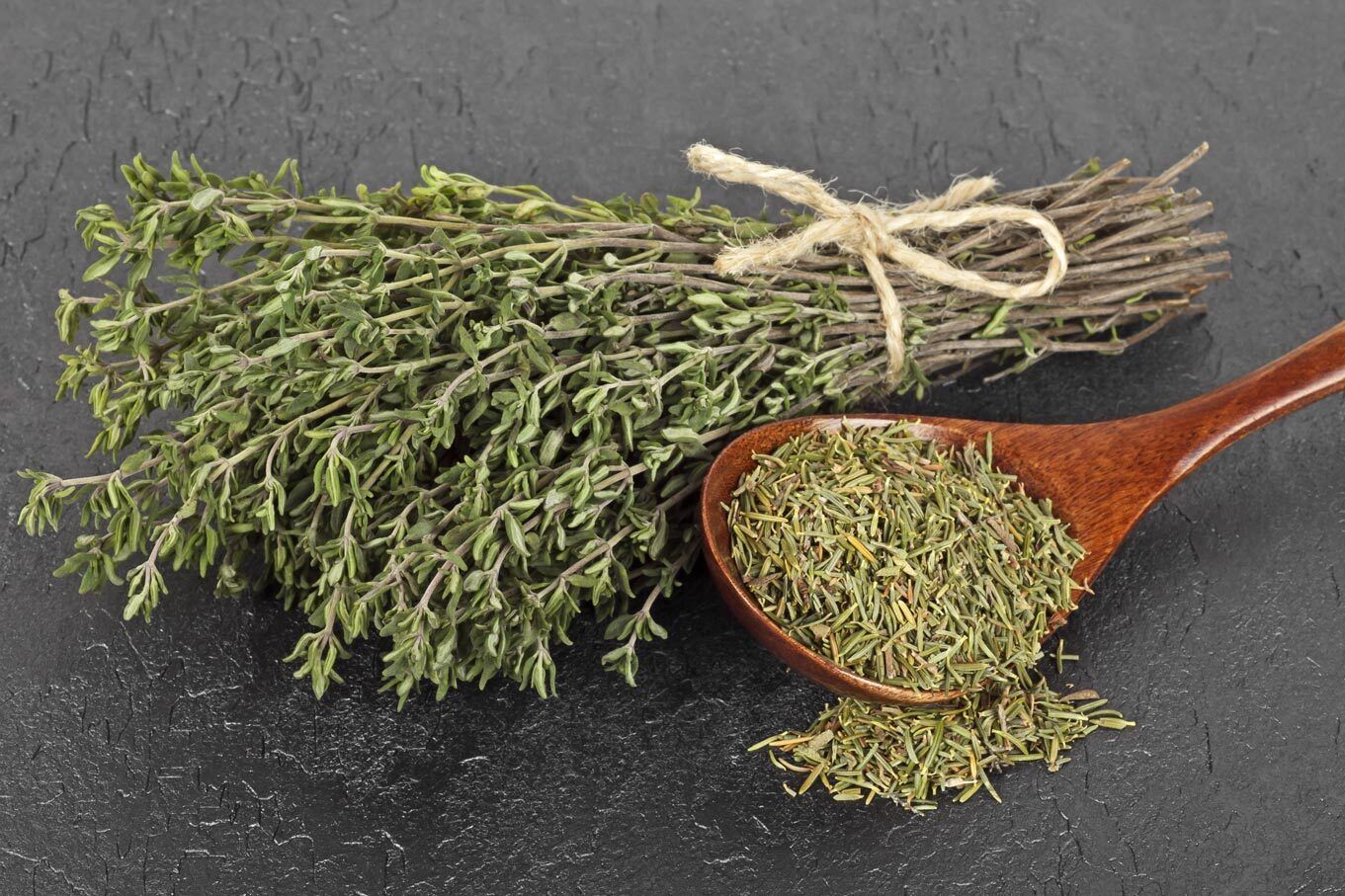
Native to the Mediterranean basin, thyme is a perennial sub-shrub that grows on sunny hillsides. A member of the Lamiaceae family, it has more than 300 varieties, including common thyme (Thymus vulgaris), the one used in cooking, lemon thyme (Thymus citriodorus) and wild thyme (Thymus serpyllum).
Already famous in Antiquity, this plant, whose origins lie at the heart of several legends, has left its mark on many civilisations. In Ancient Egypt, it was used to embalm bodies and so prevent the decomposition of the dead. It was also highly prized by the Greeks, who used it to perfume their bath water. It is said that gladiators ate it to multiply their strength, hence the symbolism around this herb, often associated with protection, strength and courage.
Among the Romans, thyme was used above all as a purifier. At that time, it was believed to be able to drive away evil spirits. The origin of its name is open to many interpretations: some claim it comes from the Latin thymus, meaning “to perfume”, others from the Greek thumus, meaning “courage”, or from the Greek thumon, which means “offering”, a reference to its status as a sacred plant widely used in religious rituals.
According to Greek mythology, the birth of thyme is linked to Helen, daughter of Zeus, considered the most beautiful woman in the world. Legend has it that she was abducted by Paris, the Trojan prince, which triggered the Trojan War. Devastated by this situation, she wept tirelessly, and from her tears thyme grew. This gave rise to the expression “the plant of the Gods” to refer to this herb.
Its place in the Chinese pharmacopoeia
 Thymus vulgaris is known in traditional Chinese medicine for its role in stimulating Lung Qi. It is traditionally used to support sensitive periods and respiratory comfort, particularly during imbalances linked to the cold seasons. The Chinese pharmacopoeia also recommends it for people with difficult digestion. Thyme has a soothing action on digestive discomfort: studies have shown that eating it encourages digestion and helps calm stomach aches. 1
In Chinese diet therapy, thyme is considered a food with a warm nature and a pungent, slightly bitter flavour. It is therefore advisable to eat it mainly in autumn and winter to fight the ailments that threaten our well-being during these two seasons. In addition, it has an affinity with the Lung and the Kidneys (the organs of autumn and winter respectively), which it tonifies, and it helps drive out Dampness.
A herb full of benefits
Besides its various uses in traditional Chinese medicine, a great deal of research carried out over the years has proven the effectiveness of this plant in treating a very wide range of ailments.
Thyme: a powerful antioxidant

Naturally rich in antioxidants, thyme is traditionally valued for helping to protect cells against oxidative stress, a factor involved in premature ageing. Its vitamin content also makes it an ingredient of choice for supporting the body's natural functions, particularly during periods of fatigue or changes of season.
Research carried out in Scotland in 1990 looked at the properties of thyme and its essential oil, particularly in relation to ageing.2 This plant is recognised for its wealth of natural antioxidant compounds, which support overall vitality and help protect cells against oxidative stress, a factor involved in premature ageing and certain functional imbalances.
A natural ally for the respiratory tract

Thyme is traditionally valued for supporting respiratory comfort, especially during cold periods or changes of season. Thanks to its aromatic compounds, it is recognised for encouraging freer breathing and helping to clear congested airways. Its ancestral use makes it an essential plant for winter infusions.
In 2013, a study of 18 volunteers assessed the effect of thymol, a compound naturally present in thyme, on the feeling of respiratory comfort. Participants reported an improved feeling of freshness and reduced perceived irritation in the airways. 3
Another clinical study looked at the use of thyme in the context of passing respiratory discomfort associated with the upper airways. The researchers observed a notable improvement in the participants' comfort, suggesting that this plant could provide worthwhile natural support during occasional winter episodes. 4
To ease digestive functions

Thyme is one of the plants known for their ability to relieve digestive problems. Thanks to its carminative action 5, it considerably relieves feelings of abdominal swelling, wind and burping, while helping to rebalance the digestive flora.
The WHO also recognises the traditional use of thyme to support mild functional digestive disorders. It is used in particular to promote comfortable digestion when you feel heavy or bloated after meals.
Natural support for your mood

Besides its various health benefits, in traditional herbal medicine thyme is also recognised for its soothing virtues. Thanks to its high carvacrol content, an aromatic compound naturally present in the plant, it is often associated with relaxation and emotional well-being. It can therefore support periods of temporary low mood or inner tension by promoting a feeling of calm and relaxation.
In traditional uses, thyme is also recognised for its positive influence on emotional balance: it helps soothe states such as nervous fatigue, passing stress, sleep problems and nightmares. It is also associated with greater overall well-being during periods of melancholy or inner tension.
Thyme honey, between tradition and skin benefits

Produced around the Mediterranean, thyme honey is appreciated for its beautiful amber colour and its traditional skincare uses. Its wealth of aromatic compounds such as thymol and carvacrol makes it a sought-after natural ingredient for preserving the skin's balance and gently supporting skincare routines.
A scientific study looked at the local application of thyme honey in skincare. The results showed a positive effect on the skin regeneration process, which supports its traditional use in care routines for weakened skin. 6
Thyme essential oil for hair and skin
A source of essential oil, thyme has a reputation for helping to stimulate hair growth. As a circulatory tonic, it works to activate oxygenation of the scalp's capillaries and deliver the nutrients needed for hair to grow back. Its essential oil is therefore recommended as a natural remedy to encourage hair growth, but also to prevent hair loss!
In addition, thyme rebalances the production of sebum, a substance which, in excess, encourages acne and other skin sensitivities. It therefore works effectively on oily skin and helps tighten enlarged pores.
A true natural treasure, thyme represents the most precious things nature has to offer. Besides its culinary and cosmetic qualities, its wealth of components gives it remarkable therapeutic potential. You can't do without it, especially not at this time of year! It is the plant to keep in your cupboards to protect yourself from winter illnesses. It will help you avoid chills, soothe throat irritation and even recover after heavy end-of-year festive meals!
