- Why does the belly change around menopause?
- Another reading: the body in transition
- In TCM, menopause is first and foremost a transition linked to the Kidneys
- When the Spleen transforms less well, Dampness sets in
- Stress and the Liver: when Qi flows less freely
- What the belly is really telling you
- How can Chinese medicine support this period?
- A gentler diet to support the Spleen
- Movement to get Qi flowing again
- Herbs to support lightness
- Acupuncture and moxibustion: supporting circulation
- Rest and rituals to support the Kidneys
- Regaining lightness without fighting your body


Around menopause, the belly can thicken without any major change in habits. What if this "menopause belly" wasn't just a story about calories?
Why does the belly change around menopause?
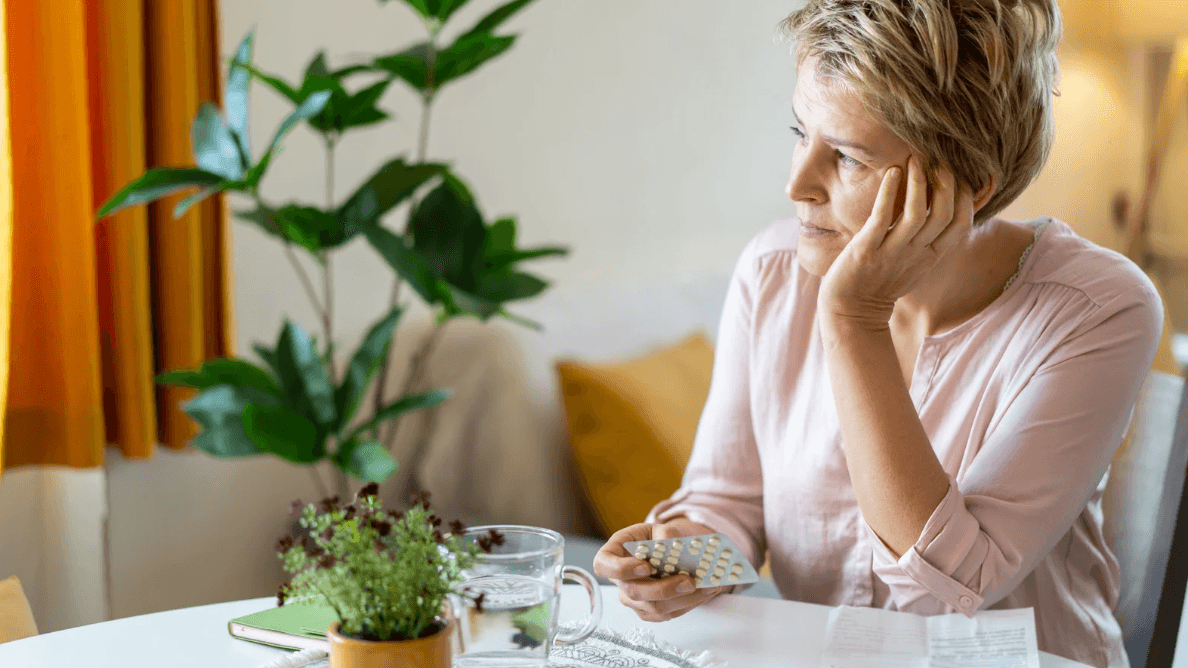
Around menopause, many women notice the same thing: their belly changes, sometimes for no obvious reason. They haven't necessarily been eating more, nor completely changed their routine… and yet the waist thickens, the belly feels heavier, sometimes more bloated, and clothes no longer fit the way they used to.
This feeling has a physical reality. At menopause, falling oestrogen levels can change the way the body distributes its reserves: fat tends to concentrate more around the abdomen rather than the hips or thighs [1]. With age, muscle mass also gradually decreases, which can reduce daily energy expenditure, even without any major change in diet [2].
But what often surprises women most is that this change is not only about the visible body. Many women also describe more noticeable fatigue, lighter sleep, heightened emotional sensitivity or that unsettling feeling of no longer quite recognising their own body.
This is precisely where Chinese medicine offers another reading: what if the changing belly were not an isolated problem, but the expression of a body in transition?
Another reading: the body in transition
In Chinese medicine, menopause marks a profound transformation of the female terrain. To understand why the belly can become heavier or harder to stabilise, three areas are particularly important: the Kidneys, the Spleen and the Liver.
In TCM, menopause is first and foremost a transition linked to the Kidneys
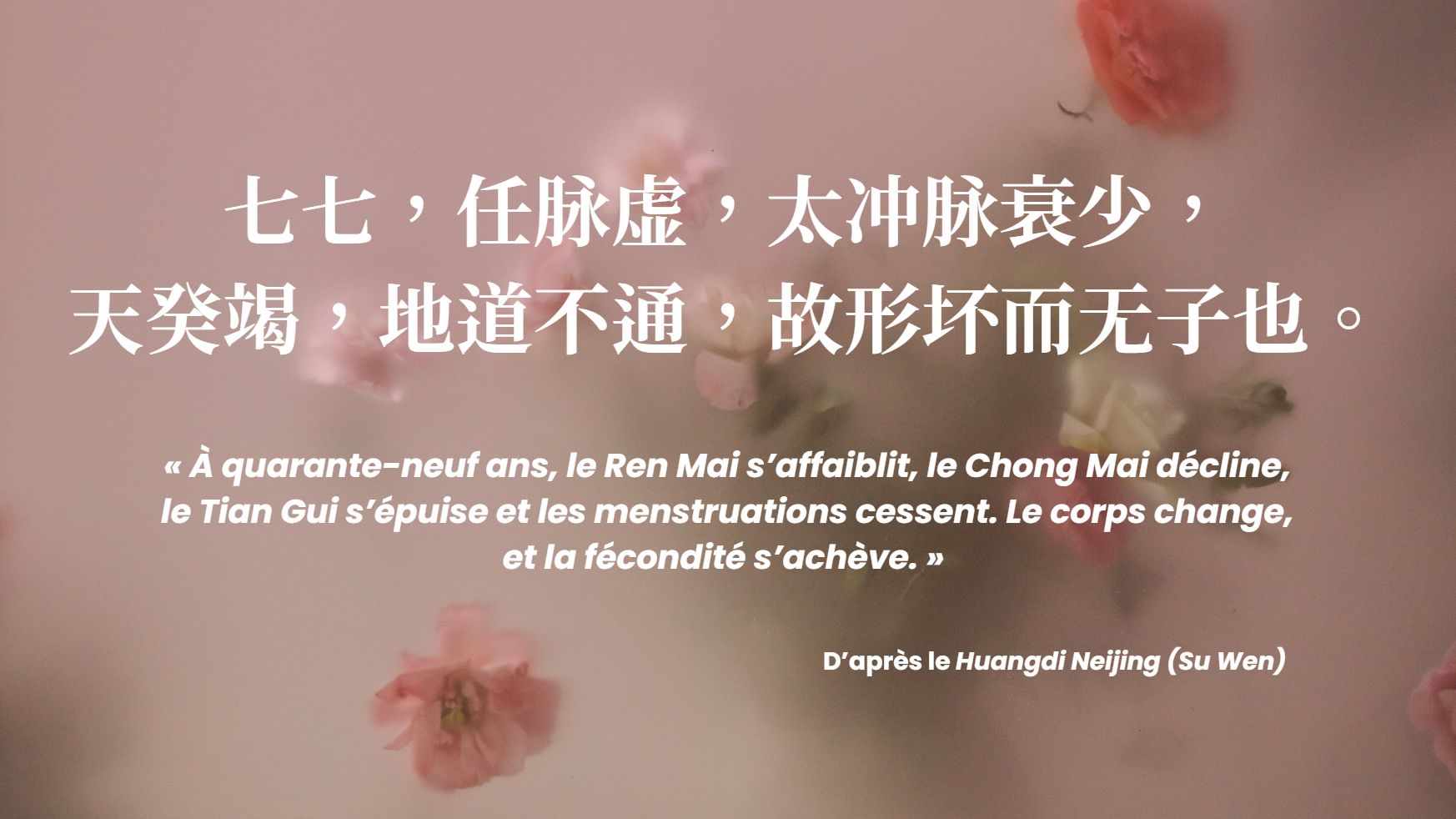
In TCM, the Kidneys do not refer solely to the anatomical organs. They are considered the place where Jing is stored, a deep reserve linked to growth, fertility, cycles, maturation and ageing [3].
Around menopause, this reserve naturally evolves. The cycle becomes irregular and then stops, the body reorganises its internal rhythms, and certain signs may appear: internal heat, lighter sleep, deeper fatigue, dryness, loss of drive or the feeling that the body no longer reacts as it used to.
From this perspective, the menopause belly is not understood as a mere cosmetic detail. It can be part of a changing terrain, with reserves that are reorganising and a capacity for transformation that is no longer quite the same.
When the Spleen transforms less well, Dampness sets in
In TCM, the Spleen is the organ of transformation. It allows us to assimilate what we eat, turn it into useful energy, and then manage fluids properly.
When this function slows down, the body may tend to hold on to more. This is what Chinese medicine calls Dampness. It does not necessarily correspond to visible water, but rather to a sensation: bodily heaviness, slow digestion, bloated belly, a body that feels weighed down, a waistline that gradually thickens.
Around menopause, this tendency can be reinforced by fatigue, lack of movement, irregular meals, food that is too rich, too sweet or too cold, but also by stress and disrupted sleep.
The belly, at the centre of the body and closely linked to digestion, then becomes an area where this slowdown shows itself particularly clearly. In this reading, the challenge is not only to eat less, but to help the body transform better.
Stress and the Liver: when Qi flows less freely

In Chinese medicine, the Liver helps Qi to flow freely. It supports inner fluidity, emotional adaptation and the release of tension.
Yet menopause often arrives at a time of life that is already full: family responsibilities, work, mental load, more fragile sleep, lingering fatigue, emotional changes… Many women carry more than meets the eye.
When stress sets in for the long term, Qi can become blocked. TCM then speaks of Liver Qi stagnation. As the Liver and Spleen are closely linked, this tension can also affect digestion: a more swollen belly, bloating, sugar cravings, a feeling of heaviness after meals.
So the belly sometimes becomes the reflection of several tensions at once: slower transformation, Dampness setting in, Qi flowing less freely.
What the belly is really telling you
By bringing these three dimensions together, a more complete picture emerges.
The Kidneys explain the deep context of the female transition. The Spleen shows why digestion and fluid management can become less smooth. The Liver reminds us that stress, emotions and mental load can also weigh on the belly.
Above all, this reading helps us move away from a guilt-laden interpretation. The question is no longer just: "What am I doing wrong?" but rather: "What does my body need to function better in this new stage?"
How can Chinese medicine support this period?
The aim is not to fight against the body, but to support it through its transition. In TCM, this means supporting the Spleen, lightening Dampness, getting Qi moving again and preserving the Kidneys.
A gentler diet to support the Spleen
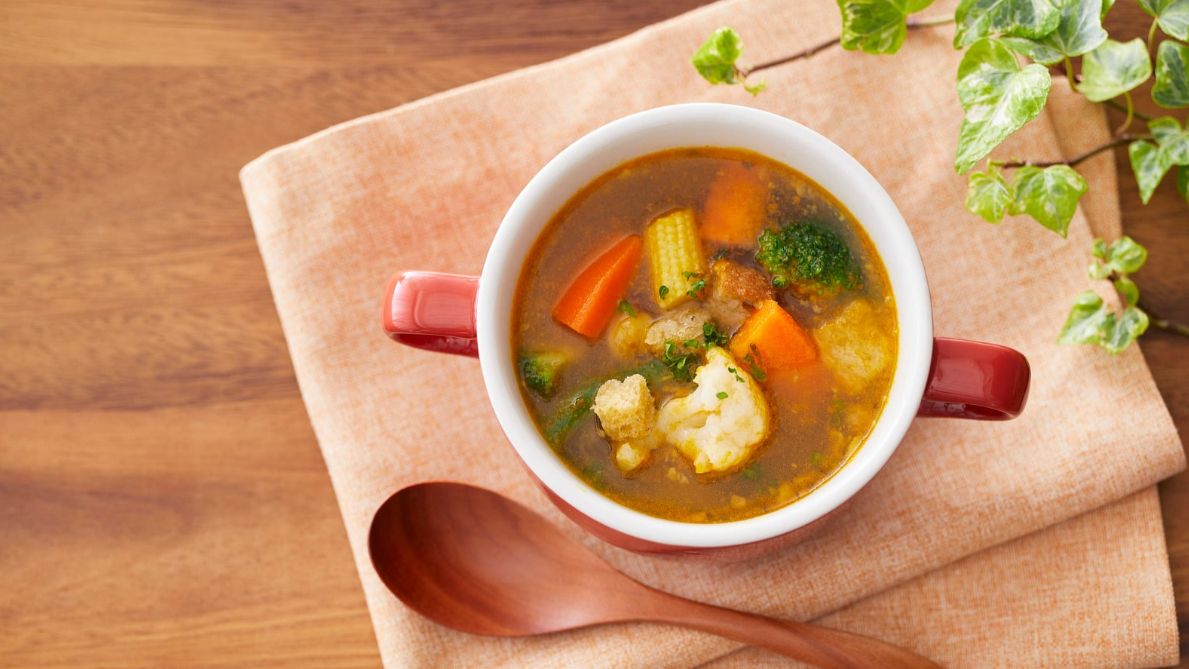
The Spleen likes regularity, gentle warmth and simple meals. When the belly becomes heavier or more bloated, it can help to ease the digestive workload: favour hot or warm meals, chew well, eat at regular times and limit excess sugar, fat or very cold foods.
On the plate, this can be as simple as replacing a cold dinner (salad, yoghurt, raw vegetables) with a light, warm meal: a bowl of wholegrains or millet, cooked vegetables, a little fresh ginger and an easily digestible protein. The idea is not to eat less at all costs, but to choose what the body transforms more easily.
Movement to get Qi flowing again
Movement helps Qi and Blood to circulate. From a modern perspective, it also helps preserve muscle mass and better support the changes linked to menopause [2].
There is no need to go for intensity. A leisurely 10 to 15 minute walk after a meal can already help reduce the feeling of heaviness and break up immobility, especially after a day spent sitting down. For those who prefer gentle practices, Qi Gong, yoga or a few stretches can become a regular ritual.
Herbs to support lightness
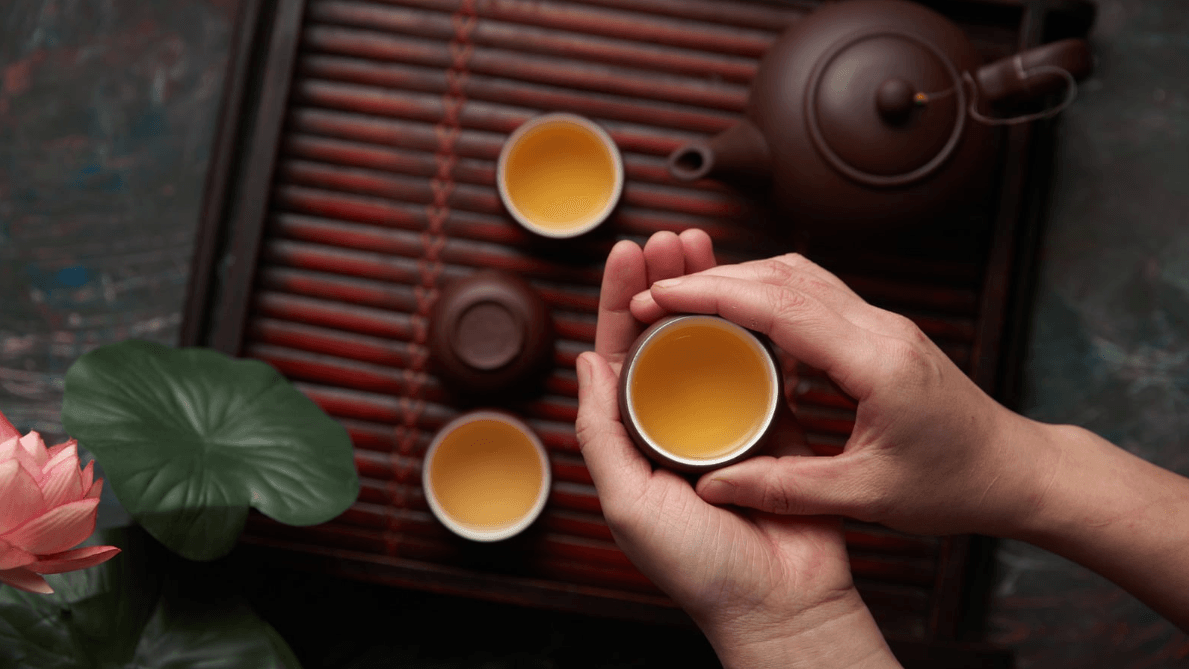
Certain herbs can help with the feeling of heaviness, not as "fat burners", but as support for the terrain.
- Mandarin peel, Chen Pi, mainly supports digestive Qi. It is helpful when a meal "sits on the stomach", when the belly bloats or when digestion seems stuck.
- Lotus leaves, He Ye, support an overall feeling of lightness. In TCM, they are traditionally used to promote a sense of drainage and ease feelings of heaviness, especially when the body seems to be holding on to more.
- Job's tears, Yi Yi Ren, target Dampness more directly. They help when the body feels weighed down, sluggish or bloated, and support the Spleen's transformation of fluids.
These herbs can be part of a gentle routine, after a generous meal or at times when the belly feels heavier. To go further, also discover our Summer Lightness drink: light belly & light legs, designed as a seasonal ritual for when the heat comes with slow digestion, a bloated belly or heavy legs.
Acupuncture and moxibustion: supporting circulation
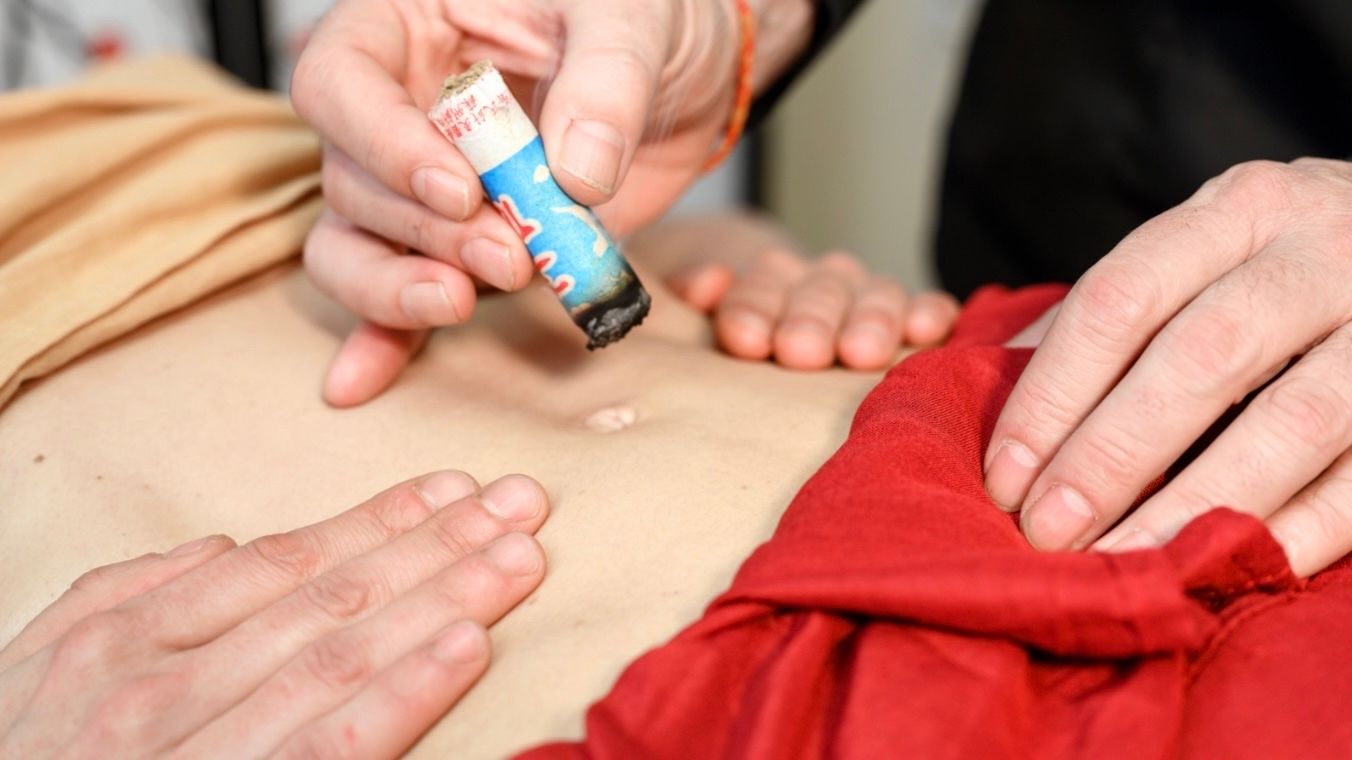
In Chinese medicine, acupuncture and moxibustion are among the traditional practices used to regulate the circulation of Qi, support digestive functions and help rebalance the terrain.
A few points illustrate this logic:
- Zu San Li — Stomach 36 (ST36), associated with digestion and vitality;
- San Yin Jiao — Spleen 6 (SP6), which connects the Spleen, Liver and Kidney axes;
- Zhong Wan — Ren Mai 12 (CV12), linked to the Stomach and digestive comfort.
These points can be worked on by a practitioner, or stimulated more gently through self-massage. Moxibustion, with its gentle warmth, is better suited to terrains marked by cold, fatigue or sluggish digestion. In case of hot flushes, internal heat or restlessness, it should be used with caution and adapted to the profile.
Rest and rituals to support the Kidneys
Menopause is not a time to fight against your body. In TCM, the Kidney terrain is also supported by rest, regularity and a gentler management of energy.
In the evening, a "winding down" ritual can help the body leave the rhythm of the day behind: switch off screens earlier, drink a warm, non-stimulating drink, gently massage the lower back or the soles of the feet, then take a few slow breaths.
This ritual does not act directly on the belly, but it helps release accumulated tension, free up the circulation of Qi and give digestion a calmer terrain.
Regaining lightness without fighting your body

In Chinese medicine, the menopause belly is not simply an excess to be eliminated. It can reflect a terrain in transformation, where digestion, fluids, emotions and the body's deep reserves are closely linked.
The aim is therefore not to "burn" belly fat, but to support this stage with more regularity and gentleness: supporting the Spleen, lightening Dampness, getting Qi moving again and preserving female balance.
Also worth reading: Menopause: explanations, symptoms and Chinese medicine solutions.
References:[1] Ameli. Menopause: what are the effects on health (in French). Assurance Maladie, accessed 15 June 2026. https://www.ameli.fr/assure/sante/themes/menopause/menopause-quelles-repercussions-sur-la-sante
[2] Toni Golen, MD. Why am I gaining belly fat during menopause, Harvard Health Publishing, accessed 15 June 2026. https://www.health.harvard.edu/womens-health/why-am-i-gaining-belly-fat-during-menopause
[3] Translated and annotated by Yao Chunpeng. Huangdi Neijing Suwen (Shanggu Tianzhen Lun), Zhonghua Book Company, Beijing, 2010.