- A warmth that has accompanied humanity since the beginning
- "Jiu" (灸): when a Chinese character tells a story
- Why mugwort? The quest for the ideal warmth
- Moxa today: a precisely worked mugwort fibre
- Moxibustion today: controlled warmth in modern life
- The Calebasse choice: continuing an ancient gesture with carefully selected moxas
- Comparison table of the moxas selected by Calebasse


Discovering moxibustion: the story of a warmth that cares for everyday life

A warmth that has accompanied humanity since the beginning
There is a warmth that does not burn, but restores.
A slow, subtle, almost living warmth: the kind humans have always sought.
From Scandinavian saunas to Middle Eastern hammams and Japanese hot springs, every civilisation has invented its own way of taming heat.
In China, this quest gave rise to a unique tradition: moxibustion, an ancestral art in which fire becomes gentleness and warmth becomes care.
To understand its significance, we need to go back to its origin: an ancient character, 灸, and the story of a gesture that went from simple instinct to a true art of well-being.
"Jiu" (灸): when a Chinese character tells a story
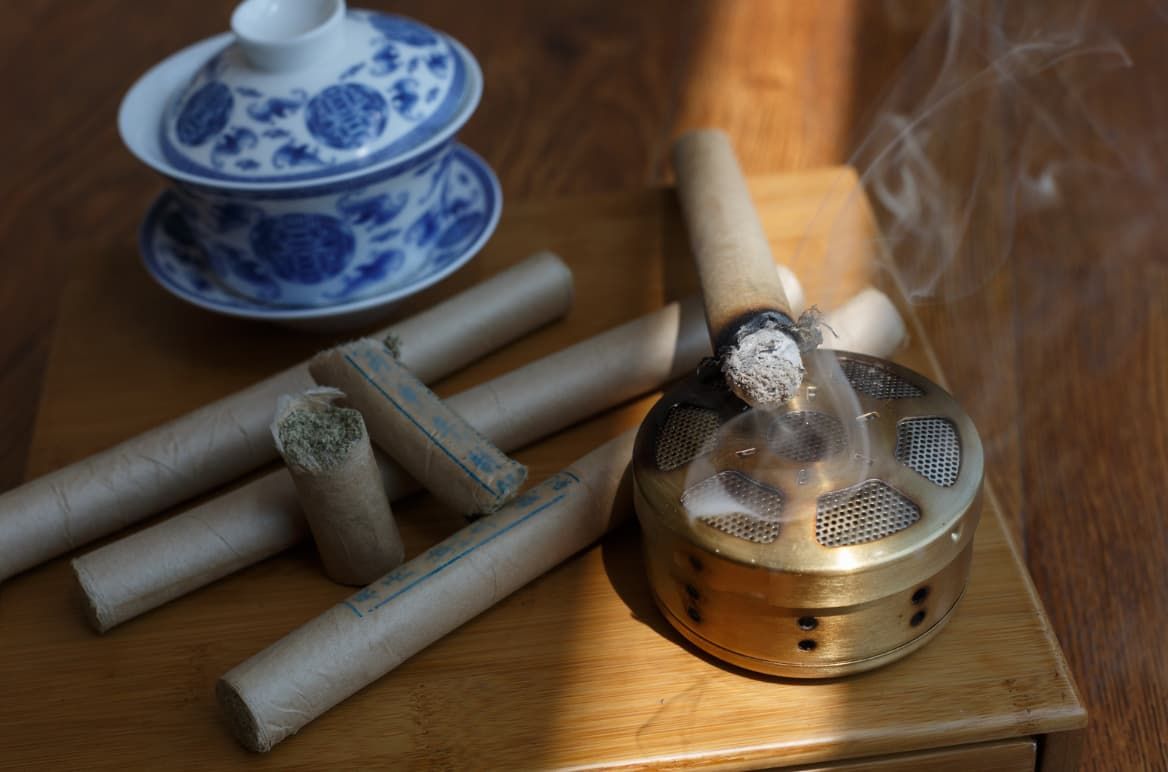
To understand moxibustion as we know it today, we first need to go back to the word that gave birth to it: "jiu" (灸).
In ancient Chinese, characters are not just signs: they are images.
The character 灸 is made up of two elements:
- The upper part「久」, which expresses the idea of duration and continuity, with notions of patience, repetition and slow progress.
- The lower part「火」: fire, the source of heat.
Put together, these two elements refer to the act of applying steady, prolonged warmth to the body..
This is the first meaning of the word "jiu": giving warmth, warming, supporting.
Long before Chinese medicine was structured into a theory, the ancients had already understood that warmth brought soothing and comfort wherever the body seemed cold, tense or tired.
Little by little, this instinctive gesture was refined: in ancient texts, "jiu" refers to an external method that applies precise warmth to certain areas of the body using carefully chosen combustible materials.
Handed down from generation to generation, this ritual was seen as a way of supporting the body's energy, helping it preserve its vitality and get through the seasons in balance.
So jiu became much more than a technique: an art of care based on getting the warmth just right.
It was at the heart of this search for the ideal warmth that one plant gradually came to the fore…
Why mugwort? The quest for the ideal warmth
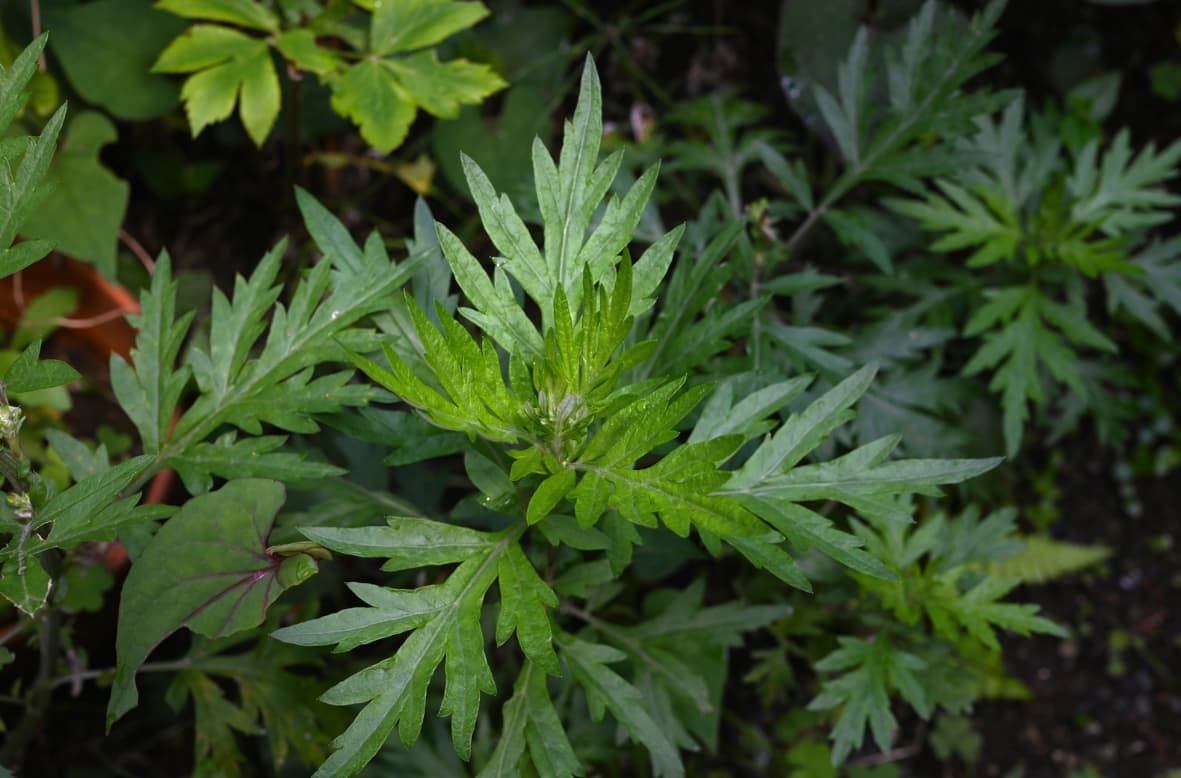
While mugwort is now inseparable from moxibustion, this was not always the case.
In the earliest forms of jiu (灸), the ancient Chinese experimented with many materials to produce the most suitable, most pleasant and most beneficial warmth.
Ancient texts such as the Huangdi Ming Tang Jiu Jing (a classic of the Chinese medical tradition) mention that pine, cypress, bamboo and jujube wood burned too quickly or too fiercely, or produced irritating smoke, and were gradually abandoned.
It was mugwort that finally won out:
Warm in nature and lightly fragrant, it burns slowly and steadily. Its gentle, penetrating warmth stimulates the meridians without burning the skin, making mugwort an incomparable material.
Over time, its refined fibre became a true plant wool, ideal for spreading an enveloping, steady warmth.
And so, through experience and tradition, mugwort became established as the material of choice for moxa.
Moxa today: a precisely worked mugwort fibre
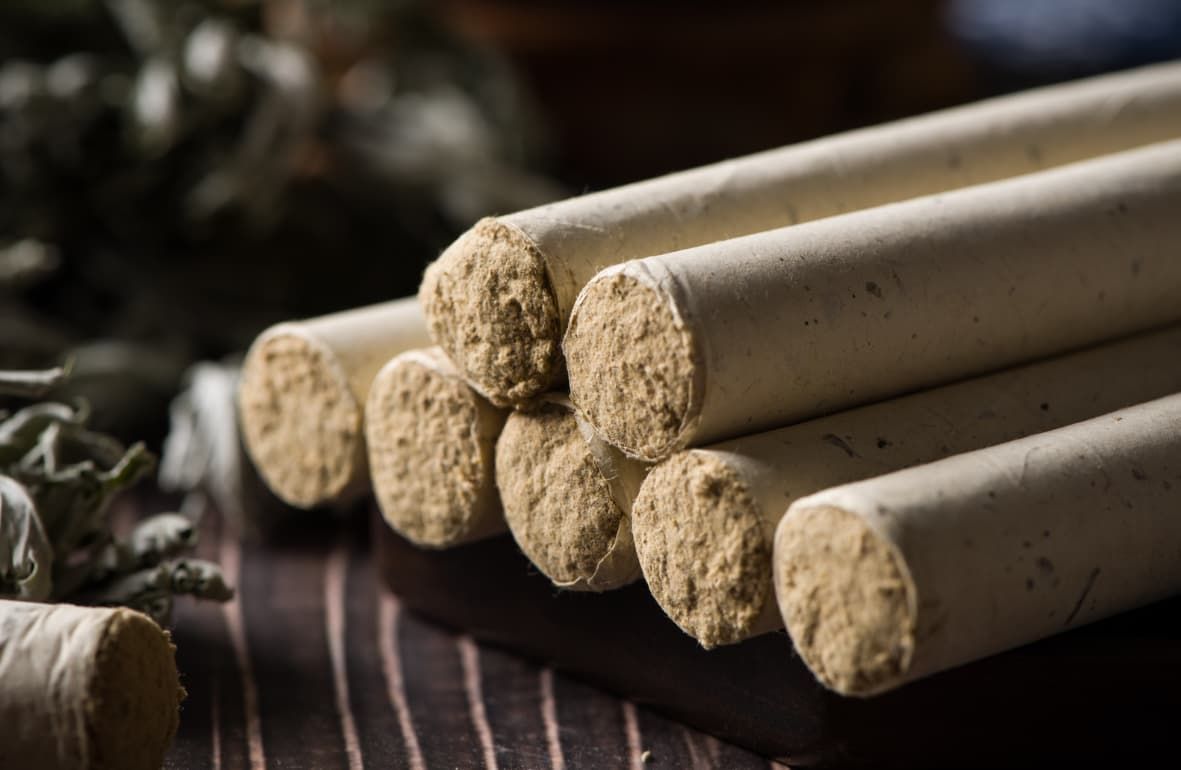
The moxa used in modern moxibustion comes from the dried leaves of Artemisia argyi, a plant of the aster family. After harvesting, the leaves are dried, ground and then sieved to obtain a fine, light plant wool: mugwort fibre. It is this fibre, not the raw leaf, that gives moxa its distinctive warmth.
Since ancient times, practitioners have attached great importance to the quality of this fibre. Traditional texts describe the ideal moxa as "supple, fine and soft as cotton", and specify that its refining and ageing influence the gentleness of the warmth and the comfort of the experience.
Even today, specialist craftsmen consider several criteria:
- the proportion of pure fibre, which affects the fineness and texture of the moxa;
- the length of ageing, which softens the smell and stabilises combustion;
- the grinding method, whether mechanical or done on a millstone, which affects the density and consistency of the material.
According to this tradition, a highly refined moxa tends to produce a more even warmth, while a less pure moxa may give off a sharper heat and more smoke.
How can you recognise a good moxa?
| Quality | Feel | Fibre fineness | Particles |
|---|---|---|---|
| Premium | Very soft, no roughness, doesn't prickle | Very fine, even fibre | Virtually none |
| Superior | Soft but slightly textured, doesn't prickle | Relatively fine fibre | A few fine particles |
| Essential | Noticeably rough, may prickle slightly | Less even fibre | Visible particles |
These variations are not about any therapeutic effect, but about the way the material burns and gives off heat.
So moxa is not just a fuel: it is a precisely worked material whose fineness, purity and age shape the quality of the warmth that will accompany the moxibustion.
Moxibustion today: controlled warmth in modern life
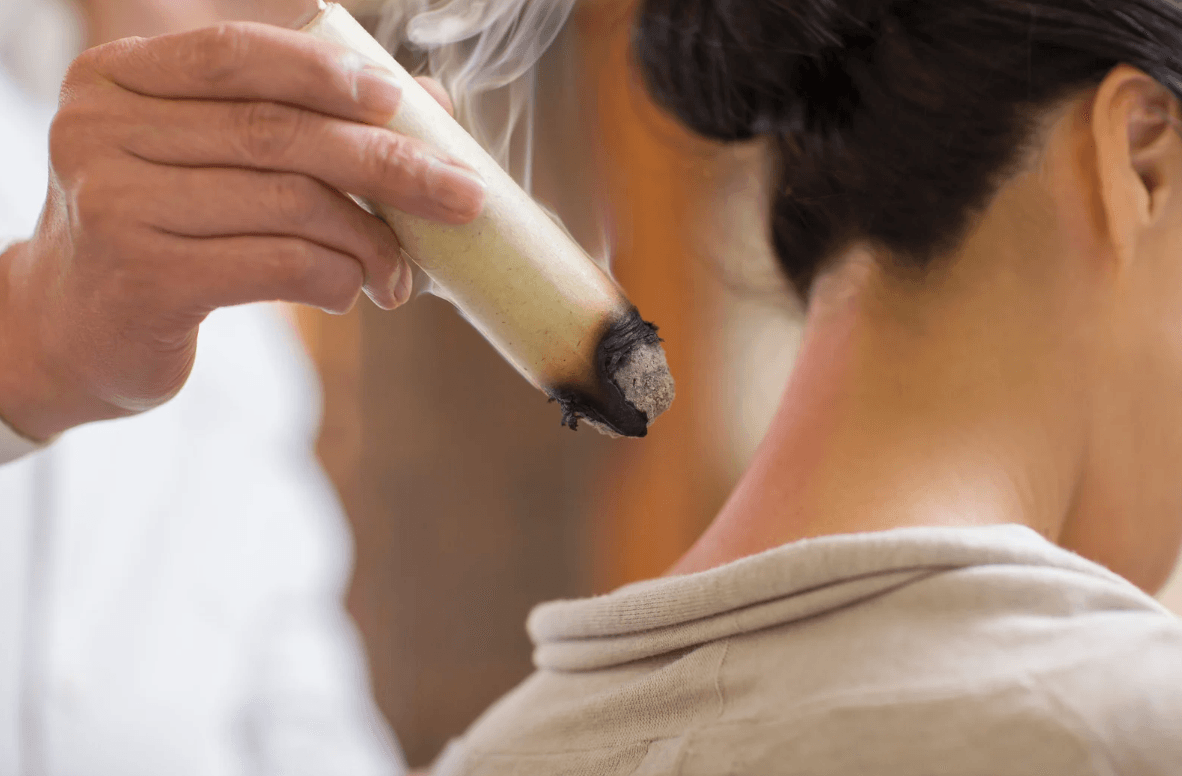
If moxibustion has come down through the centuries, it is because its principle, a gentle, steady and targeted warmth, remains surprisingly relevant in our daily lives.
In an often sedentary lifestyle marked by stress, screens and changing temperatures, this deep warmth meets simple but essential needs: relaxing, warming, releasing, reviving.
Today, moxibustion naturally fits into personal well-being rituals.
It is used:
- to soothe tense areas of the lower back or lower belly;
- to stimulate the meridians and awaken inner energy, promoting a comfortable, naturally invigorated body;
- to release tension built up over the day;
What gives this ritual its special place today is not a medical promise, but the combination of three very concrete elements:
A constant, easy-to-control warmth, application to precise areas of the body, and a simple gesture that naturally invites you to let go.
The Calebasse choice: continuing an ancient gesture with carefully selected moxas
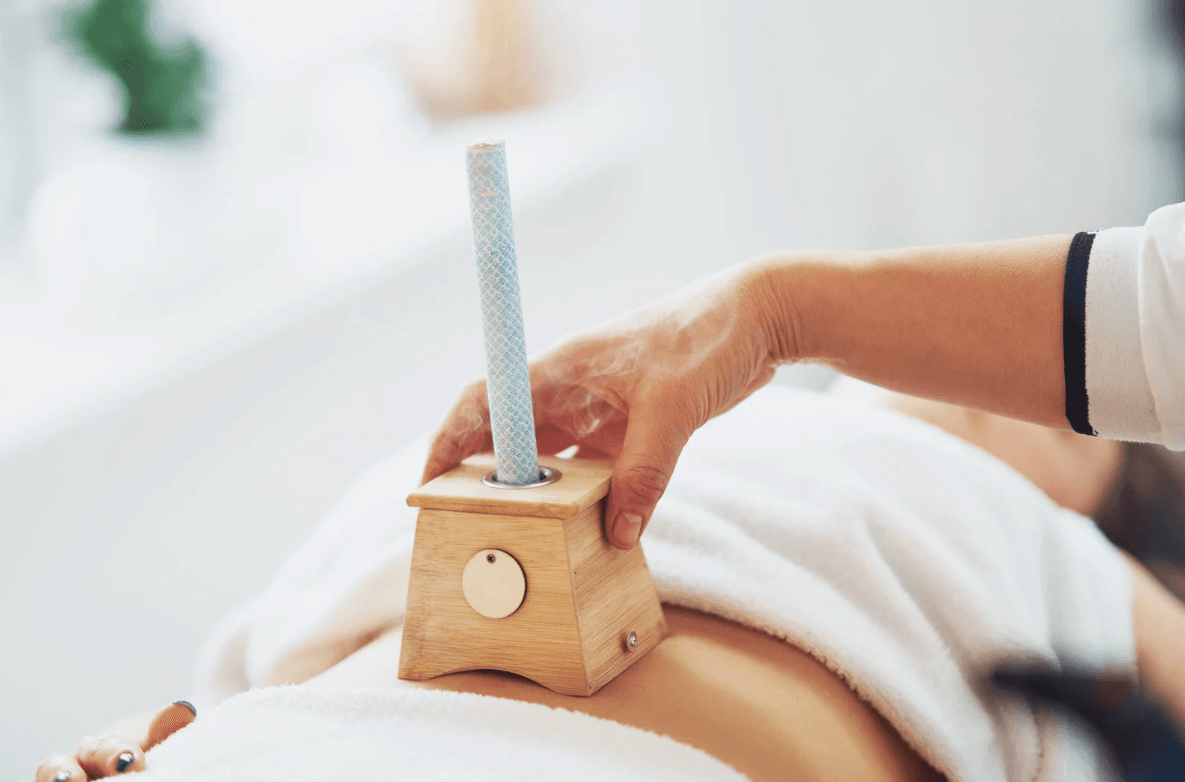
At Calebasse, we have chosen to respect this ancestral gesture by working with specialist workshops that carry on the art of refining moxa.
To offer the right, controlled warmth, we have selected three ranges of moxa, each made with a different level of fineness, ageing and fibre work, from the most traditional to the most refined.
Comparison table of the moxas selected by Calebasse
| Level | Premium | Superior | Essential |
|---|---|---|---|
| Origin of the leaves | Nanyang, aged 5 years | Tongbai Mountains (Nanyang), aged 3 years | Nanyang, aged 3 years |
| Production method | Traditional millstone, slow grinding at low temperature | Modern mechanical process, multiple stages of grinding and sieving | Traditional millstone, 3 cycles of grinding and sieving |
| Fibre texture | Very fine, airy, soft as cotton, low ash content | Even, airy, soft and light fibre, low ash content | Whole, light, airy fibre, low ash content |
| Heat characteristics | Gentle warmth, deep penetration, rich and steady sensation | Even warmth, consistent comfort | Natural, gentle and pleasant warmth |
| Recommended use | Practitioners, spas, moxibustion enthusiasts, premium gifts | Regular family use, wellness practices | Beginners, discovery and home practice |
| Available formats | Loose pure moxa, moxa sticks, moxa rolls | Loose pure moxa, mini moxa, cut moxa, moxa sticks | Mini moxa, cut moxa, moxa sticks |
Our moxas are made from:
- high-quality Artemisia argyi grown in the Nanyang region (China), renowned for centuries for its thick leaves, rich in fibre and volatile oils, giving a gentle, non-irritating warmth, a terroir considered one of the best for moxa;
- meticulous sieving, which removes coarse particles to obtain a purer fibre and more even combustion;
- suitable grinding methods, mechanical for a consistent finish, or on a millstone for a finer, more velvety fibre;
- controlled ageing, which softens the fragrance of the moxa, stabilises its combustion and allows a deeper, more pleasant warmth.
So that everyone can bring this warming ritual into their daily life according to their needs, we offer several formats: loose moxa, mini moxa, cut moxa, sticks and thick rolls, each suited to a different use: discovery, family practice or professional ritual.
More than a product, we want to offer an experience:
That of an ancestral gesture made accessible, of a warmth that accompanies you, and of a ritual that invites you to slow down, refocus and find a more peaceful presence in your body.