
According to INSEE, eighteen million adults in France complain of a feeling of heaviness and pain in their legs. Linked to poor blood circulation in the veins, the feeling of heavy legs is a disorder that makes life hard for those who experience it.
Despite its somewhat barbaric name, venous insufficiency is a very common phenomenon, affecting around 15 million French people: sitting behind a desk all day, as a great many people do, encourages this problem to appear.
Many people claim that this phenomenon gets worse with the heat in summer, but is the weather really to blame? What does Chinese medicine say about it, and what does it recommend for this phenomenon from which so many people suffer?
Heavy legs: a disorder made worse by the heat?
Although no one is immune from experiencing heavy legs one day, certain factors increase the chances of being affected by this problem. Heredity, excess weight, a sedentary lifestyle, hormonal variations and heat are all causes of venous insufficiency.
So yes, it is not just a myth! During the summer season, the feeling of heaviness in the legs can get worse and become very unpleasant. Prolonged exposure to heat causes the veins to dilate, which affects blood circulation in the legs. As a result, the legs swell and feel heavy. This disorder can also come with a whole set of discomforts: oedema, numbness, swelling of the lower limbs, tingling sensations in the legs, the appearance of varicose veins and night cramps…
How does Western medicine explain this phenomenon?
In Western medicine, the feeling of heavy legs is explained by stagnation of the venous circulation. This impression of heaviness therefore points to a blood circulation problem and can, in some cases, be an early warning sign of chronic circulatory disorders.
In a sense, veins have the opposite role to arteries: they carry blood from the organs back to the heart. When this venous return does not work properly, we speak of venous insufficiency. This disorder has a twofold origin: the loss of elasticity and tone of the veins and the malfunctioning of the valves in the vein wall, whose role is to prevent blood from flowing backwards. The blood circulating in the veins of the lower limbs then stagnates there, struggling to rise back up to the heart. The first symptoms of this stasis are heaviness in the legs (“heavy legs”), which can develop into varicose veins, oedema, eczema or even ulcers. In the long term, without treatment, a venous disorder can lead to serious complications such as the formation of blood clots (phlebitis) or serious lung problems.
Venous insufficiency can also slow down the circulation of lymph. This biological fluid, carried by the lymphatic system thanks to muscle movement and breathing, is essential for clearing waste. A veno-lymphatic dysfunction therefore leads to a build-up of fluid in the tissues that can cause all kinds of discomfort: abnormal swelling of the leg, accumulation of venous oedema and lymph, pain, visible thread veins…
A feeling of heaviness in the legs: the TCM approach
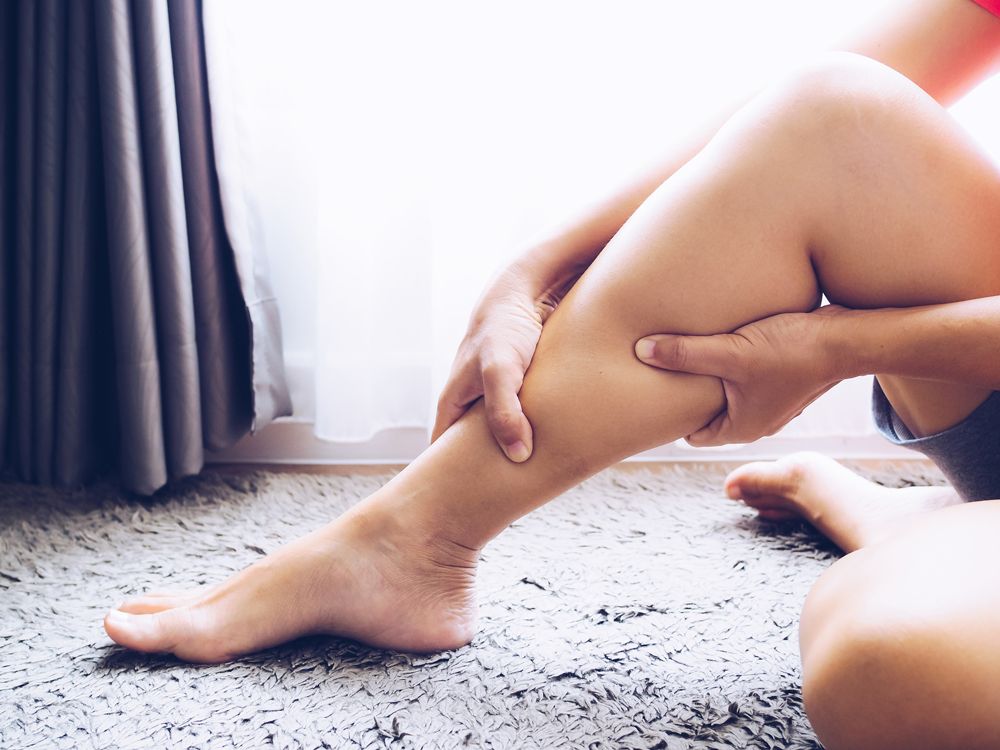
According to traditional Chinese medicine, Blood and the physiological fluids, or Yin, are linked: produced by the Spleen, these fluids are extracted from the food the body takes in and are used to produce Blood. To ensure good Blood circulation, the body needs an abundance of Blood and of Qi (vital Energy) to maintain the vessels.
When the Blood circulates little or poorly, we speak of Stasis: this disorder can have various origins, but a deficiency of Qi in the Spleen is the most common. Sometimes innate, this deficiency can also be linked to bad habits, such as standing for too long, or to external factors, such as too much exposure to Cold and Dampness, which can cause energy blockages and stasis. A lack of energy in the Spleen weakens it and reduces its ability to produce Blood and to keep the blood vessels healthy. This is how many ailments, such as varicose veins and heavy legs, can arise.
Heavy legs: how to lighten them?
The importance of physical exercise in maintaining good venous circulation is recognised by medicine in general. In TCM, the link between the blood vessels and the digestive system leads to dietary advice in cases of Blood Stasis: raw foods and dairy products, considered laden with Cold and Dampness, weaken the Spleen and can hinder Blood circulation and the digestion of food.
In modern medicine, venotonic drugs are prescribed to stimulate the veins. They act as anti-inflammatories that relieve the feeling of heavy legs associated with venous insufficiency. Alternatively, compression stockings relieve pain and heaviness in the legs and keep varicose veins and other disorders resulting from venous insufficiency at bay.
It is important to point out that venous insufficiency can have serious consequences for health. In some cases, it can lead to more serious disorders such as phlebitis (the formation of one or more blood clots in the veins) or pulmonary embolism (a blood clot travelling into the pulmonary arterial circulation). The feeling of heavy legs therefore needs to be monitored in order to prevent possible complications…
Fortunately, Chinese medicine offers several natural solutions to treat the source of the problem and relieve the feeling of heaviness in the limbs. Traditional Chinese medicine highlights herbs with tonifying properties that prevent blood stagnation and reduce the resulting pain.
Medicinal plants to the rescue

The Chinese pharmacopoeia offers a natural alternative to drug treatments. Some of its plants help to soothe pain and stimulate blood circulation. The natural solutions recommended to relieve this disorder include:
-
Heavy Legs Formula: A food supplement made from seven plants, the Heavy Legs Formula is a preparation designed by our laboratory and inspired by TCM knowledge.
It relieves heavy legs and promotes venous circulation thanks to the action of several of the plants it contains (for example, Hawthorn, known for its benefits for circulatory comfort; Hong hua, reputed to reduce swelling of the limbs and stimulate blood circulation; and Yi yi ren, whose diuretic and draining action helps eliminate excess water). -
Qing zhi tang: designed to relieve symptoms linked to venous insufficiency and swollen limbs, the Heavy Legs and Venous Circulation Herbal Tea helps combat heavy legs.
-
Horse chestnut: Used for years in TCM, the seed of the horse chestnut tree relieves the symptoms linked to poor venous circulation and eases the feeling of heavy legs.
Acupuncture for lighter legs
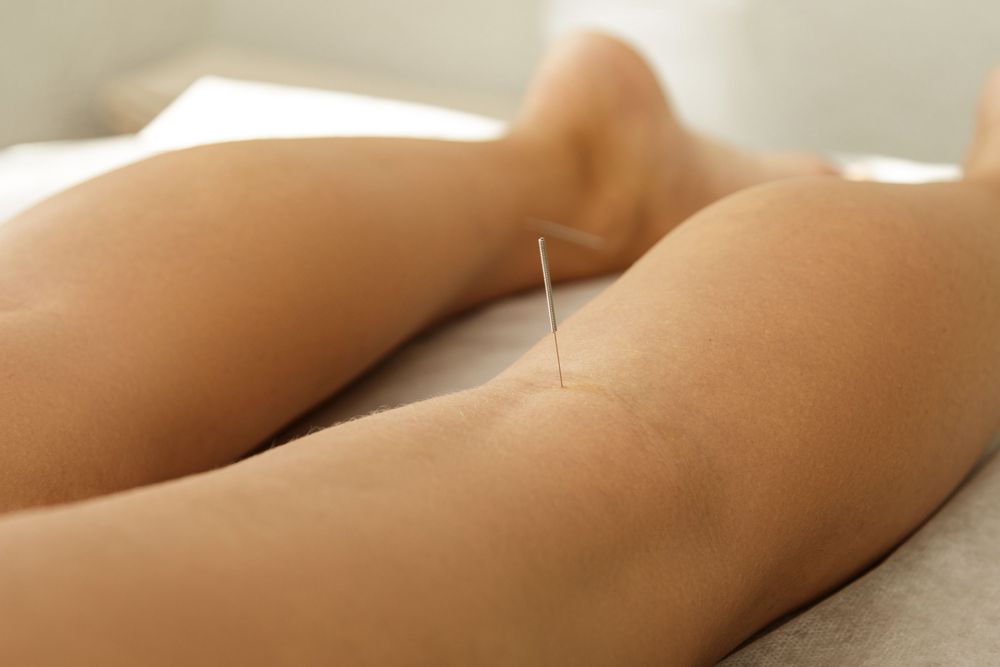
As well as the effectiveness of plants, acupuncture sessions can prove beneficial in overcoming the feeling of heaviness in the legs. Stimulating certain acupuncture points can boost the circulation of Qi and Blood and drive out the Dampness that may be at the root of this disorder. Acupuncture is also effective in reducing pain and swelling in the limbs.
For example, point SP6 works effectively to smooth the circulation of blood and energy throughout the body. Point SP9 is reputed to drain water retention, relieve swelling in the legs and reduce varicose veins.
A pillar of traditional Chinese medicine, acupuncture is a whole therapeutic art whose effectiveness is recognised by the World Health Organization. 1. The frequency of sessions is determined by the acupuncturist and depends on the patient’s condition.
So, to skip through the summer on light legs, let natural remedies take care of your health!

