Memory lapses, mental fatigue, poor concentration… What does Chinese medicine suggest?

Can't remember what you ate yesterday? Struggling to learn a lesson? Finding it hard to concentrate on your work projects? Then you may be suffering from concentration and memory problems!
Whether you are a student, working or retired, memory and concentration are two vital functions of our brain that must be preserved and maintained throughout our lives. Yet with age, they gradually decline.
How does TCM (Traditional Chinese Medicine) explain memory and concentration problems? Which plants and formulas are recommended to improve memory and increase the ability to concentrate?
Memory and concentration: how do they work?
Memory and concentration are two completely linked functions. To activate the memorisation process, concentration is essential; without concentration, nothing (or almost nothing) can enter our memory.
Nevertheless, each has its own roles.
Concentration

Concentration is our ability to focus our attention on a task for as long as necessary.
It is not unusual to have trouble concentrating at times: carrying out an everyday task, following a conversation or a film, or reading a book can sometimes prove a real challenge! It often takes several minutes to get fully back into the task you were doing before.
Our ability to concentrate is influenced by various factors:
-
Stress: the brain is overloaded with stimuli and can no longer process information in an organised way.
-
Fatigue and lack of sleep: the brain will not have the energy it needs to help you concentrate.
-
Age: with age, our cells become damaged and less functional, and neuronal membranes harden and transmit information between neurons less well.
-
Excessive, unnecessary or prolonged use of medication
-
Drug or alcohol addiction
In addition, certain conditions can affect our ability to concentrate, as is the case for a condition that affects around 5.9% of school-age children (1 or 2 per class) and 3% of adults.
Memory
Memory is the function of our brain that allows us to take in information, retain it and recall it. It brings together skills, knowledge and memories. It is essential for thinking and for each of us to project ourselves into the future. It provides the basis of our identity.

There are different kinds of memory: working memory, perceptual memory, semantic memory, episodic memory and procedural memory. Each has a very specific function.
-
Working memory (also called "short-term" memory) is the memory of the present. We use it constantly to hold and temporarily store (for a few seconds) a piece of information we are using: remembering a phone number long enough to write it down, or remembering the beginning of a sentence long enough to finish it.
-
Sensory memory (or "perceptual" memory) is linked to our different senses. It lets us remember faces, voices and places. It is what allows a person to get home by habit, thanks to visual landmarks.
-
Semantic memory stores general knowledge acquired through learning, such as language, lessons and so on. It is built and reorganised throughout our lives.
-
Episodic memory lets us recall personally lived memories, situate ourselves in time and space and thus project ourselves into the future. For example, telling a story about your last holiday or imagining your next trip.
-
Procedural memory is the memory of automatic actions. It allows us to carry out ordinary tasks without having to relearn them each time: driving, walking, eating, tying our shoelaces, riding a bike…. Because it is made up of very well assimilated sensorimotor automatisms, this memory is said to be "unconscious".
Memory can be affected by the same factors that disrupt concentration. However, the condition that affects it is the one that causes a gradual decline in mental abilities, affecting around 1 million people in France.
Concentration and memory problems explained by TCM
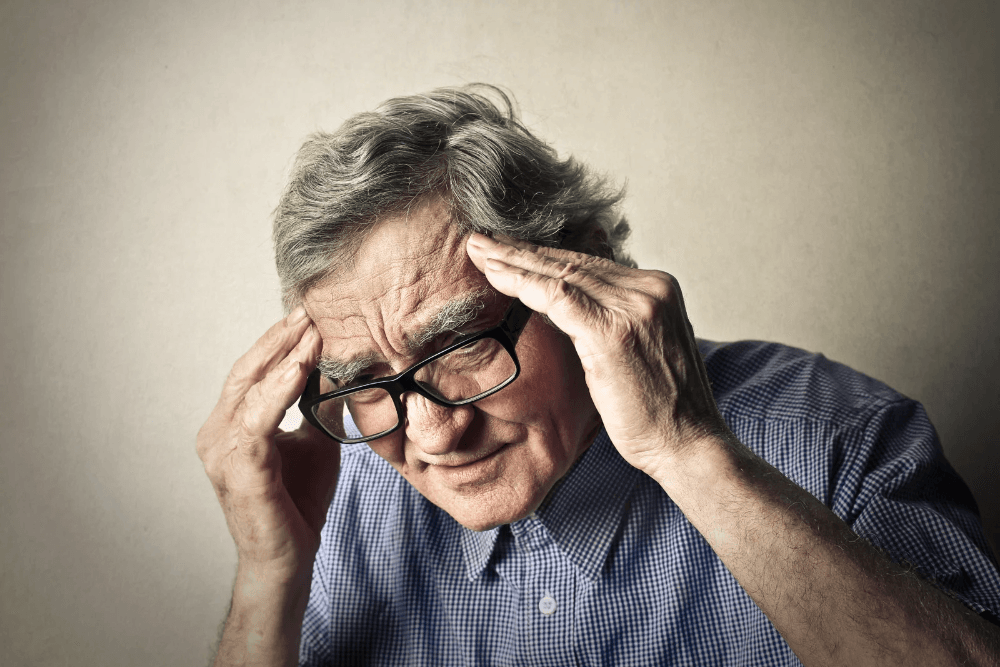
In Chinese medicine, the Brain (called the Sea of Marrow) is considered the seat of memory. It controls memory, concentration, sight, hearing, touch and smell. The Brain is functionally related to the Heart, and more particularly to Heart Blood, whose role is to supply it properly. The Spleen and Kidney are also very important for maintaining a good memory.
-
The Heart (which houses the Shen and governs Blood) is responsible for the memory of past and recent events and the memory of faces, names and so on. It also plays a role in absent-mindedness (when we can't remember where we put our glasses, or when we forget to lock the door, for example)
-
The Kidney (which houses the Essence and the Zhi) is responsible for memorising everyday events. It stores and retains information that will be used later.
So if Essence and Blood are both abundant, the Brain enjoys good health and strong vitality: short-term memory and concentration are good, the ears hear properly and the eyes see well (the eyes are the opening of the Liver but are also nourished by the Kidney).
Conversely, if Kidney Essence and Heart Blood are both deficient, the Brain is slow, memory is poor, vitality is low, and hearing and sight are weakened. In this case, symptoms such as poor concentration or dizziness in particular may appear. 1
The link between the mental energies and memory & concentration

Intellectual abilities, notably memory and concentration, are also linked to the 5 mental energies, and more particularly to the Shen, the Yi and the Hun:
When the functions of the Shen (the Spirit) are carried out properly, the mind is stable and clear, thinking is agile and receptivity to information from the outside world is normal. Conversely, when it is agitated, it affects the Heart and memory.
When the Ethereal Soul (Hun) is disturbed, it leads to an unbridled imagination with difficulty concentrating on a single task.
In addition, when the Intellect (Yi), which is responsible for concentration and linked to memory, is disturbed, memory loss can be observed.
Solutions from the Chinese pharmacopoeia to improve memory and concentration
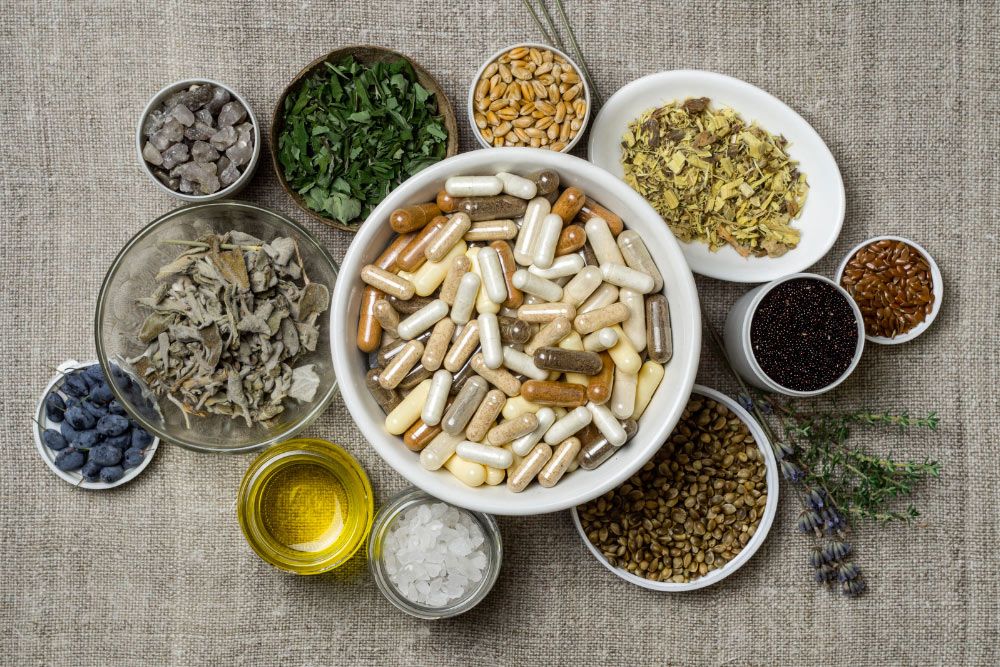
In everyday life, you can use games and exercises to strengthen your memory and concentration. However, these may prove insufficient or ineffective. In that case, plants and formulas from the pharmacopoeia can be a real help in preserving our cognitive abilities for as long as possible.
Among them are:
-
Yin xing ye (ginkgo leaves): its leaves are recommended for older people because they effectively strengthen brain function. Their rich content of flavonoids and terpenes helps improve memory, attention and concentration. They also increase blood flow to the brain. In TCM, ginkgo leaves are used to preserve the Lung and stimulate the brain and Blood.
-
Memory and Concentration Herbal Tea: generally recommended for students, this herbal tea is a real ally during exam or revision periods, as it calms the Spirit and reduces agitation so as to improve concentration and memory.
-
Intellectual Tonic Formula: made from several plants renowned for their action on brain function (notably Fu ling, Shi chang pu, Yin xing ye and Yuan zhi), it is a valuable help for retaining information better and stimulating memory. It is perfectly suited to seniors and students.
Memory and concentration problems affect everyone, at any age, and can cause difficulties in daily life, both personal and professional. But don't worry: certain plants and formulas from the Chinese pharmacopoeia can be a valuable help in getting back a memory like an elephant!


