- A thousand-year-old festival under the sign of the moon
- The legend of the first mooncakes
- A sharing ritual that is still alive
- A gourmet journey through the regions of China
- Cantonese mooncakes – lotus and egg yolk, the sun in the moon
- Yunnan mooncakes – sweet-and-savoury ham, bold flavours
- Suzhou-style mooncakes – sweet red bean or fragrant jujube
- Beijing mooncakes – the toasted aroma of black sesame
- Traditional ingredients with timeless virtues


The Moon Festival and its mooncakes: a journey through tradition and flavours

Have you ever come across, in the metro or in Asian neighbourhoods, those pretty decorated boxes containing mysterious round, golden cakes?
These pastries, called mooncakes (月饼), are not just sweet treats: they carry with them the memory of a thousand-year-old festival and the taste of family ties.
A thousand-year-old festival under the sign of the moon
Every year, on the 15th day of the 8th lunar month, China celebrates one of its most poetic festivals: the Mid-Autumn Festival (or Moon Festival 中秋节), also known as the Reunion Festival. That evening, the moon is at its roundest and brightest of the month, a symbol of harmony and reunion.
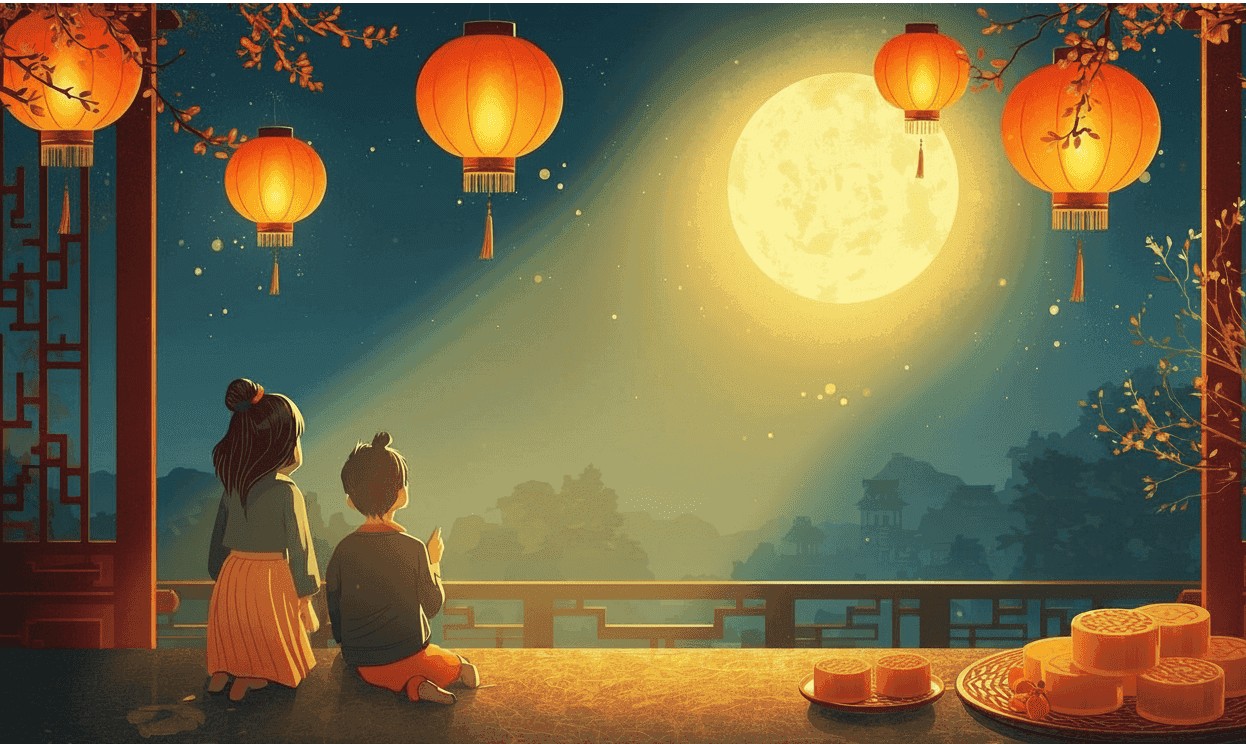
For centuries, families have gathered under the full moon to share mooncakes, round pastries that recall the night-time star.
The legend of the first mooncakes
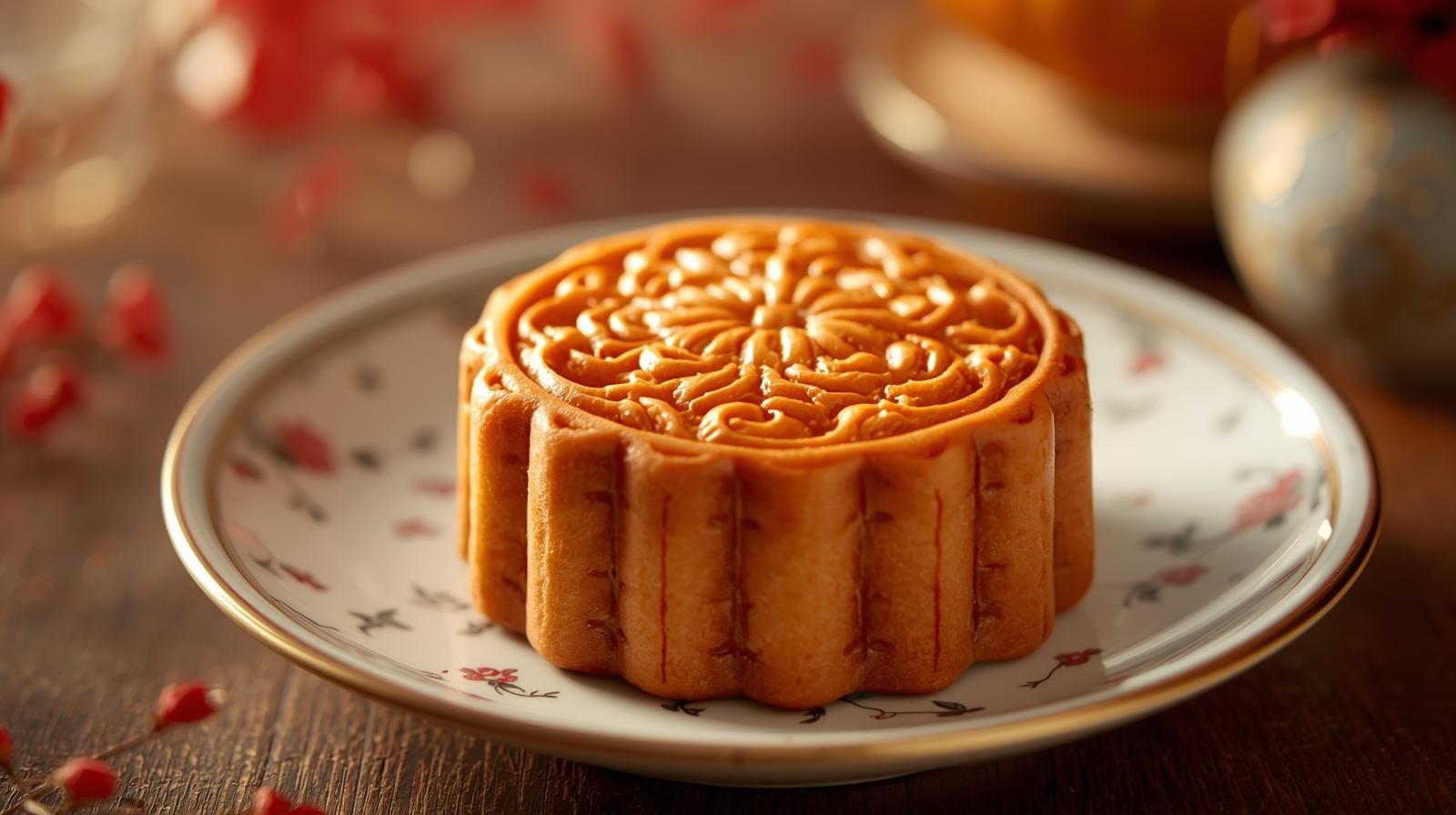
Legend has it that under the Tang dynasty, Emperor Li Yuan received small round cakes from a merchant from Central Asia. Charmed by their resemblance to the moon, he offered them to the moon and shared them with his ministers: a gesture that became a tradition.
A sharing ritual that is still alive
Since then, families have gathered every Mid-Autumn to admire the full moon, while sharing mooncakes, which have become a symbol of unity and nostalgia. The ritual still continues today; even those who cannot go home keep it alive: giving a box, sharing with friends, or enjoying them under the full moon as an invisible link with their loved ones.
That is why, as the Mid-Autumn Festival approaches, these elegant boxes can be seen in Asian neighbourhoods all over the world: they contain not just a treat, but the memory of a thousand-year-old festival and the emotion of reunion.
A gourmet journey through the regions of China
Today, there is a great variety of mooncakes depending on the region of China. Each terroir and each culinary tradition has left its mark, giving rise to a surprisingly varied palette of flavours: from sweet to savoury, from delicate lotus to intense black sesame.
It is this gourmet journey through the regions of China that we invite you to discover.
Cantonese mooncakes – lotus and egg yolk, the sun in the moon
Originating in southern China, Cantonese-style mooncakes (Guangzhou, Hong Kong, Macao) have become the essential reference, both in China and abroad. Their thin, golden crust hides one of the most emblematic fillings: a smooth lotus seed paste. Delicate and subtle, it embodies purity and harmony, values deeply associated with the festival.
And the surprise doesn't end there: at the heart of this silky lotus paste there is often a salted egg yolk. In the Chinese imagination, this bright yolk recalls the sun nestled in the moon, an image that expresses the balance between sweetness and intensity, yin and yang.
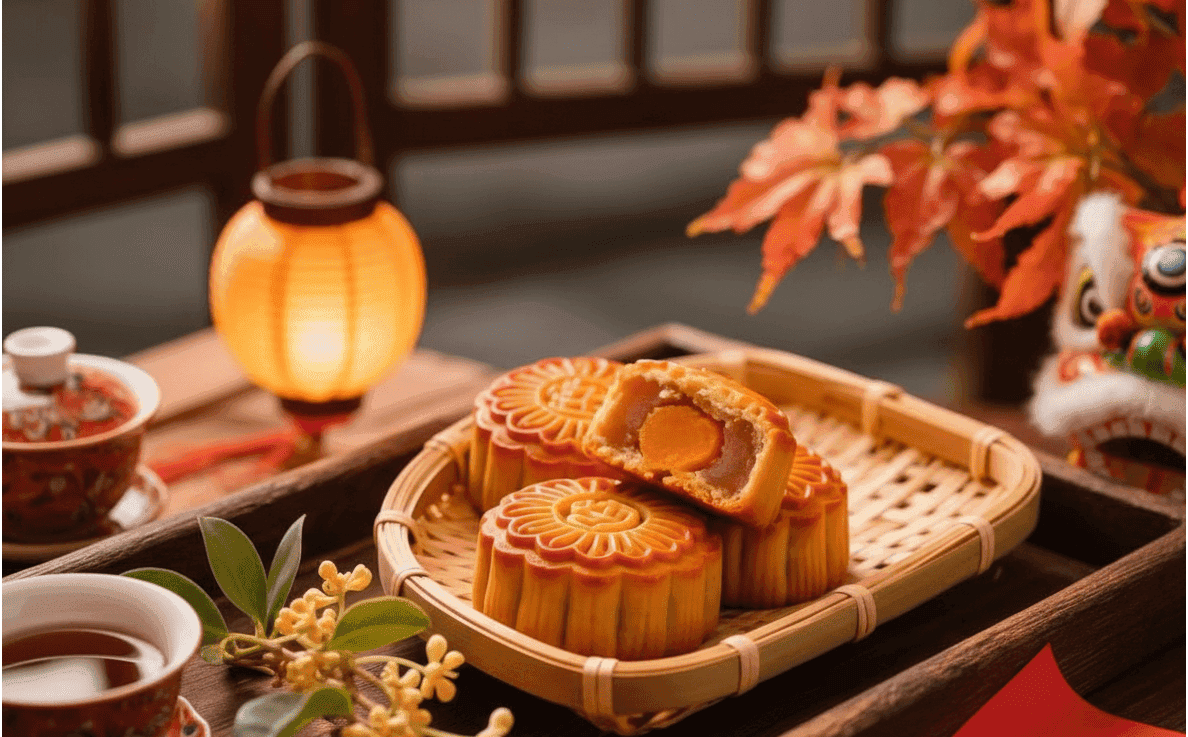
This refined contrast has made the lotus and egg yolk mooncake one of the most emblematic varieties of the Moon Festival, without eclipsing the richness of other regional recipes.
Yunnan mooncakes – sweet-and-savoury ham, bold flavours
Born in the mountainous south-west, Yunnan mooncakes surprise with their originality. Their golden crust contains an unexpected ingredient: Xuanwei ham, an emblematic product of the region, renowned for its powerful aroma.
Here, the sweetness of sugar meets the saltiness of the ham, creating a bold contrast that surprises at first, then wins you over with its harmony. This singular mix illustrates Yunnan's culinary art: playing with opposites to find balance.
Now recognised as a true local gastronomic heritage, the ham mooncake has become the culinary symbol of Mid-Autumn in Yunnan, appreciated as much for its strong identity as for its unforgettable taste, unlike any other.
Suzhou-style mooncakes – sweet red bean or fragrant jujube
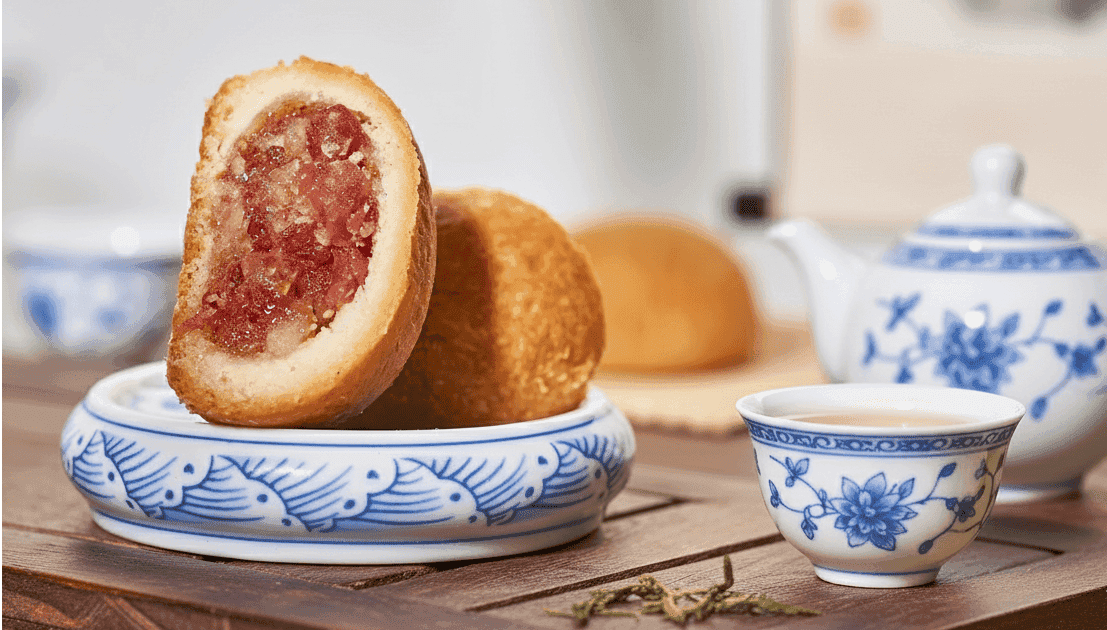
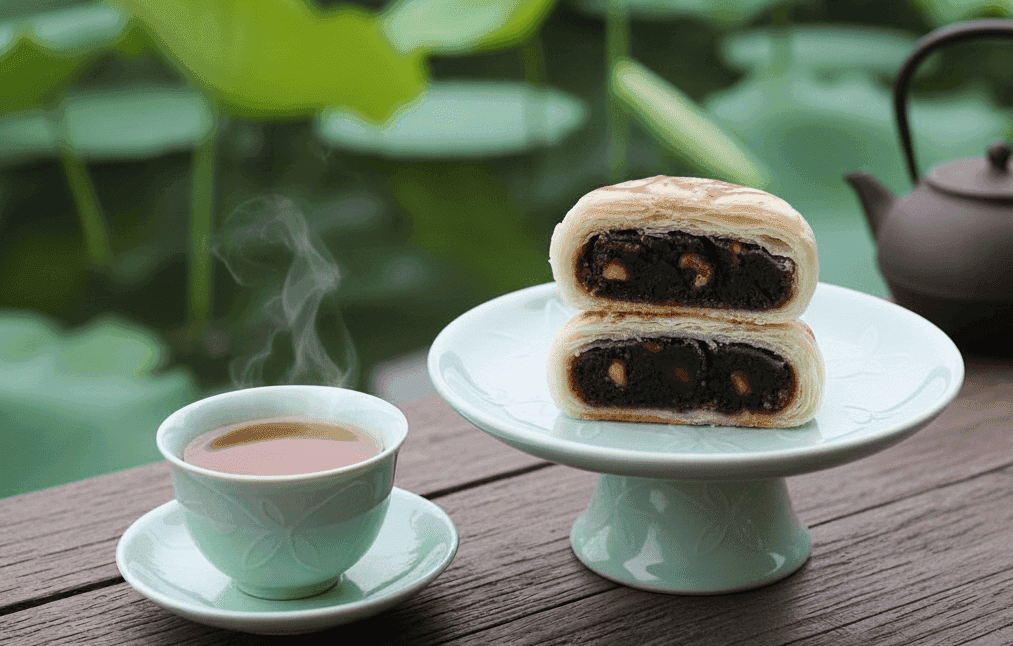
Originating in Suzhou and widespread throughout the Jiangnan region (Shanghai, Jiangsu, Zhejiang), Suzhou-style mooncakes are recognisable by their flaky, thin and crispy crust, which crumbles delicately in the mouth. Here, we highlight two emblematic fillings: red bean paste, sweet and velvety, and jujube fruit paste, more fragrant and nourishing.
These simple yet refined flavours recall the generosity of autumn harvests and the warmth of family gatherings. They offer an interesting contrast with the more opulent versions from the South, embodying instead the finesse and delicacy of Jiangnan, a region renowned for its refined art of living.
Even today, Suzhou-style mooncakes remain Mid-Autumn essentials, appreciated for their authenticity and autumnal fragrance. And for those who prefer savoury, the fresh pork version is also very popular in the region.
Beijing mooncakes – the toasted aroma of black sesame
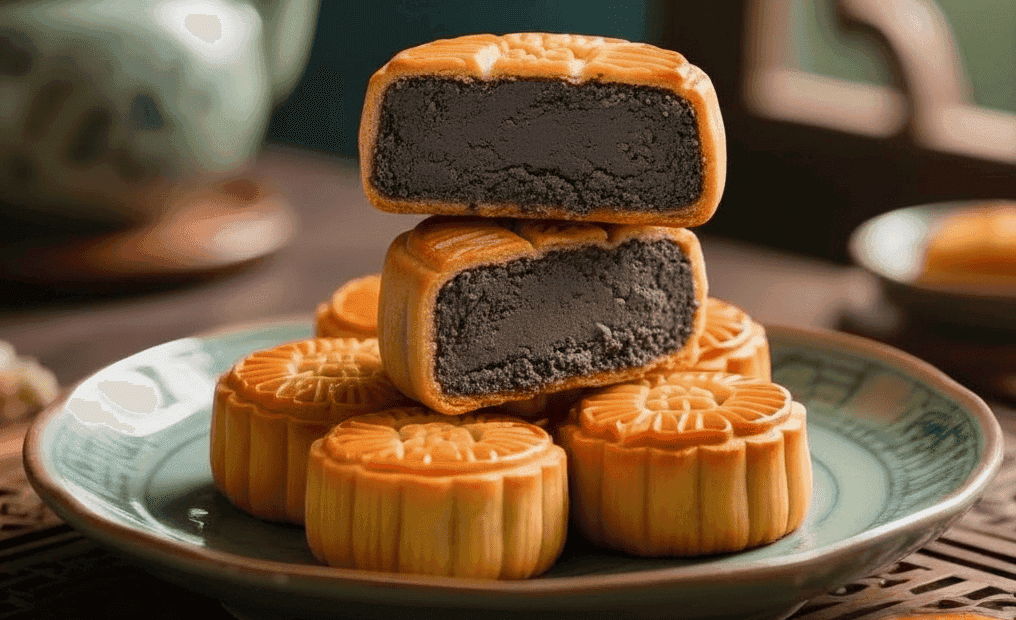
In northern China, and particularly in Beijing, mooncakes stand out for their thicker crust and a more rustic character than those of the South. You find traditional fillings such as jujube or dried-fruit paste, but also a much-loved variant: black sesame, with its toasted, deeply aromatic flavour.
This intense taste reflects the spirit of northern pastries: simple, nourishing, unpretentious, but rich in authentic warmth. Biting into a black sesame mooncake means discovering a frank, direct flavour, much like northern cuisine and temperament.
Even today, this recipe remains a classic on Beijing tables at Mid-Autumn, appreciated as much for its authenticity as for its unique aroma, which evokes both simplicity and quiet strength.
Traditional ingredients with timeless virtues
If mooncakes are so appealing, it is also because their fillings are not chosen at random. In China, each ingredient carries a particular symbolism and function, inherited from traditional medicine. Some of them stand out in particular, for example lotus seeds (Lian Zi 莲子), jujube fruit (Da Zao 大枣) and black sesame (Hei Zhi Ma 黑芝麻).
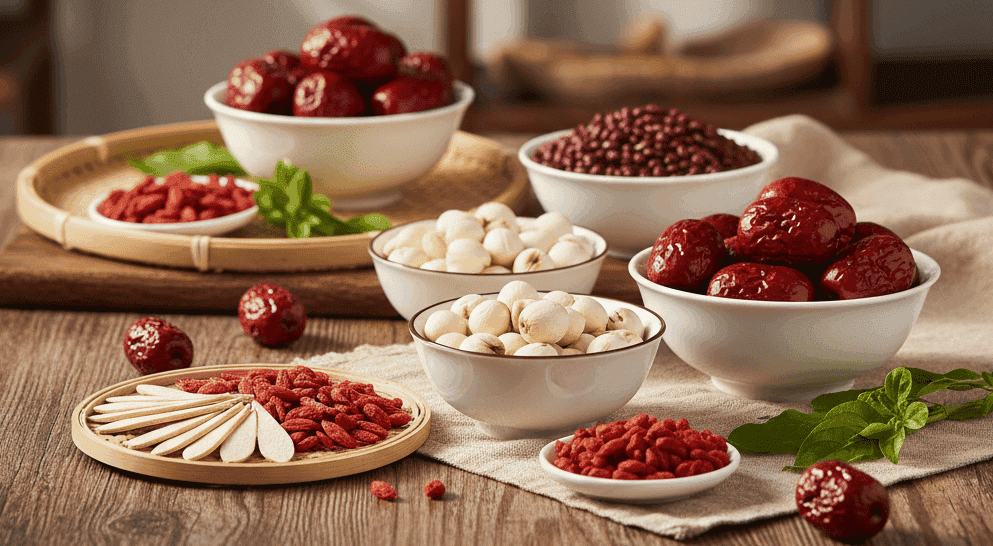
Lotus seeds (Lian Zi 莲子): a sacred seed with a sweet taste, used for centuries to calm the mind and strengthen inner energy.
Jujube fruit (Da Zao 大枣): sweet and comforting, prized for its ability to tonify Qi (vital energy) and nourish Blood, the pillars of well-being according to TCM.
Black sesame (Hei Zhi Ma 黑芝麻): rich and aromatic, reputed to support the digestive system, improve transit, stimulate memory and preserve vitality thanks to its antioxidant power.
These ingredients, inherited from tradition and full of benefits, are not limited to the Moon Festival.
You can rediscover them every day, in infusions, in cooking or as wellness supplements. Find them in our selection on calebasse.com.
