
Probably the most famous festival in the traditional Chinese calendar, the Lunar New Year, also called the "Spring Festival", marks the first day of the new moon and of the new year. It falls on the first day of the first month of the traditional Chinese lunisolar calendar, and the festivities celebrating it last about fifteen days. In the Gregorian calendar, the first day of the new year usually falls between 21 January and 19 February.
Contrary to what is thought in the West, China is not the only country that celebrates the Lunar New Year: festivities take place in most Asian countries. Celebrated all over the globe, the Spring Festival bears witness to the impact of Asian cultures on the world. Discover the origins of this festival and how it is celebrated in China.
The origins of the Lunar New Year
A festival that celebrates the arrival of spring
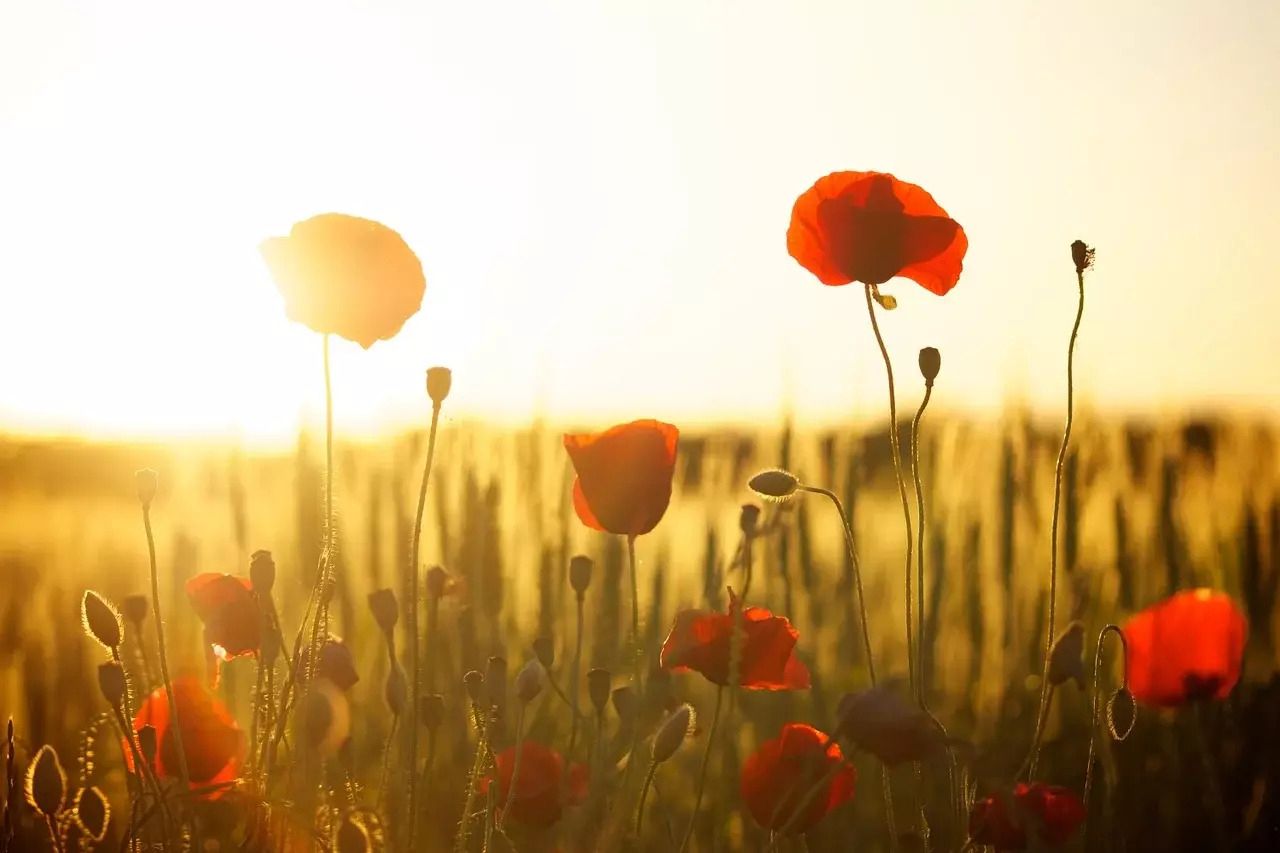
Originally, the New Year was an agricultural festival, established to mark the change of season and so restart farming after the quiet of winter. The first festivities began around 5,000 years ago: people used this day to make offerings to the God of Agriculture, hoping that the land would be fertile and the harvests good.
In Chinese culture, the arrival of spring is a very positive event that goes hand in hand with rebirth, happiness and good cheer: in this season (the first of the year), nature emerges, buds blossom, and flora and fauna wake up to gently resume their activity.
A legend at the heart of the festivities
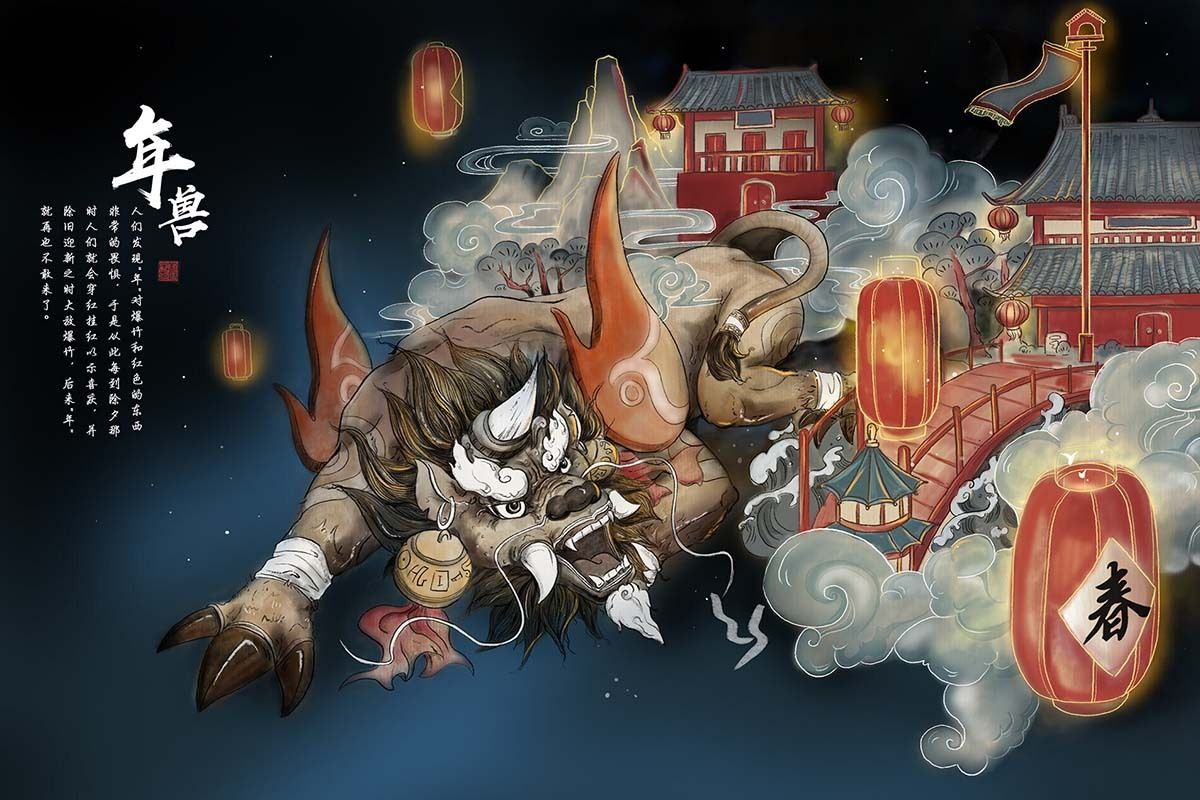
Some link this festival to other origins, and where there are Chinese festivals, there are legends! In Chinese, the New Year is called Guonian: Guo means "to pass" and Nian "the year".
According to legend, in ancient times there was a ferocious monster named Nian. It lived at the bottom of the sea and came out once a year, on the eve of the new year, to devour the village's newborns. To protect their babies, the villagers fled to the deserted mountains.
One day, an old man decided to put an end to this situation and devised a plan to drive the monster away. When Nian appeared, the old man burned dry bamboo. The red light of the fire and the noise of the bursting bamboo (the ancestors of firecrackers) frightened Nian, who fled.
That is how "Guonian" took on its full meaning and how firecrackers became a feature of Chinese New Year. Every year, the people's victory over this monstrous creature is celebrated. Some also say that the delicious New Year cake, Nian gao, was created by the villagers to avoid being devoured by Nian on New Year's Day.
Customs and festivities
As we have already mentioned, Chinese New Year takes place on the first day of the lunisolar calendar. However, it is a festival that lasts several days: the new year is celebrated both before and after the first day of the new moon. But before celebrating, you have to prepare!
The big spring clean
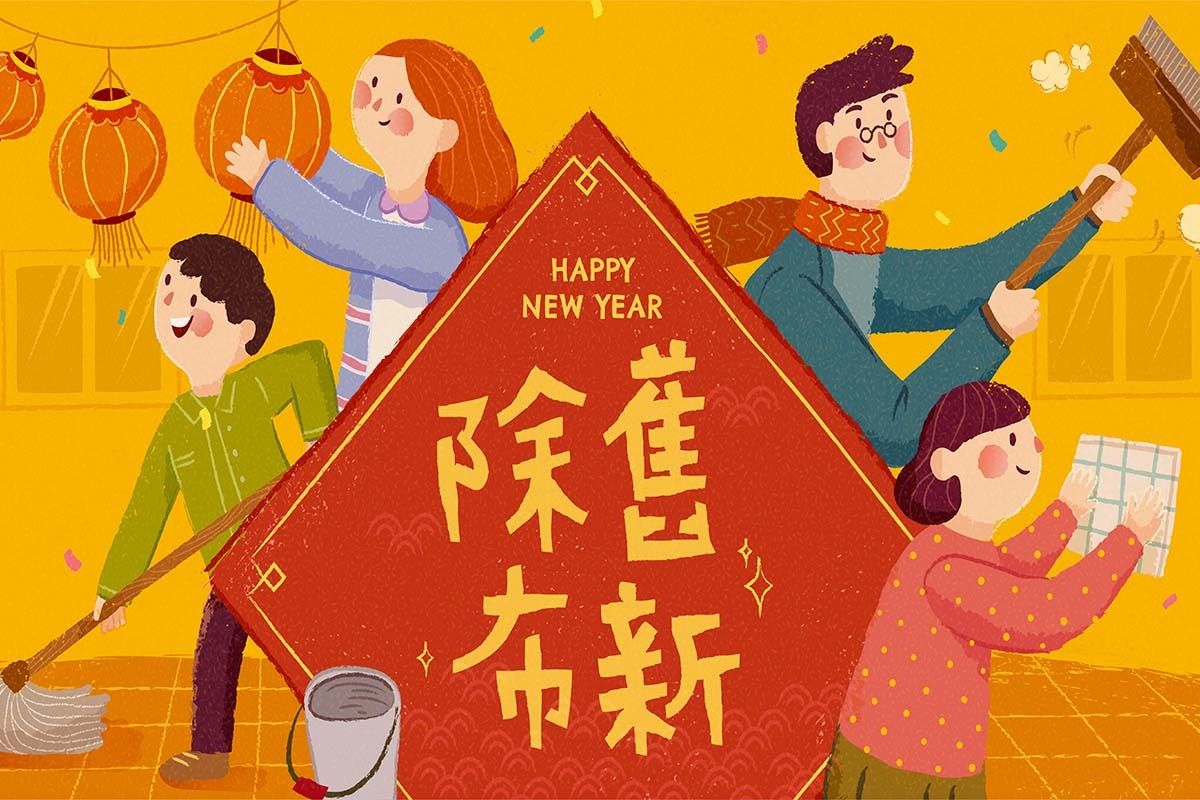
"Let go of the past, seize the present moment."
To welcome the new year, it is customary to devote a day to cleaning the house from top to bottom. This "big spring clean" marks a fresh start: in the week before the new year, people throw out old things they no longer use, to say goodbye to the year that is ending. It is also a way of wiping the slate clean, driving out bad energy and starting the new year on the right foot. This day is sometimes called the "Festival of the Kitchen God".
This custom has its origins in a Taoist legend. The legend tells that the Jade Emperor, a Chinese god, was visited by an evil spirit who told him that some men were planning to rise up against him. Furious, and not knowing that this was in fact a lie, the Jade Emperor ordered the spirit to put a mark on the doors of the houses of all those secretly preparing this betrayal. Zaowangye, the Kitchen God, got wind of the plot. He then urged the townspeople to clean their homes thoroughly to purify them of evil spirits. And so everyone was spared and could celebrate the Spring Festival joyfully.
But beware: cleaning on the first day of the new year is not recommended, or even forbidden, as it is said to risk sweeping away the luck that the new year can bring...
Decorating the house to welcome spring
In the days before the New Year, it is customary to devote time to decorating the house. In China, front doors are often decorated with two strips of red paper called Chunlian, calligraphed with a brush and black ink, on which poems heralding the arrival of spring are usually written.
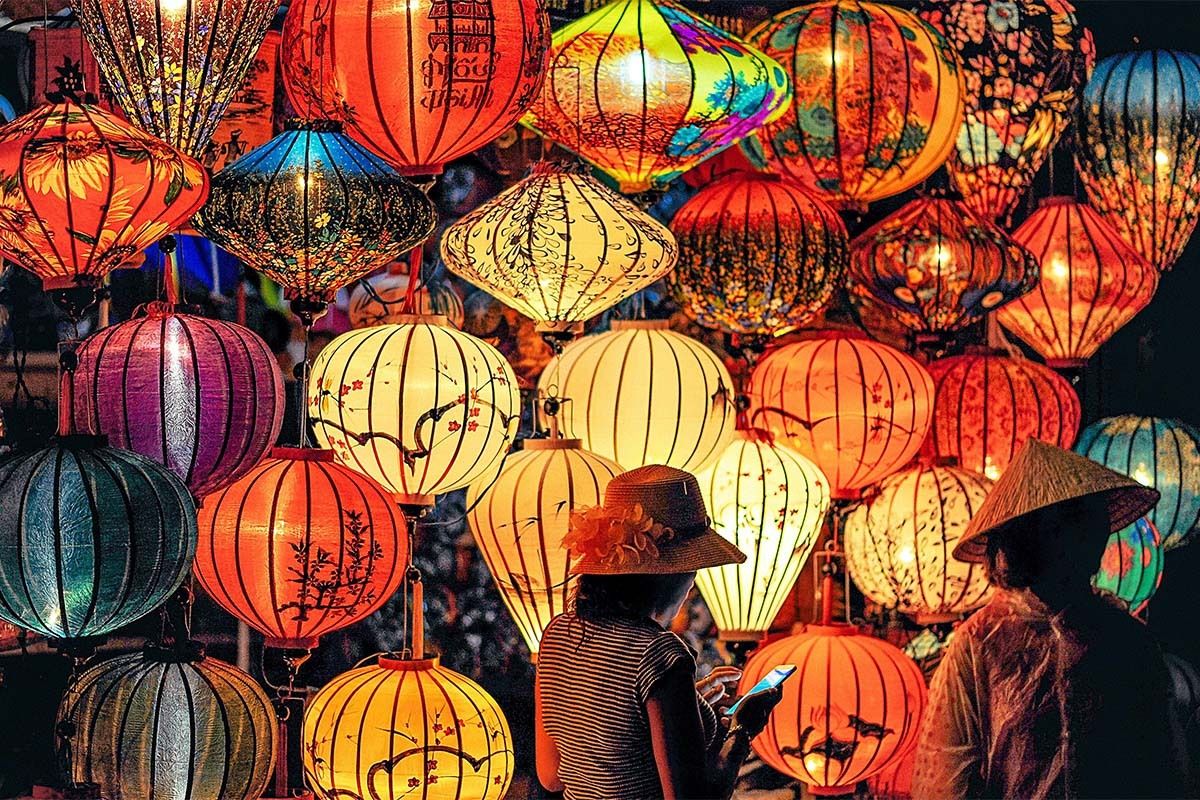
Among the best-known decorations are, of course, the famous traditional lanterns. They are sometimes placed in front of houses but, as a rule, they float in the air, hung on strings and lighting up the towns. Very festive, they come in every colour. However, they are often red, as this is a sign of good fortune.
Sky lanterns are also very popular in Asia. It is said that the higher the lanterns fly, the more likely wishes are to come true.
Besides the light of the lanterns, some people adorn their homes with peonies: these flowers are highly symbolic in Asia, as they are associated with beauty, abundance and success.
The famous red envelopes
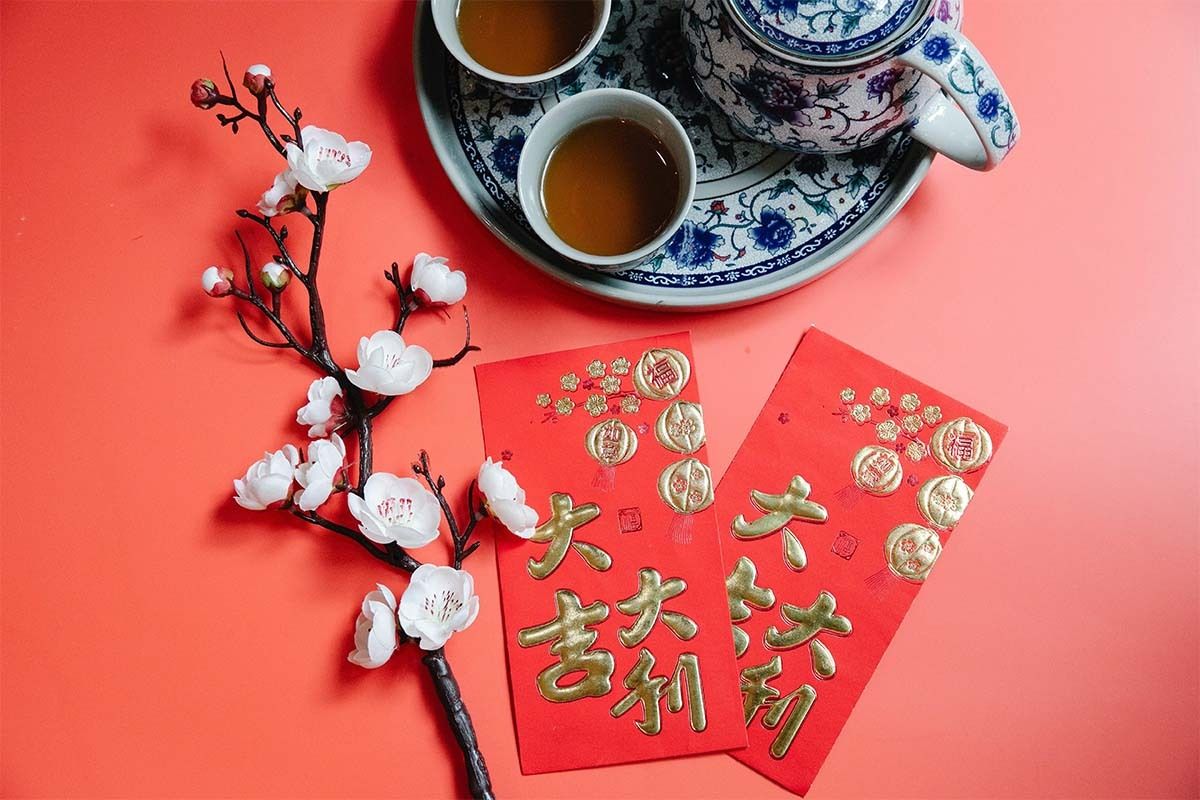
As well as the activities and delicious meals shared with family, it is customary to give red envelopes containing money, called Ya sui qian (literally "money that kills demons"). In the past, adults gave these New Year gifts to children and young unmarried people to bring them luck and happiness. Nowadays, they are given to friends and family members, and they are even sent virtually on social networks as a token of friendship.
The origins of Ya sui qian are thought to go back to the Qin dynasty, the first imperial dynasty of China. At that time, it was believed that giving these famous envelopes protected loved ones from illness or even death.
Parades in the colours of China
The Spring Festival lasts fifteen days, days marked by festivities taking place all over Asia, and it ends on the day of the famous Lantern Festival. Among the most popular events in China are the famous fireworks let off all over the country to "frighten away demons", the big televised gala that brings together billions of viewers every year, but above all the parades, where the very famous Dragon Dance and Lion Dance are performed.
The Dragon Dance
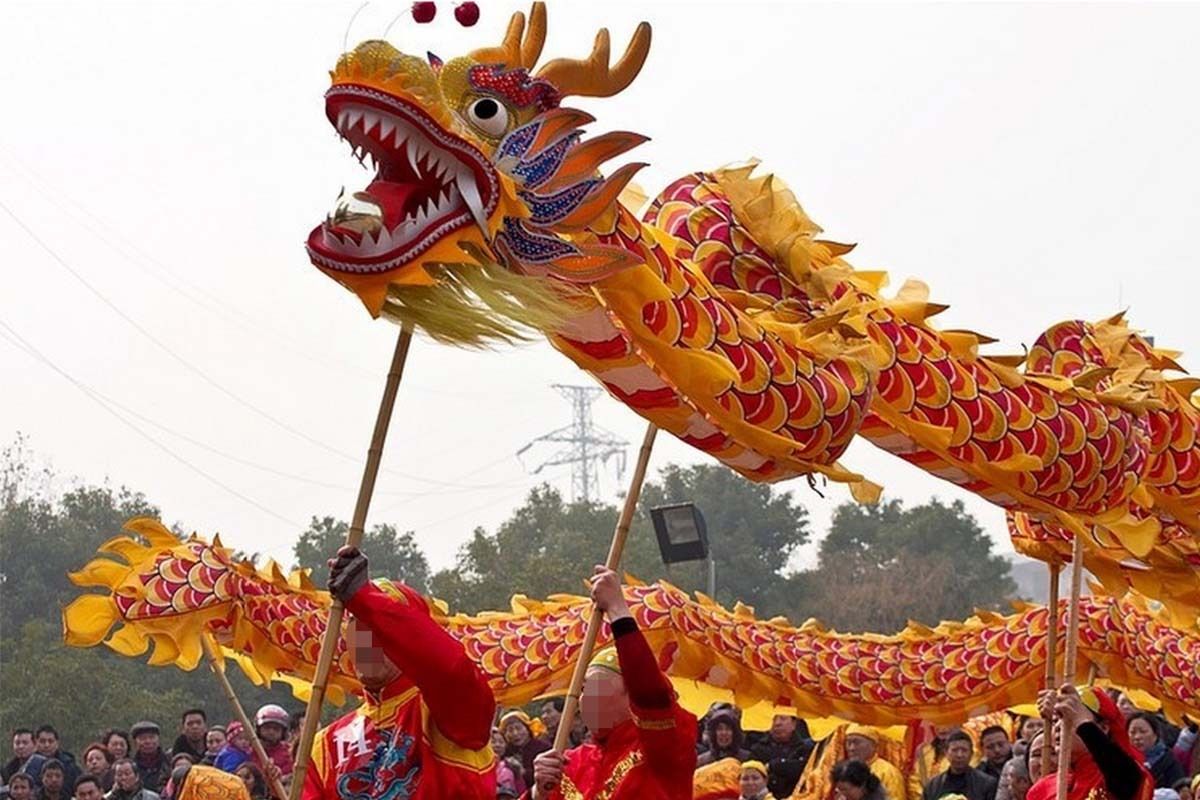
An emblematic creature of Chinese culture, the dragon is highly symbolic and is found at the heart of many traditional events (such as the Dragon Boat Festival, for example). A symbol of longevity, power, willpower and wealth, it is sometimes used to illustrate the principle of Yin and Yang.
It is therefore no surprise to see the Eastern dragon take part in the Chinese New Year festivities. The folk dragon dance, which originated with the Han Chinese, is a traditional custom whose performance is believed to bring prosperity to the people. From Chinese New Year until the Lantern Festival, parades with dancing dragons take place in many regions of China. Inspired by Qi Gong, this dance is usually accompanied by the music of gongs and drums, making for a fabulous show.
The Lion Dance
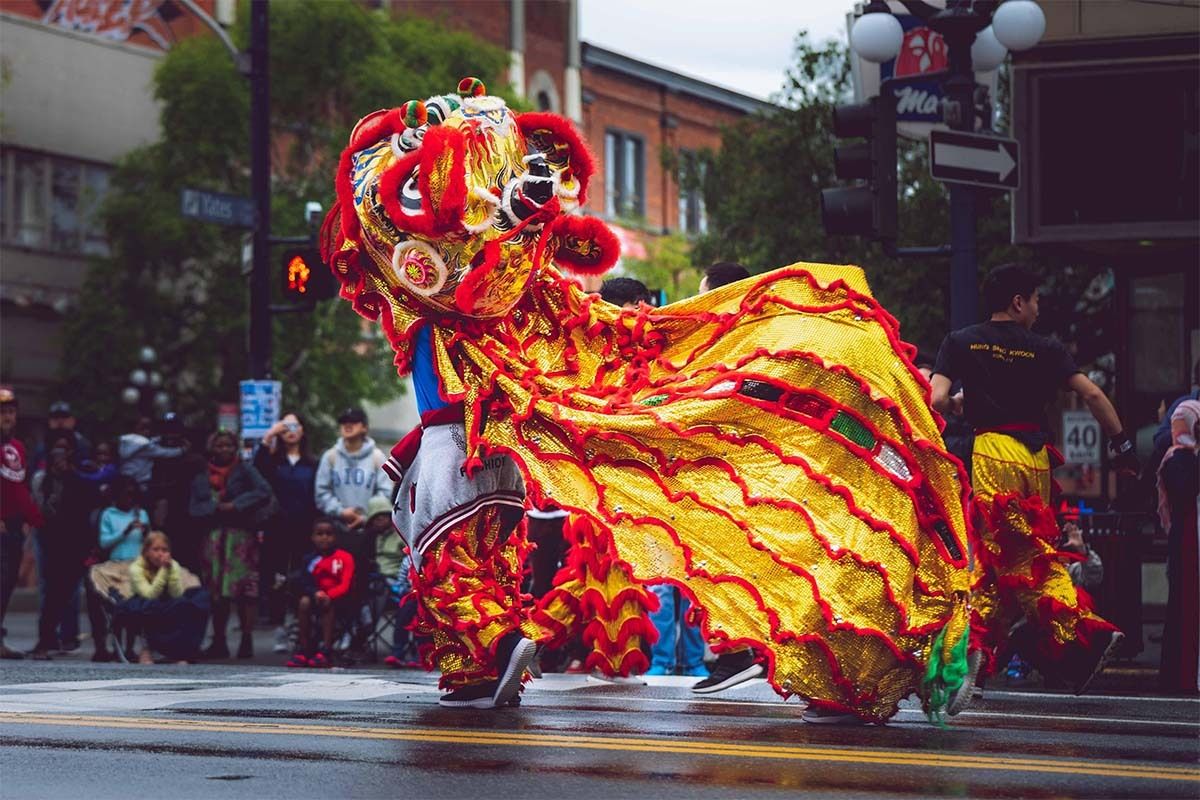
The lion is a symbol of strength and wisdom, and it is known the world over for its role as a protector.
As with the dragon dance, the lion dance is set to the rhythm of music. It is one of the oldest folk dances in China and, unlike the dragon dance, which requires several dancers, it needs only two dancers to be performed. This dance is performed in parades celebrating Chinese New Year, but also at religious or cultural festivities and sometimes even at more intimate events (birthdays, weddings, etc.).
Each lion is played by two people: one moves the head and the other the tail. The performers dressed as lions imitate the animal's movements; no acrobats are required, which explains the popularity of this dance that is so easy to perform.
Family reunions
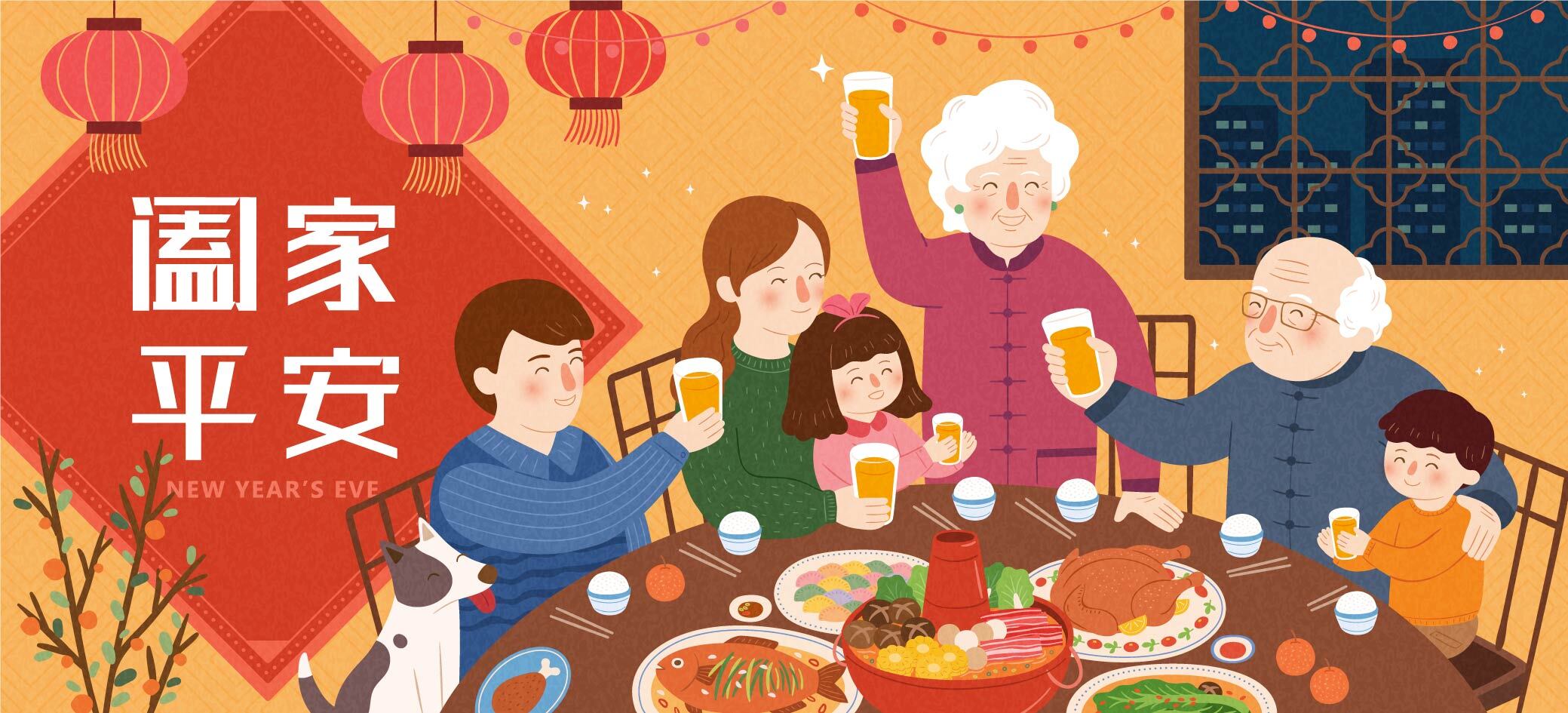
During this festive period, tradition demands that the family come together to celebrate the Spring Festival. Young people who have left their provinces to study and those who have settled in big cities to work are expected to come back and spend the new year with their loved ones, to reconnect with the customs.
It is also an opportunity to exchange symbolic gifts, carrying wishes for health, prosperity and happiness. Among the presents often given are red envelopes filled with money, fruit such as mandarins or oranges, and traditional products associated with well-being. For example, the Winter Serenity Set is a perfect choice to show your affection while bringing comfort and warmth in this winter season.
Above all, the New Year is an occasion for the family to get together: the New Year meal is said to be the most important, and it is very often held at the home of the oldest member of the family. It is also worth knowing that the country comes to a standstill during this festive period and that New Year week is a public holiday, which shows how important this event is.
Finally, there are different ways of offering New Year wishes. For example, in northern China it is common to say "Xinnian Kuaile" or "Guo Nian Hao", which mean Happy New Year. In the south, on the other hand, it is more customary to say "Gong xi fa cai", which means "wishing you a prosperous year".
A happy Year of the Wood Snake to all!
