- Ancient stories: when food and plants became the first beauty treatments
- Why is digestion the key to the complexion and inner calm in Chinese thinking?
- Qi: the energy that lights up the face
- Blood: the substance that gives the skin softness and suppleness
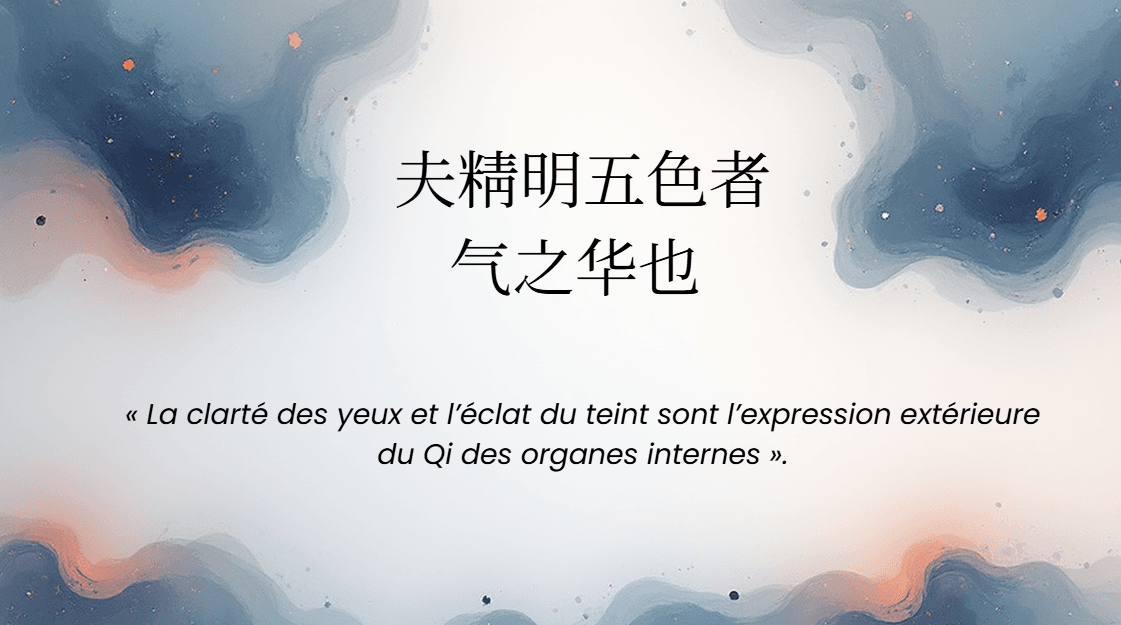
- Shen: what shines through the eyes even before words
- A beauty ritual to drink: Rose, Jujube & Goji infusion
- Ingredients
- Method
- Benefits according to TCM


Chinese culinary culture, rich and thousands of years old, rests on one central idea: harmony. Harmony of flavours, temperatures and textures… but also of the effects that foods have on the body.
In China, cooking is not only about making food taste good: it is about balancing, warming, soothing and nourishing. Cooking there has always been an art of well-being, closely linked to health.
In this logic, beauty is never separated from diet. It is built through what we eat, the way we digest, and the balance that each meal creates in the body.
Since ancient times in China, women cultivated their radiance through precise food choices: warming flavours, soothing plants, gentle cooking methods that respect digestion.
An ancient intuition that has become surprisingly relevant: eating well is already a way of caring for your skin.
Ancient stories: when food and plants became the first beauty treatments
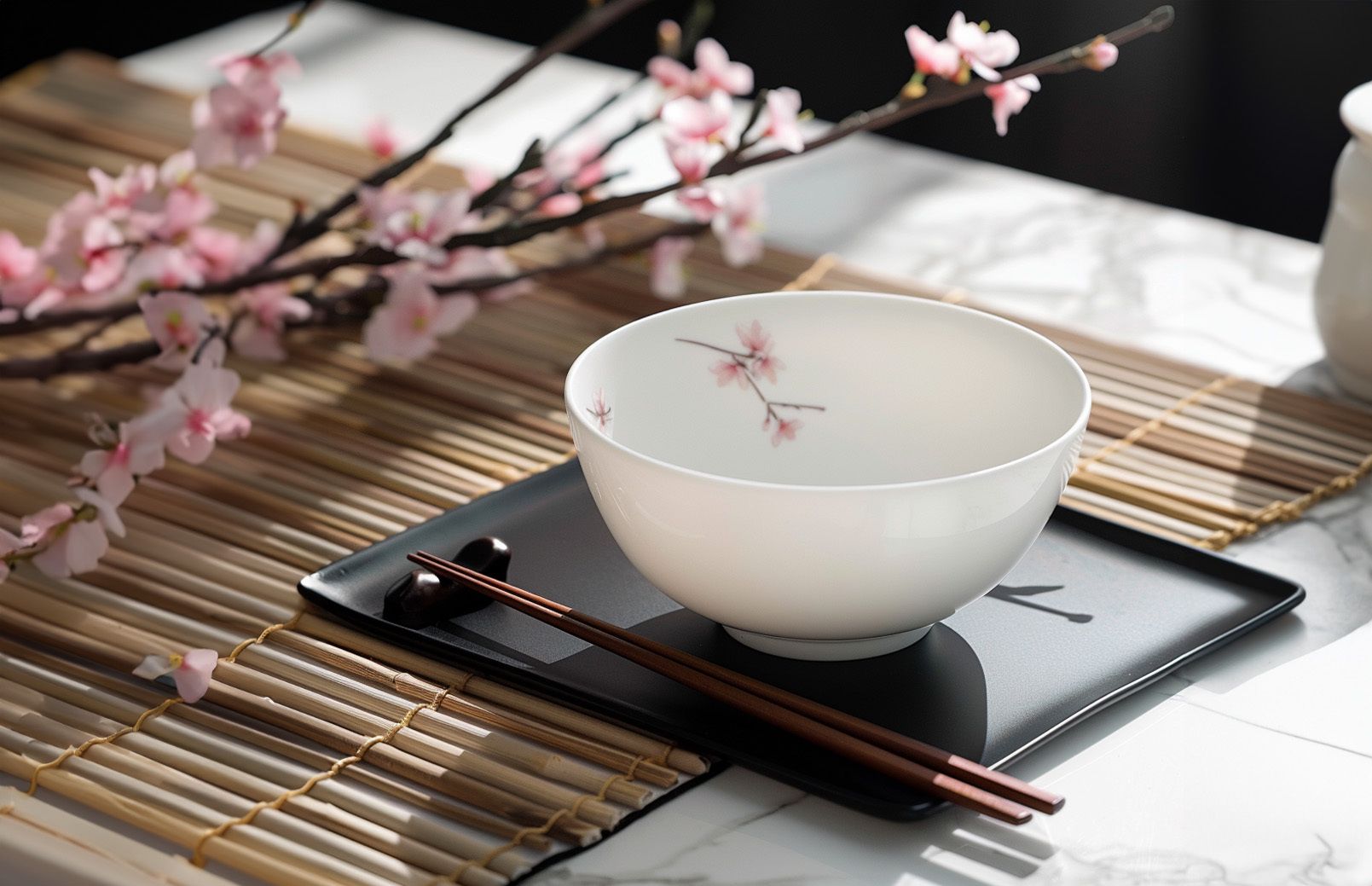
The use of plants to preserve a radiant face goes back a very long way, to the Qin-Han period (3rd century BC – 3rd century AD), when the Huangdi Neijing (one of the founding texts of TCM) already listed ingredients to nourish the skin and harmonise the complexion:
- Chinese angelica root (Dang gui) to enhance the complexion and hydrate the skin
- Mandarin peel (Chen pi) to support digestion and a luminous face
- Peach kernel to activate circulation.
Later, under the Song, when aesthetics valued purity and restraint, a woman with a fresh complexion was described as having "the colour of peach blossom".
This was not make-up, but the sign of well-nourished Blood and a calm mind.
In scholarly households, women liked to drink floral infusions (rose, chrysanthemum, plum blossom…) to soften the features and support digestion.
A simple, daily, deeply feminine ritual.
Under the Tang and then the Qing, these practices became almost an art.
- Wu Zetian, the only reigning empress in Chinese history, used a treatment made with motherwort (Yi mu cao): a gesture that harmonised the body from within while beautifying the outside.
- Cixi, a great figure of the late Qing Empire, regularly took pearl powder (Zhen zhu fen) and loved Poria (Fu ling) cakes: a tonic reputed to brighten the complexion and calm the mind.
It is worth remembering that pearl powder held a special place at the time: used since ancient times in pharmacopoeias, it was considered one of the most refined treasures, a symbol of soft light and a night-time elixir meant to even out the complexion and calm the mind.
It is said that this daily ritual allowed Cixi to keep remarkably clear skin well into old age.
And pearl did not only appeal to women: many men, scholars and stage masters alike, also used it to preserve a radiant complexion and a clear mind.
In ordinary families, the gestures were more modest but just as symbolic:
- A Chinese chamomile (Ju hua) tea to soothe redness
- Jujube fruit (Da zao) and goji berries (Gou qi zi) to "nourish the colour" of the face
- A pear cooked in autumn with snow fungus (Yin mu er) to ease dryness.
All these practices tell of the same deep conviction: beauty is cultivated first on the inside, and revealed on the outside.
These stories are not mere anecdotes: they reflect a deep logic at the heart of Traditional Chinese Medicine (TCM).
A logic in which outer and inner beauty are one: caring about appearance can never be separated from inner balance and peace of mind.
Why is digestion the key to the complexion and inner calm in Chinese thinking?

In TCM, the skin is one of the first places where our inner state can be read. One simple principle sums up this view: what nourishes the body and mind nourishes the complexion.
Everything rests on three inner forces: Qi, Blood and Shen, whose balance is reflected directly in the face.
Qi: the energy that lights up the face
In daily life, we notice it without even thinking about it: after a warm, easily digested meal, the face relaxes, the eyes brighten and fatigue lifts.
This is exactly the Chinese logic: smooth digestion creates a gentle, steady energy, Qi, which rises to the face and gives it back its light.
And when Qi flows well, it is not only the complexion that changes: the mind unwinds, the breath calms, and the face instantly shows it.
But when digestion is sluggish (meals that are too cold, stress, irregular eating), the light dims: the complexion becomes denser, duller and less alive.
Blood: the substance that gives the skin softness and suppleness
Some days, the skin seems softer, fuller and more comfortable. On others, it looks dry, thin and sensitive.
For TCM, this difference comes from Blood: the nourishing substance that hydrates the tissues and gives the skin its texture.
When Blood is ample, the complexion is even, the skin supple and the features harmonious. This is a sign not only of good nutrition, but also of an inner self that is nourished, calm and rested enough to support outer beauty.
When it is lacking (fatigue, overwork, a poor diet), the skin loses substance and responds less well to care.
Shen: what shines through the eyes even before words
Shen (the spirit) is perhaps the most poetic notion in Chinese beauty.
A restless night or a moment of stress is all it takes for the face to change immediately: a heavier gaze, tighter features, a less gentle light.
Conversely, when the mind is calm after a walk, a hot bath or a simple meal, the face opens up, the eyes shine more and the features soften.
That is why, in China, beauty is never limited to the skin: it also depends on the harmony of the mind.
A beauty ritual to drink: Rose, Jujube & Goji infusion
Liver balance | Brighter skin | Calm mind
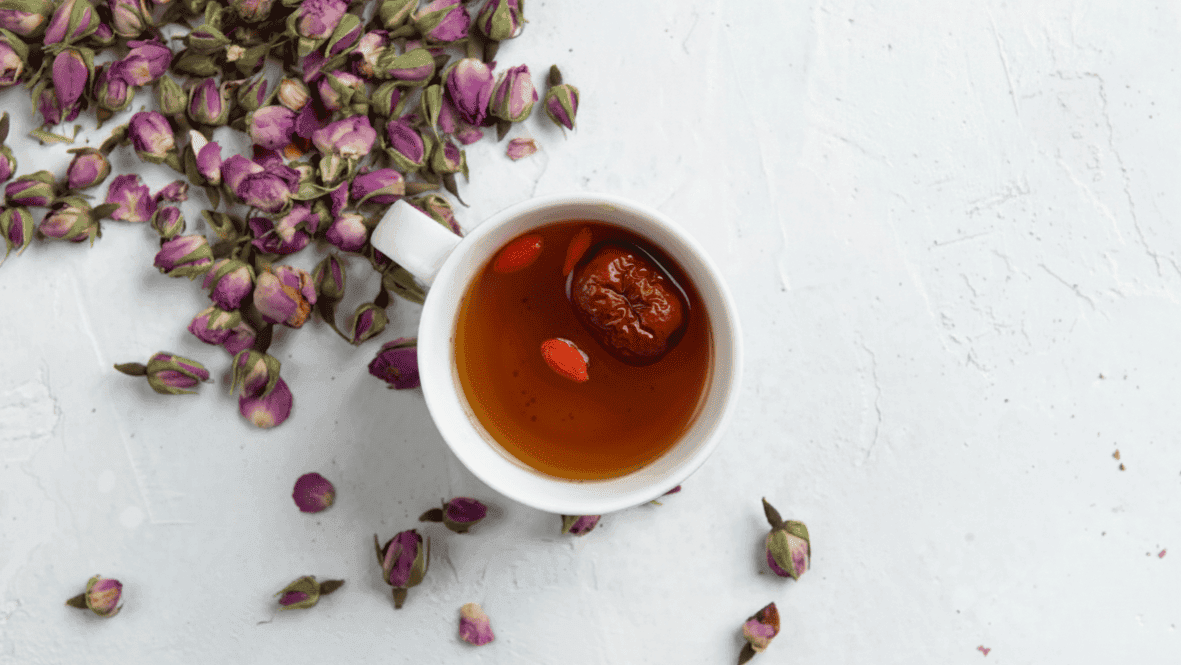
This is one of the most emblematic beauty infusions in China, a ritual designed as much to soften the complexion as to calm the mind.
Ingredients
- 5–6 rosebuds
- 5 jujubes
- 1 tablespoon of goji berries
- Hot water (80–90°C)
Method
- Quickly rinse the jujubes and goji.
- Put the rose, jujubes and goji in a large cup.
- Pour in hot (not boiling) water.
- Cover for 5 minutes for a rounder, more fragrant infusion.
- Enjoy while still hot.
Benefits according to TCM
- Rose: relaxes the Liver and calms the mind
ideal when stress shows immediately on your face. - Jujube: nourishes Qi and Blood
gives a more even complexion and a feeling of gentle warmth. - Goji: brightens the eyes and supports vitality
perfect for reviving the features after an intense day.
For those who want to bring this logic into daily life, very simple gestures are enough.
The SuperGreen Barley Grass & Ashitaba is a contemporary version: a warm, plant-based drink designed to lighten digestion and bring a clearer glow back to the face.
Congees, a discreet legacy of Chinese mornings, continue the same inner movement:
- Lotus & Poria to soothe and clarify,
- Goji & Snow Fungus to hydrate deeply and revive radiance.
Nothing spectacular. Just warm, regular gestures that remind us that beauty often begins with a simple meal, and with a gentler way of inhabiting your body.

