
Contrary to what is thought in the West, Yin and Yang are not merely a representation of good and evil; they are two opposing and complementary forces that govern our lives.
According to Traditional Chinese Medicine, our health depends on the balance of these two forces. When the balance is broken, discomforts appear. The concept of Yin and Yang is therefore a fundamental pillar of traditional Chinese medicine.
The history of Yin and Yang
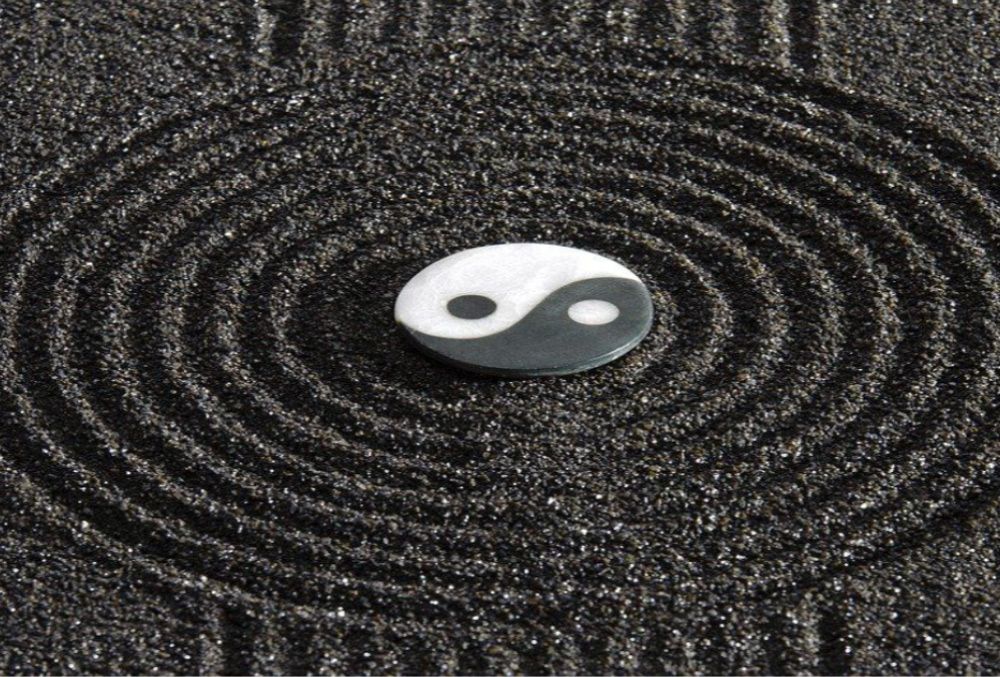
“One movement; two forces that unite and fight each other”
This concept appeared at the same time as the theory of the 5 Movements (around the 9th century BC), and it may even be older. Zou Yan (305 to 240 BC) was the first philosopher to develop and put into practice these two key theories of Chinese philosophy.In Chinese energetics, Yin and Yang are directly linked to all the other major precepts of TCM, notably Qi (vital energy), and are at the heart of every transformation on Earth. However, they are neither energies, nor substances, nor mythical or esoteric elements.
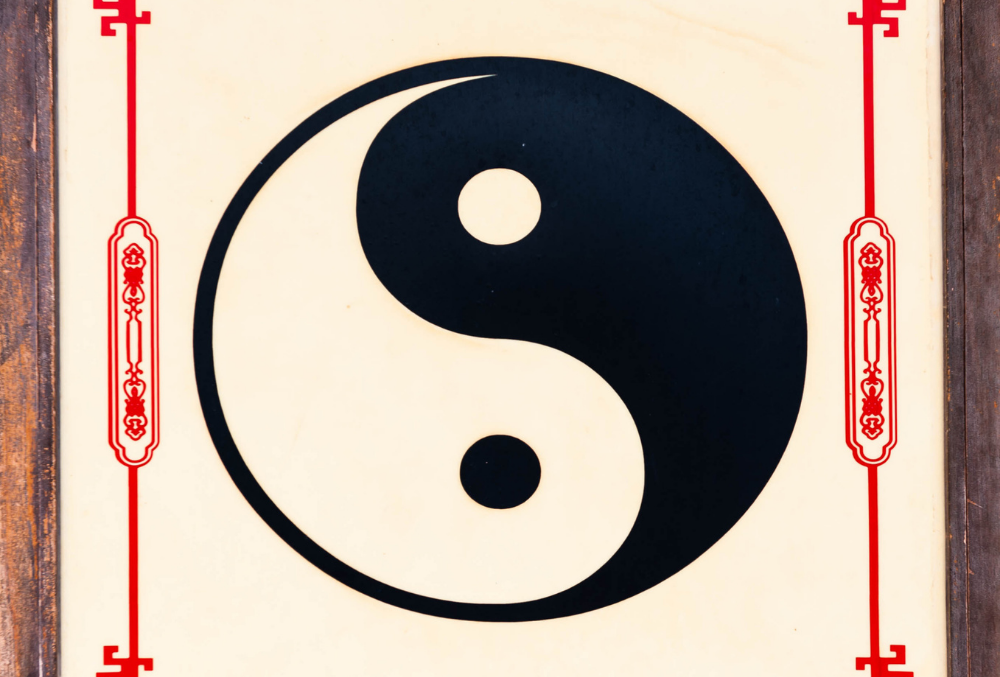
Originally, Yang referred to the sunny side of a hill and Yin to its shaded slope. Each of them refers to a different facet of reality. In the diagram we all know, Yin is the dark part. Within it, a small white dot is visible: this is the energy of Yang at the heart of Yin. Opposite it, Yang, white in colour, contains a small black dot, which is its embryo of Yin. Together they show that, in the universe as in life, nothing is ever absolute.
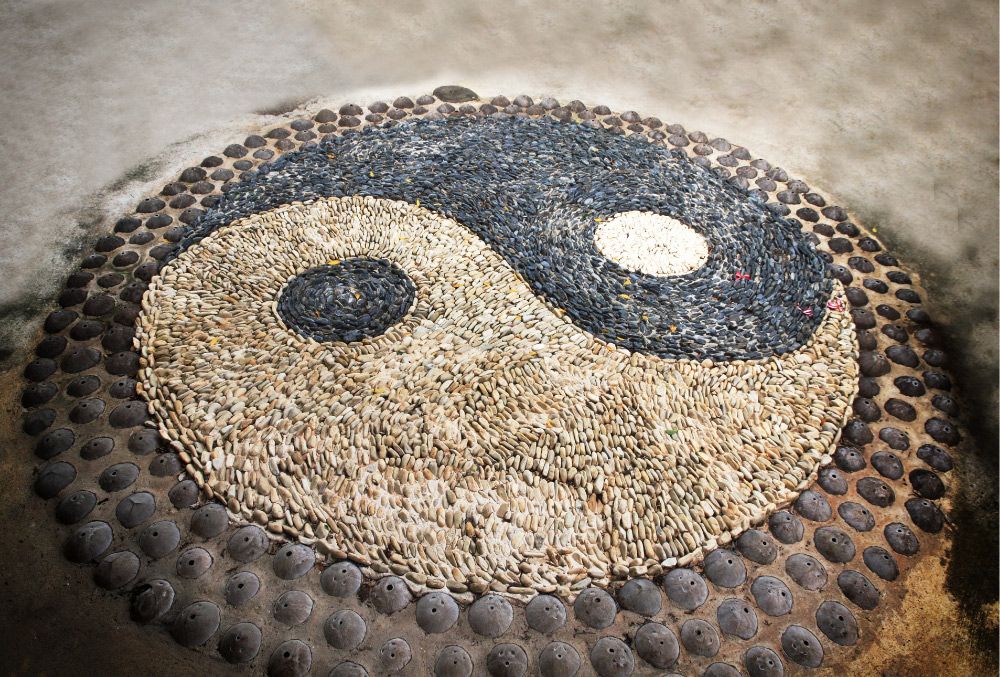
“Heaven is an accumulation of Yang, Earth an accumulation of Yin. The ten thousand beings live between Heaven, which covers them, and Earth, which supports them.”1
We have always perceived Yin and Yang as two opposing forces, and that is indeed the case. Nevertheless, when we dig a little deeper into this concept, we also realise that they are complementary. Yin cannot live without Yang, and vice versa. Together, Yin and Yang form an additional force, and all three are governed by the ultimate vital energy: Qi.
Opposing forces
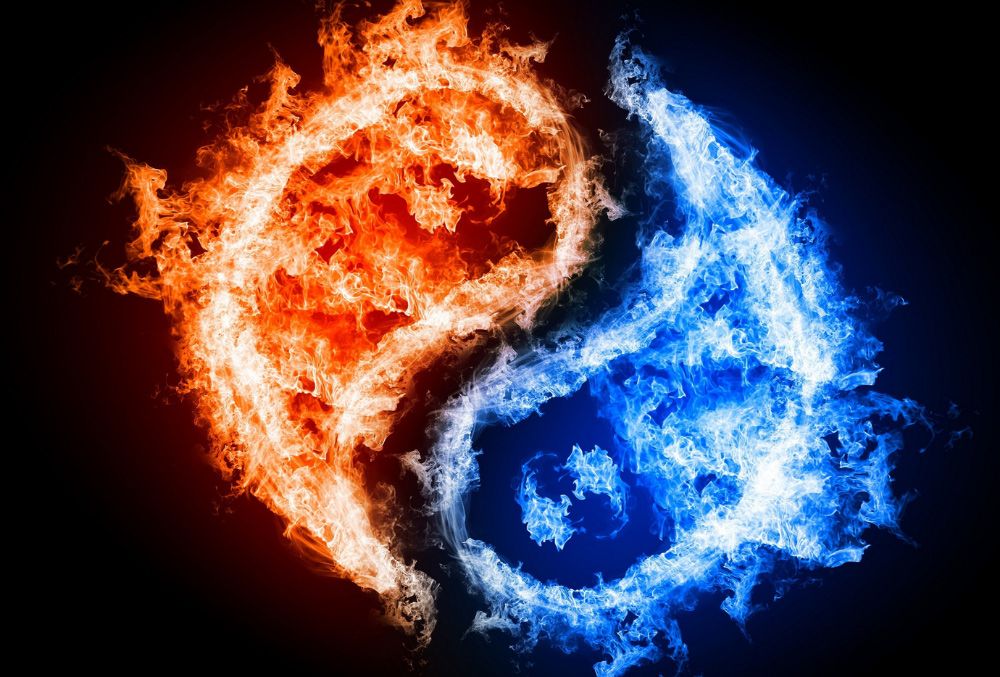
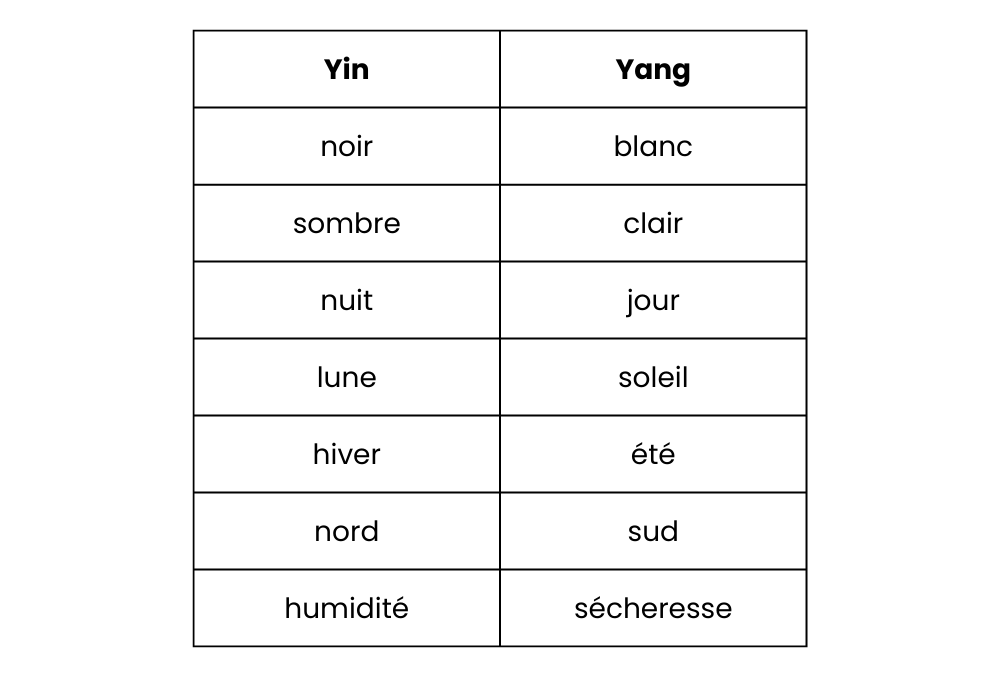
Yin is the gentle force. Its black colour recalls darkness and night. It is a force characterised by wisdom and passivity. It is associated with calm, Water, cold and winter. Moreover, being linked to woman, this gentle force thus refers to the feminine force.
As for Yang, it is considered the driving force. Its white colour refers to light and day. It is a force characterised by activity. Linked to man, it refers to the masculine force. Moreover, it is connected with dynamism, warmth, Fire, heat and summer. (Below is a comparative table of Yin and Yang)
Complementary forces
“Yin and Yang united, and thus the ten thousand beings were born.” - Huainan Zi, III
Yin and Yang are two forces that vary constantly and naturally within our lives. So much so that the morning may be suited to a Yin activity, such as reading a book, and the afternoon to chores and gardening, which are rather Yang.According to TCM, this balance is essential for keeping health harmonious and stable. Our vital activity depends entirely on these two opposites. It is when an imbalance arises between the two forces that we fall ill. Finally, when Yin and Yang separate, we die.
Yin and Yang transform
Yin and Yang are important for our growth, our development and our transformation. As seen earlier, they are linked to different organs, and consequently both are necessary for the transformation of energies in the body. If we go back to the image of the hill, we will see that the sun, which moves during the day, ends up on the other side by the end of it. The shaded side becomes sunny and so, gradually, Yin gives way to Yang, and vice versa.
Taijitu, the “Supreme Ridgepole”: Symbol of ultimate power
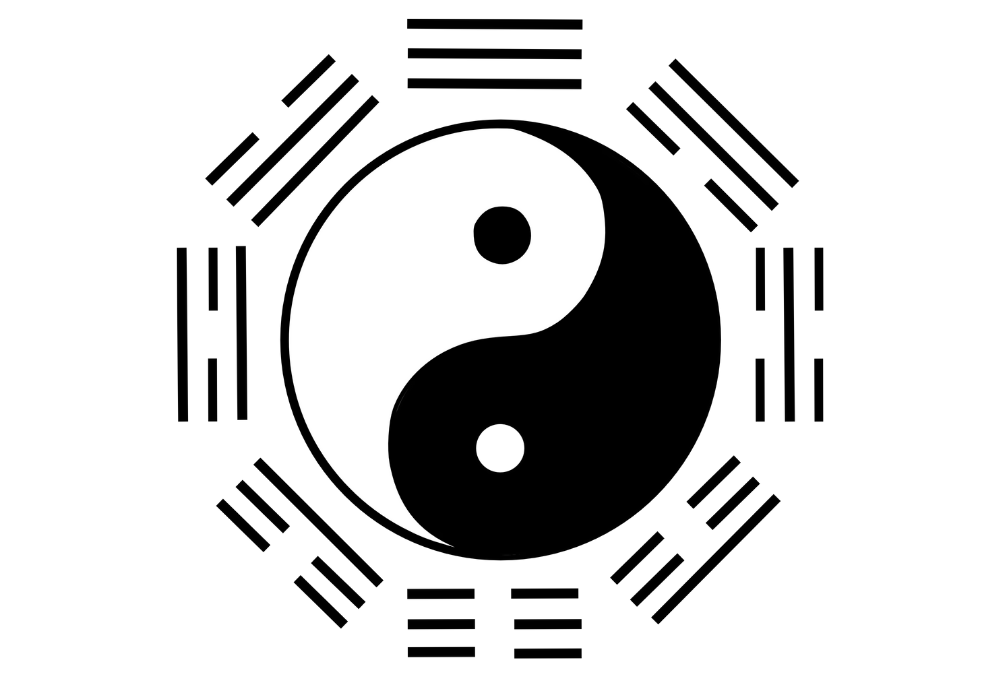
In this diagram of the Taoist symbol, at the very top we see Yang at its peak, governed by three continuous lines. At the very bottom, Yin at its peak is characterised by three broken lines. Little by little, the continuous lines become broken, and vice versa.
To illustrate this phenomenon of transformation: thanks to our Yang, we work the land and plant seeds. Thanks to water, which is Yin, and the sun, which is Yang, the seeds will grow. When the seeds open, they will turn into a new Yin matter: cold foods. Using water and fire, the way food is prepared and cooked also represents a Yin-Yang combination.
Yin and Yang in the seasons
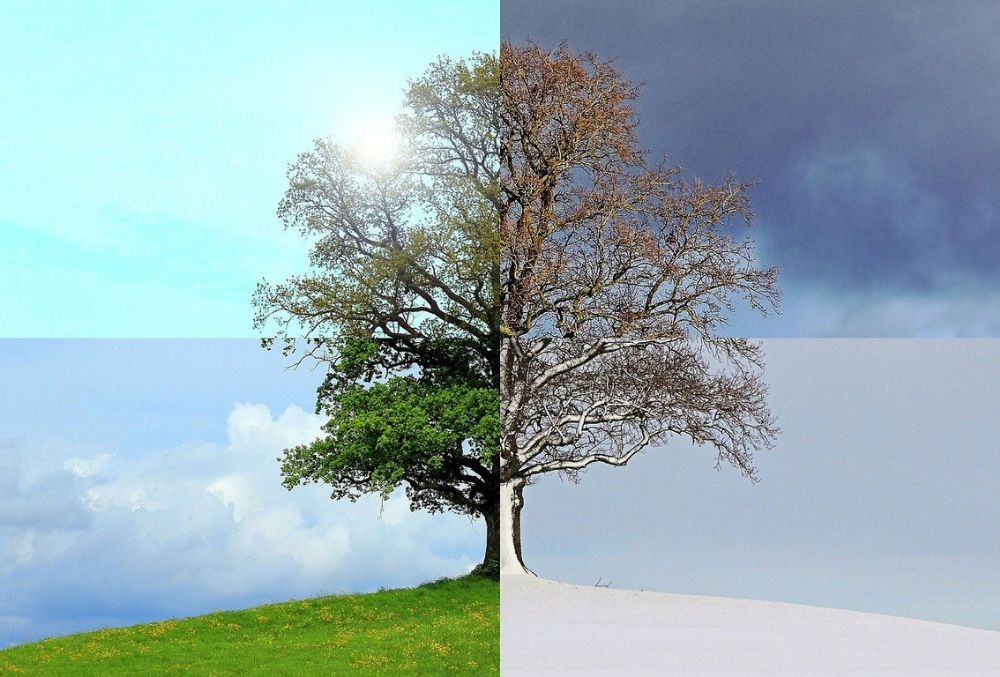
As seen earlier, Yin and Yang are linked to movement. So the change of season is also characterised by these two forces. The Yin of Yin lies in winter and the Yang of Yang in summer. Despite this, a season is never completely Yin or Yang: there is sunshine in winter, just as it can be cold and rainy in summer.
Winter: A movement of Yin growing throughout the season until it reaches its peak. Gradually, Yin tends to transform, and when the manifestation of Yang reaches its lowest level, everything gets ready to be reborn, for the day to break, for a new spring.
Spring: A movement of Yang growing to emerge from the Yin torpor of winter. We need to get moving, but still not overdo it. The rise of Yang is powerful but gradual. Too much activity exhausts the energy of the Liver and the Heart would lack proper support, which is why walking is an ideal activity.
Summer: Summer continues and completes the Yang movement launched by spring. Growth accelerates until full maturity: we are in what is called the Yang of Yang.
Autumn: Yin gradually settles in while Yang declines. We should keep getting up early, and it is also good to go to bed earlier.
Yin and Yang in the treatment of illness
In traditional Chinese medicine, understanding the Yin-Yang movement is essential for properly understanding the movements in the patient's body.
During a diagnosis, one may for example speak of a Yang insufficiency, or an excess of Yin. Conversely, one may also observe in a patient an excess of Yang and a Yin insufficiency. As a general rule, the initial imbalance is more a matter of lack, of an energy deficiency, but the symptoms show up as the excess and fullness that this deficiency has generated. The two patterns show up in the body as follows:
Yin insufficiency / Yang excess is characterised by sensations of heat, dryness in the body, sweating, thirst and a desire for cold drinks, and it can lead to syndromes such as high body heat, a red complexion, and a rapid, strong pulse.
Yang insufficiency / Yin excess is characterised by a sensation of cold, swelling and fatigue, and can lead to syndromes such as a pale complexion, difficult digestion, and a slow, weak pulse.
For example, a dysfunction of the body's metabolism stems either from an excess of Yin: fatigue, slowed metabolism; or from an excess of Yang: faster heart rate, agitation, insomnia. The practitioner then offers several solutions to rebalance the forces, such as acupuncture sessions, the practice of Qi Gong, or recommendations from Chinese dietetics.
In Chinese dietetics, foods are classified according to their natures and flavours. Depending on your metabolism, but also on the season, specific foods will be recommended to keep you in good health. To this end, TCM associates:
- Hot and Warm with Yang
- Cool and Cold with Yin
- Sweet and Pungent with Yang
- Sour, Bitter and Salty with Yin
Inseparable, Yin and Yang are like two sides of the same coin. They are two forces constantly in motion, each tending towards the other. Yin is Yang in the making, and vice versa. All the same, nothing is ever totally Yin or totally Yang, and in the universe as on Earth, we need a perfect blend of the two for harmony to be complete.