
Imagine an art capable of turning your living space into a true haven of peace, where every piece of furniture, every colour and every object tells a profound story and contributes to your well-being.
Feng Shui is an ancient Chinese art as famous as it is misunderstood. Far from being mere decoration, its practice aims to create a harmonious balance between the environment and the living beings who inhabit it. Based on the notion of energy (Qi), Feng Shui holds that everything in the universe is interconnected and that the way we arrange our living space can influence our physical, emotional and spiritual well-being.
What is Feng shui?
Where does this discipline come from?
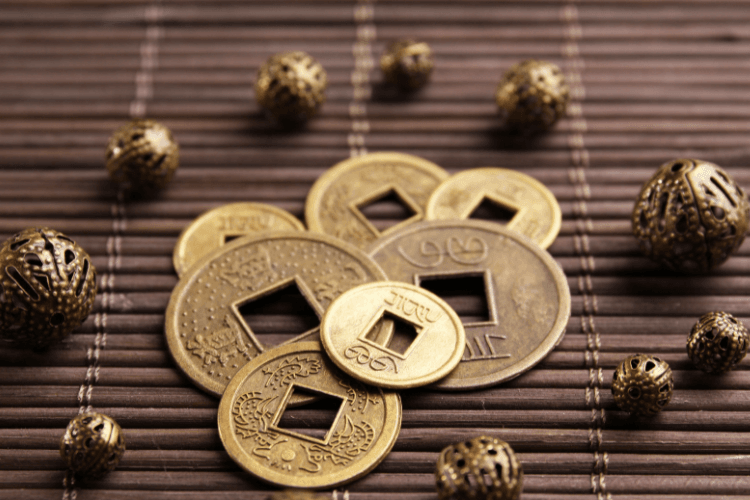
Feng shui (风水) is an ancient Chinese practice that consists of creating harmony and balance in living spaces. Inspired by Taoist philosophy (just like Traditional Chinese Medicine), Feng shui literally translates as “Wind and Water”, a reference to the movement of Qi through space (implicitly similar to that of wind and water).
The earliest traces of this art appear to date back to the Zhou dynasty (1046 to 256 BC). Originally, Feng shui was used to determine the ideal location for the Emperors’ tombs: the idea being that a site in keeping with the foundations of Feng shui would ensure prosperity and good fortune for the descendants of the deceased.
This art is therefore mentioned in very ancient texts, notably the Zhou yi (also known as the “Book of Changes”) and the Zang shu (called “the Book of Burial”), both considered to have laid the foundations of the discipline. Over the centuries, the practice of Feng shui has evolved considerably and spread to other fields such as architecture and interior design. It crossed China’s borders and gradually spread all over the world, becoming even more diverse and complex.
What principles is Feng shui based on?
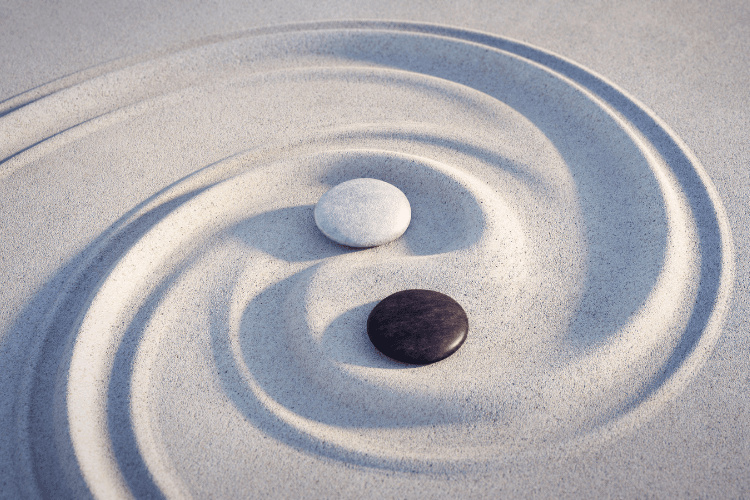
Contrary to what many people think, Feng shui is not a decorating method but a body of know-how based on Chinese cosmology. It is thus both a “pseudo-science” and a highly refined art: its practice rests on the idea that the environment around us has an impact on our well-being and our successes. The vital Energy, called Qi, must therefore be able to flow freely through the space so that we can aspire to harmony, health, prosperity and happiness.
An understanding of certain fundamentals, dear to Taoism (and well known in Chinese medicine), is essential to the practice of Feng shui. Among them:
-
Qi (the vital Energy): the creative force that drives the universe and every form of life. It flows through the world, the body and the mind. Its movement is essential to maintaining health, balance and life.
-
Yin and Yang: the two opposing and complementary forces that govern life.
-
The 5 Elements (Wu xing): namely Wood, Fire, Water, Metal and Earth. They make up nature and lie at the heart of our health and our fulfilment.
-
The Ba gua (or Pa kua): an octagonal diagram used by Feng shui masters to analyse and balance the energy in a room.
Arranging your home according to the rules of Feng shui
Using the Ba gua
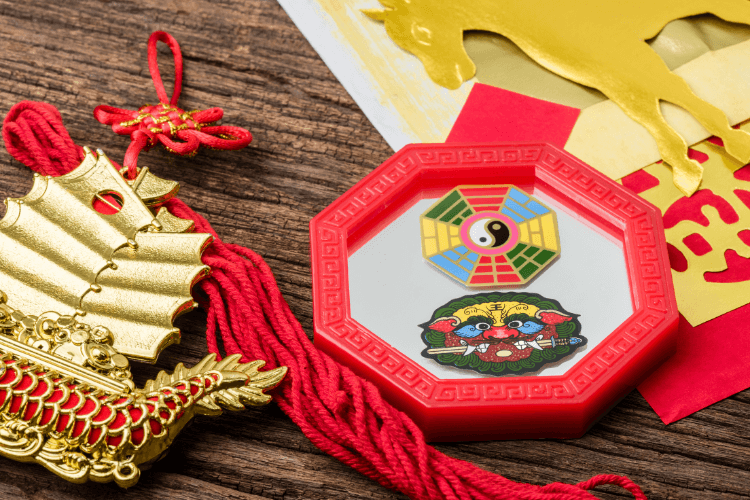
To energise the flow of energy in a space, Feng shui offers several types of remedies (meaning “changes” or “solutions”). These changes depend largely on the results given by the Ba gua.
The Ba gua (or Pa kua) is a diagram made up of eight trigrams, each associated with one of eight cardinal points, and also with eight aspects of life: career, knowledge, health, family, prosperity, reputation, love and creativity.
By laying the diagram over the floor plan of the space being studied and aligning one of its sides with the main entrance, Feng shui masters determine which sector corresponds to each specific area of the house or room, and assess the balance of energies in each sector. In this way, they pinpoint imbalances and recommend adjustments to harmonise the environment. These may include suggestions about the placement of objects, the colours to use, decorative elements, materials, the orientation of furniture, and so on.
Colour theory with Yin and Yang
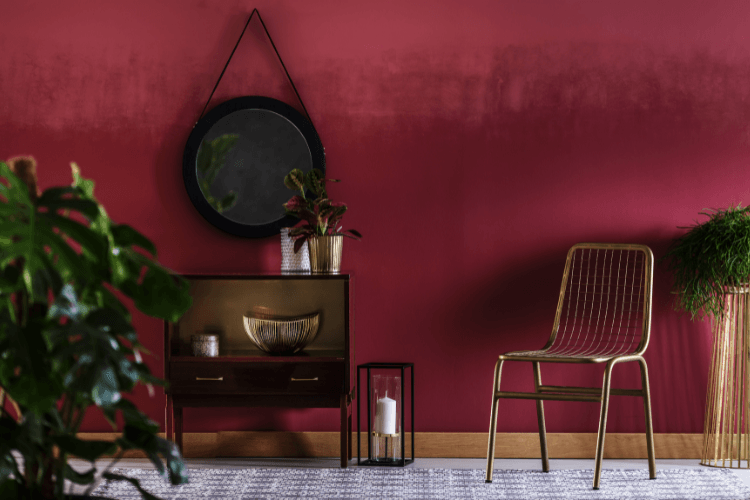
To make a “diagnosis” of your home, you will necessarily need to analyse the balance between Yin and Yang.
Yin is associated with darkness, the moon, cold, night and calm, while Yang is associated with light, the sun, heat, day and movement. By extension, neutral colours are Yin and bright colours are Yang.
For a harmonious home, it is therefore essential to find a happy medium. As a general rule, Yin colours are reserved for rooms meant for rest such as bedrooms, the bathroom… Conversely, Yang colours are recommended for living and activity areas, such as the living room, kitchen, study, entrance hall, playroom and so on.
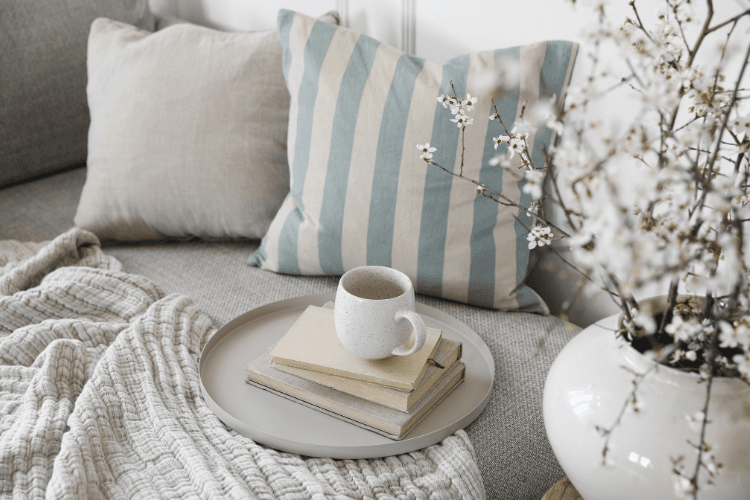
While neutral tones are very much in vogue at the moment, a home based exclusively on this colour palette opens the door to an excess of Yin energy… And a space that is too Yin is considered dark, stagnant, even depressing. Conversely, a space that is too Yang (too exposed to the sun, too many bright colours, etc.) can be a source of stress and agitation.
Rebalancing Yin and Yang in a space may therefore involve adding more neutral or brighter colours depending on the imbalance, letting more light into a room or adding curtains to darken it, placing a television to liven up the space or removing it to encourage calm. In addition, when Yin or Yang dominates a space, it is recommended to add Elements to promote harmony: a decorative fireplace can balance an overly strong Yin energy, just as an aquarium can balance an overly present Yang.
The importance of the 5 Elements
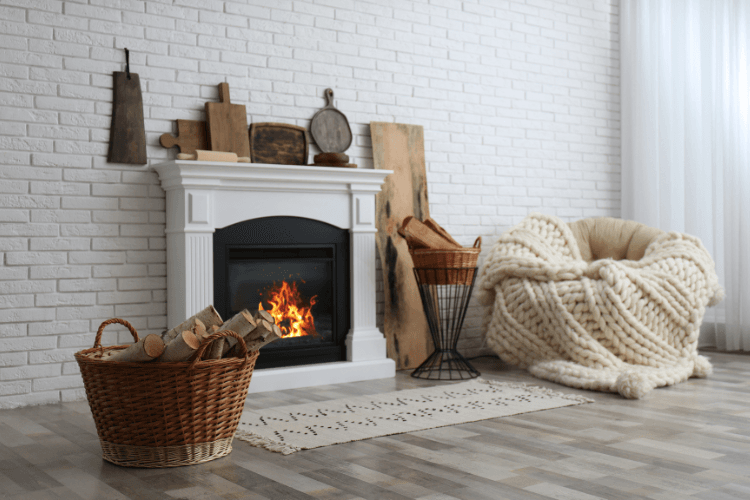
According to the rules of Feng shui, it is essential to find the Five Elements (Wood, Metal, Water, Earth and Fire) in our home. Indeed, they must coexist harmoniously to support the smooth flow of Qi, all the more so as they can favour certain aspects of our life:
-
Wood is Yang in nature; it is associated with green, rectangular shapes, creativity, growth and health.
-
Metal is Yin in nature; it is associated with white, round shapes, discipline, career and self-control.
-
Water is Yin in nature; it is associated with blue and black, wavy shapes, wisdom, money and opportunity.
-
Earth is both Yin and Yang; it is associated with yellow, square shapes, health, stability and the material world.
-
Fire is Yang; it is associated with red, triangular shapes, and with communication and passion.
According to the theory of the 5 Elements (also called the 5 Movements), our intimate connection with the elements of nature can even influence our personality. Thus, each of our characters can be defined by one of the Five Elements of nature (take the test).
This information can also have consequences for the energy balance of our environment. That is why Feng shui masters generally take the character of the occupants into account so as not to let any one Element dominate. Suppose, for example, that your personality is dominated by Metal: you will need to steer clear of white, neutral tones and an accumulation of round objects, so that the space is not overwhelmed by Metal energy. Furthermore, according to the theory of the control cycle, you will also need to avoid too strong a presence of the Fire Element, since Fire melts Metal.
Living in a place where the Elements coexist in harmony therefore requires thought and attention to detail. Feng shui is not an easy exercise, then, but understanding its foundations is necessary for our fulfilment. For indeed, what could be worse for you than bad Feng shui?
Bad Feng shui (Sha Qi)
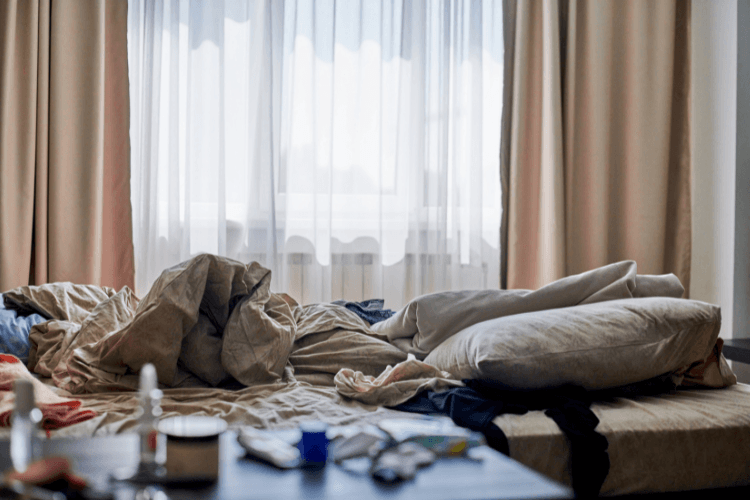
Just as a space can be harmonious thanks to abundant, free-flowing Qi, a harmful energy can also reign there: this is what is known as bad Feng shui.
We speak of bad Feng shui, or Sha Qi in Chinese, to refer to that feeling of “bad energy” you can sometimes sense on entering a room. Bad Feng shui is thus often associated with a space where the rules of this discipline are not respected and where the arrangement, orientation, colours or shapes disrupt the flow of energy. This phenomenon goes beyond a simple “lack of taste”, since according to the principles of Feng shui it can have serious consequences for the lives and health of the people who occupy the space.
In short, Feng shui also helps to detect and remedy harmful influences in an environment, by creating protective barriers, using “remedies” and purifying the energy (decluttering, using plants or incense, etc.).
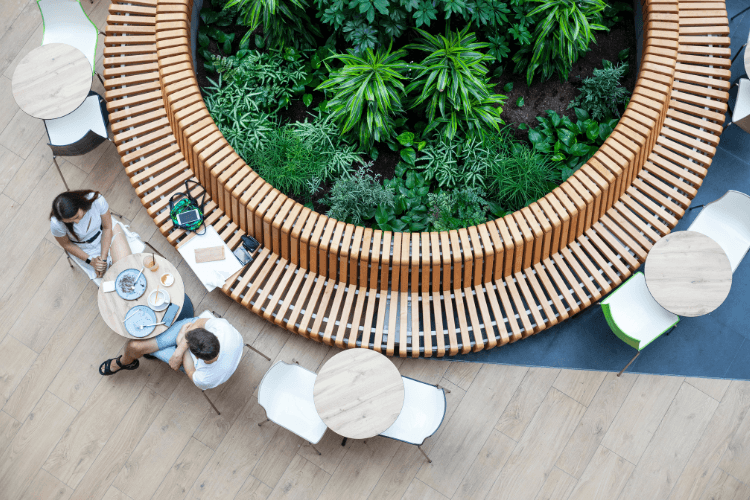
Although there are no clearly established rules (since the practice of Feng shui varies between schools and interpretations), certain principles are considered important by all. These include the harmony of the Five Elements, the importance of the flow of Qi, the Yin-Yang balance, the choice of colours…
Other principles are added to these: the importance of decluttering (too many useless objects in a space can hinder the flow of Qi), the placement of the bed (which should face the bedroom door and be backed by a solid wall to foster a sense of security), the care given to the main entrance, one of the most important rooms according to Feng shui (it must be welcoming, well lit and uncluttered to welcome positive energy), and the use of symbolic objects meant to represent your goals.
By using specific principles and techniques, Feng Shui masters thus help people to create spaces that promote harmony, prosperity, health and well-being. This art is also omnipresent in contemporary China: to cite a concrete example of Feng shui’s influence, what could be more telling than the famous Forbidden City in Beijing?
Today, Feng Shui continues to be widely used and appreciated as a way of harmonising and optimising living and working spaces. It is regarded as a holistic approach that goes beyond simple interior decoration, taking into account the influence of the environment on our physical, emotional and spiritual well-being.