
Used as a condiment to add flavour to our dishes and known for giving food a lovely golden colour, turmeric is a spice our cupboards cannot do without.
In cooking, it is usually its dried, powdered roots that are used to give our dishes a sunny taste. And although some people are still unaware of it, turmeric is above all a precious ally for our health. It has many benefits for the body, whatever its form (powder, capsules, essential oil).
Although it quickly won over Asia, where it originates, it is now also very popular in the West; that is why 25 kilos of it are produced every second, or 800,000 tonnes a year worldwide!1 India is the leading producer, with around 75% of the world total, ahead of southern China, Japan, Pakistan, Thailand and Cambodia.
But what makes this spice so special? Discover everything you didn’t know about turmeric, its use in TCM and, above all, its health benefits!
Discovering turmeric: its origins and history

A herbaceous plant with a rhizome, turmeric belongs to the Zingiberaceae family, a botanical family of around 1,600 species including ginger, cardamom, galangal and grains of paradise. Native to India and Southeast Asia, turmeric comes in several species, the best known probably being Curcuma longa, the one we usually eat. However, many variants such as Curcuma domestica, zedoariae and aromatica are used as a spice in cooking or as a means of treatment by ancestral medicines.
Its French name, curcuma, was borrowed from the Spanish “cúrcuma”, which at the time referred to saffron, since the two plants are said to have often been confused – hence its name “Indian saffron”. In Indian culture, Buddhists and Hindus hold it in true veneration. For centuries they have associated it with fertility, luck, joy of living, the future and renewal. In wedding ceremonies, it is customary to use it to seal the union.
Renowned worldwide: since 1999, the WHO has recognised the value of Curcuma longa in supporting digestive, joint and inflammatory comfort2. However, its use for therapeutic purposes is nothing new. For more than 4,000 years, it has been among the most highly valued plants in traditional Asian medicine. Since Antiquity, it has been used in Ayurvedic medicine to bring comfort in cases of tension. In Chinese medicine, several of its varieties are used in the pharmacopoeia and in traditional dietetics to promote the body’s balance. What are its different uses in TCM?
Turmeric in Traditional Chinese Medicine
In China, turmeric has been known and used since time immemorial, since the oldest treatise on Chinese medicine, the PEN-TSAO of Shen Nong, written around 2600 BC, mentions it for treating joint pain3. Besides its benefits for the skeleton, turmeric is generally recommended to protect the Liver and Gallbladder, move Qi and release stagnation; however, its use varies depending on the species:
- Jiang huang – Curcuma longa: this variety is used in Chinese medicine to relieve discomfort caused by Liver Qi stagnation and Blood stasis. Its calming action relieves joint pain and helps restore energy.
- Yu jin – Curcuma wenyujin: less well known than Curcuma longa, its root is nevertheless highly valued in TCM for its ability to soothe digestive discomfort, promote transit and reduce bloating.
- E zhu – Curcuma zedoariae: it breaks up Blood stasis, helps regulate the menstrual cycle and soothes painful periods.
In diet therapy, it is also common to use foods according to their properties and to combine them with edible medicinal plants to enhance their effects. Jiang huang is classed as a neutral food, a nature that has no thermal impact on the body and can therefore be eaten all year round and at any age. Chinese dietetics recommends it because it nourishes the body without upsetting the Yin-Yang balance. What is more, with its sweet and slightly pungent flavour, turmeric enters the Liver, Spleen and Stomach meridians and is recommended for treating joint pain and chest and abdominal pain4.
A food supplement with a thousand benefits
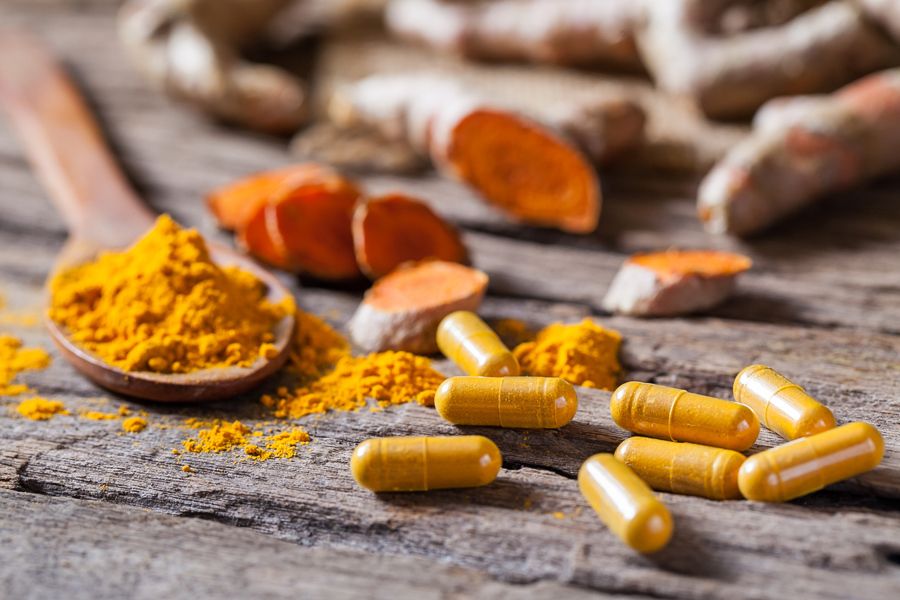
Far from being a mere condiment, then, this plant is a precious natural remedy with many benefits for the body. According to Dr Franck Gigon, a specialist in medicinal plants: “A synthesis of 4,000 studies on turmeric identifies at least 580 health benefits expressed by its polyphenols. It is simply mind-boggling to grasp the full therapeutic potential this little ochre tuber has to offer us.” So let’s discover its health virtues!
Turmeric, a powerful natural anti-inflammatory
Since the 1980s, health professionals have been looking into how effective turmeric really is at easing pain and tension in the body. Research has concluded that curcuminoids, whose main representative is curcumin (one of the main active components of turmeric), have a remarkable soothing action. A study carried out by the Department of Pharmacology at Mahidol University in Bangkok (Thailand) showed that curcuminoids could support the balance of the inflammatory system, notably by acting on certain cytokines involved in the body’s reactions. 5 Turmeric is therefore valued today for supporting joint comfort and ease of movement.
To strengthen your immune system
Turmeric is valued for its role in supporting the natural defences. This property is linked notably to curcumin, its main active ingredient, which helps activate certain players in the immune system such as macrophages. Curcumin also acts as a powerful antioxidant, comparable to vitamin C or E, neutralising the free radicals that can weaken the body.
Turmeric to combat digestive disorders
Turmeric is also often associated with digestive well-being and traditionally valued for its affinity with the liver. Research has observed an improvement in intestinal comfort in people with digestive imbalances after taking turmeric-based formulations. It is also recognised for aiding digestion and soothing everyday feelings of discomfort6.
Turmeric: an asset for your beauty
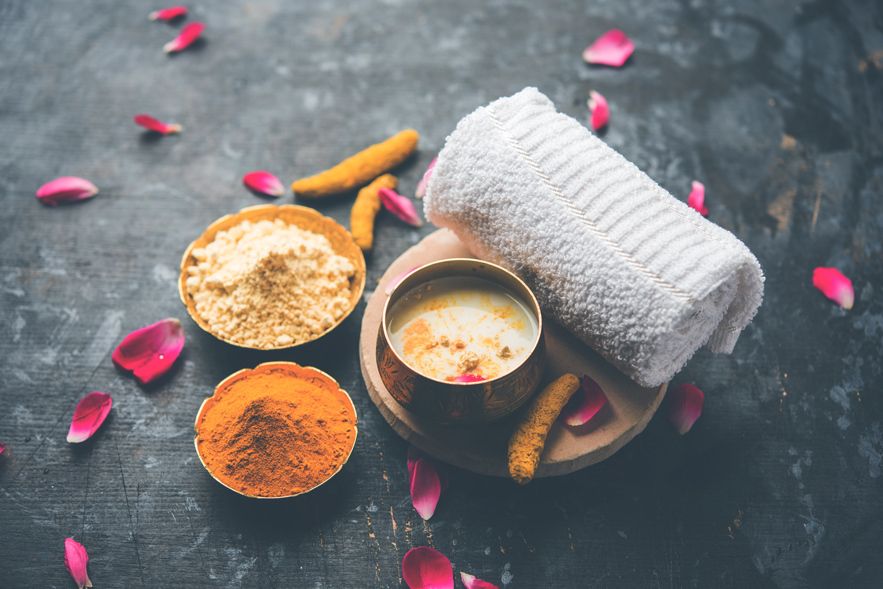
Besides its countless benefits for the body, turmeric is a plant you can even include (and are encouraged to include!) in your beauty routine. It is an essential ingredient found in most Indian beauty treatments and is now prized worldwide by the cosmetics industry.
To preserve the beauty and youth of your skin
Traditionally, turmeric was used in skincare to soothe and beautify the complexion. Thanks to its softening properties and repairing potential, this spice is still valued today in natural skincare routines to even out and smooth the appearance of the skin. Research has also suggested that some of its active compounds (notably tetrahydrocurcuminoids) could help reduce the appearance of signs of skin ageing 8.
To improve the quality of your hair
Turmeric is also prized for its uses in traditional hair care. Added to a homemade mask, it is known for adding shine to the hair and reviving natural highlights. Thanks to its purifying properties, it helps to keep the scalp healthy and rebalance excess sebum. It is often included in beauty rituals aimed at supporting hair vitality.
A plant with a thousand virtues, turmeric has aroused great enthusiasm among researchers and herbal medicine specialists in recent years. Today, the growing demand for turmeric-based products to improve health naturally makes it an essential food supplement and a food to slip into our recipes and onto our plates often!

