- The impact of screens on our eye health
- The causes of eye strain
- The symptoms of tired eyes
- How can you soothe your tired eyes?
- Eye health in Chinese medicine
- The role of the Liver
- The role of the Shen and the Kidney
- Caring for your eyes with the Chinese pharmacopoeia
- Goji berries (Gou Qi Zi)
- Chrysanthemum flowers (Ju Hua)
- Pipewort (Gu Jing Cao)
- Mulberry leaves (Sang Ye)
- Chinese blackcurrant (Jue Ming Zi)


As the organs of sight, the eyes are a muscle as complex as it is fascinating. As well as being at the heart of our visual system, our eyes are our main tool for communicating with the outside world: they charm, worry, threaten, reveal our deepest feelings and allow souls to meet…
However, with the arrival of screens in our lives (at work as at home), our eyes have never been so vulnerable. More and more of us frequently experience eye strain, irritation, tension, blurred vision… These symptoms, such as burning or red eyes, can also reflect a deeper imbalance in the body.
In Chinese medicine, the eyes are said to be “the mirror of the soul”. So there is no need to dwell on how important it is to take care of them. But more than a reflection of our emotions, they are also an indicator of our overall health. According to TCM, the eyes are closely linked to the energy of the Liver, a key organ that plays a central role in the body's well-being. An imbalance of this organ can show up as red eyes, burning eyes or even bags under the eyes.
Taking care of our eyes therefore also means protecting the internal balance of our body. How can we soothe our tired eyes? How can we strengthen our eye health? Discover the valuable advice that traditional Chinese medicine offers us.
The impact of screens on our eye health

According to AsnaV (the French national association for better eyesight), in 2018 40% of French people said they experienced visual discomfort (eye strain, blurred vision, reddened eyes…) when using screens. More worrying still: our screen use keeps increasing year after year! Social media, television, streaming platforms, remote working… all these phenomena have one thing in common: they take a heavy toll on our peepers!
So it is no secret to anyone: screens are dangerous to health. As well as their harmful effects on the brain, screens emit blue light (present in artificial lighting – televisions, tablets, computers, smartphones… – but also in natural sunlight) which, in the event of overexposure, can cause photochemical damage to the retina and the lens, or even lead to the development of diseases. Working on screens and/or looking at them excessively therefore greatly increases the risk of developing visual disorders and experiencing eye strain. But in the end, what is “excessive use”?
Health professionals agree that we should not exceed two hours of exposure to screens a day. Yet, according to recent surveys, French people spend on average 3.5 hours on their phones1 every day (and that is without counting the use of other screens). An alarming finding, and one that unfortunately has serious consequences for health.
The causes of eye strain
Overexposure to screens is certainly the main cause of eye strain, but it is not the only one. Living in a space that is too brightly or too dimly lit, wearing unsuitable glasses (or, on the contrary, not wearing glasses when you need them), dust, air conditioning, not letting your eyes rest and forcing them to make too much effort (for example when driving for long periods) are all factors that encourage tired eyes.
So eye strain is always the result of overusing our eyes. However, in some cases it may be a sign of an underlying disorder (tired eyes are a symptom of long-sightedness, for example). How does eye strain show itself?
The symptoms of tired eyes

There are two types of tired eyes: visual fatigue, which affects our sight, and ocular fatigue, which affects our eyes themselves. Although each type therefore has different symptoms, the distinction is not always made, since the causes behind both types are generally the same.
The main symptoms of tired eyes are:
- reduced vision
- blurred or double vision
- eye tension
- eye irritation, pain and/or a burning sensation in the eyes
- headaches
- difficulty with accommodation (trouble focusing between distance and near vision)
- dry eyes
As a general rule, eye strain causes a feeling of general fatigue. What is more, it takes a heavy toll on the quality of work and on mood, and makes some everyday tasks extremely arduous.
How can you soothe your tired eyes?
Eye health in Chinese medicine

In traditional Chinese medicine, it is said that the state of the organs can be read in the 5 colours of the eyes: the pupil reveals the health of the Kidneys, the corner of the eye that of the Heart, the iris the health of the Liver, the eyelids that of the Spleen, and the white of the eye that of the Lung… For example, having yellow eyes is a well-known sign of a liver disorder. So, much more than a “mirror of the soul”, the eyes are in fact the mirror of our Energy and of our health.
The role of the Liver
In TCM, the Liver has several functions:
- it ensures the circulation of Qi (and supports the digestive process, emotional stability…)
- stores Blood
- governs the tendons
- “opens into the eyes” (which are nourished and moistened by Liver Blood)
- manifests in the nails
Chinese medicine links eye health to the energy of the Liver (Gan). Eye disorders are therefore considered to arise as a result of Liver imbalances. And what is known to threaten the energy of the Liver? Easy: emotions!

In Chinese energetics, the Liver is the organ responsible for emotional health. So when an emotion is poorly managed, repressed or experienced excessively, it affects the Qi of the Liver and stops the organ from working properly. As a result, an unhealthy Liver has a negative impact on the eyes:
- If the eyes are not properly nourished by Liver Blood, this can lead to blurred vision or dry eyes
- The presence of Damp-Heat in the Liver causes yellowing of the eyes
- Liver Fire causes eye irritation (reddened, painful eyes, etc.).
So, to have healthy eyes and relieve the effects of a dysfunctional Liver on the eyes, Chinese medicine is categorical: you need to tonify the Energy of the Liver.
The role of the Shen and the Kidney
The Shen (the Mind) and the Kidney also play an important role in eye health. It is said that the eyes are bright when the Shen is calm and, conversely, dull and lifeless when it is agitated. Strengthening the Heart (which houses the Shen) therefore contributes to eye health.
In addition, in Chinese medicine the Kidney governs the fluids and the Essence (Jing), which is known to nourish the eyesight. As a result, when Kidney Qi is weakened, eye health is under threat: the eyes are dry and signs of fatigue appear (dark circles, bags…).
Caring for your eyes with the Chinese pharmacopoeia
In Chinese medicine, several solutions exist to strengthen the health of our eyes and relieve eye strain. As mentioned above, they consist of tonifying the Liver.
In the Chinese pharmacopoeia, certain plants are specifically known to support eye health. Among them:
Goji berries (Gou Qi Zi)
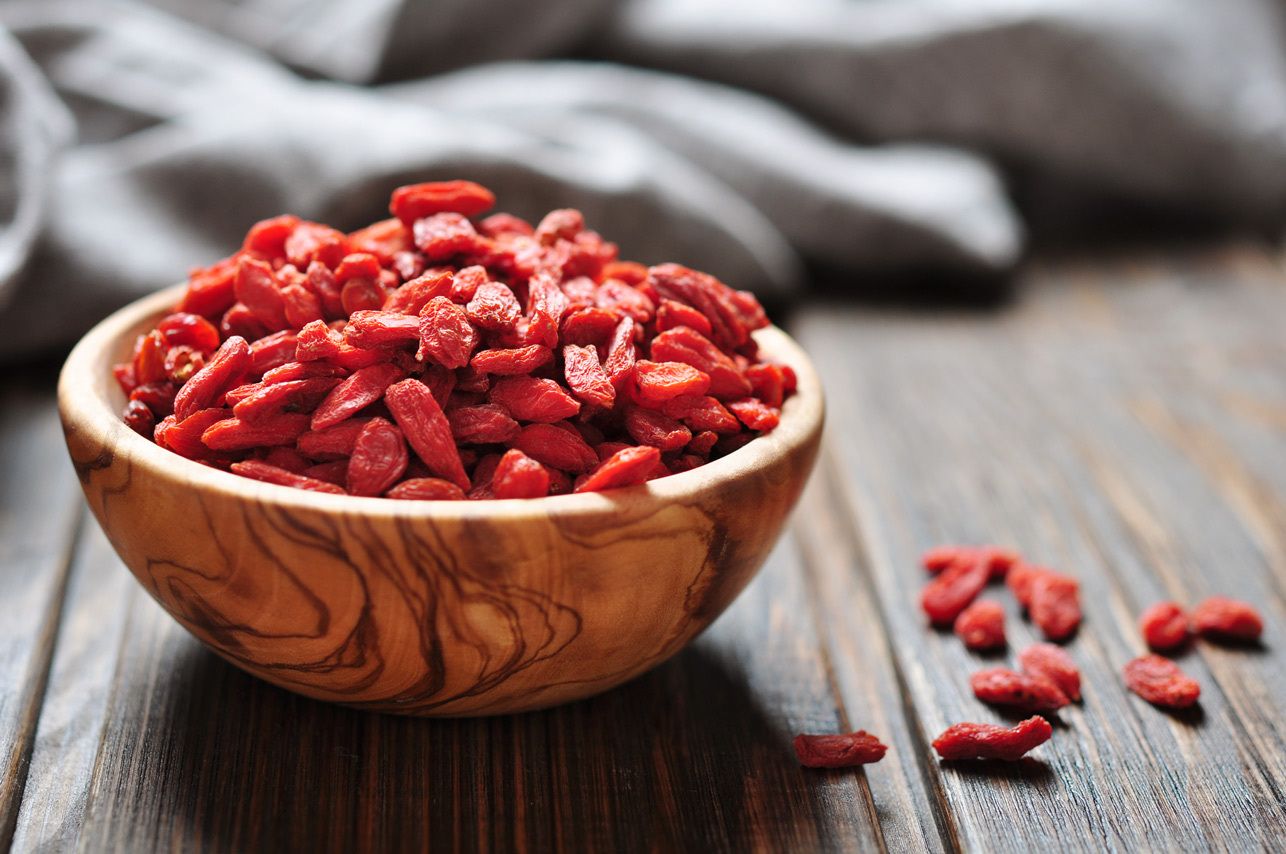
Popular in Asia for thousands of years, goji berries (Gou Qi Zi in Chinese) have in recent years become one of the most popular superfoods in the West. Belonging to the tomato family, they are known for their slightly sweet taste and for the many trace elements, vitamins and amino acids they contain2.
In the Chinese pharmacopoeia, Gou Qi Zi is known to tonify the Liver and nourish the Blood and the Kidneys (which contain the Essence). It is therefore recommended to strengthen eye health and ease eye strain.
From a scientific point of view, this medicinal plant is an important source of antioxidants, with a very high proportion of carotenoids. Studies have shown that goji berries are very rich in taurine, a powerful antioxidant that is the most concentrated amino acid in the retina3: consuming it prevents eye diseases and improves vision4.
Chrysanthemum flowers (Ju Hua)
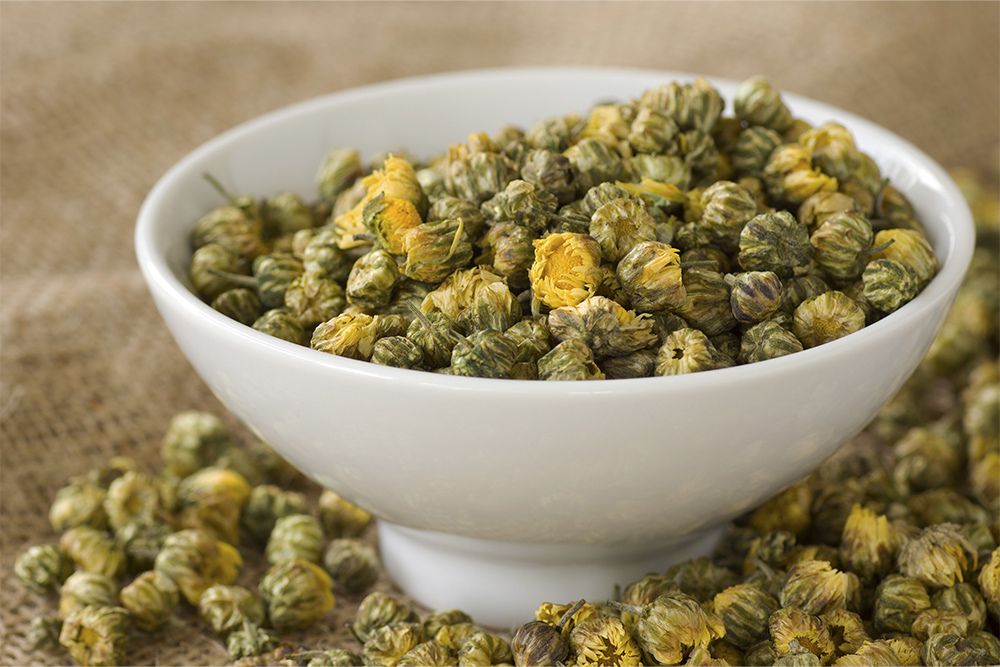
Chrysanthemum (Ju Hua in Chinese) is native to Europe and East Asia. It holds special cultural importance in China: it is the flower of the cities of Beijing and Kaifeng, and it is at the heart of a great many poems and of several festivals and commemorations.
In traditional Chinese medicine, Ju Hua is known for its benefits for the eyes: it clears Wind and Heat from the body and stimulates the circulation of Qi and Blood. But its main action concerns the Liver: by calming the Liver, Ju Hua soothes sensitive eyes and is an ideal ally for regaining eye comfort (blurred or double vision, difficulty with accommodation, etc.).
A study carried out in 2016 demonstrated the antioxidant properties of Ju Hua and confirmed its effectiveness in treating certain eye discomforts and diseases5.
Pipewort (Gu Jing Cao)
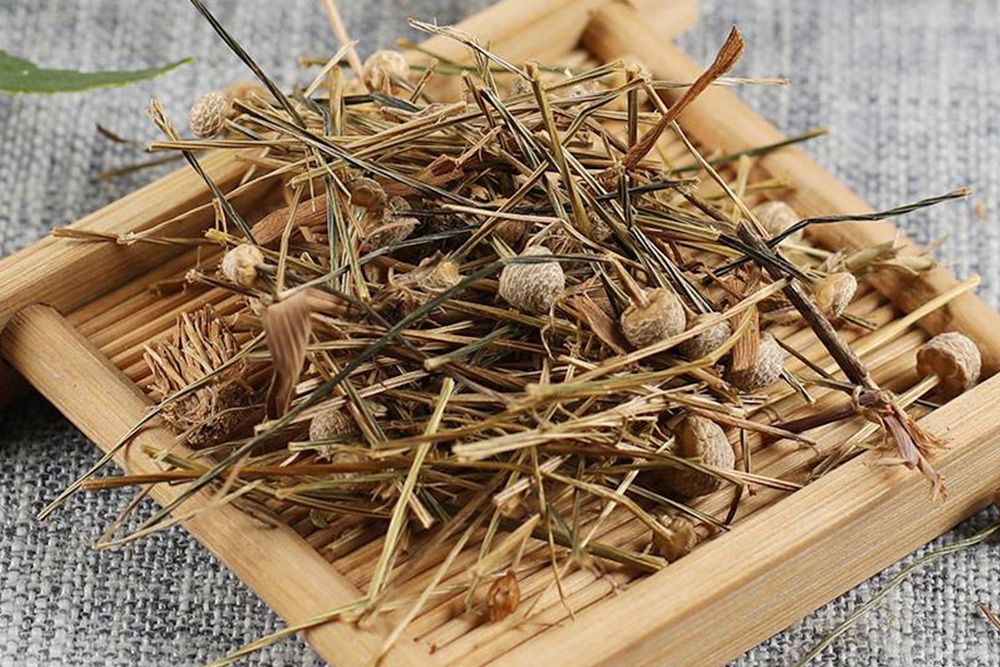
Pipewort (Gu Jing Cao in Chinese) is a plant found throughout the world, whose Chinese species grow mainly in southern China.
Listed in the Chinese pharmacopoeia for years, Gu Jing Cao is recognised for its powerful virtues for the eyes. This plant also acts on the Liver: it expels Wind-Heat to soothe sensitive and tired eyes (notably from screens) and to improve eye comfort.
Although few studies have been carried out on Gu Jing Cao, its effects on the eyes have been the subject of long-standing traditional use based on effectiveness proven by experience.
Mulberry leaves (Sang Ye)
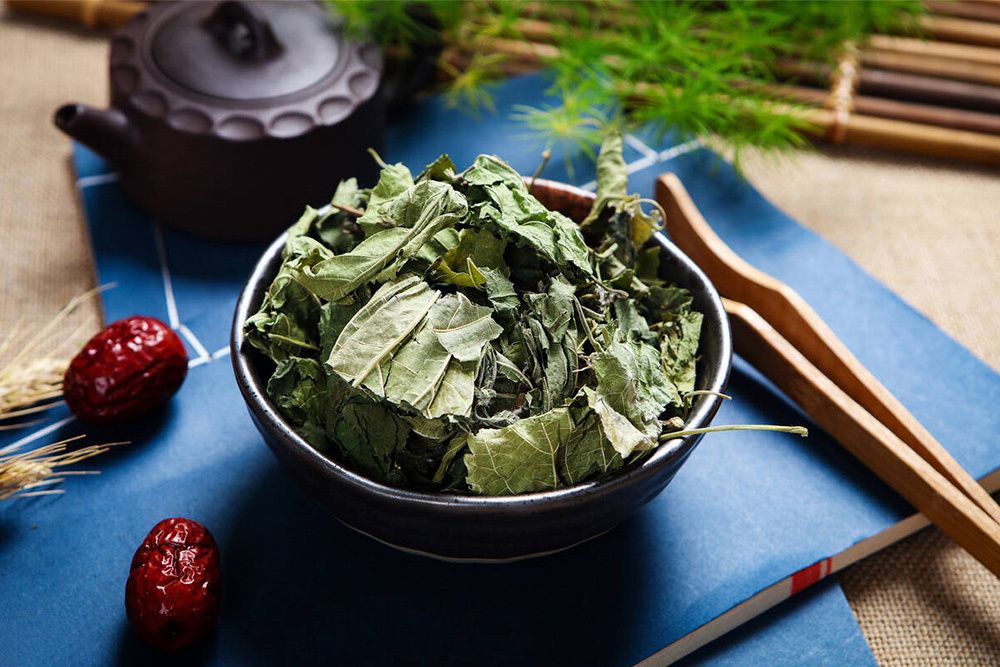
Mulberry leaves (Sang Ye) come from the mulberry, a tree native to Central and Western Asia that belongs to the Moraceae family. Its leaves are known for their astringent properties, but the Chinese pharmacopoeia recommends them above all for preserving eye health.
Sang Ye calms the Liver and “clears” the eyes. In addition, it combats excess Heat, which causes or worsens Liver problems.
Scientific studies have shown that mulberry leaves contain flavonoids, molecules known for their antioxidant virtues, which protect against a large number of chronic diseases (cardiovascular disorders, cancers…). They also contain anthocyanins, powerful antioxidants that help strengthen the immune system and prevent eye infections6.
Chinese blackcurrant (Jue Ming Zi)
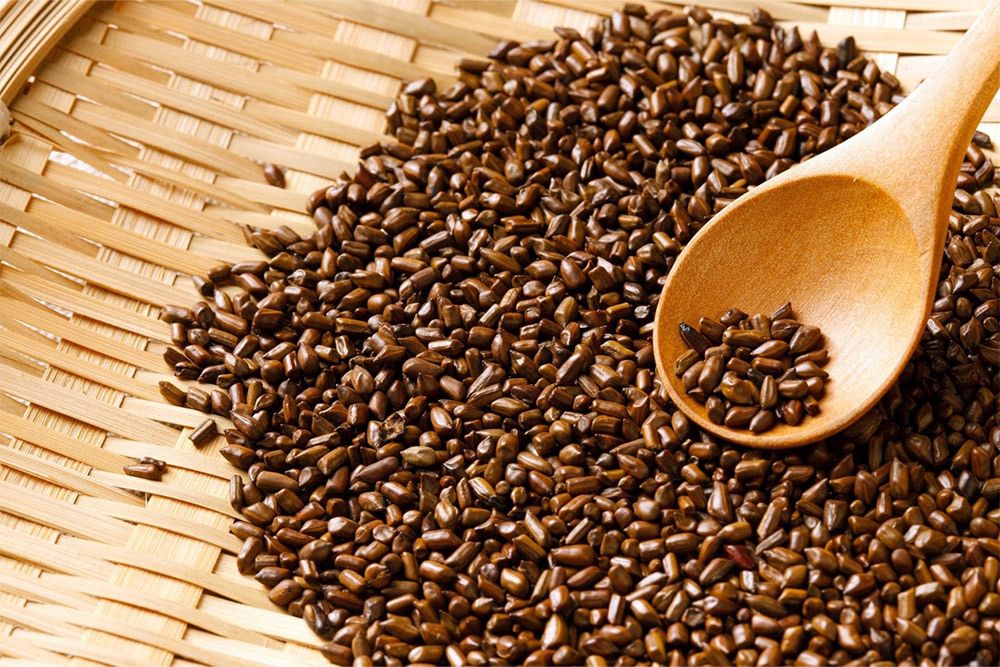
Chinese blackcurrant (Jue Ming Zi) is a fruit with many uses: in Sudan, its leaves are fermented to make “kawal”, a form of protein-rich food that replaces meat. In terms of medicinal use, it is included in the Korean, Japanese and Chinese pharmacopoeias because of its benefits for the eyes.
Jue Ming Zi literally means “the seed that brightens the eyes” in Chinese. By clearing Liver Heat and calming Liver Yang, it calms eye strain and ensures a return to well-being.
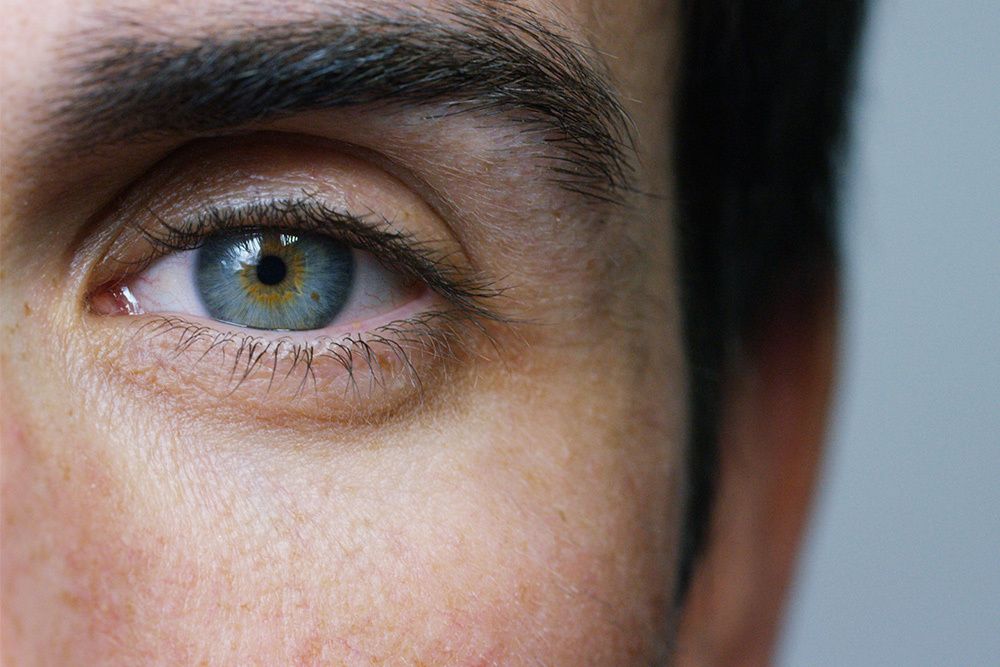
Several habits can be adopted to prevent eye strain. Of course, we encourage you to reduce the time spent in front of screens. However, if your work requires the use of a computer, we suggest you take a break every hour to avoid tiring your eyes. In addition, avoiding glare on screens by fitting blinds or curtains to the windows can go a long way towards relieving your eyes.
Turning to medicinal plants can be a major solution for relieving tired eyes. Used in Asia for thousands of years, they soothe eye discomfort and improve the general health of the body.
Finally, if your discomfort seems to persist over the long term, we strongly encourage you to consult a professional. Although we sometimes forget just how essential they are to us, our eyes are precious organs that it is important to take care of throughout life.


