- Immunity is not a button you press in an emergency
- What weakens our defences today
- As summer approaches: points to watch
- The Chinese medicine view: prevent before the emergency
- Yu Ping Feng San: the "Jade Windscreen" for your terrain


The return of viruses: why strengthening your immunity has become essential

Some viruses regularly make the news. They don't all tell the same story: some are linked to the environment, others to localised outbreaks, others still to respiratory forms that evolve over time.
But they all remind us of the same idea: it is better to support your body every day than to react only once the alarm has already sounded. Because these alerts are no longer associated only with winter or major health crises. They are part of a wider context: travel, shared spaces, chronic fatigue, stress, changing seasons, disrupted sleep.
Faced with this reality, the challenge is not to "boost" your immunity at the last minute, but to preserve, day after day, what supports the body's natural defences.
Immunity is not a button you press in an emergency

We often talk about "boosting your immunity". The expression is common, but it can be misleading.
The immune system is not a switch you flip the moment a virus appears. It is a complex network, relying in particular on natural barriers, specialised cells, organs, mucous membranes and coordinated biological responses[1].
It works on several levels: a rapid response, known as innate, which forms the body's first line of defence; then a more targeted response, known as adaptive, able to recognise certain agents and retain an immune memory. It is this principle of memory that allows vaccines, in particular, to prepare the body to react more effectively to a given agent[2].
In everyday life, it is therefore more accurate to speak of supporting your natural defences than of "boosting" them in an emergency. Getting enough sleep, eating a balanced diet, moving regularly, limiting chronic stress and following prevention measures do not create instant immunity. But these habits help preserve the conditions the body needs to function properly.
In other words, immunity is not built at the last minute. It is prepared over time.
What weakens our defences today

Before even talking about viruses, we need to look at the state of the body facing them.
Today, many people are already running on low reserves: too little sleep, lasting stress, meals eaten in a hurry, accumulated fatigue, lack of movement, irregular digestion. On top of this comes an environment that places more demands on the body: public transport, travel, offices, shared spaces, enclosed rooms, dry air, air conditioning, temperature swings.
None of this, on its own, is enough to explain a weakness. But when these factors take hold, the body recovers less well, adapts less easily, and its resources can gradually run down.
Immune balance also depends on very concrete functions. Several scientific studies point out that sleep, stress and the gut microbiota can influence the balance of natural defences. The gut microbiota matters too: a balanced gut helps the body better manage what comes from outside and contributes to the proper functioning of natural defences[3].
In other words, the question is not only: which virus is going around? It is also: what state is the terrain in when it is exposed?
This is where prevention takes on its full meaning: supporting natural defences before an emergency, rather than trying to react at the last minute.
As summer approaches: points to watch

Immunity is often associated with winter. Yet the arrival of summer also calls for attention.
Air conditioning increases the temperature gaps between outdoors and indoors. It can also dry out the air, making the respiratory mucous membranes less comfortable, even though they are among the body's first natural barriers[4].
Heat can also upset the balance: harder to fall asleep, more fragmented sleep, less deep recovery[5]. And sleep is closely linked to certain immune responses[6].
Summer is also a time of travel: trips, trains, planes, hotels, restaurants, tourist sites. The body changes its rhythm, its environment and sometimes its diet.
Finally, according to Chinese medicine, too much cold food deserves particular attention: iced drinks, too many raw vegetables, irregular meals. In summer, seeking coolness is natural; but too much cold can weaken digestion, which is considered essential to producing the body's resources.
As summer approaches, supporting your immunity is not about doing more, but about doing things more wisely: sleeping better, staying hydrated, looking after your digestion, avoiding excess cold and giving the body real time to recover.
The Chinese medicine view: prevent before the emergency

In Traditional Chinese Medicine, prevention holds a central place. This idea is summed up in an ancient phrase: 治未病, which means acting before imbalance sets in.
This vision echoes modern knowledge: immunity does not depend on a single isolated factor, but on an overall balance between sleep, stress, digestion, environment and pace of life. Chinese medicine calls this the terrain.
Preparing the terrain means preserving the body's resources before they are exhausted. It is not about trying to "boost" your immunity abruptly, but about supporting what allows the body to stay stable, responsive and able to adapt.
In practice, this approach invites you to act on several levels: a digestible, regular diet, restorative sleep, suitable physical activity, good stress management, and also, as needed, practices such as acupuncture or the sensible use of herbs from the Chinese pharmacopoeia.
To go further into this holistic vision (diet, lifestyle, herbs, acupuncture and Qi support), read our dedicated article: Strengthening your immune system with TCM.
Yu Ping Feng San: the "Jade Windscreen" for your terrain
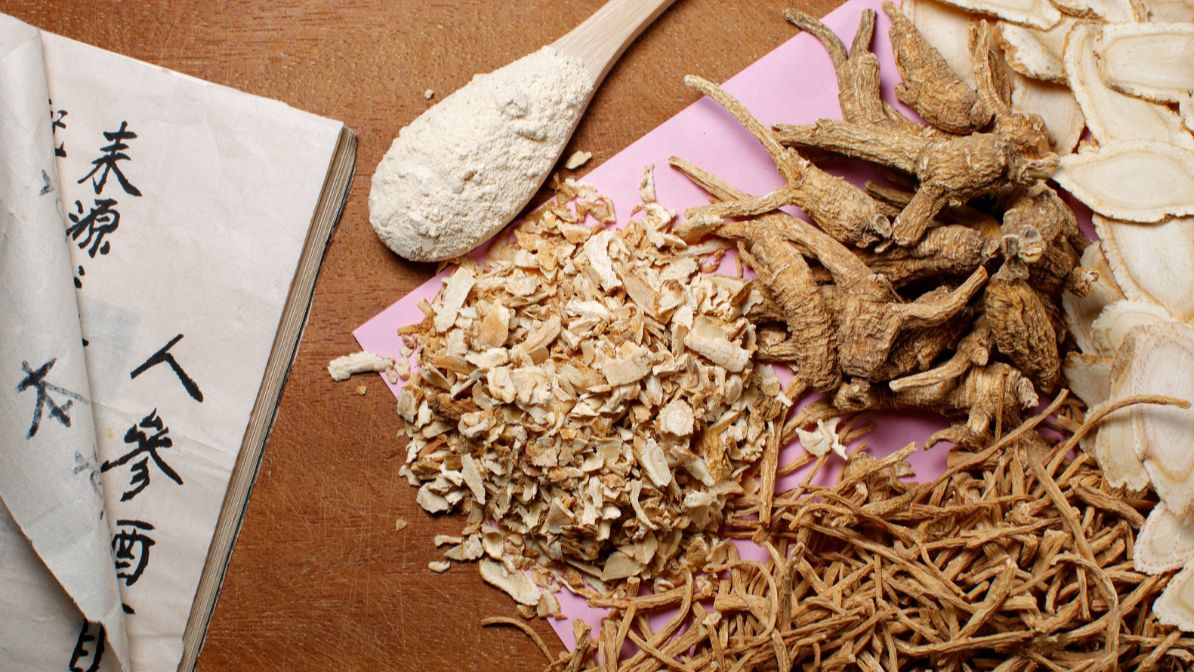
In this logic, one formula holds a special place in Chinese tradition: Yu Ping Feng San, or "Jade Windscreen Powder". Used for more than 700 years in China, this classic formula is traditionally associated with supporting Wei Qi, the defensive energy described in TCM.
Its name conjures up a powerful image: that of a screen that helps the body better preserve its balance in the face of external changes. It brings together herbs such as astragalus, atractylodes and saposhnikovia, traditionally used to support Qi, support natural defences and help the body get through the changing seasons.
At Calebasse, Yu Ping Feng San is therefore part of a terrain-based approach: it is not about "blocking" viruses, but about supporting the body's resources, vitality and overall balance day to day. For a broader approach, the Natural Defence Formula also offers a blend of Qi-tonifying herbs, designed to support natural defences throughout the seasons.
You can also explore our practical guide: What to eat to support your body during viral periods?
Some viral alerts can be worrying. But they can also invite us to change our perspective.
The real question is not only: how should we react when the alert comes? It is also: how can we take care of the terrain before it is weakened?
From this perspective, strengthening your immunity is not a last-minute reflex. It is a way of preserving your balance day to day, before an emergency forces itself upon you.
[1] National Center for Biotechnology Information, In brief. The innate and adaptive immune systems, NIH / NCBI Bookshelf, updated 2023.
[2] National Institute of Allergy and Infectious Diseases, Features of an Immune response, section on immune memory, 2026.
[3] Takiishi T. et al., "Intestinal barrier and gut microbiota: Shaping our immune responses throughout life", Tissue Barriers, 2017.
[4] Guarnieri G. et al., "Relative Humidity and Its Impact on the Immune System and Infections", International Journal of Molecular Sciences, 2023.
[5] Okamoto-Mizuno K., Mizuno K., "Effects of thermal environment on sleep and circadian rhythm", Journal of Physiological Anthropology, 2012.
[6] Besedovsky L., Lange T., Haack M., "The Sleep-Immune Crosstalk in Health and Disease", Physiological Reviews, 2019.
