- White hair: the origin of the phenomenon
- Goodbye melanin, hello white hair
- The causes of canities
- Getting older
- Genetics
- Ethnic origins
- Health and lifestyle
- Stress
- Hair health in Chinese medicine
- He shou wu, a thousand-year-old treasure
- At the heart of a legend
- One of the most precious plants in the Chinese pharmacopoeia
- Its incredible properties


Some people remember, as if it were yesterday, the day they discovered their very first white hair in horror. Often experienced as a blow, the appearance of white hair is a source of embarrassment and is equated by many with growing old.
Although it is inevitable, there are remedies for white hair that slow down or conceal its appearance. Among the most effective natural options, Chinese medicine offers unique solutions. He shou wu, one of the flagship plants of the Chinese pharmacopoeia, is often cited as a true miracle solution for white hair.
But before exploring this natural anti-white-hair remedy, an essential question arises: why does hair turn white, and how can Chinese medicine for hair step in to remedy it?
White hair: the origin of the phenomenon
Goodbye melanin, hello white hair

The colour of our hair is due to the presence of pigments called melanins. These natural colourants are produced by melanocytes, cells located in the hair bulb.
There are two types of melanin: eumelanins, which produce brown hair, and pheomelanins, which produce blond and red hair. Most people have a mix of the two types, which explains why there are so many different hair colours. There are eight natural colours: black, brown, auburn, chestnut, red, strawberry blond, blond and… white.
Indeed, nothing could be more natural than white hair! But why does our hair turn white over time? Well, white hair is simply a sign of an absence of pigment: just like us, the cells that produce melanin age until they disappear. That is how white hairs appear.
This whitening of the hair on the head and body is called canities. Canities is not a health problem but a universal natural phenomenon. It can be total or partial and generally appears between the ages of 20 and 40. While recolouring has been observed in some exceptional cases, canities caused by ageing is irreversible in any case. What can cause white hair to grow?
The causes of canities
Getting older
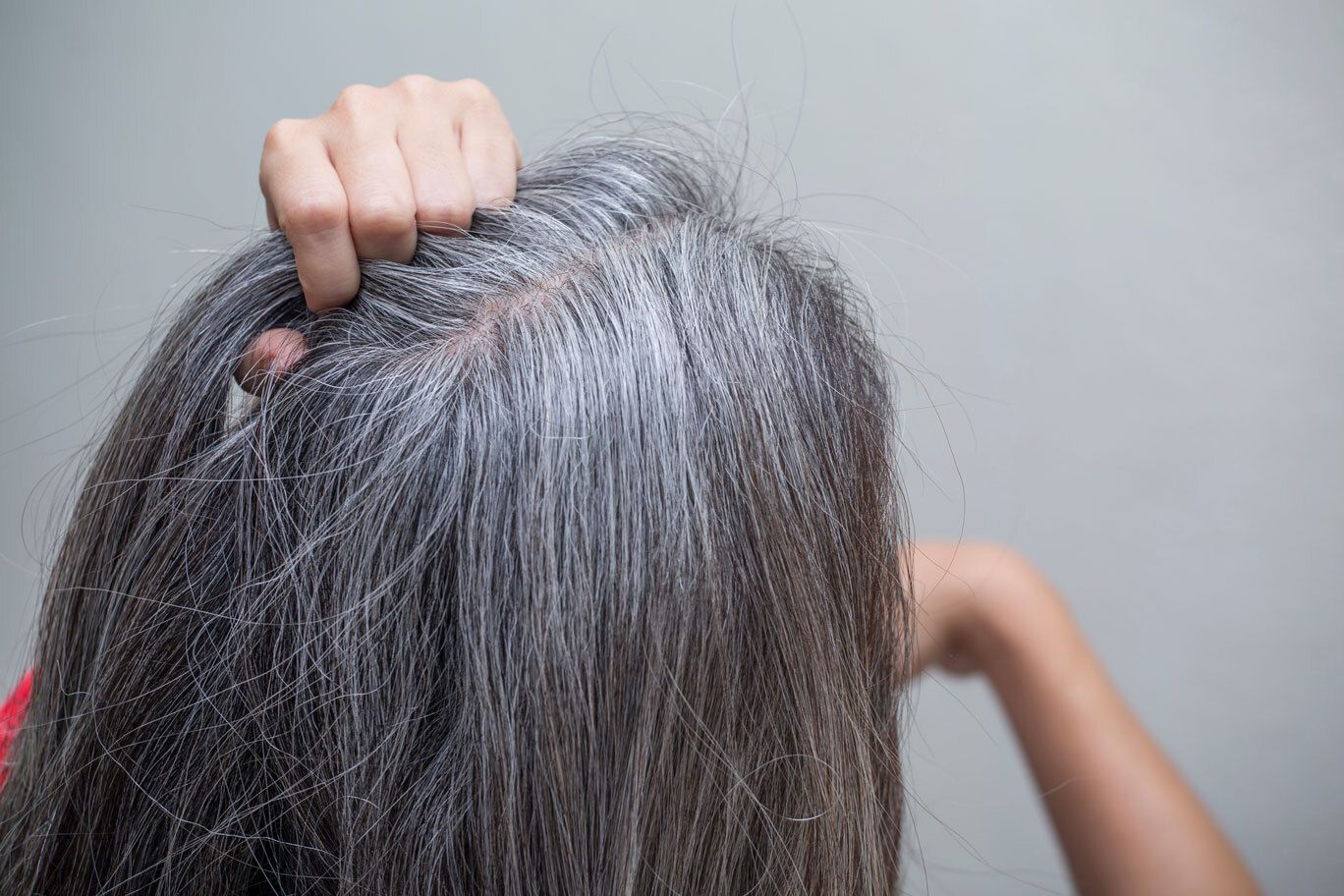
The main cause of white hair is, of course, getting older. That is also why many people panic when they discover the first signs of depigmentation, which, according to popular belief, would mean that they are now old. As explained above, this phenomenon is simply due to the ageing of cells that no longer pass pigment on to the hair.
Genetics
Besides old age, there is a hereditary factor. While some people will have "salt and pepper" hair at 30, others will have to wait until their fifties to notice a first greyish glint in their hair.
Bad luck for one and good fortune for the other? Well, no: the culprits are very often our parents! When one of our parents went grey quite early, it is a safe bet that our first white hair will not be long in coming. There are therefore genetic predispositions that explain (sometimes premature) greying of the hair.
Ethnic origins
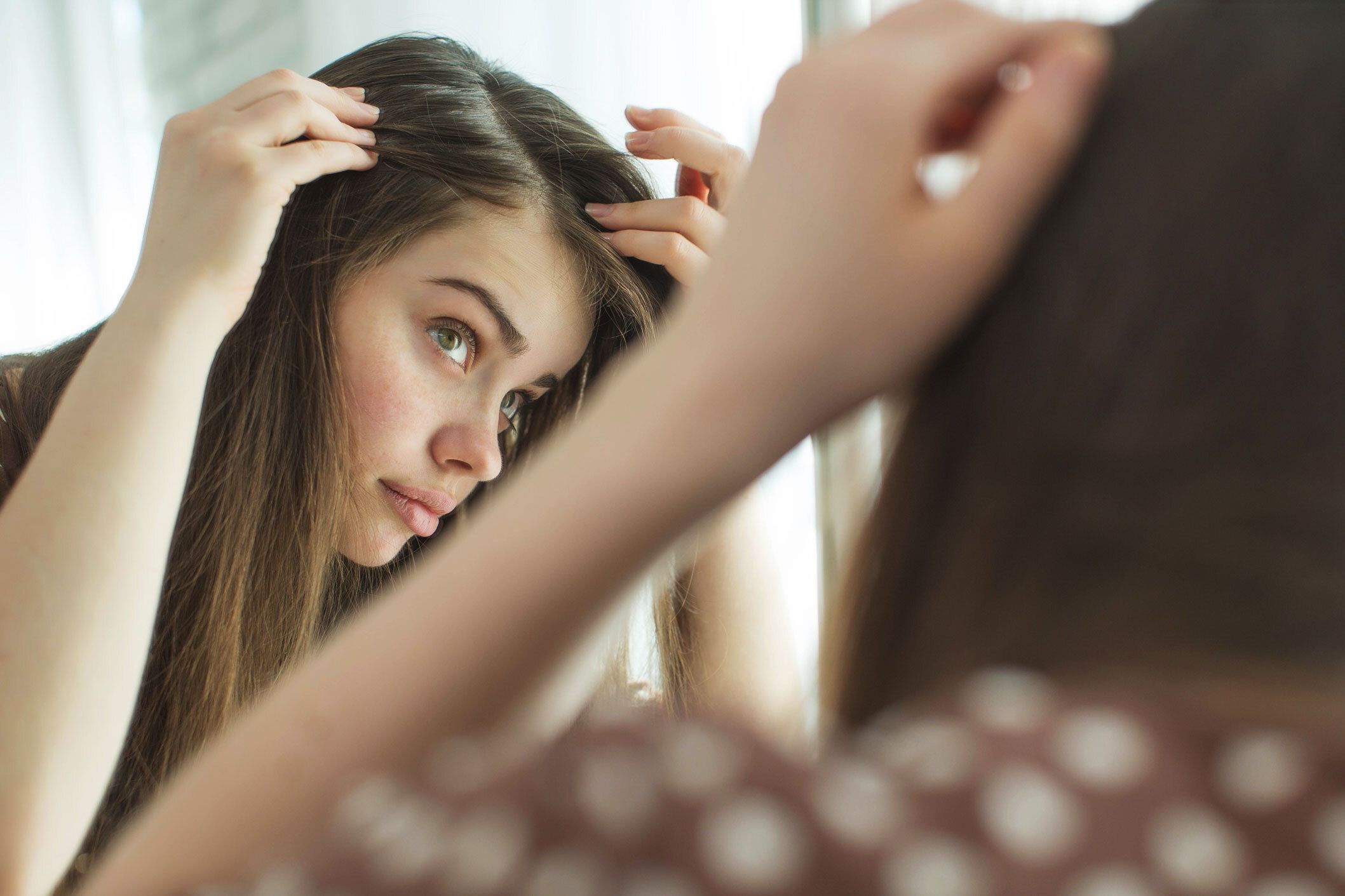
According to studies, ethnic origin may determine the age at which we can expect to see our first white hairs. For example, premature canities generally occurs before the age of 20 in Caucasian people. In Asian and African people, it occurs later, at around 25 and 30 respectively1.
Health and lifestyle
The environment we live in and our lifestyle play a fundamental role in the health of our hair. There are therefore indeed external causes2 that may encourage white hair, such as frequent use of drugs, tobacco or alcohol, nutritional deficiencies, undernutrition, lack of sleep, overexposure to the sun…
Certain genetic diseases can also cause depigmentation of the hair. This phenomenon is then called leukotrichia. This is the case, for example, with albinism, vitiligo and ataxia. In addition, hormonal disorders (linked to thyroid problems, for example) and taking medication can also encourage white hair.
Stress
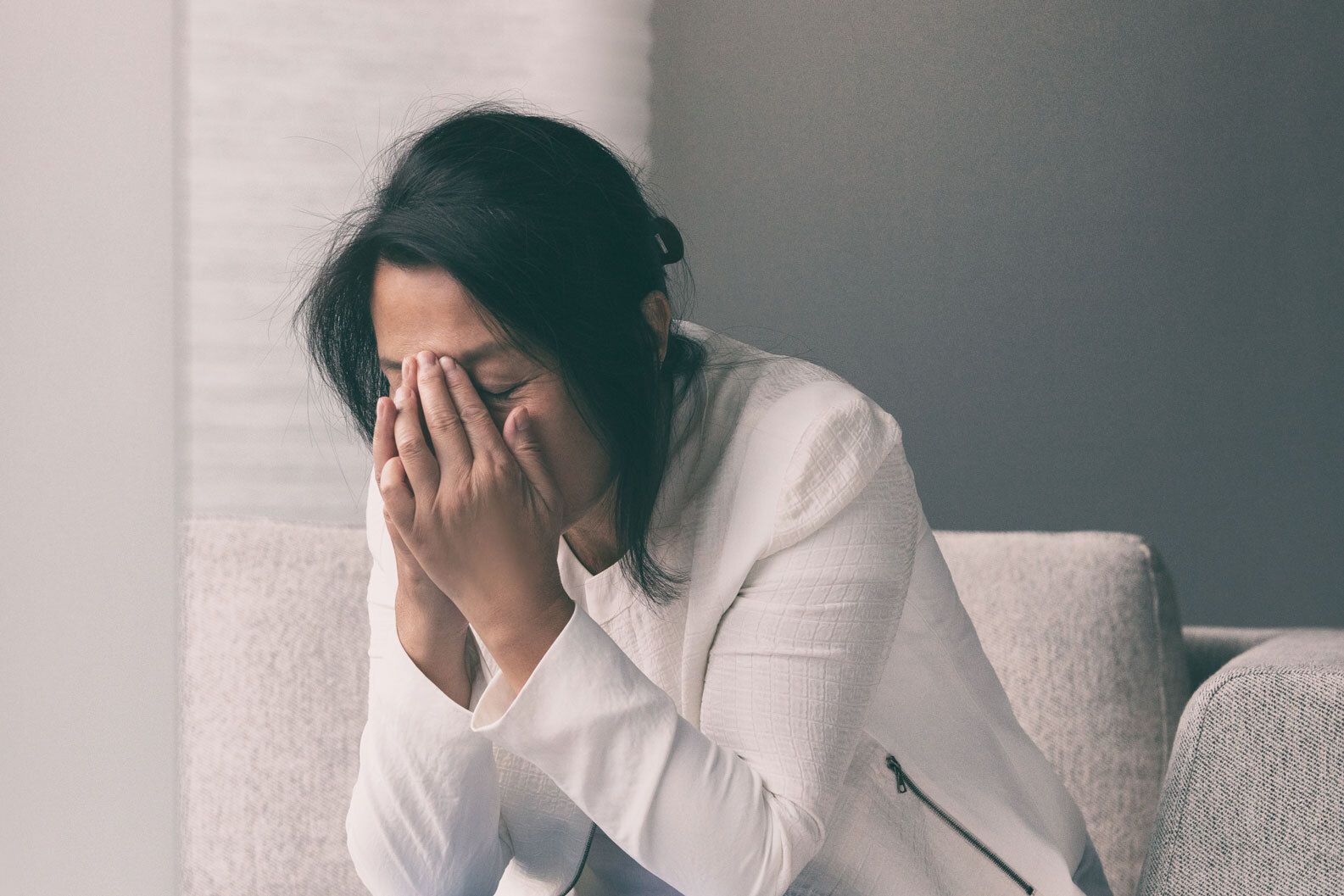
For years, we have wondered whether there is a link between stress and the appearance of white hair. The idea can be found in everyday language, as when we say someone is "worrying themselves grey". In 2020, an American study published in Nature3 proved that there was indeed a correlation between stress and depigmentation in rats; however, no study had yet managed to prove that this link held true in humans.
Very recently, many international researchers joined forces to study the effects of stress on health. They looked at the depigmentation of human hair and observed that, in some cases, a white hair could regain its natural colour.
After questioning volunteers about the stressful periods in their lives, they noticed that the depigmentation of their hair coincided with the events reported. Conversely, once the stress had eased, their hair gradually regained its original colour. This study was thus able to demonstrate the correlation between stress and white hair, and to establish that in this scenario it is a reversible phenomenon4.
Hair health in Chinese medicine
In China, it is said that the hair reveals the state of the body's health. Linked to the energy of the Liver and the Kidney, hair health therefore depends heavily on these two "systems". In traditional Chinese medicine, the Kidneys are the source of life and their health depends on the Yin they contain. They are known to strengthen the body's endurance and vitality, and so give it the weapons it needs to fight stress.
A healthy Liver also contributes to healthy hair: the Liver circulates Qi, and Liver Blood comes to "nourish the head". In addition, the Liver is the well of the emotions in TCM: if its energy is deficient, our emotional health will be unsettled, encouraging hair loss or even depigmentation.
Consequently, when it comes to hair health, Chinese medicine advises tonifying the Liver and the Kidney. To do so, it offers the virtues of He shou wu, a natural remedy for regaining healthy hair and fighting white hair.
He shou wu, a thousand-year-old treasure
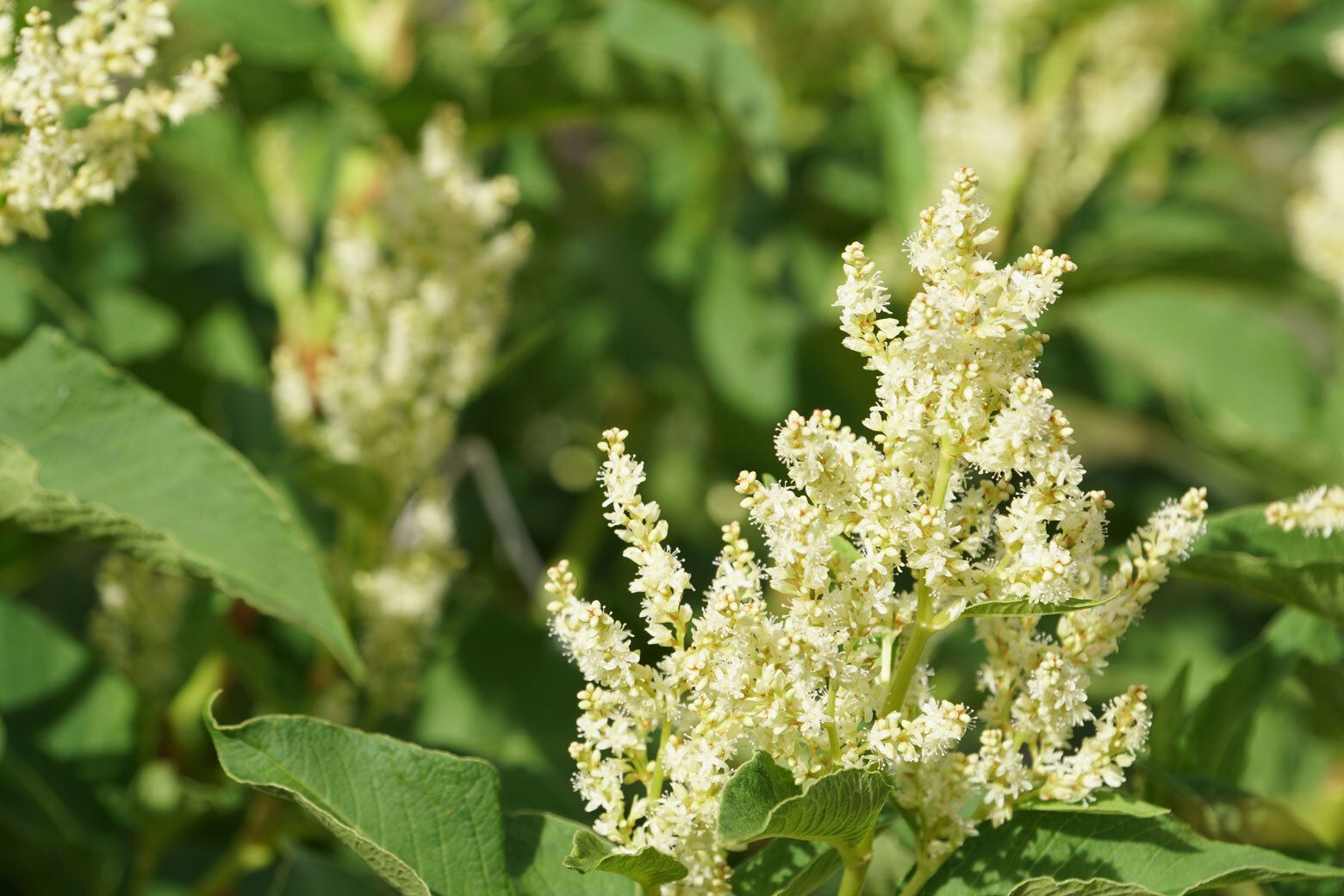
A herbaceous plant of the Polygonaceae family, many-flowered knotweed (Fallopia multiflora) is native to central and southern China. Very popular throughout Asia, it is known as He shou wu, which could be translated as "General Ho has black hair".
At the heart of a legend
He shou wu takes its name from an ancestral legend which tells that General Ho, condemned to die in prison and deprived of food, was forced to feed on the only plant growing in his cell, He shou wu. To survive, he ate a small amount of the mysterious plant's leaves and roots every day. Expecting to find his corpse, the astounded guards found a man who looked visibly younger, with long, beautiful black hair.
It is also said that He shou wu was one of the favourite plants of Taoist masters (they consumed it to improve their longevity) and that under the Jin dynasty, Emperor Shizong used it in the form of an elixir to beautify his beard.
One of the most precious plants in the Chinese pharmacopoeia
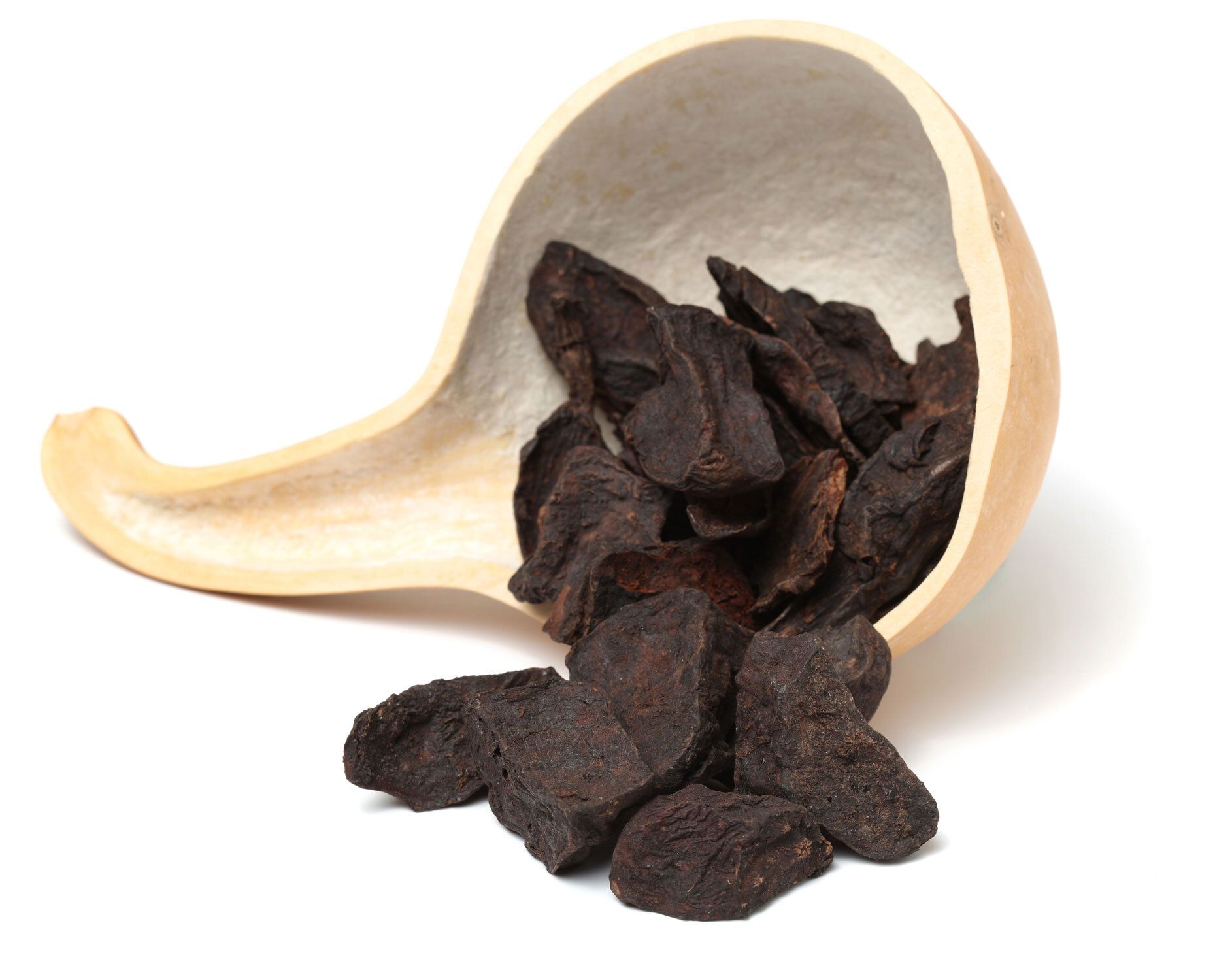
In Chinese energetics, He shou wu is one of the plants that tonify Blood. It has an affinity with the Liver and Kidney meridians, which explains its powerful action on the hair.
Its root is said to strengthen the Yin of the Liver and the Kidney, the organs responsible for hair health. It also nourishes and purifies Blood, which allows it to hydrate the hair and speed up its growth. It drives Wind out of the skin so as to improve skin health, and strengthens Jing ("Essence"), one of the Three Treasures of TCM, which gives it benefits for libido and fertility.
Its incredible properties
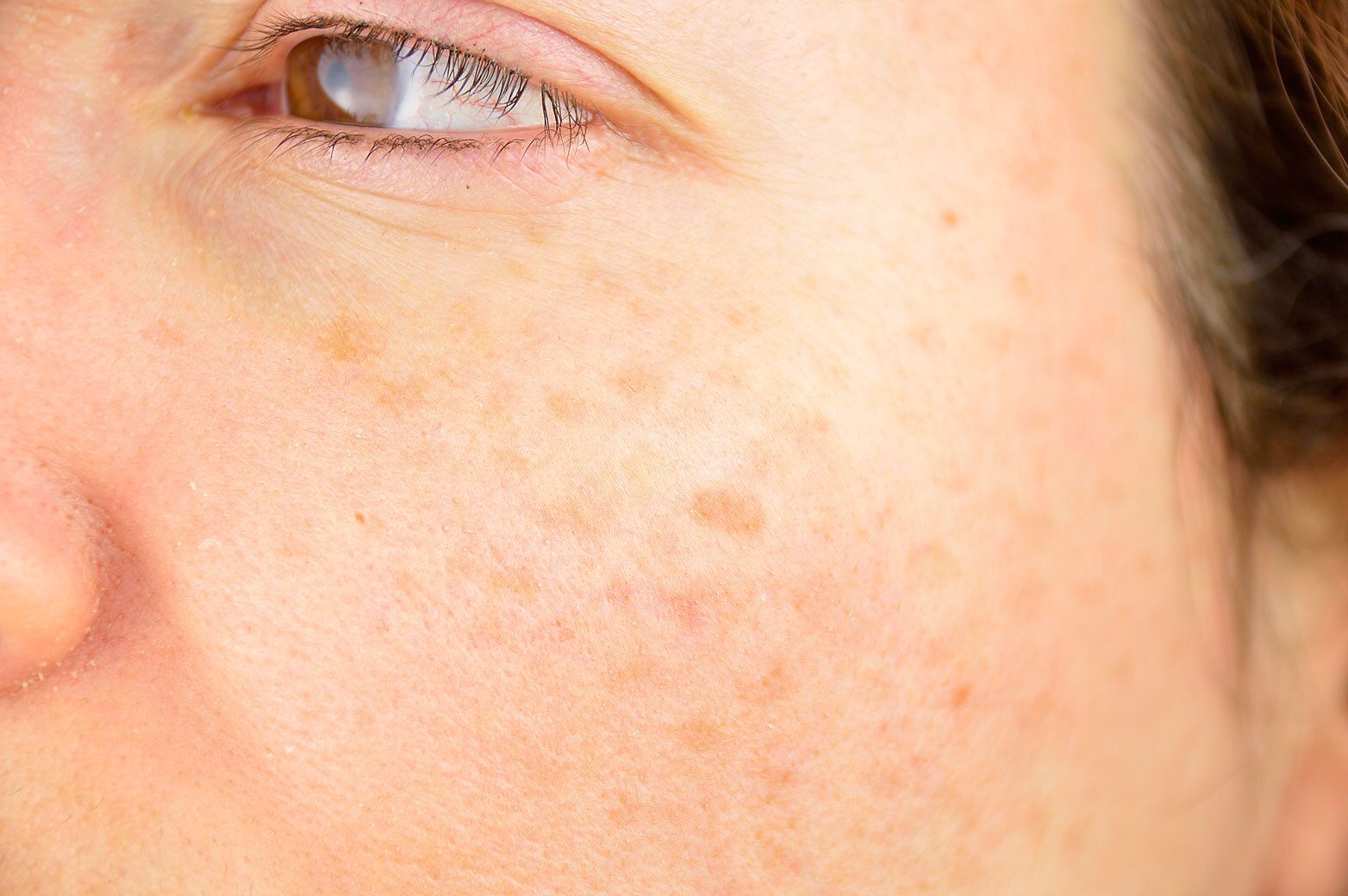
Since it was introduced to the West, He shou wu has been prized for its incredible properties, notably its anti-ageing ones. Renowned in Asia for its benefits for hair health, many-flowered knotweed acts on the blood so as to encourage hair growth. Studies have proven that it helps prolong the activity of hair follicles and stimulates the synthesis of melanin, which allows it to effectively reduce hair loss and slow down the appearance of white hair5. But its benefits are not limited to the hair.
The therapeutic properties of He shou wu rest mainly on three of its components6:
-
lecithin: a lipid produced by the liver that helps strengthen cell membranes, lowers cholesterol in the liver and strengthens cellular tissues).
-
emodin: a substance that gives it a laxative and antiviral action.
-
rhein: a rare component reputed to strengthen bones and prevent cartilage breakdown (notably in the case of osteoarthritis).
He shou wu therefore encourages lipid balance and helps maintain the arteries. It has hepatoprotective and anti-hyperlipidaemic properties7. As for skin health, it slows down the appearance of signs of ageing such as wrinkles and, by reducing lipofuscin deposits, it prevents age spots (brown spots).

Now very popular, He shou wu is one of the most precious anti-ageing plants in the Chinese pharmacopoeia. As well as rejuvenating the body in general, it strengthens hair health and is a miracle solution for preventing canities. If you are prone to stress, consider plants with soothing properties such as Mei gui hua (Rose buds) or Chai hu (Bupleurum root). They will help you calm your Shen (Mind) and combat the effects of stress on the body.
Watching yourself grow old can be hard to accept. The body changes, health declines, the dreams that once drove us gradually slip away… Waking up one fine morning to find a grey streak is probably not the nicest way for our youth to remind us that it is now far behind us. Yet growing old is a privilege. We can choose to hide the signs of age and put off the arrival of old age for as long as possible, but we can also welcome it and let it accompany us.

